
Data Collection Methods and Instruments
282 resources created by 262 users
This Data Collection Methods and Instruments page on GoConqr gathers community-made quizzes, mind maps, flashcards, slide sets, flowcharts and notes, from questionnaires and Likert scales to interviews, observation and field research. It's built for university students working through research methods, and for teachers after ready-made material. There are over 270 resources here, including more than 220 mind maps, 5 quizzes and 15 flashcard decks, made by over 250 contributors. Open a mind map, try a quiz to find your gaps, then build your own.
Top Data Collection Methods and Instruments resources
-
58 questionsResearch Methods Practice Final CHAPTER 11 Non-reactive research is often the best way to gather data when individuals might change their b...
-
Mind map QUESTIONNAIRES RESEARCH INSTRUMENT: QUESTIONNAIRES
-
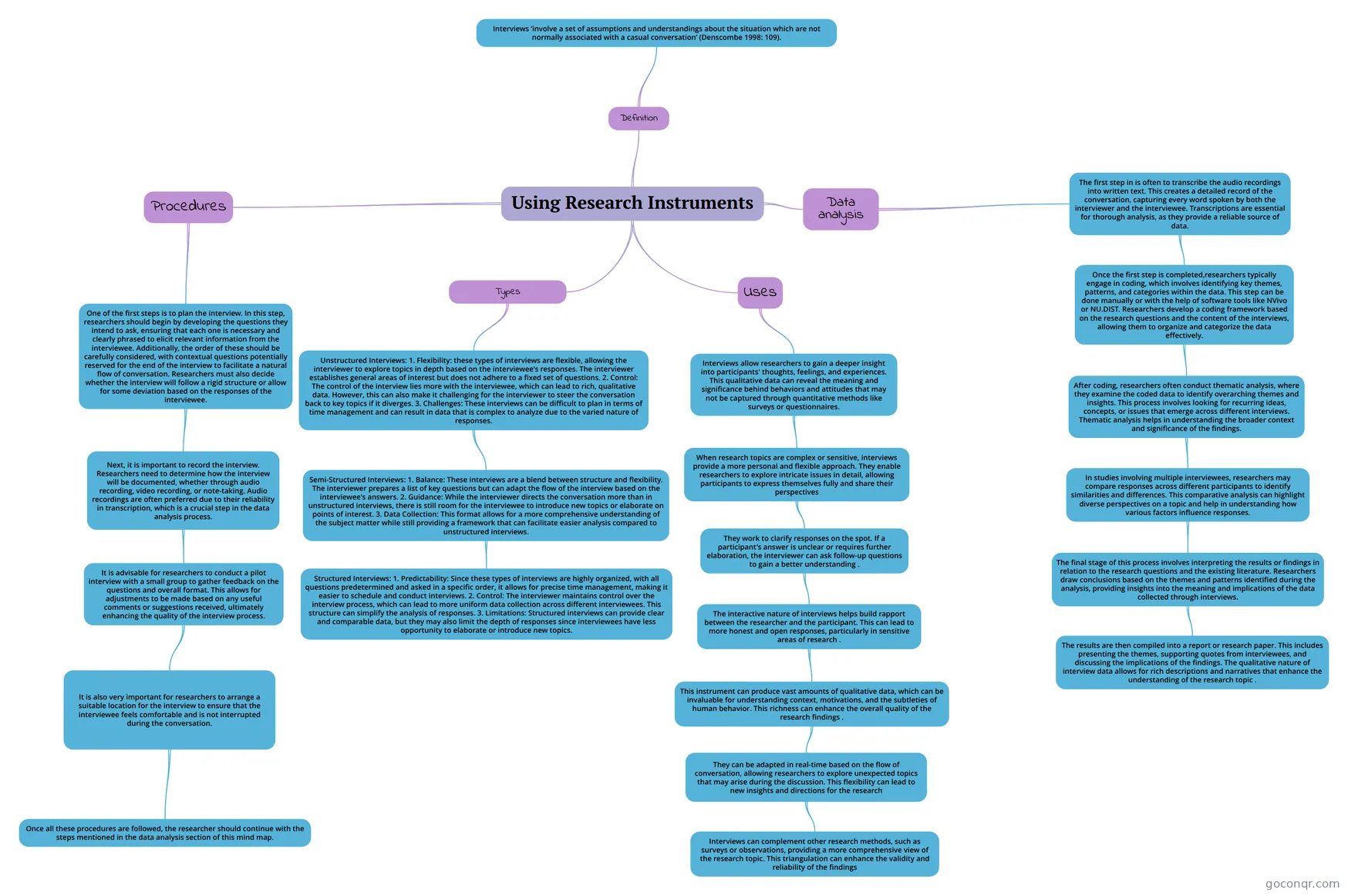 Mind map Using Research Instruments Interviews
-
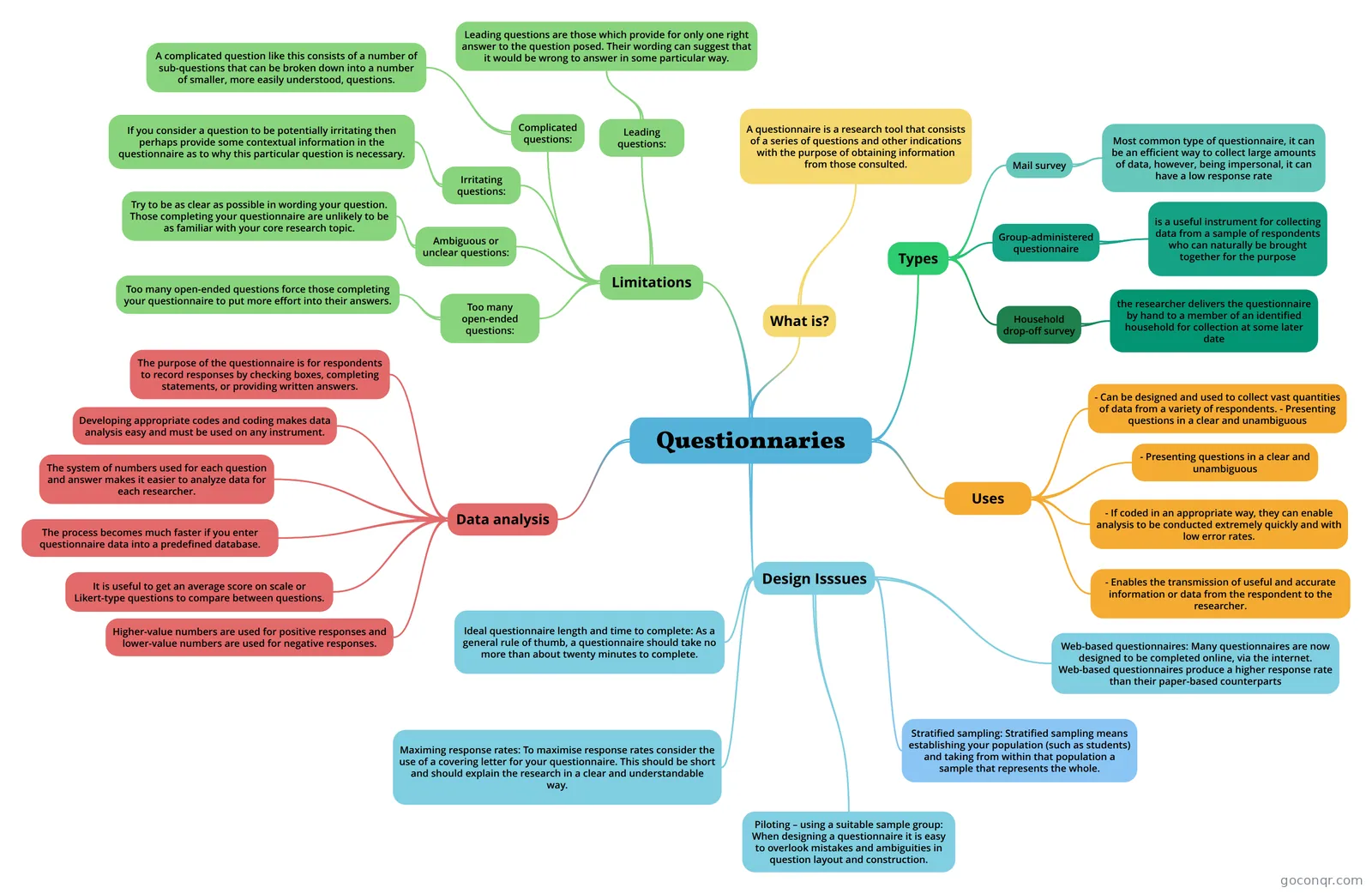 Mind map Questionnaries
-
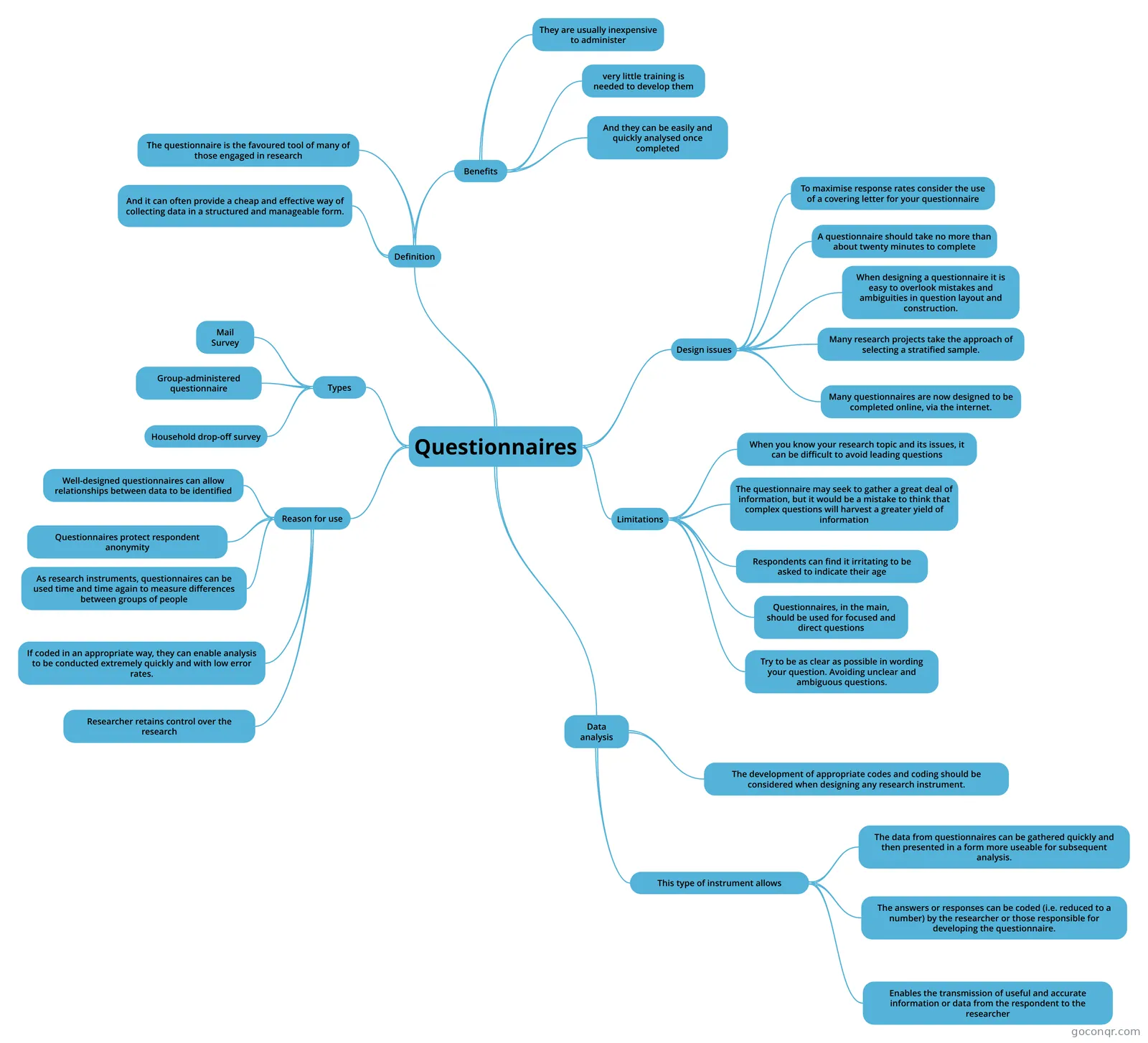 Mind map Questionnaires Research intrument: Questionnaires
-
7 cardsAndrea Mora Quantitative Method
-
Mind map Interview The interview is a research instrument that consist in a conversation between two people in which the resea...
-
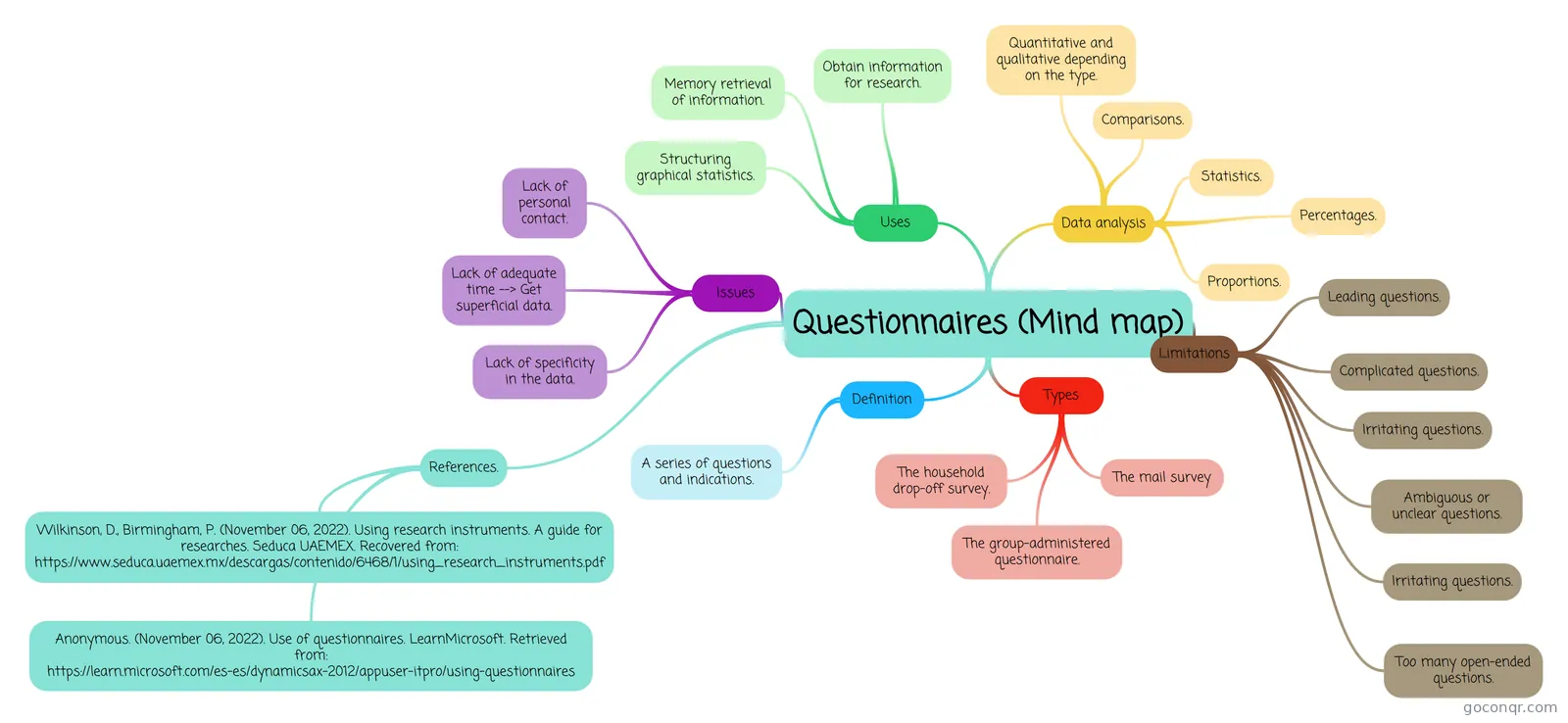 Mind map Questionnaires (Mind map) A questionnaire is a set of questions that is used to collect information with various objectives, it repre...
Quizzes
-
58 questionsResearch Methods Practice Final CHAPTER 11 Non-reactive research is often the best way to gather data when individuals might change their b...
-
3 questionsInvestigation group 1 1.-Questionnaire is A self-report data-collection instrument filled out by research participants,can be use...
Mind maps
See all 236 mind maps-
QUESTIONNAIRES RESEARCH INSTRUMENT: QUESTIONNAIRES
-
Using Research Instruments Interviews
-
Questionnaries
-
Questionnaires Research intrument: Questionnaires
-
Interview The interview is a research instrument that consist in a conversation between two people in which the resea...
-
Questionnaires (Mind map) A questionnaire is a set of questions that is used to collect information with various objectives, it repre...
-
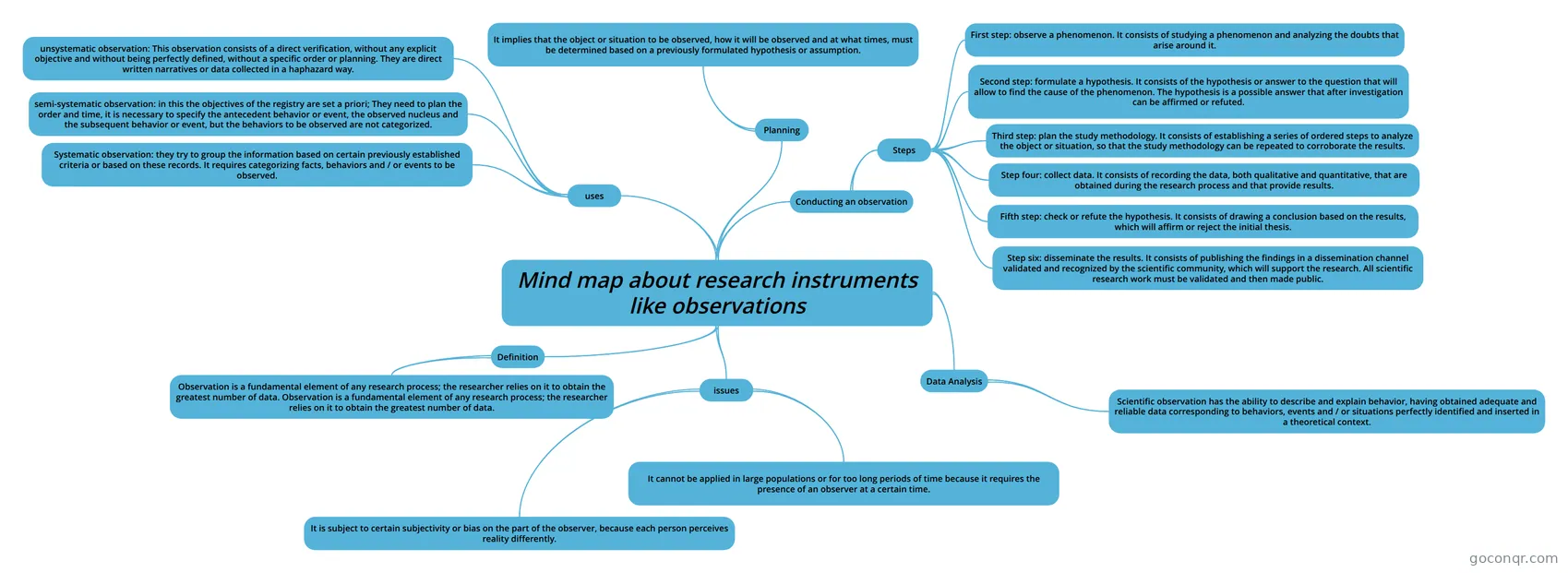 Mind map about research instruments like observations Mind map About research instruments like observations
-
Observations-Anahi Information about observation as a research tool
Flashcards
See all 15 flashcardsSlides
Topics in Data Collection Methods and Instruments
More Research methods and academic skills topics
About Data Collection Methods and Instruments
GoConqr OriginalWhat this unit covers
The page is about how researchers gather data and which tools they use. Most of it is mind maps, and questionnaires come up again and again. The mind map called QUESTIONNAIRES defines a questionnaire as a set of questions designed to generate the data a study needs, then moves on to types of questionnaire. Others cover interviews, observation, Likert scales, closed-ended items and the issues that arise when collecting data.
Where to start
- Begin with Data Collection Methods flashcards or the mind map Methods to Collect Data for the overall picture.
- Read Chapter 9: Selecting a method of data collection to see how quantitative and qualitative approaches differ.
- Move to the questionnaire maps, then the interview maps, then Observation.
- Finish with the validity and reliability maps, which explain why a chosen instrument must be both valid and reliable.
Sampling and fieldwork
The Data Collection mind map lists sampling types, including simple random, stratified, two-stage, cluster, systematic and convenience sampling. The Field Research Process map walks through preparing to enter the field, choosing a site and gaining access, applying strategies and maintaining relations.
Using quizzes and maps together
Read a map first, then test yourself. The quiz Research Methods Practice Final includes a question on non-reactive research, which suits situations where people might change their behaviour once they know they are being observed. The BRT - Ch. 7 quiz checks ideas such as primary and secondary data and question order. If an answer surprises you, go back to the matching map and read that branch again. The flashcard deck on the Hawthorne effect and related ideas is a quick way to revise that point.
Where it sits
This unit belongs to the Data Collection and Analysis strand of Research methods and academic skills. Teachers can set a map as pre-reading, then use a quiz in class. Pick a map that matches your current topic, and make your own flashcards from its branches.
Frequently asked questions
Which resource should I open first?
Start with the mind map Methods to Collect Data, or the flashcard deck on data collection methods, for an overview. Then choose the questionnaire or interview maps depending on your topic. Once you have read a map, try the quiz Research Methods Practice Final to see what stuck.
What do the questionnaire resources cover?
There are many questionnaire mind maps, plus a slide set on developing your questionnaire and a flowchart on closed-ended items. They cover definitions, types of questionnaire, constructing one, Likert scales and the advantages and disadvantages of using questionnaires in a project.
Are the resources free to use?
Yes. Every resource listed here is free to open, study and take, with no account needed. They were made by GoConqr users rather than by GoConqr itself, so it helps to check them against your own course materials.
Who is this page for?
It is mainly for university students studying research methods, who can use the maps, flashcards and quizzes to revise instruments and methods. Teachers can also use the ready-made material as pre-reading, class discussion starters or quick checks of understanding.
What do the validity and reliability maps explain?
They cover why a researcher must make sure the chosen instrument is valid and reliable, because the quality of a research project depends largely on it. Several maps, including one from a chapter on validity and reliability, let you compare how different authors present it.
What if I cannot find a topic I need?
You can make your own. A free account lets you create quizzes, mind maps, flashcards and notes, and saves your quiz scores. Until then, browse the related maps on interviews, observation and data sources, which may cover the point under a different title.