
Mapa mental
Contrasting Teaching approaches
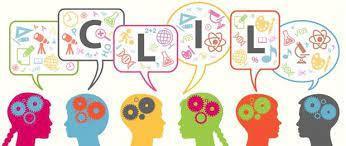
Contenido del mapa
Contrasting Teaching approaches
Content Based Instruction (CBI)
- It is a pedagogical approach that is committed to addressing language and content learning objectives in such a way that students work to learn both simultaneously.
- Teachers must make the model fit into their existing instructional framework
- The English teacher can use a text about space to learn about science but at the same time learn English vocabulary and spelling.
- There are three models of content - based approach
- 1. Sheltered model
- 2. Adjunct model
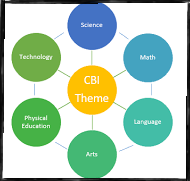
- 3. Theme based model
- There are three models of content - based approach
- The English teacher can use a text about space to learn about science but at the same time learn English vocabulary and spelling.
- Teachers must make the model fit into their existing instructional framework
- It is a pedagogical approach that is committed to addressing language and content learning objectives in such a way that students work to learn both simultaneously.
English Medium Instruction (EMI)
- To create enjoyable lessons, the teacher can focus on
- Start with a warm-up where students are prepared for the class, where either English vocabulary or grammar is used to facilitate understanding of the lesson, with a duration of 10 to 15 minutes
- Mini-lecture on the topic to include support for students and help them learn during the lectures.
- Interactive in-class activity that will allow students to develop both their English skills and their content knowledge skills.
- Regrouping to summarize the content at the end of class, allowing the student to remember what was learned
- Students have to learn content in a non-native language, particularly concepts that require deep learning.
- This approach is based on specific content or for an entire program.
- The learning objectives are to acquire and master content and knowledge (mainly implicit language learning objectives)
- The teacher must have a good command of the language
- In addiction, must be a specialist in the subject taught
- To create enjoyable lessons, the teacher can focus on
Content and Language Integrated Learning (CLIL)
- To have trained teachers to ensure success in the implementation of CLIL
- Core competencies of a CLIL teacher
- 1. Linguistic competence: It covers intercultural aspects and focuses on Basic Interpersonal Communication Skills (BICS) and Cognitive Skills for social interaction in the classroom.
- 2. Pedagogical competence: Teachers must become familiar with a series of student-centered methodologies, more diversified learning environments and resources where ICTs are important and the type of evaluation is holistic and formative.
- 3. Scientific knowledge: It affects the mastery of both the content they teach and also the theoretical foundations of CLIL, with which they must be well versed.
- 4. Organizational competence: Based on classroom management and control strategies.
- 5. Interpersonal and collaborative skills: They are an integral part of the CLIL teacher's profile and involve the ability to create an appropriate classroom environment where students feel safe and also the ability to relate to a greater extent with classmates, promoting collaboration and learning. teamwork with them.
- 6. Reflective and developmental competence: Points to the need for lifelong learning and for teachers to be constantly updated with the latest information and research on CLIL developments.
- Core competencies of a CLIL teacher
- Language is learned and used to build subject knowledge, what is called content.
- Knowledge of such subjects as history, social studies, art, music, science and mathematics becomes a motivation for students to learn a new language.
- Students use the four skills of reading, writing, listening, and speaking to learn and discuss the topic.
- Students analyze and evaluate information using critical thinking skills, leading to a deeper understanding of information.
- In addition to having both intercultural learning and learning theories, languages learning theory
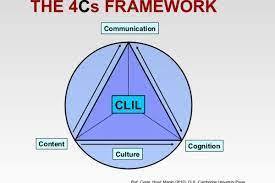
- Focused on: Communication, content and cognition
- In addition to having both intercultural learning and learning theories, languages learning theory
- Students analyze and evaluate information using critical thinking skills, leading to a deeper understanding of information.
- Students use the four skills of reading, writing, listening, and speaking to learn and discuss the topic.
- Knowledge of such subjects as history, social studies, art, music, science and mathematics becomes a motivation for students to learn a new language.
- To create enjoyable lessons you can do
- Choose an interesting topic
- Choose the target vocabulary
- Choose a grammar structure to focus on
- Choose a reading text
- Create a graphic organizer for the students
- To let students use the information creatively
- To have trained teachers to ensure success in the implementation of CLIL
Imágenes y archivos del mapa

Información
- Descripción
- Mapa Mental sobre Contrasting Teaching approaches, creado por yicel grijalba el 26/10/2022.
- Creado por
- yicel grijalba
- Visitas
- 4
- Valoración