
Bilingual Education and CLIL
729 resources created by 616 users
This Bilingual Education and CLIL page on GoConqr gathers community-made mind maps, quizzes, flashcards, flowcharts and notes, from CLIL lesson planning and the 4Cs to bilingualism in Spain and Colombia. It's built for university students and professional candidates, and for teachers after ready-made material. Learners can practise the principles of CLIL, compare bilingual programme models and review lesson design. There are over 690 resources here, including more than 650 mind maps, drawn from over 580 contributors. Pick a map, try a quiz to spot your gaps, then make your own.
Top Bilingual Education and CLIL resources
-
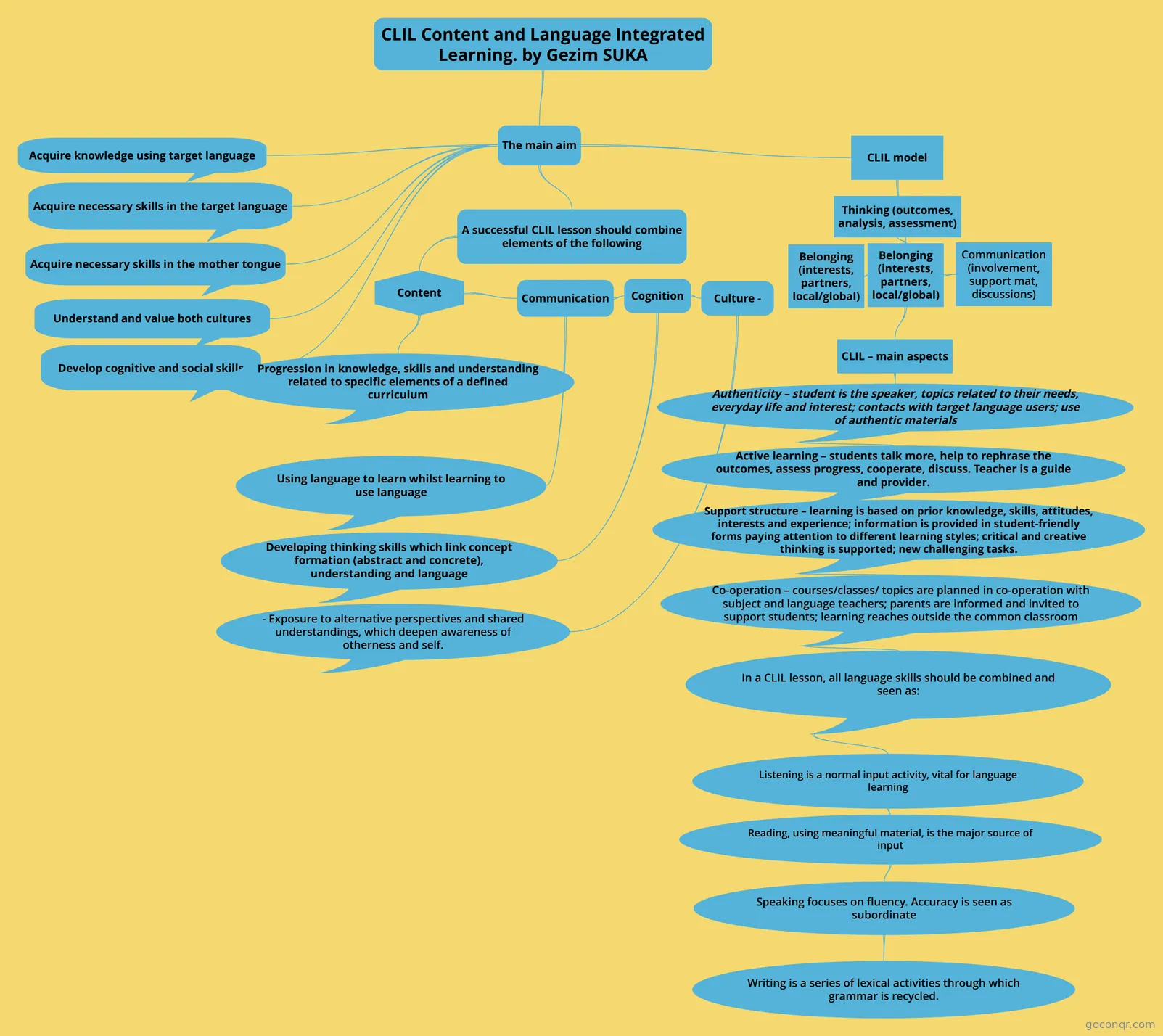 Mind map CLIL Content and Language Integrated Learning. by Gezim SUKA HERE ARE MY THOUGHTS ABOUT THE MIND MAP.
-
Mind map MULTILINGUALISM IN THE EDUCATIONAL SYSTEM
-
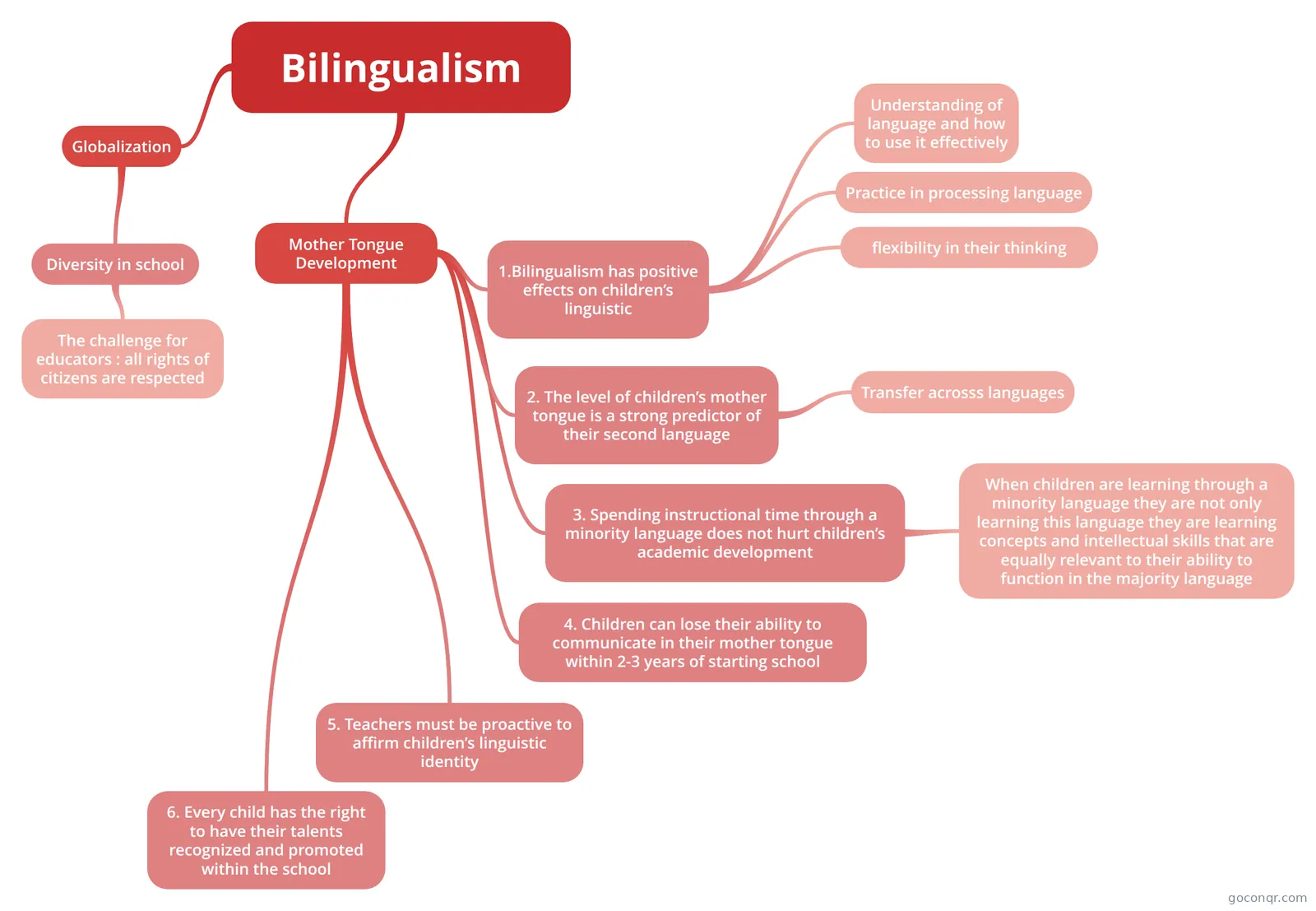 Mind map Bilingualism
-
Mind map CLIL
-
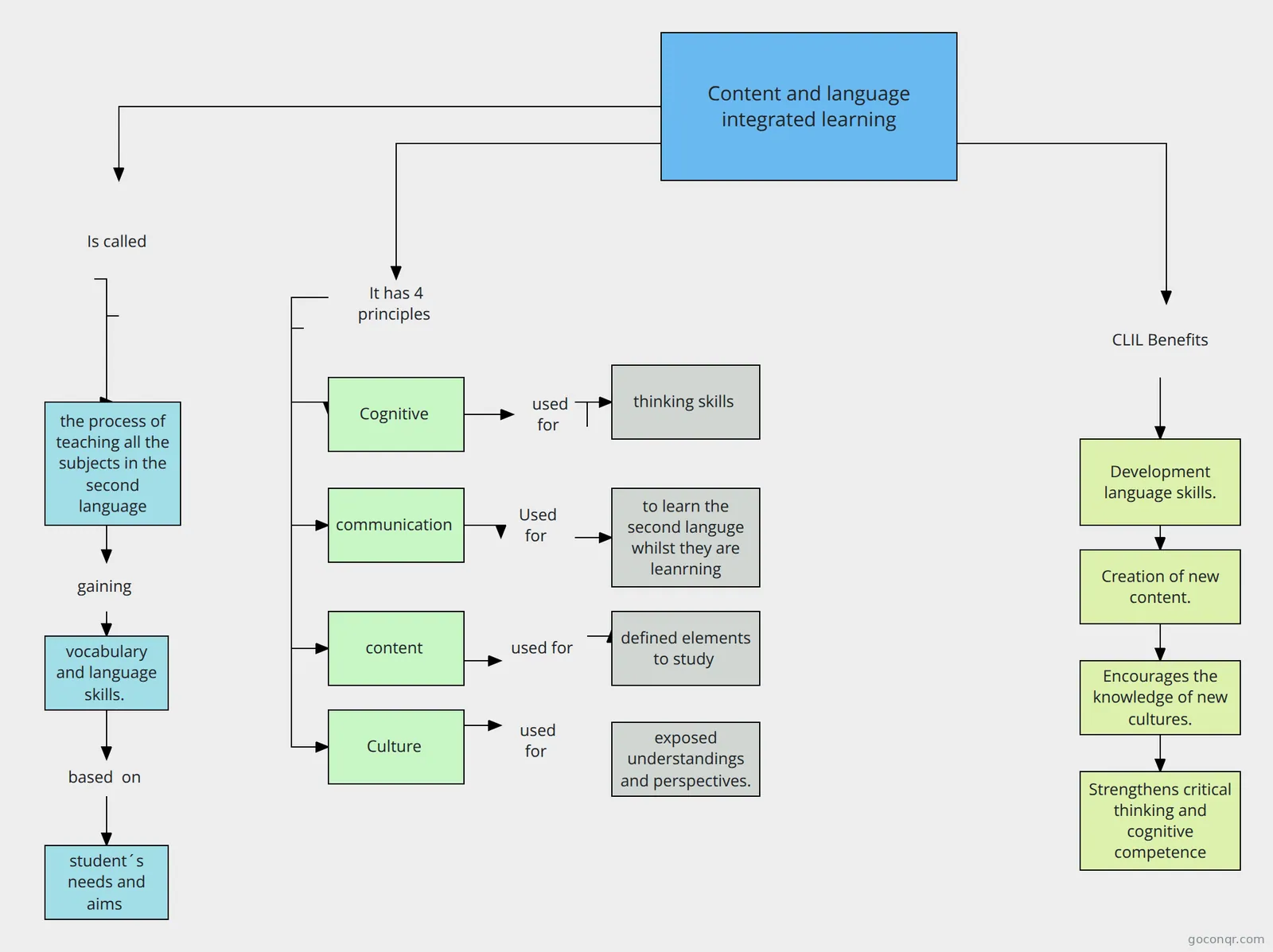 Flowchart CLIL CLIL
-
Mind map CLIL LESSON PLANNING Clil lesson plan Module Five
-
Mind map CLIL Content Language Integrated Learning
-
Mind map CLIL BASIC CONCEPTS OF CLIL
Mind maps
See all 681 mind maps-
CLIL Content and Language Integrated Learning. by Gezim SUKA HERE ARE MY THOUGHTS ABOUT THE MIND MAP.
-
MULTILINGUALISM IN THE EDUCATIONAL SYSTEM
-
Bilingualism
-
CLIL
-
CLIL LESSON PLANNING Clil lesson plan Module Five
-
CLIL Content Language Integrated Learning
-
CLIL BASIC CONCEPTS OF CLIL
-
Bilingual education This Mind Map is created to simplify the concept of bilingual education from a specific context. References...
Flashcards
See all 16 flashcardsFlowcharts
See all 13 flowchartsMore Education and pedagogy (incl. teaching methods, curriculum, educational psychology) topics
About Bilingual Education and CLIL
GoConqr OriginalWhat this page covers
Most of the material here is mind maps, with a smaller set of flashcards, flowcharts, notes and quizzes. It splits into two main threads: CLIL (Content and Language Integrated Learning) and bilingual education more broadly. All of it was made by GoConqr users.
Where to start
Begin with the CLIL mind maps that set out the basics. The map titled CLIL names David Marsh, Do Coyle and Áine Furlong, then lists dimensions, research foundations, dual-focussed aims and the essential elements of culture, environment, language and content. The CLIL Content Language Integrated Learning map covers what CLIL is, why it is used, its principles and the order of language skills. The flowchart CLIL Concept and Usage gives a quick overview.
Planning and classroom practice
Next, move to the practical maps. CLIL LESSON PLANNING brings together the 4Cs Framework, the Language Triptych and the CLIL Matrix, with reflection questions on context, learners' interests and CEFR level. Bicycle as a mean of transport shows the 4Cs in a worked topic, split into language of learning, for learning and through learning. You will also find maps on teaching history and science through CLIL, authentic materials and the CLIL teacher.
Bilingualism and policy
For the wider context, open the maps on bilingualism, multilingualism in the educational system and the Council of Europe, and the notes on bilingualism in Spain. Flashcard decks cover submersion, maintenance and supplemental bilingual education, the bilingual brain and the effect of a child's home language. Candidates preparing for oposiciones or TKT CLIL will find these useful for checking terms.
Using quizzes and maps together
Read a map first, then take one of the quizzes, such as the CLIL quiz or the overview of bilingual and ESL programmes. Note what you missed, go back to the matching map, and test yourself again with the flashcards. Where this unit sits: it belongs to the Language Learning and Teaching Approaches strand of Education and pedagogy. Choose one map today and see how far it takes you.
Frequently asked questions
Which resource should I open first?
Start with the CLIL mind map that names David Marsh, Do Coyle and Áine Furlong. It sets out the dimensions, principles and essential elements of CLIL. After that, the CLIL lesson planning map shows how the 4Cs Framework and the CLIL Matrix turn those ideas into lessons.
What do the flashcards cover?
The decks deal with bilingual education models and related topics: submersion, maintenance and supplemental programmes, the bilingual brain, and how a child's home language affects education. There are also decks on the multilingual classroom and CLIL essentials, handy for checking key terms quickly.
Are the resources free to use?
Yes. Every resource listed here is free to open, study and take, with no account needed. They were made by GoConqr users, not by GoConqr itself. If you want to keep your quiz scores or make your own maps, flashcards and notes, a free account lets you do that.
Who is this page for?
It suits university students and professional candidates, plus teachers looking for ready-made material. Some resources mention oposiciones and TKT CLIL, so candidates for those can use them to revise concepts such as lesson planning, the 4Cs and bilingual programme types.
Does the page cover specific countries?
Yes, in part. You will find a unit on bilingualism in Spain, a map on English in Colombia, and a flowchart on the influence of bilingual education policies in Colombia on language learning. Another map looks at court decisions and bilingual education.
What if I can't find a topic I need?
Browse the CLIL and bilingualism maps by title first, since many cover similar ground from different angles. If a topic is still missing, you can build your own mind map, flashcards or notes with a free account and use them alongside what is already here.