
Mapa mental
The liver
Contenido del mapa
The liver
Detoxification of alcohol
- Takes place in the smooth endoplasmic reticulum of the Hepatocytes
- Ethanol molecules are small and fat soluble so can pass through the phospholipid bilayer into cells.
- 1. Ethanol is converted into ethanal by ethanol dehydrogenase.
- 2. Ethanal is converted into ethanoic acid by ethanal dehydrogenase.
- 3. Ethanoic acid in converted into Acetlycoenzyme A
- Fatty liver---- NAD is required to oxidise fatty acids. If too much alcohol is consumed, there is not enough NAD to do so. As a result, fatty deposits build up in the liver.
- Cirrhosis ----- Toxins in alcohol damage the hepatocytes. Damaged hepatocytes are replaces by fibrous tissue. The liver is not able to effectively carry out its function.
Blood supply
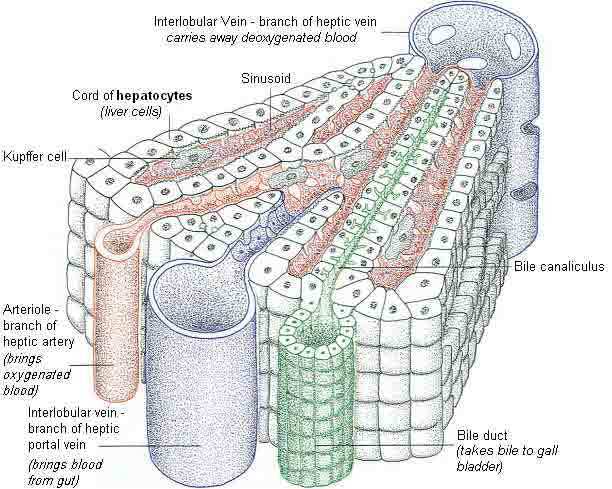
- Receives oxygenated blood from the hepatic artery which branches off the Arota.
- The hepatic portal vein carries blood from the digestive system so that the kidneys can control the levels of compounds ingested.
- Blood is carried by the hepatic vein back to the vena cava
Functions
- Control of blood glucose levels
- synthesis of cholesterol and plasma proteins
- Detoxification of alochol
Excretion
- The removal of metabolic waste from the body. This is the unwanted substances produced in cell chemical reactions.
- Excretion of CO2
- Binds with haemoglobin to from carbaminohaemoglibin. This has a lower affinity for O2.
- Dissolves in plasma and combines with H2O to form carbonic acid.
- This dissociates into HCO3- and H+.
- This increases the acidity of the blood.
- Leads to breathing difficulty, headaches, drowsiness, tremors and confusion.
- This increases the acidity of the blood.
- This dissociates into HCO3- and H+.
- Excretion of Nitrogenous compounds
- Amino acids cannot be stored so they are Deaminated in the liver. This produces ammonia which is highly toxic. It must be converted into urea.
- The remaining Keto acids are respired or turned into a carbohydrate or lipid for storage.
The Ornitine cycle
- 1. Ornitine + NH3 + CO2 ----> Citrulline + H2O
- 2, Citrulline + NH3 -----> Arginine + H2O
- 3. Arginine + H2O -----> Urea + Ornithine