
Mapa mental
Bacterial Transformation

Contenido del mapa
Bacterial Transformation
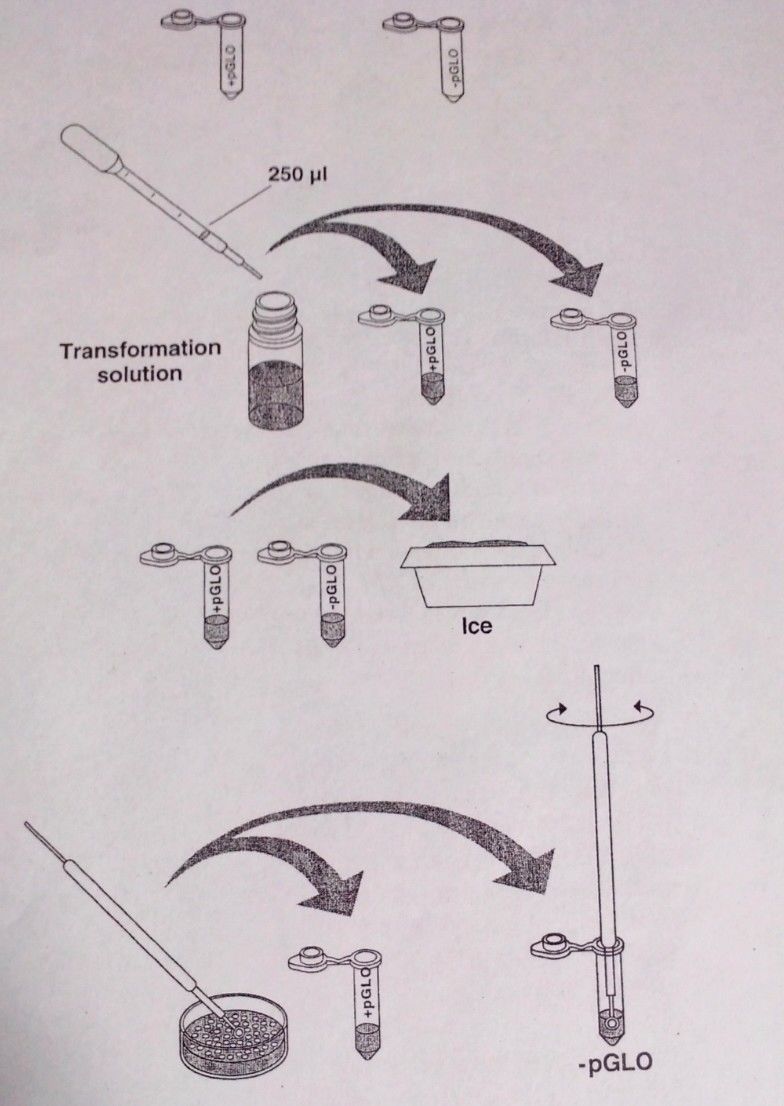
Label two micro test tubes
- +pGLO and -pGLO
- Add transformation solution (CaCl2)
- Calcium chloride neutralizes the plasma membrane so DNA can enter the cell
- Place tubes on ice
- Ice slows down the movement of the plasma membrane
- Pick up a colony of bacteria from the starter plate and submerge it in the CaCl2 until its dispersed (For both tubes)
- E. coli is the bacteria being used in this experiment. It's ideal for transformation because its small, single-celled, and reproduces quickly
- Use a UV light to examine the pGLO plasmid DNA solution
- Immerse an inoculation loop in the solution and withdraw a lapful of plasmid solution
- Mix the solution into the +pGLO tube (ONLY) and return to rack
- Incubate the tubes on ice for 10 minutes
- While the tubes are incubating label the four agar plates as follows:
- Heat Shock. Transfer both the +pGLO and -pGLO into the water bath, set at 42 C for 50 sec.
- Place tubes back on ice and incubate for 2 minutes
- Remove tubes from ice and add LB broth to both
- LB is nutrient broth (food for bacteria)
- Incubate at room temperature for 10 minutes
- Tap the lid of the tube to mix
- Pipet transformation and control suspensions to the corresponding plate
- Using a new sterile loop for each plate, spread the suspension evenly
- Stack up the plates, tape them together, and put them in the incubator
- Using a new sterile loop for each plate, spread the suspension evenly
- Pipet transformation and control suspensions to the corresponding plate
- Tap the lid of the tube to mix
- Remove tubes from ice and add LB broth to both
- Heat Shock increases the bacterial uptake of foreign DNA
- By using the calcium rich environment of the calcium chloride the heat shock counteracts the magnetic field between the plasmid DNA and bacterial cellular membrane thus creating pores to allow the plasmid DNA to enter the bacterial cell membrane
- Both -pGLO plates serve as control
- Place tubes back on ice and incubate for 2 minutes
- Heat Shock. Transfer both the +pGLO and -pGLO into the water bath, set at 42 C for 50 sec.
- While the tubes are incubating label the four agar plates as follows:
- Incubate the tubes on ice for 10 minutes
- Mix the solution into the +pGLO tube (ONLY) and return to rack
- Immerse an inoculation loop in the solution and withdraw a lapful of plasmid solution
Goal: Facilitate the replication of GFP by the pGLO plasmid
- The pGLO plasmid consists of not only for the GFP gene but also the ore, arak gene, and beta-lactanase enzyme
- This is the enzyme for ampicillin resistance
- Only transformed bacteria will be able to grow AND glow on the plates because they contain the genes for ampicillin resistance and GFP
- Plates without amp (only LB agar will grow but not glow
- Ampicillin is a antibiotic
- Only transformed bacteria will be able to grow AND glow on the plates because they contain the genes for ampicillin resistance and GFP
- Ori Origin of replication
- Allows plasmid replication
- araC gene regulates GFP transcription through the breakdown of arabinose
- Arabinose is a sugar that activates the arak gene through its decomposition therefore also activating GFP
- This is the enzyme for ampicillin resistance
- The pGLO plasmid consists of not only for the GFP gene but also the ore, arak gene, and beta-lactanase enzyme
Imágenes y archivos del mapa



Información
- Descripción
- Flow chart with explanations on how to transform the pGLO plasmid
- Creado por
- Tashelle Davis
- Visitas
- 189
- Etiquetas
- Valoración