
Mapa mental
Religious Experience; The Argument
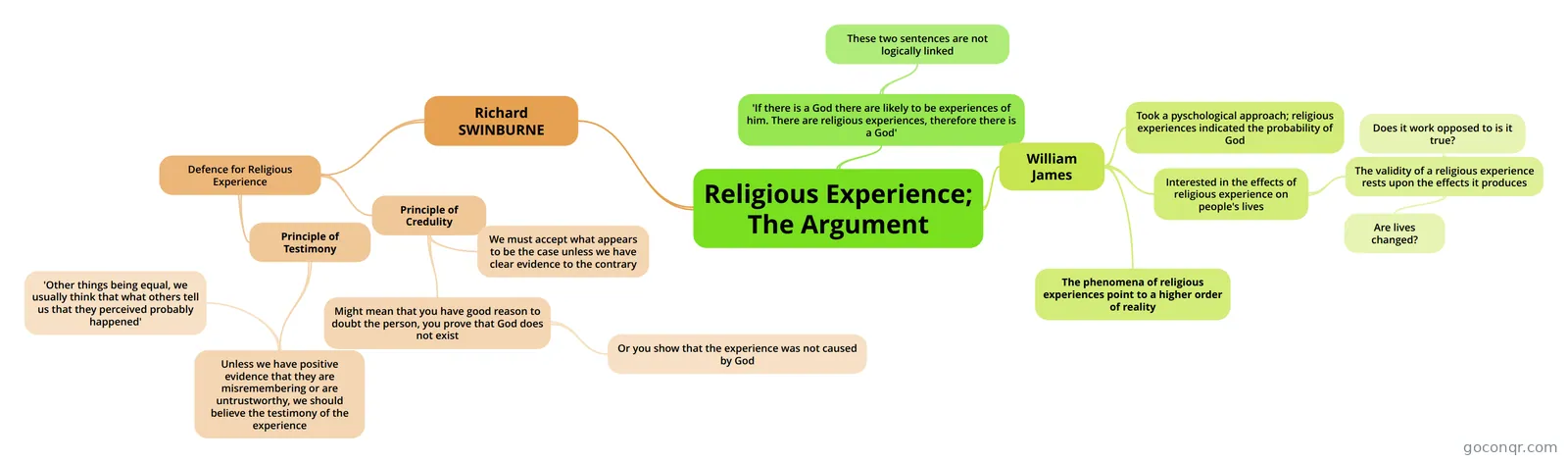
Mind map: religious experience argument
Contenido del mapa
Religious Experience; The Argument
'If there is a God there are likely to be experiences of him. There are religious experiences, therefore there is a God'
- These two sentences are not logically linked
William James
- Took a pyschological approach; religious experiences indicated the probability of God
- Interested in the effects of religious experience on people's lives
- The validity of a religious experience rests upon the effects it produces
- Are lives changed?
- Does it work opposed to is it true?
- The validity of a religious experience rests upon the effects it produces
- The phenomena of religious experiences point to a higher order of reality
Richard SWINBURNE
- Defence for Religious Experience
- Principle of Credulity
- We must accept what appears to be the case unless we have clear evidence to the contrary
- Might mean that you have good reason to doubt the person, you prove that God does not exist
- Or you show that the experience was not caused by God
- Principle of Testimony
- Unless we have positive evidence that they are misremembering or are untrustworthy, we should believe the testimony of the experience
- 'Other things being equal, we usually think that what others tell us that they perceived probably happened'
- Unless we have positive evidence that they are misremembering or are untrustworthy, we should believe the testimony of the experience
- Principle of Credulity
- Defence for Religious Experience
Información
- Descripción
- (Religious Experience) Philosophy Mapa Mental sobre Religious Experience; The Argument, creado por joe_lamy el 10/04/2013.
- Creado por
- joe_lamy
- Visitas
- 239
- Etiquetas
- Valoración