
Religious Experience
98 resources created by 63 users
This Religious Experience page on GoConqr gathers community-made mind maps, flashcards, notes, slides and quizzes on visions and voices, mysticism, conversion, numinous and corporate experience, and the challenges to each. It's built for school students revising for A-level or GCSE Religious Studies, and for teachers after ready-made material, with a little for university students too. There are over 90 resources here, including more than 50 mind maps and 4 quizzes. Pick a topic, try a quiz to find your gaps, then make your own.
Top Religious Experience resources
-
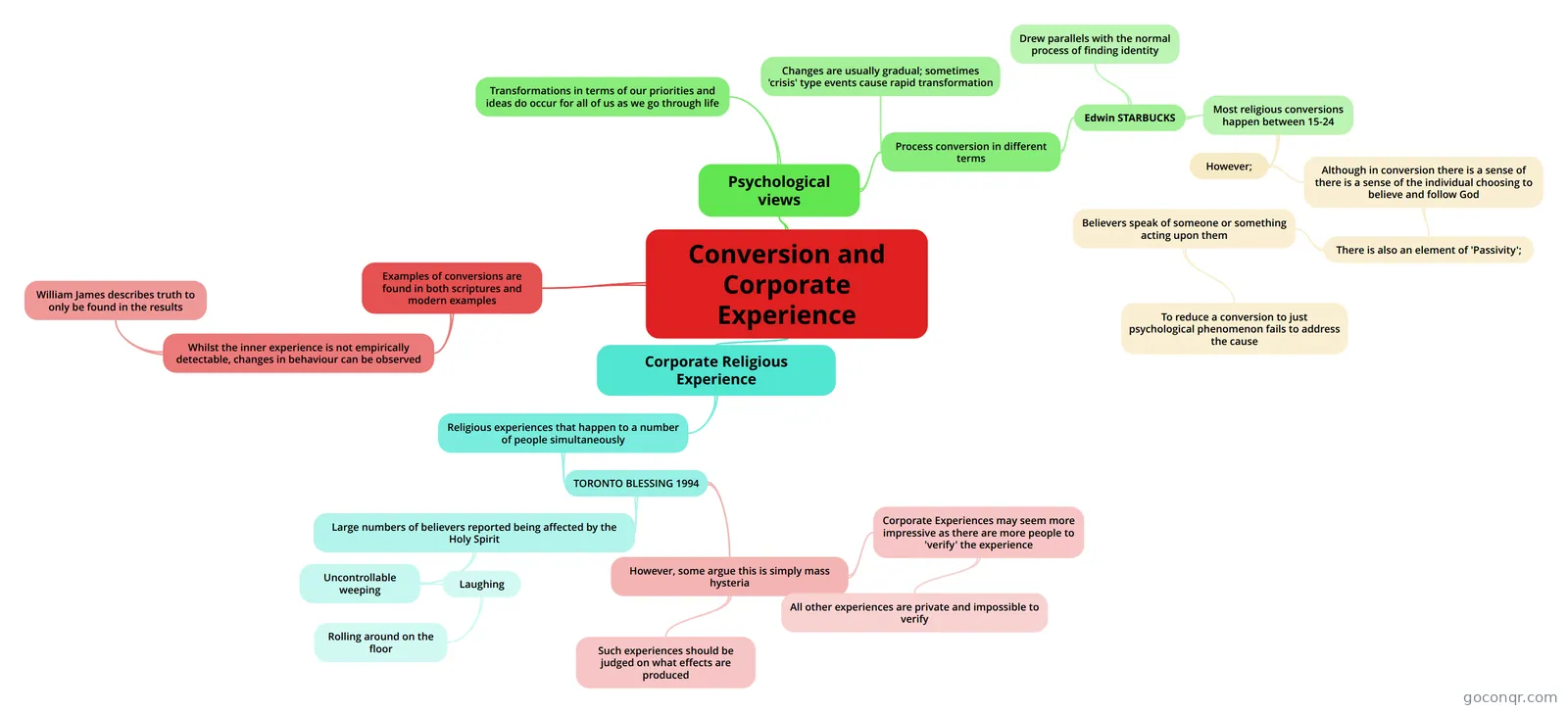 Mind map Conversion and Corporate Experience
-
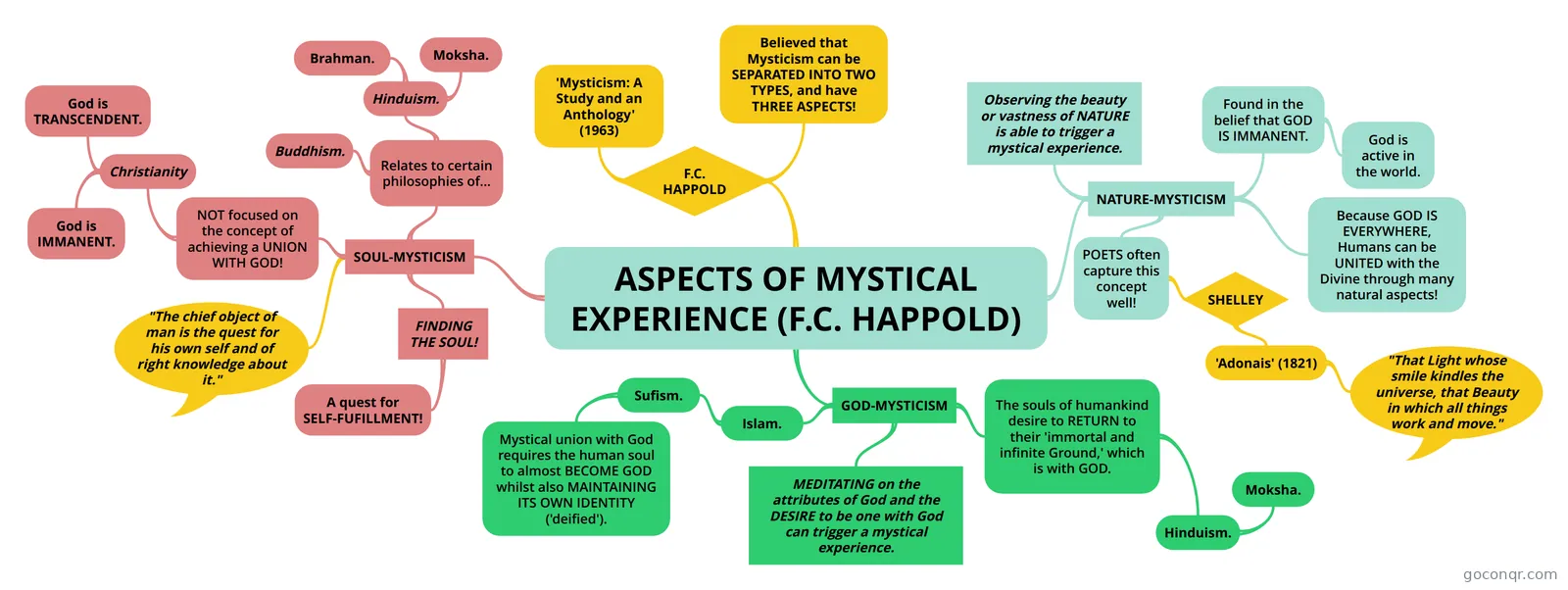 Mind map ASPECTS OF MYSTICAL EXPERIENCE (F.C. HAPPOLD)
-
Mind map Caroline Franks Davis
-
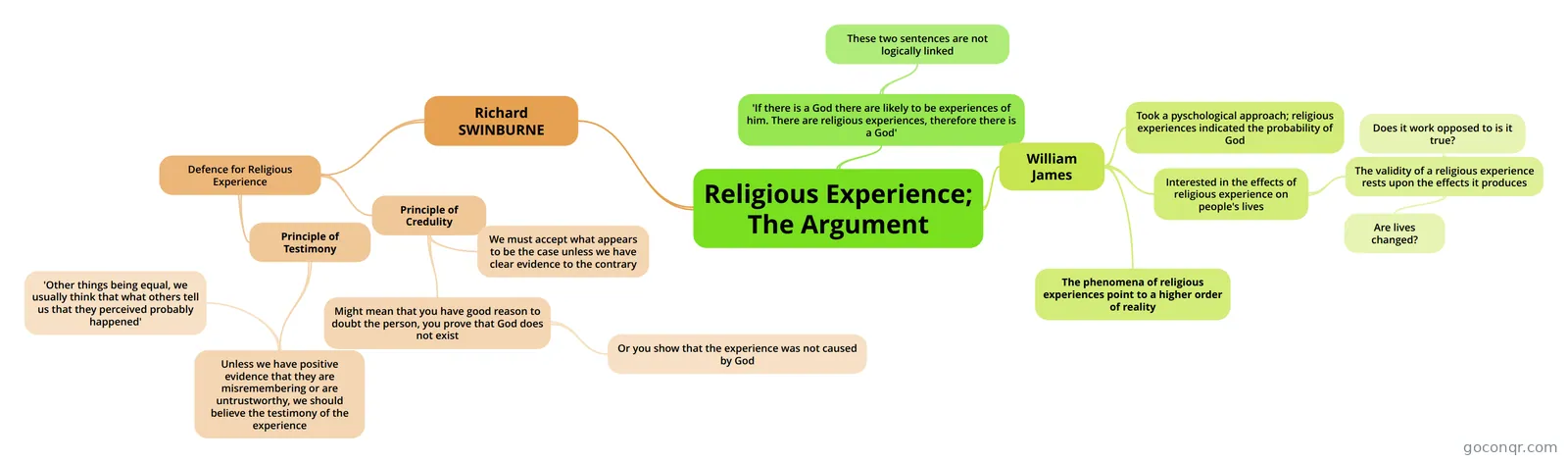 Mind map Religious Experience; The Argument
-
35 cardsRELIGIOUS EXPERIENCE - KEY QUOTES "But the fruit of the Spirit is love, joy, peace, patience, kindness, goodness, faithfulness, gentleness an...
-
Mind map Religious Experience
-
Mind map Religious Experience
-
32 cardsReligious Experience Cards (AS)
Quizzes
-
36 questionsReligious Experience What are the types of Religious Experience? (SELECT THREE)
-
8 questionsPeter Cole Religious Experience questions When did William James write his book?
-
4 questionsReligious Experience
-
2 questionsYear 13 Religious Studies: Religious Experience. What is a religious experience?
Mind maps
See all 52 mind mapsFlashcards
See all 26 flashcards-
35 cardsRELIGIOUS EXPERIENCE - KEY QUOTES "But the fruit of the Spirit is love, joy, peace, patience, kindness, goodness, faithfulness, gentleness an...
-
32 cardsReligious Experience Cards (AS)
-
43 cardsVisions/Voices/Conversion/Corporate/Numinous What are the three types of visions?
-
23 cardsTypes of Religious Experience What is a visual experience?
-
39 cardsreligious experience types of religious experience
-
22 cardsWilliam James / Mystical Experiences Who was William James?
-
19 cardsReligious Experiences - corporate/numinous/conversion What is a corporate religious experience?
-
11 cardsReligious Experience
Notes
See all 10 notes-
Visions and Voices Visions When a person is having a vision, they see something different that what their eyes can physically register. A vision experience can happen when a person is awake or in a dream. These visions are experiences o...
-
Numinous Experience Notes What is a Numinous Experience? The word 'numinous' comes from the Latin word 'numen', which means 'to bow the head.' Numinous experiences are experiences of awe and wonder in the presence of an almighty God. It is an ...
-
Revelation What is revelation? Revelation is the communication of knowledge to man by a divine or supernatural agency. In monotheistic religions, the term revelation deals with how God has revealed himself, his will and/or other...
-
Corporate Experiences The Toronto Blessing The Toronto Blessing, a term coined by British newspapers, describes the revival and associated phenomena that began in January 1994 at the Toronto Airport Vineyard church, known as the Toronto Ai...
-
Types of religious experience - Swinburne Ordinary experiencesExperiences where a person interprets a natural event as having a religious experience (e.g. the beauty of nature) Extraordinary experiencesExperiences that appear to violate normal understanding o...
-
Types of religious experience - Swinburne Public experiencesOrdinary experiencesExperiences where a person interprets a natural event as having a religious experience (e.g. the beauty of nature)Extraordinary experiencesExperiences that appear to violate norma...
-
William James' religious experience Passive - Experience isn't under the control of the mystic, and is from God Ineffable - The experience goes beyond human powers of description Noetic - The mystic receives knowledge of God that isn't otherwise av...
-
how a religious experience may lead to belief in god religious believers who have had a religious experience will find that the experience makes their belief in God stronger because they believe they have had direct contact with God.the numinous is a feeling of the...
Slides
Topics in Religious Experience
More Religion and theology topics
About Religious Experience
GoConqr OriginalWhat this unit covers
The page sits in the Philosophy of Religion strand of Religion and theology. It brings together the main types of religious experience and the thinkers who describe and test them. You will find mind maps, flashcard decks, notes, slide sets and quizzes, all made by GoConqr users.
Where to begin
Start with Religious Experience and Philosophical Approach to Spirituality, a mind map that asks what a religious experience is: a unique encounter with the Divine beyond the self, often subjective and mystical. Then move to the types:
- The Visions and Voices mind map, which looks at Muhammad's vision and the purpose it gave him.
- The Conversion and Corporate Experience mind map, which notes that the inner experience cannot be detected empirically, though changes in behaviour can be observed.
- The slide sets on numinous and mystical experience.
Thinkers and key ideas
The mind map on aspects of mystical experience by F.C. Happold separates mysticism into two types with three aspects. The notes on Swinburne's types of religious experience split experiences into ordinary and extraordinary. There are also resources on William James, Stace's key ideas and the Alistair Hardy research centre, which focuses on contemporary religious experience.
Testing the claims
Several maps deal with challenges. The Caroline Franks Davis mind map covers description-related, subject-related and object-related challenges, such as an impaired subject through drugs or mental illness. Pair it with the maps on psychological explanations, strengths and weaknesses. Then look at the argument map, which sets out the claim that if there is a God, there are likely to be experiences of him.
Using quizzes with maps
Read a map first, then take a quiz without notes. Wherever you slip, go back to the matching map or flashcard deck. The key quotes flashcards are handy for recalling wording. The resources mention A-level Religious Studies and GCSE Religious Studies, so check which applies to you.
When you are ready, choose one type of experience and work through its map, cards and quiz in turn.
Frequently asked questions
Where should I start on this page?
Begin with the mind map Religious Experience and Philosophical Approach to Spirituality, which defines the topic. After that, move through visions and voices, conversion and corporate experience, then numinous and mystical experience, before looking at the challenges and psychological explanations.
What do the mind maps cover?
They cover types of experience such as visions, voices, conversion, corporate and numinous experience, plus mysticism. Others explain thinkers including Happold, William James, Stace and Caroline Franks Davis, and set out strengths, weaknesses and psychological explanations.
Which exams are these resources for?
The listed resources mention A-level Religious Studies and GCSE Religious Studies. Most of the material is aimed at secondary students, with a smaller share at university level. Check your own specification to see which topics you need.
Are the resources free to use?
Yes. Every resource on this page is free to open, study and take, with no account needed. They were made by GoConqr users, not by GoConqr itself, so it is worth comparing them with your class notes.
Can I save my quiz scores or make my own?
A free account saves your quiz scores and lets you make your own quizzes, mind maps, flashcards and notes. That is useful if you want to adapt a listed resource to match your own course.
What if a topic I need is missing?
Browse the notes, slide sets and flashcard decks, since some topics appear under different titles, such as revelation or direct and indirect experiences. If it is still missing, you could build your own mind map or flashcards.