
Mapa mental
Software Development Life Cycle
Contenido del mapa
Software Development Life Cycle
Software Development Life Cycle model
- Requirements-gathering
- Design
- Implementation
- Testing
- Implementation
- Design
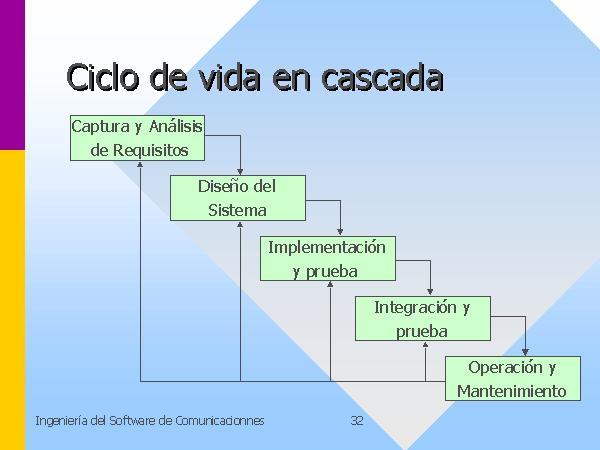
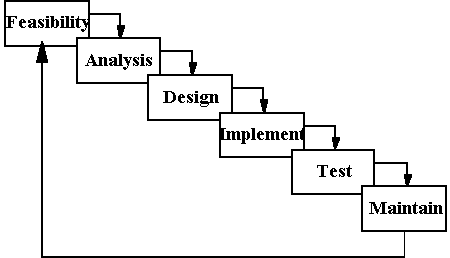
- WA T E R F A L L L I F E C Y C L E MOD E L
- The Waterfall model is characterized by a series of steps that must be completed in a linear, sequential order
- Disadvantages of the Waterfall model
- If requirements change or are added, the project must start over from the beginning
- its usefulness is limited
- is inappropriate for complex projects
- It should not be used for developing object-oriented software, for long-term or ongoing projects, or for projects in which requirements are unknown or subject to change.
- is inappropriate for complex projects
- its usefulness is limited
- If requirements change or are added, the project must start over from the beginning
- Advantages of the Waterfall model
- the Waterfall model is simple and easy to use
- Is appropriate for small development projects in which the requirements are well understood
- Each phase has a specific purpose
- Is appropriate for small development projects in which the requirements are well understood
- the Waterfall model is simple and easy to use
- INCREMENTAL LIFE CYCLE MODEL
- The Incremental life cycle model builds an iterative approach into the Waterfall model
- Requirement, design, implementation and testing phases are completed for each iteration.
- Disadvantages of the Incremental model
- the Incremental model exhibits some rigidity in that phases cannot be overlapped.
- but it may be inappropriate for large, longterm projects.
- the Incremental model may incur errors in early iterations.
- but it may be inappropriate for large, longterm projects.
- the Incremental model exhibits some rigidity in that phases cannot be overlapped.
- Advantages of the Incremental model
- generates a working prototype early in the development process.
- flexible when adding or changing requirements
- This model is also easier to test and debug because testing is performed incrementally during each iteration
- The Incremental model is an effective tool for managing risk
- This model is also easier to test and debug because testing is performed incrementally during each iteration
- flexible when adding or changing requirements
- generates a working prototype early in the development process.
- The Incremental life cycle model builds an iterative approach into the Waterfall model
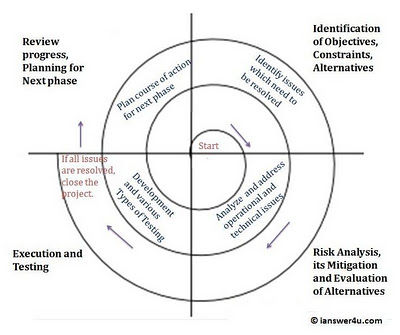
- SPIRAL LIFE CYCLE MODEL
- The Spiral life cycle model is similar to the Incremental model but incorporates risk analysis. It is divided into four phases: planning, risk analysis, engineering, and evaluation.
- Advantages of the Spiral model
- The focus on risk avoidance makes the Spiral model ideal for large-scale and missioncritical products
- the customer is given many opportunities to evaluate the software and plenty of time to ease into adoption of the software
- The focus on risk avoidance makes the Spiral model ideal for large-scale and missioncritical products
- Disadvantages of the Spiral model
- The Spiral model is inappropriate for use in small and medium-scale projects that are not mission-critical.
- The Spiral model can cost considerably more to implement than other life cycle models.
- The Spiral model is inappropriate for use in small and medium-scale projects that are not mission-critical.
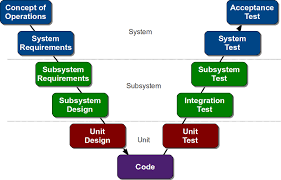
- V-SHAPED LIFE CYCL
- the V-Shaped life cycle model provides a sequential path of discrete phases that must each be completed before development proceeds to the next phase
- Advantages of the V-Shaped model
- is relatively simple and easy to use.
- is appropriate for small development projects in which requirements are well understood
- is relatively simple and easy to use.
- Disadvantages of the V-Shaped model
- The rigidity of the V-Shaped model makes it inappropriate for most projects
- all requirements must be stated at the beginning of the project,
- All software development occurs in a single phase
- the V-Shaped model is inappropriate for complex projects.
- All software development occurs in a single phase
- all requirements must be stated at the beginning of the project,
- The rigidity of the V-Shaped model makes it inappropriate for most projects
- Requirements-gathering
Imágenes y archivos del mapa
Información
- Descripción
- Mapa Mental sobre Software Development Life Cycle, creado por Julio Cesar Rios Lopez el 07/03/2017.
- Creado por
- Julio Cesar Rios Lopez
- Visitas
- 3
- Valoración