
Apuntes
Notes for exam
Contenido del apunte (1)
Página 1
Assets and Liabilities
A balance sheet is simply
a statement of what the company owns (its assets) and what the company owes out
(its liabilities). As we will see, the amount of assets will always be the same
as the amount of liabilities. Imagine a set of scales; if we write assets on
one side and liabilities on the other, because they both add up to the same
amount, the scales will ‘balance’.
Capital-Wealth in the form of money or
property, used or accumulated in a business by a person, partnership, or
corporation.
Creditor-Someone/a company you pay money back at a later date also known
as a payable.
Debtor-Someone who owes you money-Receivable
Points to
Note
1. It is important to keep the figures in neat
columns – directly under the £ signs.
2. Individual figures are put under the first £
sign (for both assets and liabilities). One line is drawn under the list and
the total is put, one line down, under the second £ sign.
3. The totals under the second £ sign are then
added. Two lines are drawn under the final figures.
4. The balance sheet should still balance!
Liabilities
We can split up the liabilities in the same way as we
split up the assets. There are two types of liabilities:
Current Liabilities – this is what we owe now but will not owe in
12 months. Examples are creditors (who will want their money in the next month
or so) and a bank overdraft or loan.
Long-Term Liabilities – this is what we owe now and will still owe
in 12 months and probably for longer. Examples are capital (as the owner
invested the money for many years) and a mortgage
(long-term loan on premises).
Assets
We have seen that ‘assets’ are what the business owns.
These can be split up according to how long we intend to keep them. There are
two types of assets:
Current Assets – this is what we own now but will not own in 12 months as they constantly change.
Examples are stock, debtors, bank and cash. Yes, we will have stock in 12
months but it won’t be the same stock. We will also have cash in 12 months but
it won’t be the same notes and coins.
Fixed Assets – this is what we own now and will still have next year and probably for longer.
Examples are premises, equipment, fixtures and fittings (furniture), and a van.
Budget: Forward finantual plan
Budgetry control: Moniter the figures of your budget.
Cash flow: Money coming in or out of the buissness
Cash flow forecast: To predict how much you have
Why make a flash flow forecast? To solve problems you might have.
For a minus figure, USE BRACKETS
Increace revenue
Get a cheaper supplier or arange a deal with your current supplier.
Advertising will increace sales but will cost money.
Increace prices but people might not buy. Reduce price people might buy them
Statement of finantual position or balence sheet tells you assets and liabilities
Working captal is the amount of money that i have to run said buisness.
Current assets-current liabilities
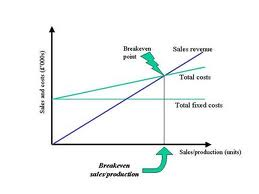
Break even is where you don't make a profit or a loss

19th November