
Introduction to Accounting
605 resources created by 548 users
This Introduction to Accounting page on GoConqr gathers community-made quizzes, mind maps, flashcards and notes, from the accounting equation and bookkeeping basics to financial statements and break-even analysis. It's built for university students and professional candidates, school students, and teachers after ready-made material, all practising key terms, double entry and the building blocks of the accounts. There are over 500 resources here, including more than 60 quizzes and over 290 mind maps. Try a quiz to find your gaps, then make your own revision sets.
Select topic
- Purpose and Users of Accounting26
- History of Accounting27
- Types of Accounting24
- Accounting Careers10
- Accounting Terminology58
- Accounting Concepts and Principles45
- The Accounting Equation84
- Assets, Liabilities and Equity21
- Types and Classification of Accounts10
- Double-Entry Bookkeeping and Debits and Credits15
- Accounting Cycle and Recording Transactions12
- Financial Statements19
- Break-Even Analysis9
Top Introduction to Accounting resources
-
55 questionsAccounting - Unit 1: Grade 11 Review Debt refers to
-
46 cardsAS AQA Accounting Unit 1 - FLASH CARDS What are Cheques used for, and where are they recorded?
-
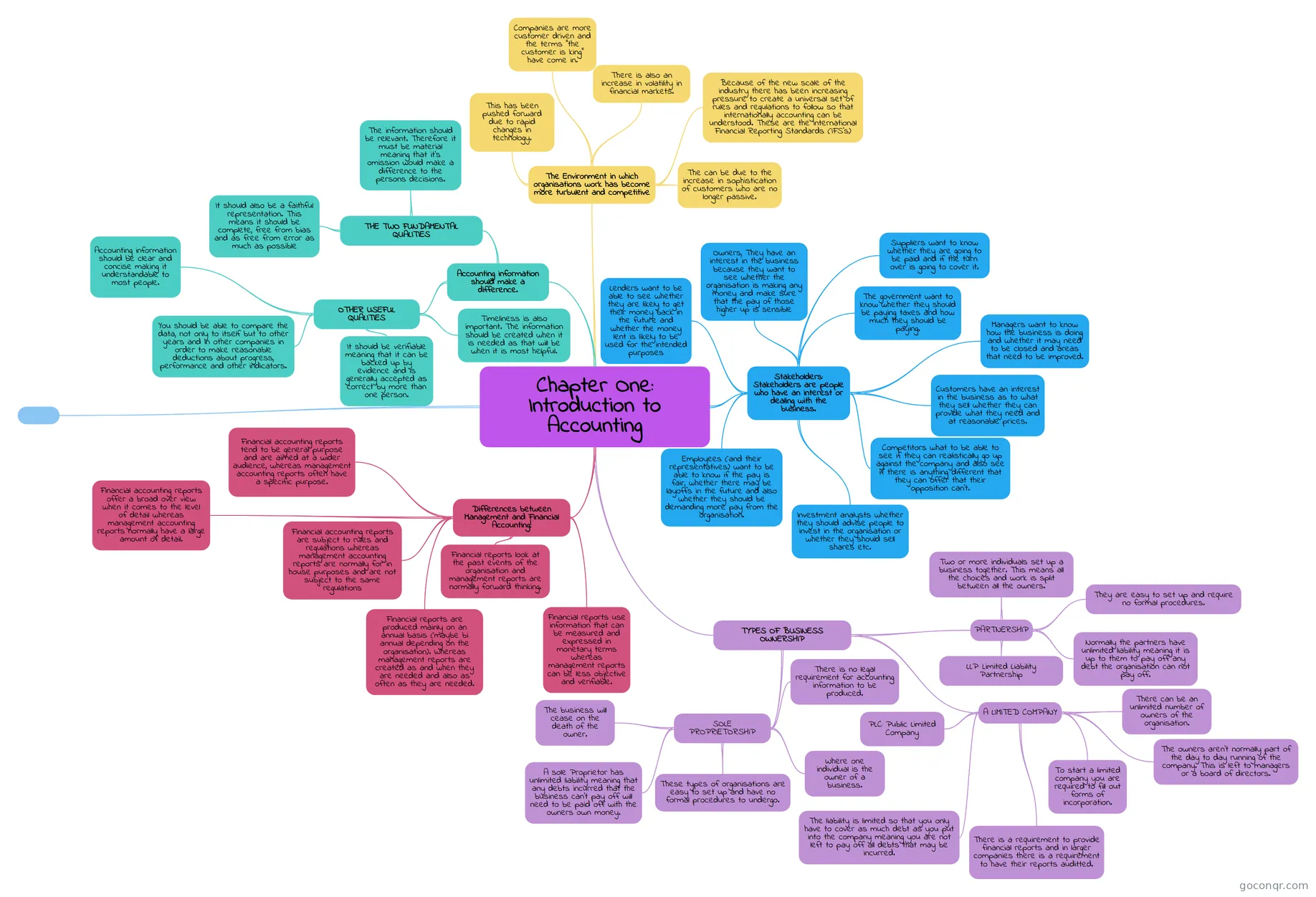 Mind map Chapter One: Introduction to Accounting Accounting and Finance: An Introduction Chapter One Notes.
-
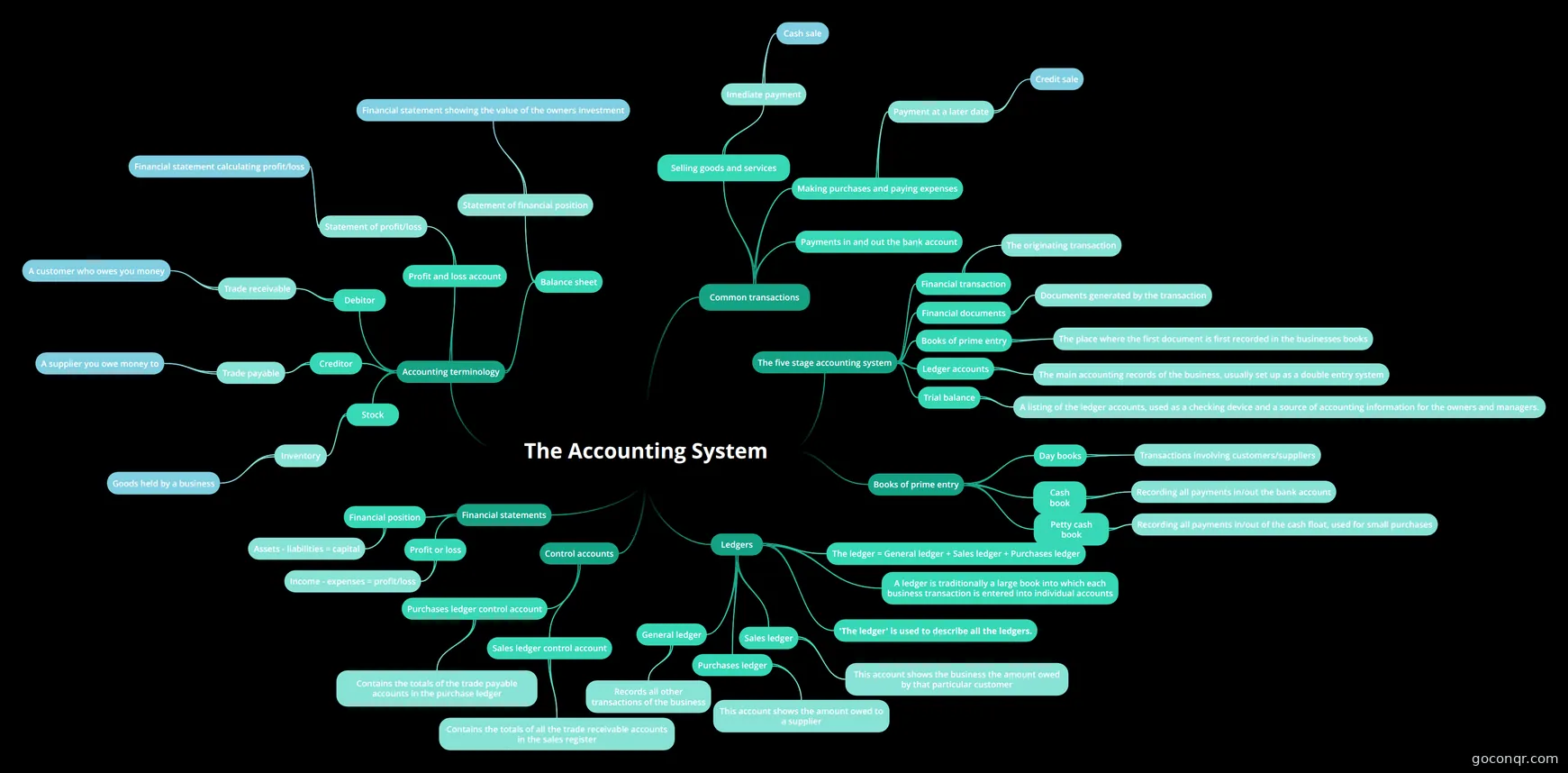 Mind map The Accounting System Chapter 1
-
12 cardsBookkeeping Basics Definition of Accounting
-
20 questionsIntroduction to Accounting Your reading material mentions the use of a paper-printing calculator mainly as
-
18 cardsAccounting Vocab Chapter 1 Accounting Vocab Chapter 1 College Level Accounting Course
-
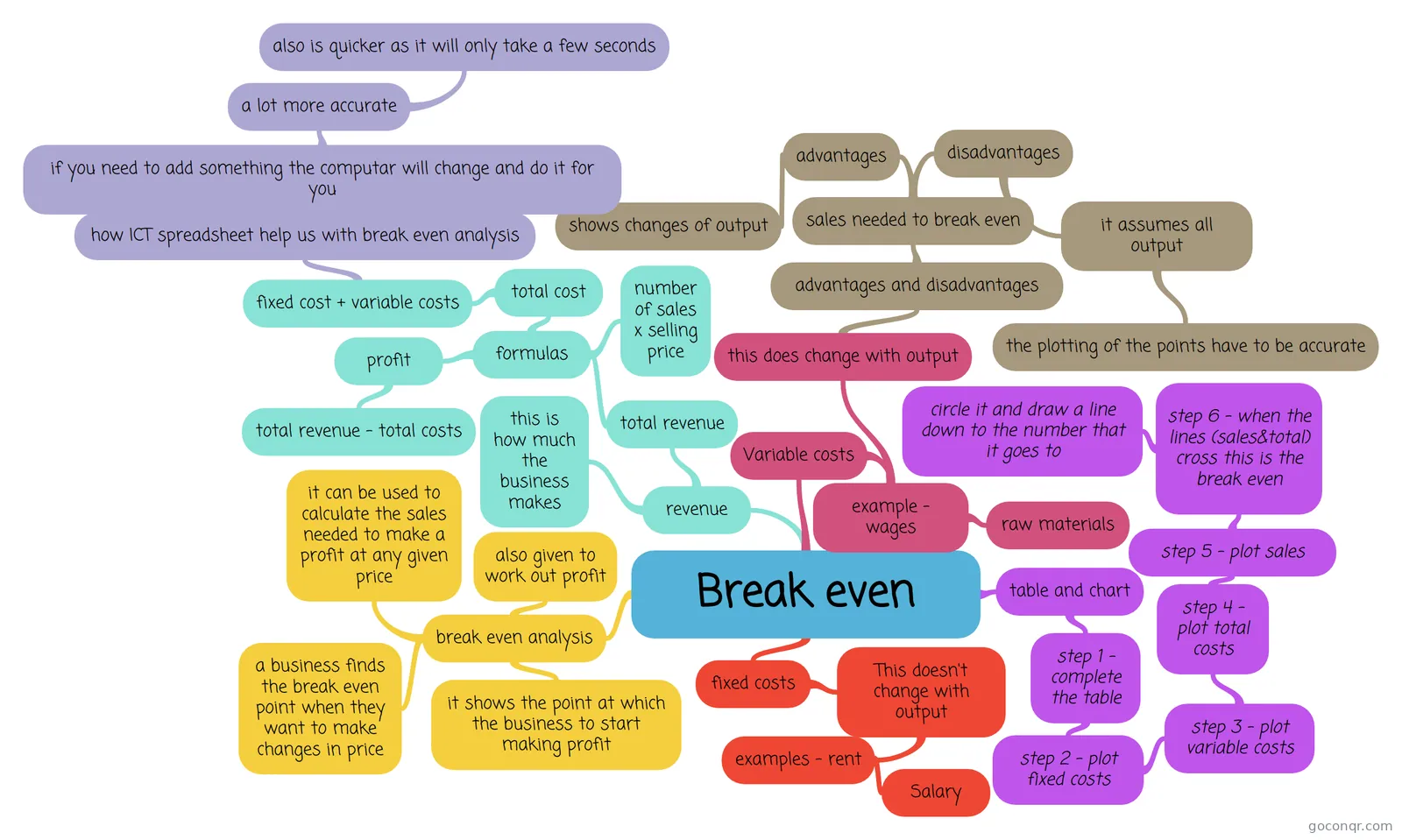 Mind map Break even
Quizzes
See all 78 quizzes-
55 questionsAccounting - Unit 1: Grade 11 Review Debt refers to
-
20 questionsIntroduction to Accounting Your reading material mentions the use of a paper-printing calculator mainly as
-
71 questionsFinancial Accounting Fundamentals Chapter 1-4 What is the accounting equation?
-
34 questionsAccounting I - UNIT 1 Fundamentals This is the objective 1 practice accounting test.
-
100 questionsChapter 1 multiple choice (first 100 questions---146) Which of the following is the primary purpose of accounting?
-
32 questionsModule 1 - Accounting & Society Tim is the audit engagement partner of a large client. The audit team consists of 2 managers and 7 junior s...
-
114 questionsAccounting An Introduction The main objectives of book – keeping are
-
107 questionsAccounting Which of the following is not included in current assets?
Mind maps
See all 326 mind maps-
Chapter One: Introduction to Accounting Accounting and Finance: An Introduction Chapter One Notes.
-
The Accounting System Chapter 1
-
Break even
-
The Accounting Equation Accounting and Finnance
-
The Accounting Equation I smash
-
1.1
-
Chapter One: Introduction to Accounting Accounting and Finance: An Introduction Chapter One Notes.
-
CH 30 - Accounting Fundamentals
Flashcards
See all 153 flashcards-
46 cardsAS AQA Accounting Unit 1 - FLASH CARDS What are Cheques used for, and where are they recorded?
-
12 cardsBookkeeping Basics Definition of Accounting
-
18 cardsAccounting Vocab Chapter 1 Accounting Vocab Chapter 1 College Level Accounting Course
-
38 cardsAccounting Definitions What is Accounting?
-
36 cardsAccounting chapters 1-2 What are the 3 types of business?
-
33 cardsAccounting flashcards
-
104 cardsThe Context of Management Accounting - Flashcards (10%) Name two disadvantages of Business Process Outsourcing.
-
160 cardsAccounting term 1 What are the 4 types of financial accounts?
Flowcharts
See all 10 flowcharts
Notes
See all 30 notes-
Untitled uACCOUNTING AND THE BUSINESS ENVIRONMENT uUniversity of the Philippines VISAYAS TACLOBAN COLLEGE uDivision of management uBA 99.1 Fundamentals of Accounting Theory and Practice I uLEARNING OBJECTIVES: 1.Understand the...
-
Lectures Lecture 1. Intro Learning outcomes: Branches of accounting Main user groups of accounting information Types of business organisations Financial objectives of a business 1) What sort of financial informatio...
-
Chapter One INTRODUCTION TO ACCOUNTING AND BUSINESS ACCOUNTING IS PART OF DAILY LIFE Budgeting - The process of receiving money, planning, and allocating it according to ones' needs. Revenues - Income generated from normal busine...
-
CHAPTER 1: BOOK-KEEPING AND ACCOUNTING. Definition of Accounting Accounting can be defined as a process of reporting, recording, interpreting, and summarising economic data. The introduction of accounting helps the decision-makers of a company to make effec...
-
Work effectively in accouning and finance Chapter 1,2,3 Chapter 1 Summary Finance - involves providing and managing funds and resources for an organisation such as a business, whereas accounting is a system for recording, analysing and reporting financial transactions...
-
Work effectively in accounting and finance Chapter 3,4,5 Estimation – using a common sense approach to calculation by seeing if the answer produced seems ‘reasonable’ Percentage – ‘per cent’ means ‘out of every hundred,’ so a percentage is the top number of a fraction where...
-
The nature and role of Accounting in business 1.1 The nature and role of Accounting in business Business is not just about making and selling; it is about managing - managing people, managing inventory, managing customers and suppliers and, last but not le...
-
Notes for exam Assets and Liabilities A balance sheet is simply a statement of what the company owns (its assets) and what the company owes out (its liabilities). As we will see, the amount of assets will always be the same as the a...
Slides
Topics in Introduction to Accounting
More Accounting and auditing topics
About Introduction to Accounting
GoConqr OriginalWhat the unit covers
This page lists material for the first steps in accounting. The mind map The Accounting Equation sets out assets, liabilities and expenses with everyday examples such as a car, a laptop or a house, and what debtors owe you. Other maps look at users of accounting information, the three types of financial statements, and the difference between management and financial accounting.
Where to start
Begin with vocabulary. The flashcard deck Bookkeeping Basics defines accounting, an account, a transaction, assets, liabilities, owner's equity and the accounting equation. Accounting Vocab Chapter 1 adds terms such as GAAP, creditor and economic entity. Then move to The Accounting System, a mind map that follows common transactions: selling goods and services, making purchases, paying expenses, bank payments, and credit sales against immediate payment.
Using quizzes and maps together
Read a map first, then test yourself. The quiz Accounting - Unit 1: Grade 11 Review asks what debt refers to, which item is not an asset, what all assets have in common and how owner's equity is described in a proprietorship. If a question trips you up, go back to the matching map branch and read it again.
- Skim a mind map for the overall picture.
- Run through a flashcard deck for the terms.
- Take a quiz and note what you missed.
- Return to the map for those gaps.
For cash handling, the deck AS AQA Accounting Unit 1 - FLASH CARDS asks what cheques, receipts and direct debits are and where each is recorded. Candidates working towards AAT will find a deck called WEAF - AAT2.
Going a little further
Several maps on break-even analysis cover fixed costs, variable costs and the point where a business neither gains nor loses. There are also notes, slide sets and a few flowcharts, including one on the history of accounting, if you prefer to read.
Where it sits
This unit belongs to the Accounting Foundations strand of Accounting and auditing. Choose one resource that matches what you are studying today, and see how far it takes you.
Frequently asked questions
Which resource should I open first?
Start with the Bookkeeping Basics flashcard deck, which defines accounts, transactions, assets, liabilities, owner's equity and the accounting equation. Once the terms feel familiar, open the mind map The Accounting System to see how common transactions flow, then test yourself with a quiz.
What do the mind maps cover?
They cover the accounting equation, the accounting system and its common transactions, users of accounting information, the three types of financial statements, and double entry. A good number also deal with break-even analysis, including fixed and variable costs. Some compare management and financial accounting.
Do I need an account to use these resources?
No. Every resource listed here is free to open, study and take without an account. If you want your quiz scores saved, or want to make your own quizzes, mind maps, flashcards and notes, you can sign up for a free account.
Who made these resources, and which levels do they suit?
They were made by GoConqr users, not by GoConqr itself. Most suit university students and professional candidates, with a good share for school students. Teachers can use them as ready-made material. One flashcard deck is labelled for AAT.
What kinds of quiz are here?
There are more than 60 quizzes. Some are short reviews of assets, liabilities and owner's equity, others follow whole chapters, and one covers introductions to accounts and double entry. Pick one that matches your course, then compare your answers with the related maps.
What if I can't find the topic I need?
Try a nearby resource first, such as a map on the accounting equation or a vocabulary deck, since many topics overlap. If something is still missing, you can build your own quiz, mind map, flashcards or notes with a free account.