
Apuntes
Innate Knowledge

Contenido del apunte (1)
Página 1
Innate Ideas:
Rational thinkers believe that not all of our knowledge comes from experiences and that some of our concepts or knowledge is in-born, discoverable without reference to experience.
Innate ideas are to be found in all of us because of our nature as human beings, whereas our experiences may differ from person to person.
John Locke - the human mind is capable of acquiring knowledge and ideas exclusively from sense experience and the mind's ability to reflect
Instincts:
A baby knows how to suckle from its mother, it knows to cry when hurt etc.
We may not consider these ideas however it does seem to be true that the babies have some sort of practical knowledge.
One could argue that all knowledge is essentially knowledge of how to behave.
God:
Descartes believed that the idea of God was planted in our minds by God himself, as we could not achieve the idea of perfection through experience.
Morality:
G.E. Moore - moral ideas are known intuitively as they cannot be equated with anything from our sense experience - we cannot see 'good' and it is indefinable.
Moral terms are self-evident and can only be known by what Moore calls intuition.
Numbers:
Plato argued our concepts of numbers are innate because we have no sense experiences of numbers.
E.g. the number two - we may have encounters with couples, pairs etc. but what we are experiencing is 'two-ness' and never the real thing.
Descartes concluded that geometric shapes are conceived by the intellect as we can easily imagine a shape with 1000 sides.
Beauty: Plato argues that we have to have the concept of beauty in order to recognise it. However if the concept of beauty was not innate we would not have recognised beauty the first time we saw it. How then could we ever hope to learn what beauty was from experience?
Reason as a source of knowledge about the world:
Reason alone, independently of the senses, can generate knowledge about the world.
This is most clearly seen in mathematics, which we use to describe fundamental truths about the world.
Another example is colour. If we are told that something is blue we know that it cannot also be yellow. Therefore we have gained knowledge of the world through reason alone.
Analytic Truths (tautological truths)
Propositions that are true because of the meaning of the terms alone
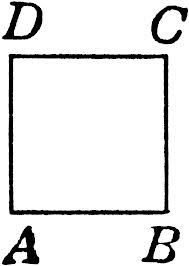
e.g. a square has four sides
I do not need to take a survey of every square in order to believe this
To suggest otherwise would be a contradiction
Synthetic Truths
Cannot be verified simply by definition and can be denied without contradiction
e.g. John, a bachelor, is miserable
Just because he is a bachelor does not mean he is miserable
Necessary Truths
Propositions that are true in all possible worlds
The opposite is impossible
e.g. 2+2=4
Contingent Truths
Propositions that we could imagine being false in another world.
e.g. Tony Blair was prime minister in 1999
An empiricist may claim that all we can know from a prior knowledge is analytic and necessary truths.

Induction and deduction
In deductive reasoning if the premises are true the conclusion must be true
e.g. If I know that Bob is taller than Neil and I know that Neil is taller than Tom then I can work out through reason alone that Bob is taller than Tom
If we accept the reasons we cannot deny the conclusion.
However - since deductive validity is only a matter of the relationship between the reasons and the conclusions the argument need not have reasons or a conclusion that are actually true.
The conclusion does not tell me anything that was not implicitly in the premises.
Cannot tell us anything new.
Inductive reasoning is based on the idea that unobserved cases are likely to resemble observed cases
Generalising from evidence. The reasons go some way to support the conclusion but cannot demonstrate that it is true.
e.g. My apples have ripened so I can conclude that my friend's apples have also ripened.


For the empiricist the fact we are having sense impressions seems certain.
We cannot be absolutely certain about what is causing these impressions
I can be certain that I am having a tea-drinking experience but i cannot be certain that what I am drinking is tea.
Therefore the certainty of empirical knowledge is limited to introspection
'cogito ergo sum' and other transcendental arguments
The statement defeats doubt in that it shows that by if i do not exist it would be impossible to doubt my own existence
Other transcendental arguments include:
Language exists
You are aware you are having experiences
You hold beliefs
You can doubt various things
Your reasoning ability is reliable
Knowledge is possible
Descartes' Evil Demon
Descartes claimed that we cannot be certain of any sense experiences because we cannot be certain that an evil demon is creating the world we think exists as a massive illusion to trick us.
Some philosophers argue that the possibility we are being so radically deceived is empty.
As, in principle, we could never catch the demon out, there is no effective difference between real life and the deceived life.
If there is no way to draw the difference then there isn't really any difference to draw.
The mind is not a tabula rasa, it is partially formed and has a structure or architecture that enables it to make sense of the raw sense data it receives.
In order to process sense impressions into ideas some from of classification or conceptual scheme is necessary.
According to William James such an undifferentiated stream of sensations would be a 'blooming, buzzing confusion'
Therefore the human mind must have some scheme in order for any information received to be classed as experience.
Consider the analogy of the office storage system. Without a system of organisation the constant stream of documents, files and letters would not be understandable, within a couple weeks it would be impossible to link documents or look back to old ones. This is clearly not how the mind works as we relate ideas, look back at old ideas and collect our ideas into categories.



Immanuel Kant: 'thoughts without content are empty: intuitions without concepts are blind'
Having a concept in place is a precondition of any experience.
Kant's a priori concepts:
Categories of quantity: Unity, Plurality, Totality
Categories of quality: Reality, Negation, Limitation
Categories of relation: Substance and Accident, Causality and Dependence, Community or Interaction
Categories of modality: Possibility-Impossibility, Existence-Non-existence, Necessity-Contingence.
Example of the Concept of Unity: the world is scientifically a huge mass of energy constantly shifting and changing. However we perceive an ordered world. We are able to distinguish a table from what is on the table, we have the idea that there are discrete entities separate from other entities. Without the concept of unity our experiences of the world would be unintelligible.

In addition to these categories, Kant argues we posses two features that are required to have an experience.
Space is the form of our outer impressions, whilst out inner experiences (feelings/emotions) are non-spatial.
Time is the form that all impressions, both inner and outer, are bound by.

Kant's Copernican Revolution:
What you perceive, the world around you, has been structured by your mind.
The mind must categorise and structure data in order for an intelligible experience to occur.
There is the world itself - the noumenal world - and there is the world we experience - the phenomenal world.
Kant's synthetic a priori:
Hume's Law - that analytic truths are knowable a priori whereas synthetic truths can only be know a posteriori.
Kant wanted to show that a priori synthetic knowledge is possible.
Kant claimed that we could know a priori that every event has a cause. This is not a tautology as it is not in the meaning of the word 'event' that there must be a cause.
Kant argued that we could know this a priori by analysing experience and working out must be the case in order for us to enjoy the type of experience that we do. If such an analysis can unearth transcendental conditions that might tell us something substantive about the world as we conceive it: it would establish certain synthetic a priori truths.
Analogy of a black and white TV - you don't know what picture you will see when you turn on the TV but you are sure that the image will be black and white as this is the way the TV has structure the experience.


Criticisms of Kant:
Obscure and hard to follow.
Disagreement about the categories - Schopenhauer argued we only need substance and causation.
It is difficult for Kant to argue about anything beyond what might be the case in his own mind.
Can Kant's a priori knowledge apply to the real world?
We can never perceive the noumenal world and so the categories themselves, as far as we know, only apply to the world as we perceive it - the world of causes and substances etc.
It is tempting to think that the objects in the noumenal world cause our sensations however the concept of cause only applies to the world of sense experience - it is only within our experience that we observe one event causing another. We can not suppose that the real, raw world exhibits causal relations at all.
Kant would argue his conceptual schemes apply to 'the real world' because the real world is the phenomenal world - it is the only one that we can inhabit and speak meaningfully of.
Innate Ideas
Truths
Certainty
Conceptual Schemes
Copernican Revolution
Información
- Descripción
- A-Level (Reason and Experience) Philosophy Apunte sobre Innate Knowledge, creado por lucy-hook el 10/04/2013.
- Creado por
- lucy-hook
- Visitas
- 1.897
- Etiquetas
- Valoración