
Apuntes
Topic 3b: digestive system
Contenido del apunte (9)
Página 1
Function: extraction of nutrients from food via mechanical and chemical digestion and elimination of waste.
Carbohydrates, proteins, and fats are the primary components of diet that require digestion
Structure: the GI tract is a series of modified tubes that's sequesters food and digestive enzymes from the rest of the body.
Sequestration is necessary to prevent digestion of self-tissues, as well as to prevent spread of infectious organisms, especially as the digestive system is open.
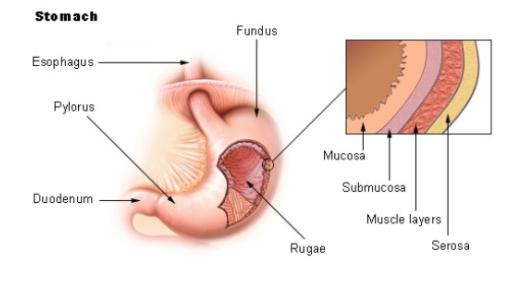
4 tissue layers:
mucosa layer: mucous membrane that comes in contact with food, serves as a lubricant, provides protection from desiccation, abrasion, and digestive enzymes. Lacks blood vessels and nerve endings
submucosa layer: contains blood vessels, lymphatic vessels, and nerve endings. Supports the mucosa and transports materials to the bloodstream.
muscularis layer: composed of two layers of smooth muscle that run in opposing directions. The nerve endings in the submucosa stimulate these muscles to produce peristalsis (contractions to propel food through the system).
Serosa: thin connective tissue layer found on the surface of digestive tubing, reduces friction with other surfaces in contact with the GI tract.
Página 2
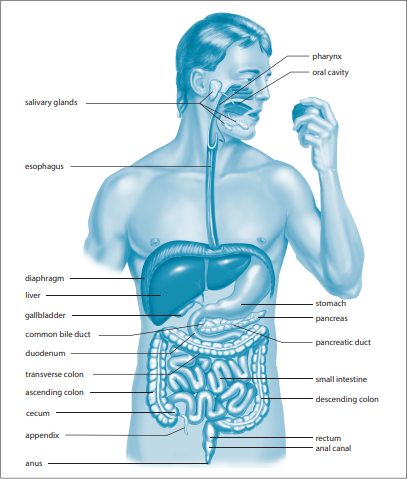
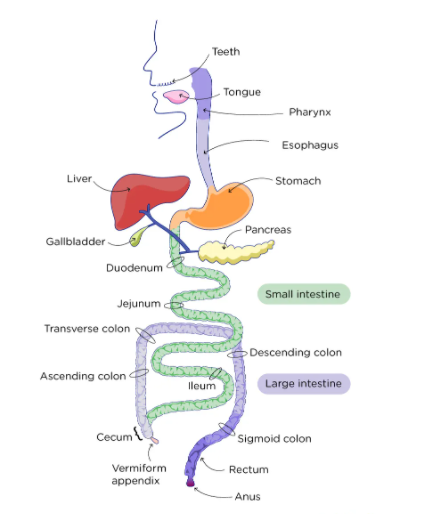
pathway of food through the digestive tract: Oral cavity--> pharynx --> esophagus--> stomach--> small intestine--> large intestine
Oral cavity: salivary glands begin to secrete saliva as food enters the mouth. The teeth begin mastication (mechanical digestion) by breaking food into smaller pieces with chewing. Enzymatic digestion also begins as saliva mixes with the chewed food. Food is rolled into a bolus by the tongue so it is ready to be swallowed.
Saliva contains amylase (digestive enzyme), lysozymes (kill pathogens in the bolus), and it also lubricates food.
Esophagus: bolus of food passes the pharynx as it is swallowed. Reflex action pushes the epiglottis over to cover the glottis of the larynx when food touches the pharynx. As the bolus proceeds down, peristalsis forces the food towards the stomach
Página 3
Stomach: a relatively small, curved organ connected to the esophagus; Bolus from the esophagus comes here and is digested chemically and mechanically
Unique because it has a very acidic environment from its secretions (pH 1.5 and 2.5).
functions of acidic environment: transformation of zymogens to active form, toxic to many pathogens, reduces iron from ferric Fe 3+ form to ferrous Fe 2+ form so it can be absorbed in the duodenum
Sphincters at the top and the bottom keep its secretions within the stomach.
Cardiac sphincter (at the junction of the esophagus and the stomach) opens to allow bolus to enter the stomach. AKA lower esophageal sphincter
this is why it's called heartburn, because when stomach acid regurgitates back up this sphincter, one experiences burning in the chest area near the heart
under autonomic control, food is propelled via peristalsis after entering the esophagus
pyloric sphincter: at the junction of stomach and small intestine controlling entry of chyme
inner wall has rugae (folds) that allow significant expansion when it is full of food.
Chemical digestion via gastric juice and mechanical digestion via churning using smooth muscle
gastric juice: food mixes with the juice for liquification, as well as initiation of chemical digestion of proteins.
Gastrin, a hormone produced by G cells, stimulates parietal cells to release HCl
somatostatin: a hormone produced by D cells that prevents gastric acid secretion, negative feedback mechanism, inhibits release of histamine which keeps HCl from being secreted
contains
mucus: protects the stomach lining from autodigestion; secreted by goblet cells lubricates walls of stomach aids movement of chyme into small intestine
pepsinogen--> a zymogen that is converted to active form pepsin via HCl: breaks down proteins, produced by chief cells
lipase: gastric enzyme that digests fats/lipids
hydrochloric acid: secreted by parietal cells, converts pepsinogen to pepsin
histamine: released by enterochromaffin-like cells (ECL cells are neuroendocrine cells), also stimulates release of HCl from parietal cells
intrinsic factor: also produced by parietal cells, binds to Vitamin B12 to be absorbed in ileum, important because Vitamin B deficiencies are problems in many metabolic disorders and in anemia
Chyme: liquid mixture of food and gastric juice, exits the stomach in small bursts through the pyloric sphincter.
It takes an average of four hours for the stomach to empty its contents into the small intestine.
Alcohol and aspirin are unique substances in that they are absorbed into the blood stream directly from the stomach.
Página 4
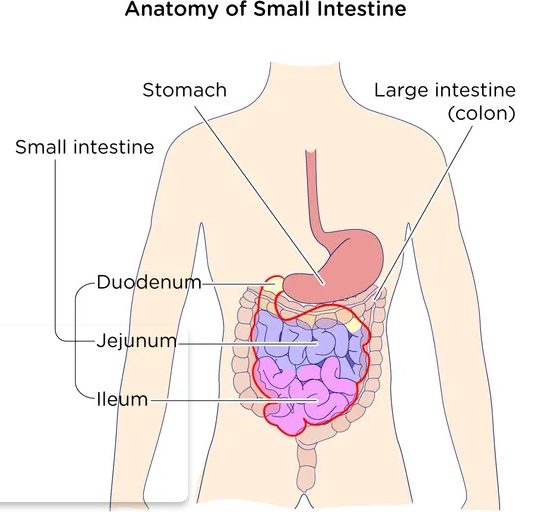
Small intestine: a tube approximately 6 meters in length, completes chemical digestion of food and absorbs nutrients into the bloodstream.
3 sections:
duodenum: 1st one, shortest part, most chemical digestion using enzymes takes place here
secretin released from here in response to influx of chyme. Secretin stimulates acinar cells of pancreas to produce and secrete bicarbonate to neutralize acidic chyme entering from stomach
cholecystokinin: hormone made by I cells in the duodenum secreted to stimulate gallbladder contractions and release bile, typically within minutes of eating
absorbs iron
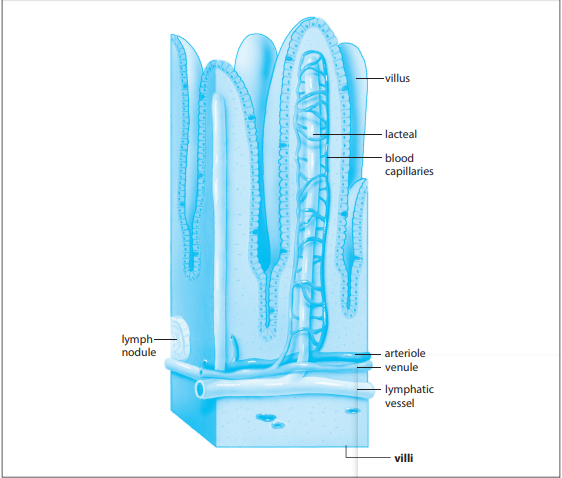
jejunum: middle section, has a mucous membrane (lining) covered in villi that increases surface area for absorption (of carbs and proteins, nutrients)
absorbs calcium
ileum: last section, absorbs Vitamin B12 (complexed to intrinsic factor), bile salts, ascorbic acid, and any leftover nutrients
ileocolic sphincter connects small and large intestines
Absorption of nutrients: can take 3-10 hours bring nutrients to be absorbed from the small intestine.
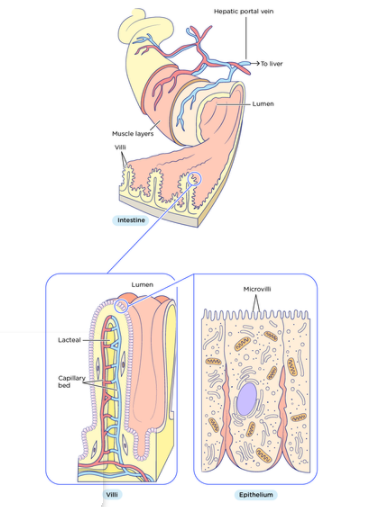
The small intestine is designed for a large surface area for absorption.
The mucosa are folded into villi to form the brush border. The villi are then further folded into microscopic microvilli.
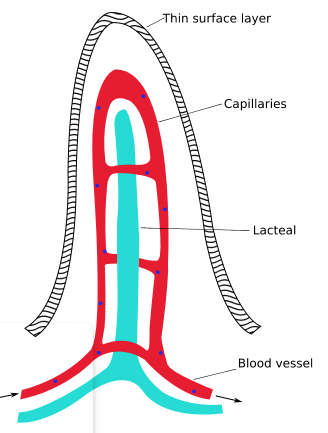
Each villus contains capillaries and a lacteal (lymphatic capillary). Nutrients diffuse into the capillaries within each villus.
small intestine absorbs nutrients (glucose/other simple sugars, amino acids, vitamins, and minerals) and water
Products of fat digestion are assembled into a triglyceride and packaged into chylomicrons.
Chylomicrons are not able to diffuse into capillaries, so they enter the lacteals. The lymphatic fluids deliver the chylomicrons to the bloodstream at the thoracic duct.
incomplete fat absorption blocks normal water absorption, leading to diarrhea
Relies on secretions from the gallbladder and pancreas to function.
Chyme first enters the duodenum. The acidity of gastric juice must be neutralized, which is achieved by the secretion of pancreatic juice into the duodenum.
Gallbladder secretions (bile) enter the jejunum and and the ileum
pancreatic enzymes are the most essential to chemical digestion, however some enzymes made by the small intestine are also necessary
maltase (breaks down maltose to glucose)
sucrose (breaks down sucrose to glucose and fructose)
lactose (breaks down lactose to glucose and galactose)
aminopeptidase (breaks down small pieces of proteins to amino acids).
Página 5
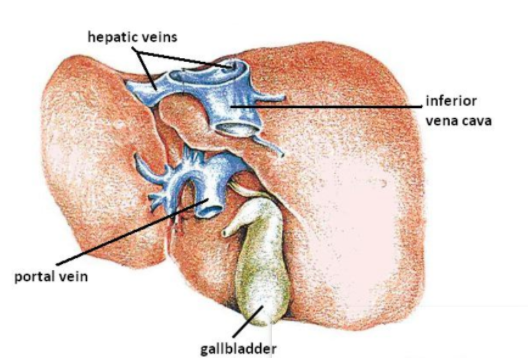
Liver: composed of several lobes of tissue, one of the larger organs in the body. Has numerous functions.
Part of its digestive role is the production of bile (fat emulsifier)
Liver is an accessory organ in the digestive system--> does not contain food
Made of hepatocytes
contain large amounts of rough ER and free ribosomes
these are needed for the liver's role in detoxification, and role in synthesis (including cholesterol) and packaging of lipids in lipoproteins for travel throughout the body.
detoxification: removes ammonia from the blood, metabolizes alcohol and some drugs (acetaminophen for example) and toxins
Role in glycogenesis and gluconeogenesis: After nutrients are absorbed in the small intestine, blood (from the capillaries in the small intestine) travels directly to the liver via the hepatic portal vein. The glucose levels of this blood will be regulated once it is in the liver.
The liver, under the influence of insulin, stores excess glucose from the blood as glycogen.
Under the influence of glucagon, the liver will breakdown glycogen to release glucose if the glucose level of the blood entering the liver is low.
The liver also stores fat soluble vitamins (A, E, D, and K). Blood reenters general circulation after the functions of the liver are completed.
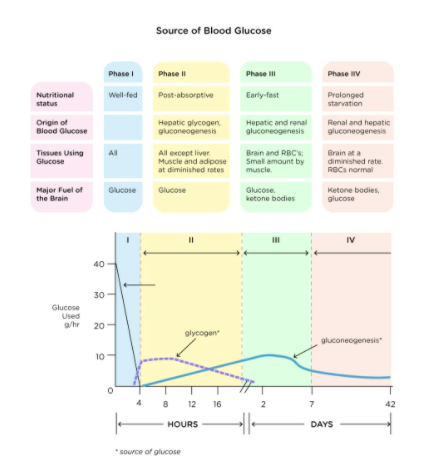
Liver metabolism occurs in 3 phases in the hepatocytes:
oxidation
exogenous (like drugs) and endogenous (like bilirubin) molecules are oxidized by cytochrome P450 to make these metabolites more soluble in the urine for excretion
conjugation
the addition of functional groups via transferases (like acetyltransferases, methyltransferases, glucuronosyltransferases) to reactive metabolites from phase I which makes the metabolites more hydrophilic for excretion into urine or bile
transportation
transport of larger, modified molecules into bile for excretion via ATP and vesicle packaging
Página 6
Gallbladder: small structure on the underside of the liver that stores bile. Hormones secretin and cholecystokinin (CCK) signal the release of bile to the small intestine via the common bile duct.
Bile:
Bile helps break fats into smaller pieces so they are more susceptible to digestion by enzymes secreted from the pancreas.
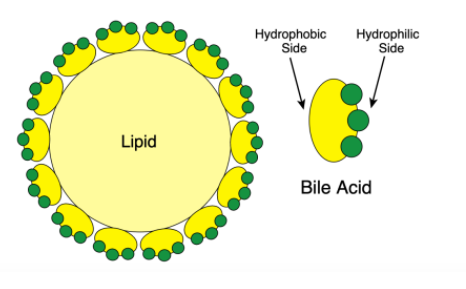
in the small intestine, when bile salts are exposed to water mixed with fat, they congregate around a fat droplet with their hydrophobic side towards the fat, and hydrophilic ends out towards the water
It is made up of water, cholesterol (increases fluidity to keep fats from packing tightly together), bile pigments, amphipathic bile salts and phospholipids (help bile associate in hydrophilic small intestine environment), bilirubin (byproduct of liver metabolism that is present in bile and is later recycled to the liver after reabsorption by the ileum) and some ions.
bile is produced by the liver, stored by the gallbladder, and then secreted into the small intestine
Página 7
Pancreas: a gland that secretes pancreatic juice into the small intestine, accessory digestive organ (because it does not directly digest food)
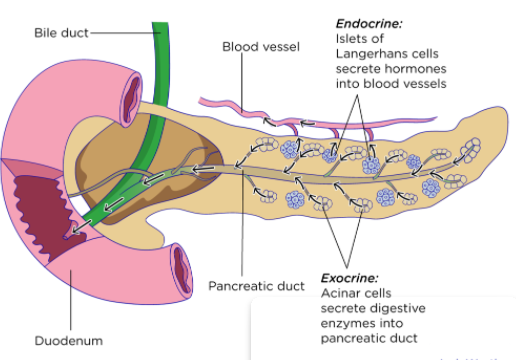
Has both exocrine (secretion of pancreatic juice into ducts) and endocrine (secretion of hormones insulin and glucagon into glands) functions.
Stimulated by secretin and CCK to release pancreatic juice when food enters the small intestine.
Pancreatic juice is made up of: a lot of enzymes and proteins
All pancreatic enzymes are secreted in zymogen form to prevent auto digestion of the cells in which they are produced
bicarbonate ions: neutralizes stomach acid
amylase: complete breakdown of starch to release glucose, made by acinar cells
proteinases: trypsin (made by acinar cells), chymotrypsin, and carboxypeptidase; complete protein digestion to release amino acids
trypsin activates all the other digestive enzymes, so if it is not present, there is little to no digestion. Trypsin is an active version of the zymogen trypsinogen
lipase: breaks down fats to fatty acids and glycerol
nuclease: breaks down nucleic acids to nucleotides
Pancreatic juice enters the small intestine the common bile duct
the common bile duct is formed by the pancreatic duct and the bile duct from the gallbladder merging together
Página 8
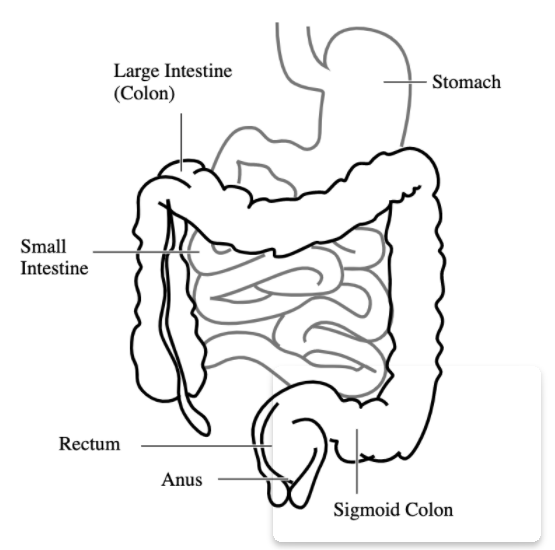
Large intestine: receives the remnants of digestion (mostly waste products and water) travel here after nutrients have been absorbed into the bloodstream. It resorbs water from the remnants, to solidify wastes. It stores waste products.
Large intestine contains a population of natural flora. The microbiota synthesizes some essential vitamins, and changes in the flora are linked to disease.
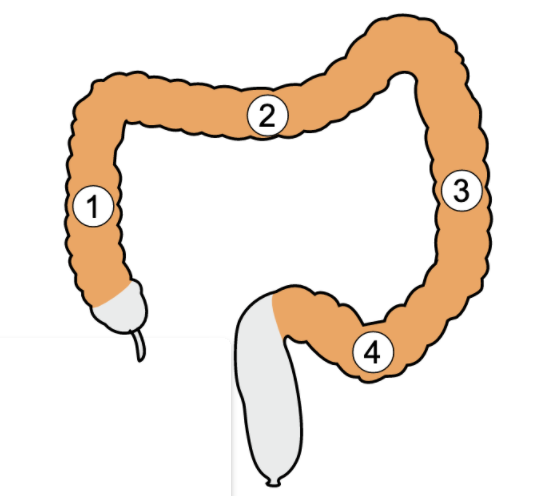
Larger in width, but shorter in length (1.5m) than small intestine. 4 regions:
Cecum: large intestine connects with small intestine on the R side of the body. Also encompasses the appendix.
Colon: the majority of the large intestine; ascending colon (1) moves up the R side, transverse colon (2) moves horizontally across the abdomen, the descending colon (3) runs down the L side of the body, ending with the sigmoid colon (4). Primary role is water absorption to solidify the feces
Rectum: the final destination of feces; the sigmoid colon connects to the rectum. Stores waste products. Feces propelled by peristaltic movements for defecation. The anal sphincter (at the junction of the rectum and anus) opens involuntarily to move the feces to the anus.
Anal canal: receives the contents of the rectum for elimination, two sphincters regulate exit. and the second external sphincter is under voluntary control.
Has invaginations as opposed to evaginations (villi) like the small intestine
Página 9
Muscular and Endocrine control:
peristalsis: involuntary movement of smooth muscle to progress food through the digestive tract
neurotransmitters involved are: ACh and Substance P (orad contraction) and nitric oxide (caudad relaxation)
sphincters: circular muscles
cardiac sphincter: at the junction of esophagus and stomach regulating movement of food from esophagus and stomach
pyloric sphincter: at junction between stomach and small intestine regulating movement of chyme
anal sphincter: at junction of rectum and anus regulating movement of feces into anus for defection
other sphincters control movement of bile from gallbladder, and movement of enzymatic secretions from pancreas
Hormones controlling digestive function:
gastrin: secreted by G cells in stomach in response to presence of proteins; stimulates release of HCl
somatostatin: stops release of HCl when the stomach has been emptied
controlled by negative feedback mechanism
secretin: stimulates the pancreas to produce alkaline bicarbonate solution and secrete to duodenum to neutralize the acidic chyme
cholecystokinin (CCK): stimulates pancreas to produce pancreatic juices and stimulates gallbladder to release bile into duodenum
gastric inhibitory peptide: secreted by small intestine to slow down peristaltic movements of intestine in response to presence of food high in lipids, because they take longer to be digested
Información
- Descripción
- Apunte sobre Topic 3b: digestive system, creado por 000 000 el 16/01/2022.
- Creado por
- 000 000
- Visitas
- 4
- Valoración