
Apuntes
Evolution - created from Mind Map
Contenido del apunte (1)
Página 1
Evidence
Speciation
Mechanisms
The cumulation of changes in the heritable characteristics of a population
Fossil Records
Selective Breeding
Structures
Patterns of Variation
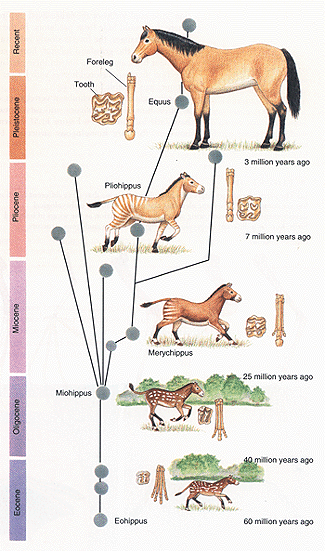
Sequence of changing fossils from layers of rock strata
Carbon dating (radioisotopes)
Phylogenic tree can be made
(-) Gaps in records
e.g. Equus
fossils only form in environments that prevent decay
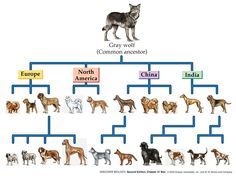
Breed differentiation has occurred in domesticated animals
(-) Human rather than natural selection
Evolution in short time-period
e.g. Dogs
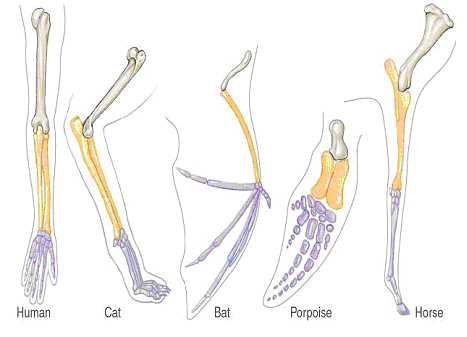
Homologous Structures (Divergent Evolution)
Analogous Structures (Convergent Evolution)
Similar structure, different function
Often formed similarly in embryo
e.g. Pentadactyl limb
Rudimentary/vestigial organs
same bones in similar positions "unity of type" - Darwin
“Adaptive radiation”
different purposes
i.e. radius and ulna attached to humerus
swimming, running, digging, jumping
e.g. human appendix, snake hip bones
Similar function, different origin
e.g. fish and whale tails
Continuous variation
Discrete variation
therefore, causes divergence
across geographical range
e.g. human skin colour
e.g. industrial melanism
Divergence in the gene pool of a population
Models
Causes
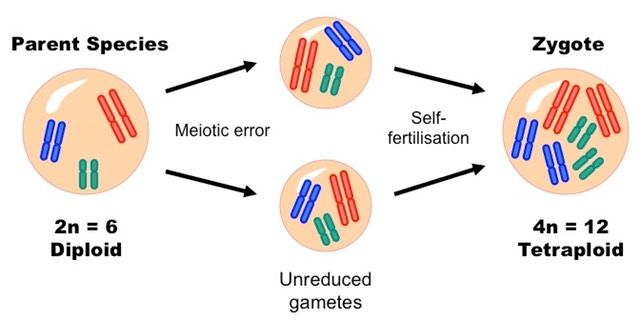
Polyploidy
can be confirmed if two diverged populations are merged and do not interbreed
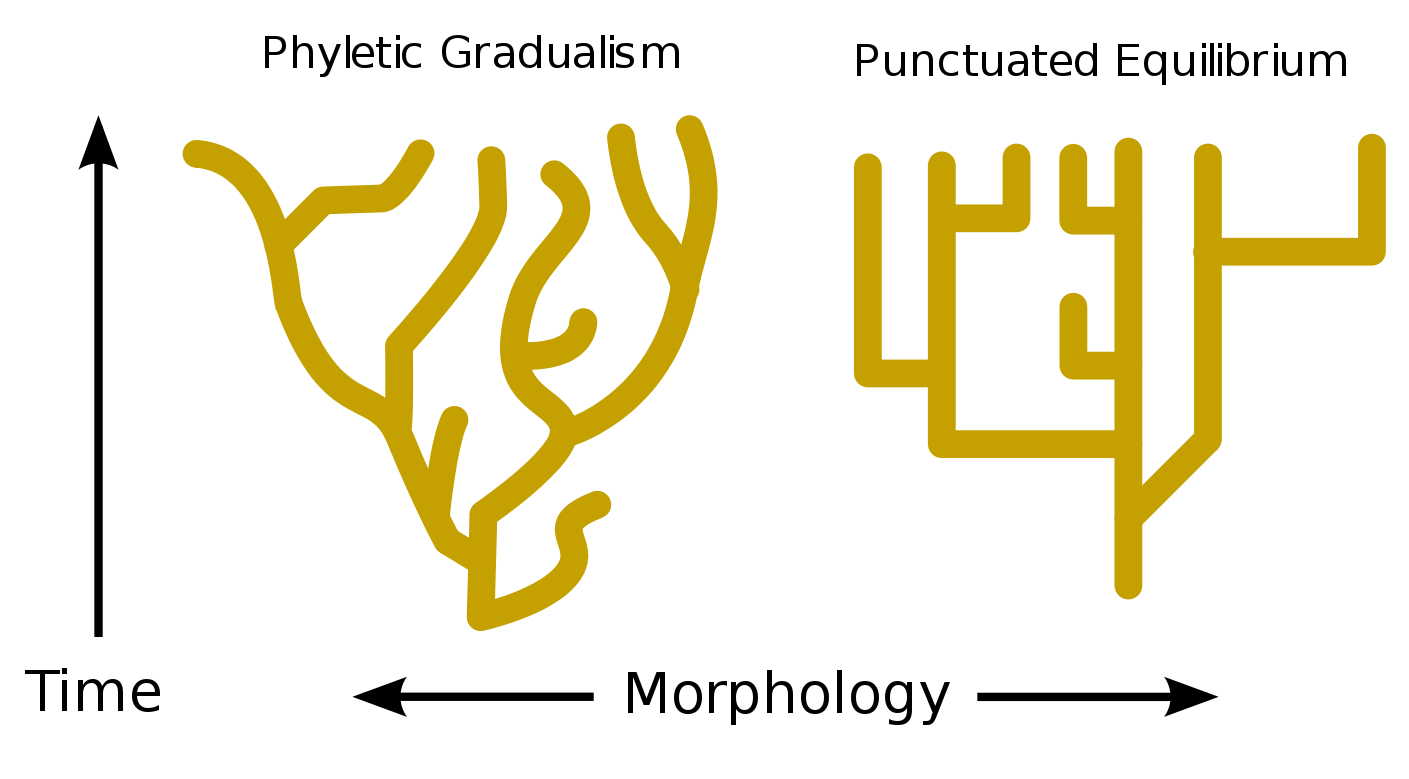
Phyletic Gradualism
Punctuated Equilibrium
e.g. Galapagos finches
many intermediate forms between species
long periods of relative stability (stasis) and then periods of rapid evolution
explains gaps in fossil records
incited by sudden environmental changes
Mass speciation event - natural disaster causes extinction and new species can erupt to take advantage of resources
Gradualism: Darwin observes Adaptive radiation
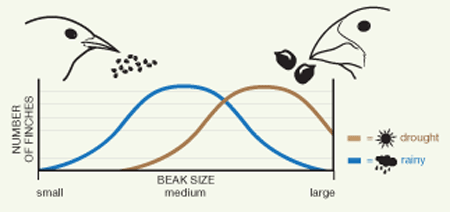
Punctuated Eq.: Peter and Rosemary Grant observed drought
in drought, bigger beaks survived
Directional natural selection
Change in allele frequencies in populations
Reproductive Isolation
Gene pools contain all the genes and the different alleles of a population
Theoretical: Hardy-Weinberg Equilibrium formula
Actual: ALFreD database
Genetic equilibrium - when all members of a population have an equal chance of contributing to the future gene pool i.e. same chance of reproduction
Heritability is the proportion of variation that is due to genes
Sympatric
Allopatric
Temporal
Behavioral
e.g. flowering at different time
e.g. mating displays change
Geographical
i.e. no interaction with other populations
esp. Endemic species
Causes
Organism that has more than two sets of homologous chromosomes
Effects
e.g. Red viscacha has 102 chromosomes, 4n=112 then shed some
Autopolyploidy
Allopolyploidy
single species, problem in meiosis
hybrid
diploid and haploid gamete fuse
organism not sterile since there will always be a chromosome to pair with if it mates with another polyploid or self-pollinates
Instant speciation when only polyploids can reproduce together
evolution for angiosperms that clone themselves
desirable crops can self-pollinate
e.g. Allium
Natural Selection
Genetic Drift
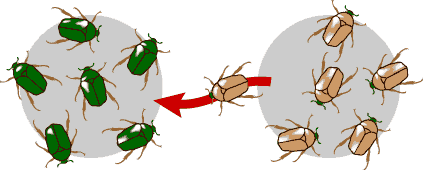
Genetic Flow
Selective Pressures
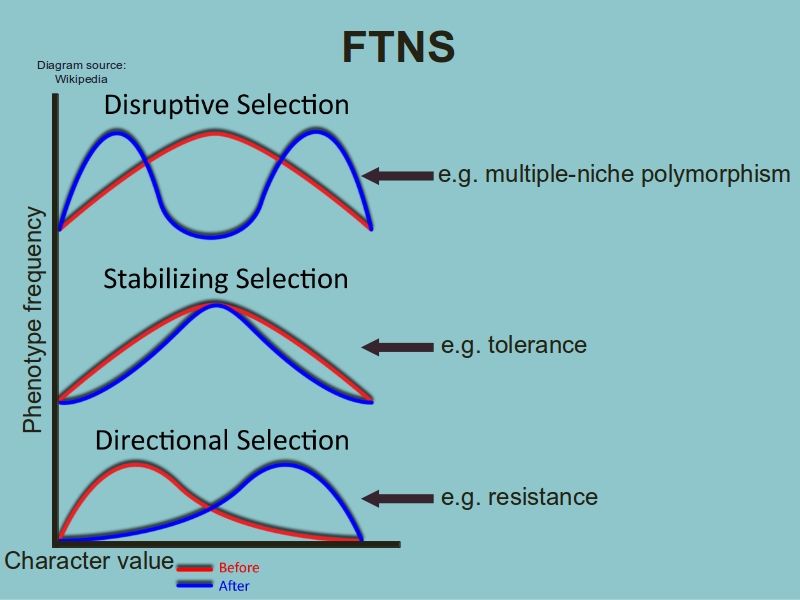
Patterns of Natural Selection
i.e. competition
Causes
Effects
Stabilizing selection
Directional selection
Disruptive selection
mean of the normal curve is preferred
e.g.. birth size of humans, # of eggs hatched
shift to one extreme due to a selective pressure or environmental resistance
e.g.peppered moths, beak sizes, antibiotic resistance
mutations occur that make the bacteria resistant to antibiotics
exchanging of plasmids
the mean is undesirable
tends to drive speciation most because offspring occupy divergent niches
e.g. Red crossbill, small or large fish
variation within a species
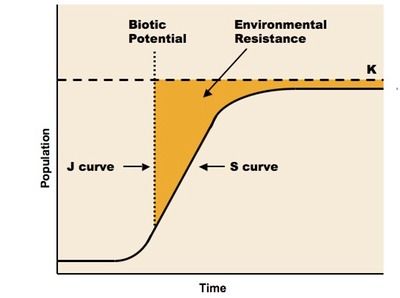
populations produce more offspring than an environment can support
Mutations
meiosis (independent assortment, crossing over)
sexual reproduction and random fertilization
plasmid transfer
environmental resistance
survival of the fittest
adaptation to make an individual more suited to its environment
Only animals that reproduce pass on their genes to offspring
Natural selection increases the frequencies of beneficial alleles
Organisms that reproduce more often evolve faster
occupies a niche
"progressive change"
i.e. geographical separation
i.e. migration of populations
i.e. extenuating factors
Información
- Descripción
- Apunte sobre Evolution - created from Mind Map, creado por horseluvrfurevr el 22/02/2016.
- Creado por
- horseluvrfurevr
- Visitas
- 0
- Historial
-
- Creado por horseluvrfurevr · 22 feb 2016
- Copiado a Apunte por horseluvrfurevr · 22 feb 2016
- Valoración