
Evolution and Natural Selection
442 resources created by 343 users
This Evolution and Natural Selection page on GoConqr gathers community-made quizzes, mind maps, flashcards and notes, from Darwin's theory and fossils to speciation, genetic drift and human evolution. It's built for school students revising a topic, university students and professional candidates filling gaps, and teachers after ready-made material. There are over 4,100 resources here, including more than 400 quizzes and over 2,100 mind maps, mostly at secondary level with a solid university share. Pick a topic, try a quiz to find your gaps, then build your own revision set.
Top Evolution and Natural Selection resources
-
192 cardsEvolution
-
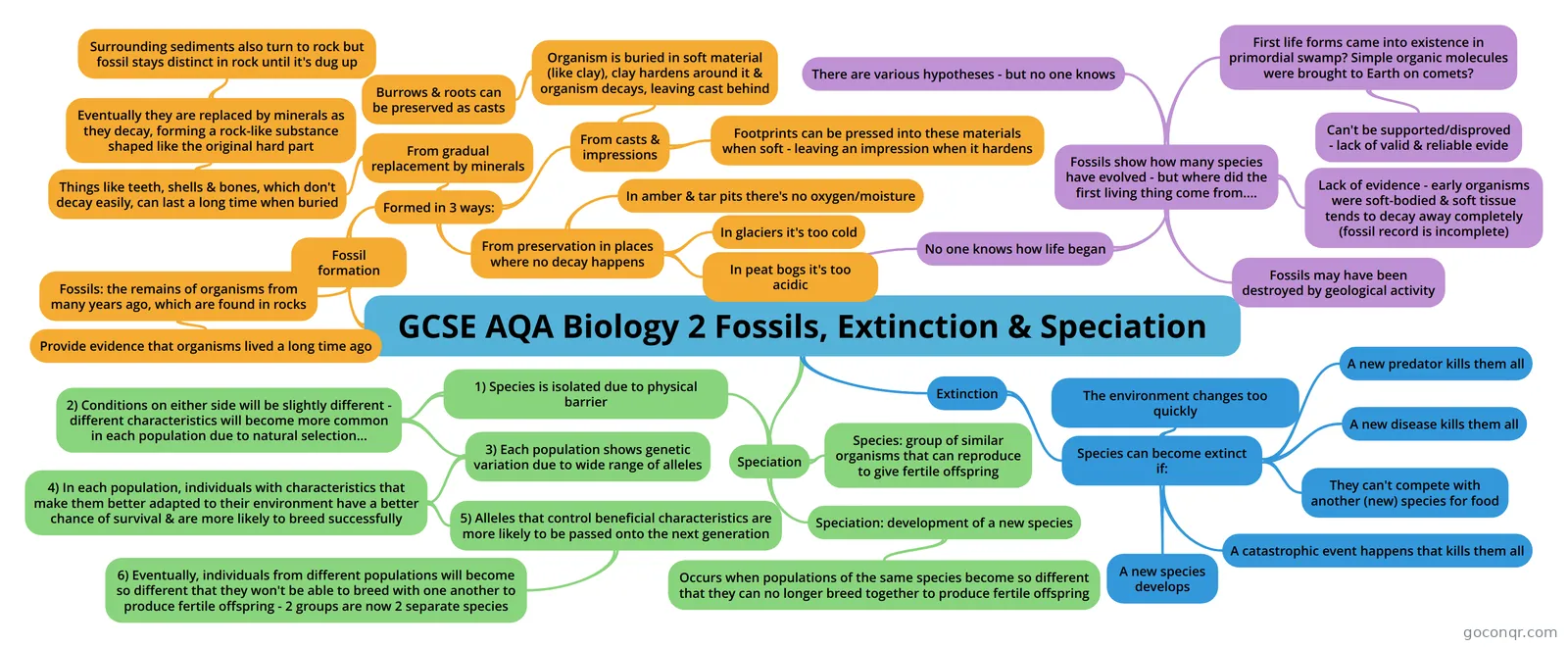 Mind map GCSE AQA Biology 2 Fossils, Extinction & Speciation A mind map showing information about the formation of fossils, why no one knows how life began, causes of e...
-
75 questionsEvolution Final Which idea is central to the biological species concept?
-
59 questionsTEST ISA Taxonomy is the science responsible for:
-
78 cardsGish Final Exam 2019 Flashcards Which phrase best describes evolution?
-
88 cardsBis 2B Midterm 2 increased atmospheric concentration facilitated the evolution of larger and more active animals
-
18 questionsBIOSCI101 Evolution - Lecture 5
-
63 cardsDino 101 Definitions Definitions from lecture 1 Dino 101 UAlberta
Quizzes
See all 80 quizzes-
75 questionsEvolution Final Which idea is central to the biological species concept?
-
59 questionsTEST ISA Taxonomy is the science responsible for:
-
18 questionsBIOSCI101 Evolution - Lecture 5
-
27 questionsBiology 189 Final Exam Practice The theory of natural selection states that:
-
13 questionsBIOSCI101 Evolution - Lecture 7
-
10 questions18.- Evolution ( http://www.sumanasinc.com/webcontent/animations/content/evolution/evolution.html ) THE BIG PICTURE- Comparative anatomy provides evidence
-
23 questionsWeek 2: Genetic Drift/ Inbreeding and Population/quantitative genetics What type of selection is graph one?
-
9 questionsFossils and evolution (edexcel) Fossils are the preserved traces or remains of organisms that lived millions of years ago
Mind maps
See all 159 mind maps-
GCSE AQA Biology 2 Fossils, Extinction & Speciation A mind map showing information about the formation of fossils, why no one knows how life began, causes of e...
-
Evidence for Evolution idk
-
Evolution ib biology 5.1,2
-
COADAPTATION & COEVOLUTION
-
Evolution
-
Natural Selection
-
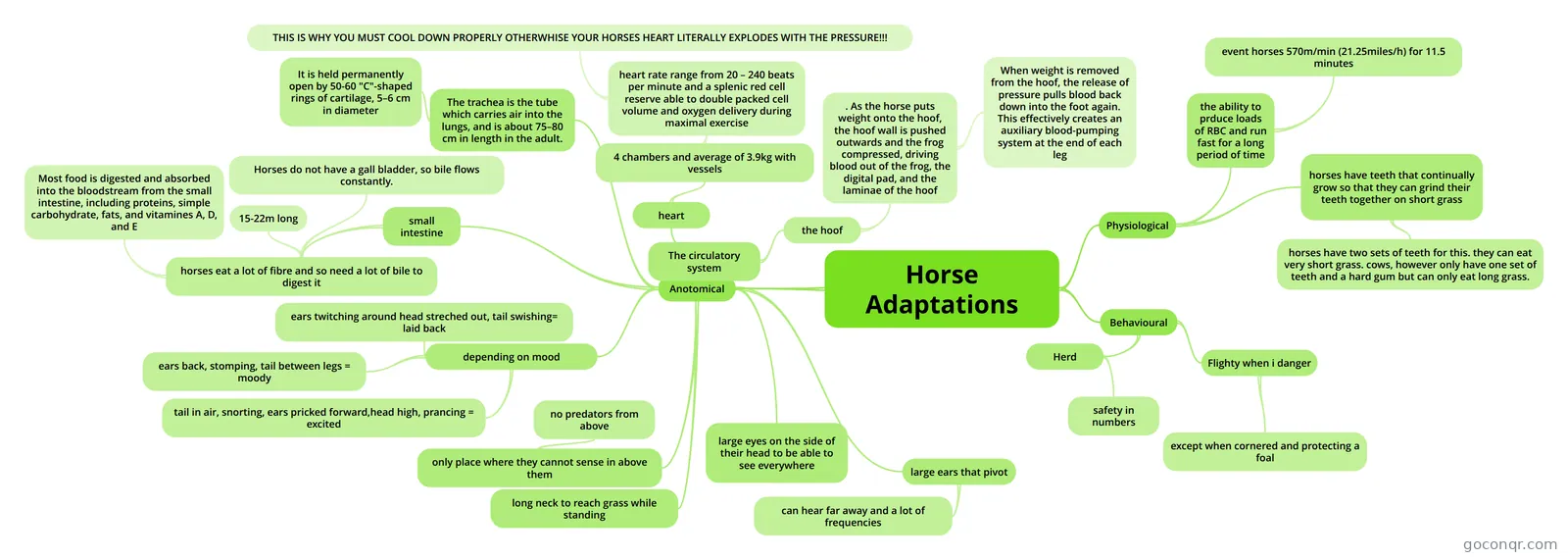 Horse Adaptations
-
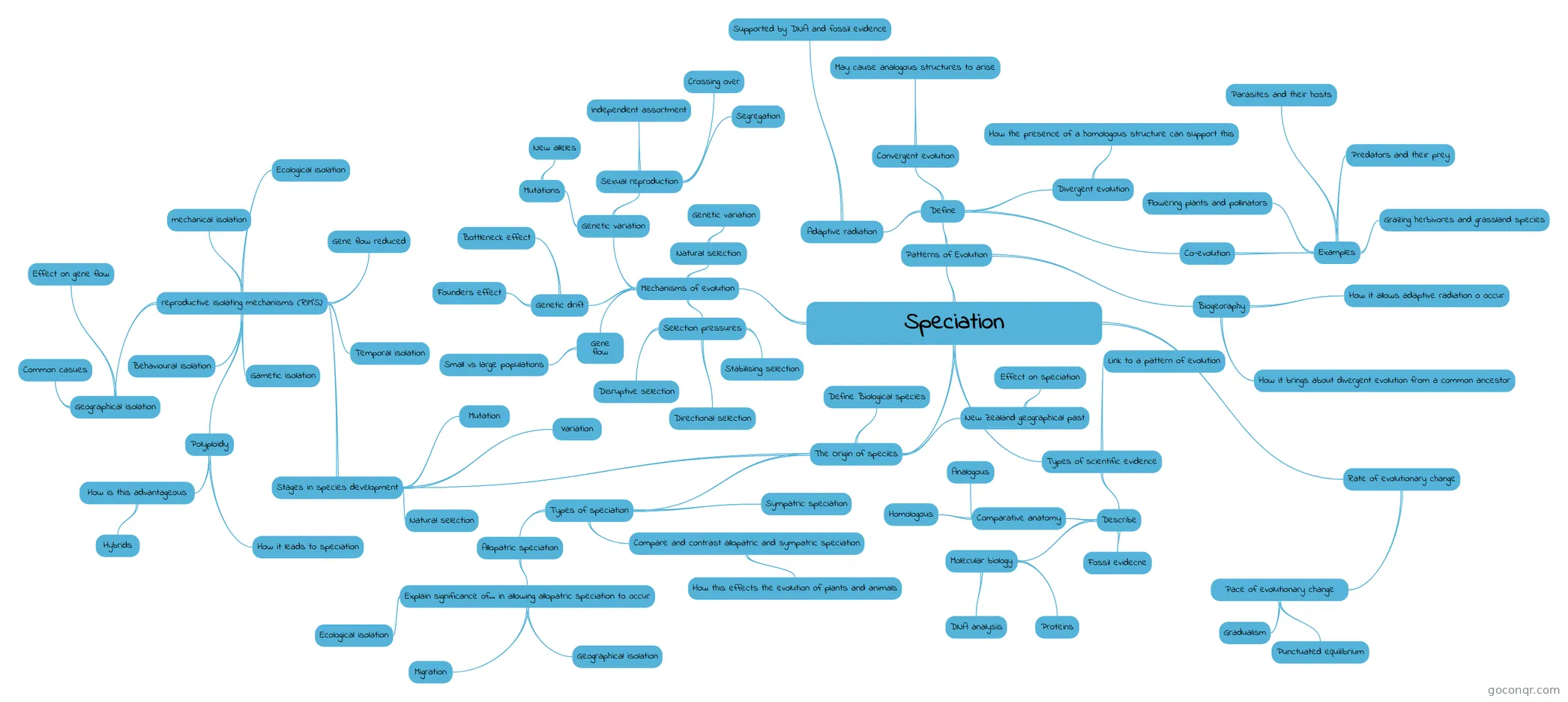 Speciation Mind map outlining the heading and subheadings needed to write out notes
Flashcards
See all 159 flashcards-
192 cardsEvolution
-
78 cardsGish Final Exam 2019 Flashcards Which phrase best describes evolution?
-
88 cardsBis 2B Midterm 2 increased atmospheric concentration facilitated the evolution of larger and more active animals
-
63 cardsDino 101 Definitions Definitions from lecture 1 Dino 101 UAlberta
-
41 cardsComparative Vertebrate Anatomy (Starfish, Frog, Chick) Flashcards for first 3 chaps of comparative anatomy.
-
16 cardsfatima hilal 4.1 science term1 [4.2] Q1: what does natural selection help humans explain?
-
20 cardsBug on Bug Mimicry: Who am I and Who am I Trying to be? A quick tangent/exercise on arthropod mimicry.
-
12 cardsEvolution What can be passed on or inherited by future generations?
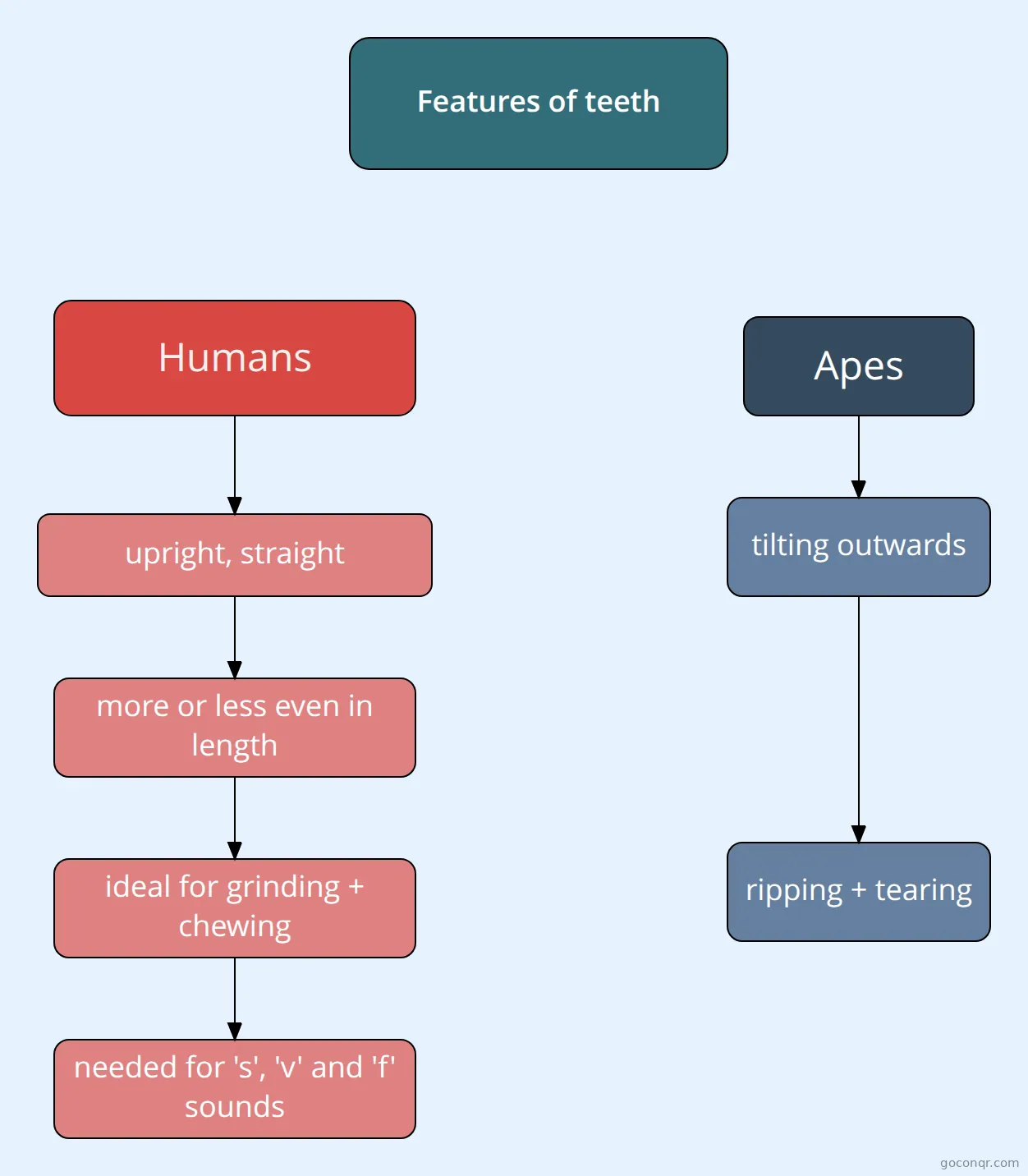
Flowcharts
Notes
See all 36 notes-
Evolution and Speciation TEST NOTES Patterns of Evolution: Divergent Evolution Convergent Evolution Co-Evolution Adaptive Radiation Punctuated Equilibrium Phyletic Gradualism Divergent Evolution: Ancestral species evolve into 2 or more species Be...
-
SciPad Answers (Pages 281-283, 292-296) Page 281 4. Use the diagram and previous answers to dicuss how changes in the diet, hunting/foraging behaviour and cliamte may have led to the obsebvable trends in cranial capacity. Changes in climate re...
-
Xerophites Xerophite adaptationsThick waxy cuticle- water can not pass through so easilyStomata sunk into pitsincreased humidity in stomatal guard cells pit decreases transpiration raterolled leavesincreased humidity and decreas...
-
Adaptations and Extremophiles Adapt and survive To survive and reproduce, organisms need a supply of resources from their surroundings and other organisms around them. Both plants and animals need different materials to survive. What do plants nee...
-
Genetic Change DARWIN'S THEORY OF NATURAL SELECTION General Points Populations can produce large numbers of offspring with inherited variation among them. Those with phenotypes best suited to the conditions of the environment are mo...
-
China, Southeast Asia, and the Pacific China, Southeast Asia and the PacificHomo erectus in Asia Indonesia- 1.7 mya? Or 800kya?china - 1.9-1.6myaVietnam- 500,000yaMade and used stone and possibly bamboo toolsLikely hunted scavengedAcheulian hand axes in Ar...
-
B1 Adaptations Animal adaptations: Polar bear:White coat- camouflage for hunting/predation.Black skin- absorbs sun's energy/heat energy- channeled by transparent hollow hair tubes from surface to skin surface.Large body ...
-
Topic 4-Natural selection and Genetic modification CB4: Natural selection and genetic modificationCB4a-Evidence for human evolution Evolution is the slow and continuous change of organisms from one generation to the next. Binomial species names are a species' genus na...
Slides
More Biology and natural sciences topics
About Evolution and Natural Selection
GoConqr OriginalWhat the resources cover
The unit follows the main ideas of evolution. The mind map on Darwin's theory of evolution breaks the theory into its parts, including natural selection, common descent and gradualism. Others look at evidence: the mind maps on fossils, extinction and speciation start from how fossils form and what they show about life long ago. The Human evolution mind map covers primates, hominids and the out of Africa idea.
Where to start
- Begin with a broad overview, such as the mind map called Evolution or the one on Darwin's theory.
- Move to the mind maps on speciation, including Speciation & Selection, which sets out allopatric speciation and geographical isolation.
- Use the flashcard deck Evolution to learn terms such as adaptive radiation, homologous structures, founder effect, bottleneck effect and genetic drift.
Using quizzes and maps together
Read a mind map first, then test yourself. The quiz Biology 189 Final Exam Practice asks what the theory of natural selection states and presents scenarios, such as deer and cheetahs, that need you to apply an idea rather than recite it. Wrong answers show which map to reopen. Exam-focused material includes GCSE, A-level, AP Biology and IB Biology resources, plus an MCAT mention, so you can look for your own course.
Where it sits
This unit belongs to the Genetics and Evolution strand of Biology and natural sciences. Related material on adaptations, genetic diversity and population genetics sits alongside the core evolution topics, so you can move between them as you revise.
Make it your own
Once you have found a few useful resources, open a blank mind map or flashcard set and rebuild a topic from memory. Teachers can pick ready-made items to set as starter or review tasks.
Frequently asked questions
Which resource should I start with?
Start with a broad mind map such as the one on Darwin's theory of evolution, which lays out natural selection and common descent. Then try the flashcard deck Evolution for key terms, and finish with the quiz Biology 189 Final Exam Practice to see what you remember.
What do the mind maps cover?
They cover Darwin's theory, speciation and its modes, fossils and extinction, adaptations, human evolution and evidence for evolution. Some follow specific courses, such as the mind map on AQA GCSE Biology evolution and the one on IB Biology evolution and classification.
Are the resources free to use?
Yes. Every resource listed here is free to open, study and take, with no account needed. They were made by GoConqr users, not by GoConqr itself, so styles and depth vary from one resource to the next.
Which levels and exams do they suit?
Most are at secondary level, with a good share for university students. Listed resources mention GCSE Biology, A-level Biology, AP Biology, IB Biology and MCAT, so check titles and excerpts to find one that matches your course.
What if I can't find my exact topic?
Try nearby titles, since topics such as adaptation, genetic drift, sexual selection and macroevolution each have their own resources. A free account also lets you make your own quiz, mind map, flashcards or notes to fill the gap.
Can teachers use these in lessons?
Yes. Teachers can open the mind maps, flashcard decks and quizzes as ready-made material, for example a speciation map for a starter or a quiz for review. Check each resource first, since community authors write them.