
PRESENT SIMPLE
Diapositivas del conjunto (7)
-
-
- 1. We use the Present Simple for:
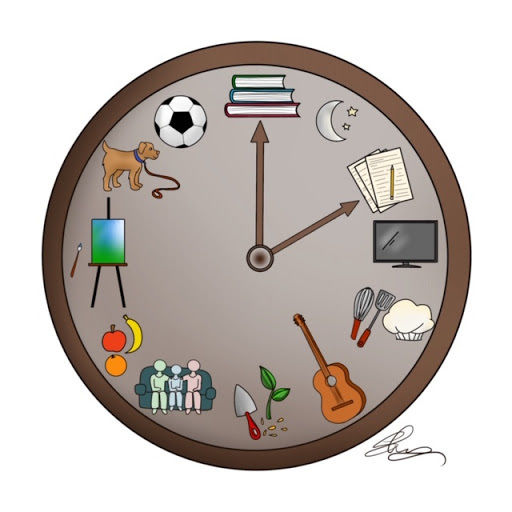
- Regular habits and daily routines.
- Facts, things in general.
- Permanent or long-lasting situationes
- Timetables and schedules.
- 2. It is used with adverbs like:
- Always
- Often
- Usually
- Sometimes
- Never
-
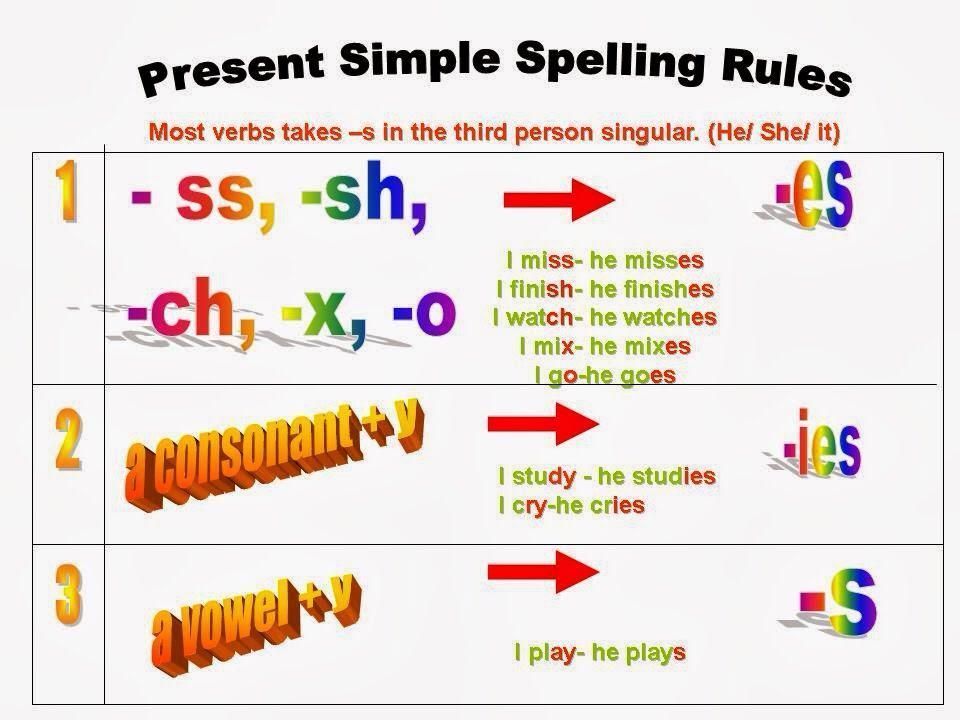
- 1. To form the Present Simple we add –s to the infinitive of the verb in the 3rd person singular (he, she, it)
- 2. But when the verb ends in:
- a) –o, -ss, -sh, -ch, we add –es
- b) a consonant followed by –y, the –y changes into –ie and we add -s
- c) a vowel followed by –y we just add -s

-
-
- To form the negative, use the auxiliary don’t (for I, you, we, they) and doesn’t (for he, she, it).
- Then follow the auxiliary with the infinitive form of the verb.
- For example:
- I don’t live here
- You don’t live here
- She doesn’t live here
- We don’t live here
- They don’t live here

-
- To form the question, use do / does as the auxiliary. Use do for I, you, we, they; and does for he, she, it.
- Here is the word order for questions in the present simple:
- Question word (optional) – auxiliary – subject – verb
- Where do you live?
- What does he do?
- What does this computer program do?
- Why do they argue all the time?
- Do you like tennis? (There is no question word “why”, “what”, “where” in this question, so the question starts with the auxiliary “do”.)


Información
- Descripción
- LEARN ABOUT SIMPLE PRESENT: AFFIRMATIVE-NEGATIVE-QUESTION
- Creado por
- Usuario eliminado · ene 2021
- Actualizado
- 12 ene 2021
- Visitas
- 19
- Etiquetas
- Historial
-
- Creado por Iskra Cabrera · 11 ene 2021
- Copiado por Iskra Cabrera · 12 ene 2021
- Valoración