
Apuntes
drug interactions
Contenido del apunte (1)
Página 1
Drug interactions
Therapeutic index of an interacting drug
cyclosporine – an immunosuppressant widely used to prevent organ transplant rejection,
digoxin – a sodium ⁄ potassium ATPase pump inhibitor which was among the first drugs to show effectiveness in the treatment of congestive heart failure
lithium carbonate – with diverse actions in the central nervous system and still a mainstay in the treatment of bipolar disorder,
methotrexate – a folic acid synthesis inhibitor used in the treatment of various cancers and more recently in slowing the joint destruction of rheumatoid arthritis,
phenytoin – a sodium channel blocker in the central nervous system with potent anticonvulsant activity,
theophylline- a phosphodiesterase inhibitor and adenosine receptor antagonist employed frequently in severe asthma, and
warfarin – an inhibitor of vitamin K-dependent clotting factors and the prototype
Pharmacokinetic mechanisms of drug interactions
absorption
Antifungal agent ketoconazole is more completely absorbed at highly acidic pHs, so antacids, histamine-2 receptor blockers (i.e. cimetidine and ranitidine), and proton pump inhibitors (i.e. omeprazole and esomeprazole) an significantly reduce the absorption and anti-fungal efficacy of this drug .
Systemic tetracycline and quinolone (i.e. ciprofloxacin) antibiotics to chelate drugs (i.e. antacids, vitamins, and iron a supplements) and foods (dairy products) that contain divalent and trivalent cations (i.e. Al3+, Bi2+, Ca2+, Fe2+, Mg2+, and Zn2+) resulting in the formation of poorly absorbed antibiotic–cation complexes and sub-therapeutic blood concentrations of the antibiotic
Drug displacement (protein-binding) interactions
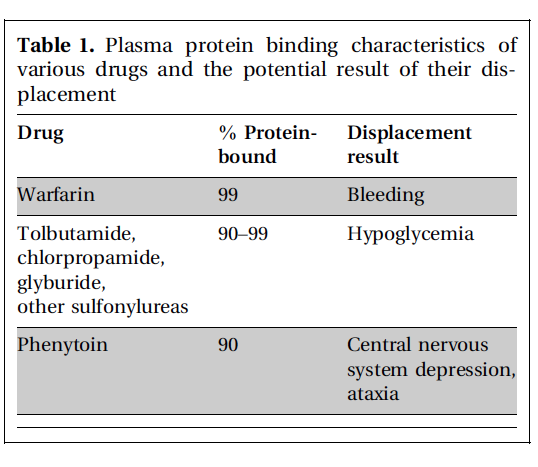
clinically significant interactions can occur when two highly protein-bound drugs (typically >90%) are given concomitantly andcompete for these sites. Potential displacer drugs employed in dentistry include the
non-steroidal anti-inflammatory drugs,
salicylates,
diazepam,
and chloral hydrate.
potential adverse drug interactions reported between warfarin and the nonsteroidal anti-inflammatory drugs ibuprofen or naproxen.A short analgesic course of ibuprofen or naproxen, which themselves are reported to be 99% protein-bound (46), could theoretically reduce warfarin protein binding ( which is 99%) to 97% minor change in warfarins equilibrium, it really represents three-fold increase in free blood levels of warfarin, greatly increasing the chance of a bleeding episode.
In the case of warfarin and non-steroidal anti-inflammatory drugs, an additive pharmacodynamic interactionwhere two drugs with distinct pharmacological mechanisms on clotting profile (an inhibition of vitamin K-dependent clotting factors for warfarin and an inhibition of cyclooxygenase-1 resulting in antiplatelet activity and a diminution of cytoprotection or non-steroidal anti-inflammatory drugs) are thought to be more important factors in the increased gastrointestinal bleeding risk posed by the combination
warfarin and phenytoin are highly protein bound and get displaced by common displacer drugs
Información
- Descripción
- Apunte sobre drug interactions, creado por Raman Deep el 15/07/2015.
- Creado por
- Raman Deep · jul 2015
- Actualizado
- 19 feb 2016
- Visitas
- 0
- Valoración