
Pharmacokinetics
432 resources created by 277 users
This Pharmacokinetics page on GoConqr gathers community-made quizzes, mind maps, flashcards and notes, from absorption, distribution and routes of administration to drug metabolism, clearance and half-life. It's built for university students revising a topic and teachers after ready-made material. There are over 400 resources here, including more than 60 quizzes, over 140 mind maps and more than 180 flashcards, shared by over 270 contributors. Pick a quiz to find your gaps, then open a map to fill them.
Top Pharmacokinetics resources
-
99 questionsPharmacology Exam 1 The study of what the drug does to the body is called what?
-
40 questions1807NRS Safe Administration of Medications 1 End of Trimester 2, 2017 Quiz
-
34 questionsTopic 2: Drug Administration - Tablet, injection, cream or patch? Label the image with the correct administration route
-
24 questionsIndependent and Supplementary Prescribing Choose the word or phrase from the list below that best completes this sentence. Cell membranes are compose...
-
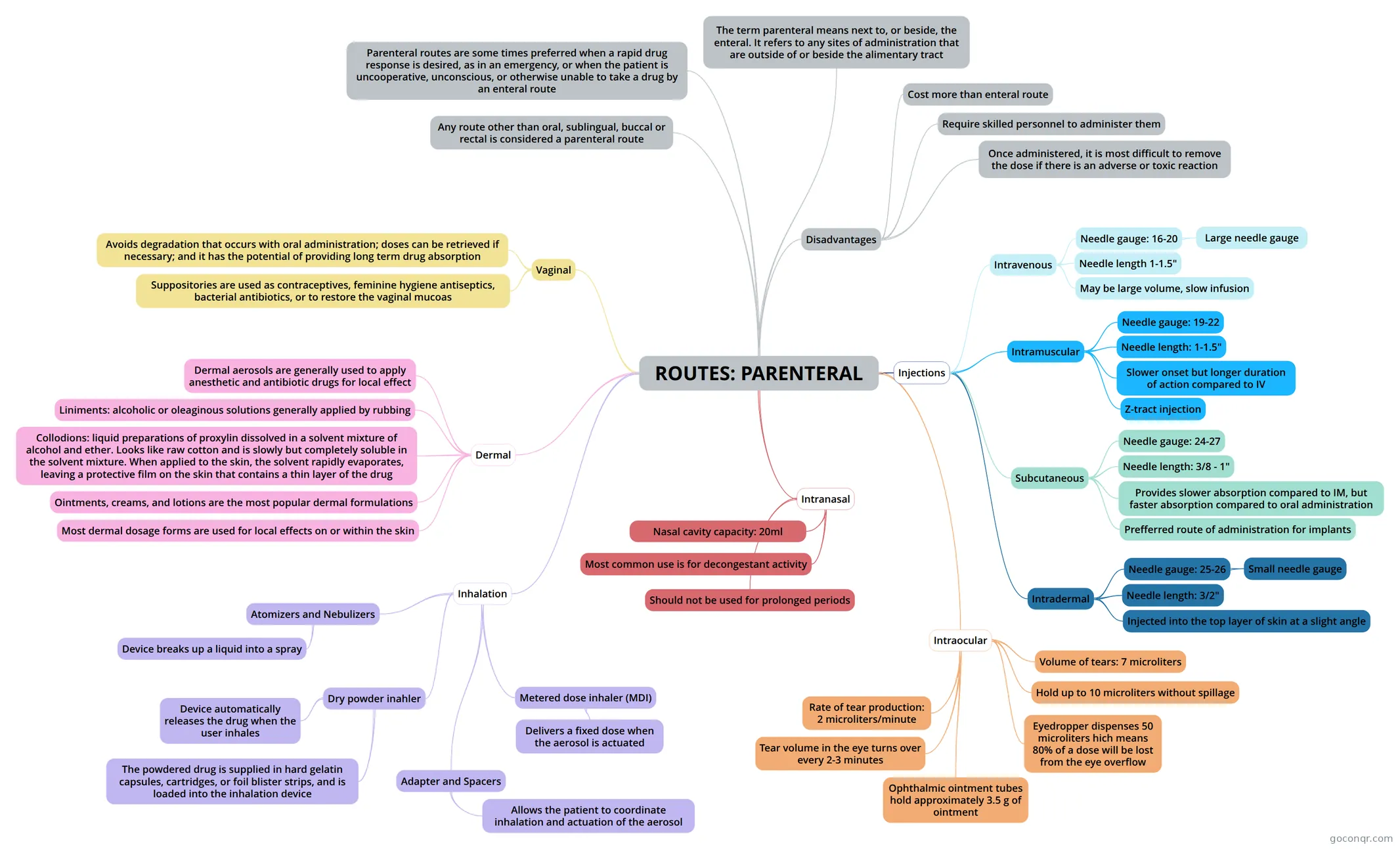 Mind map ROUTES: PARENTERAL parenteral routes
-
Mind map Pharmacokinetics
-
15 questionsDrug Delivery How is Gyceryl trinitrate administered to treat angina?
-
10 questionsDrug Interactions Cimetidine is what type of agent in the CYP syste?
Quizzes
See all 71 quizzes-
99 questionsPharmacology Exam 1 The study of what the drug does to the body is called what?
-
40 questions1807NRS Safe Administration of Medications 1 End of Trimester 2, 2017 Quiz
-
34 questionsTopic 2: Drug Administration - Tablet, injection, cream or patch? Label the image with the correct administration route
-
24 questionsIndependent and Supplementary Prescribing Choose the word or phrase from the list below that best completes this sentence. Cell membranes are compose...
-
15 questionsDrug Delivery How is Gyceryl trinitrate administered to treat angina?
-
10 questionsDrug Interactions Cimetidine is what type of agent in the CYP syste?
-
84 questionsPharmocokinetics - ADME What is pharmocokinetics?
-
136 questionsPharmacology Mid Semester Exam MCQs What factors can influence drug absorption?
Mind maps
See all 147 mind maps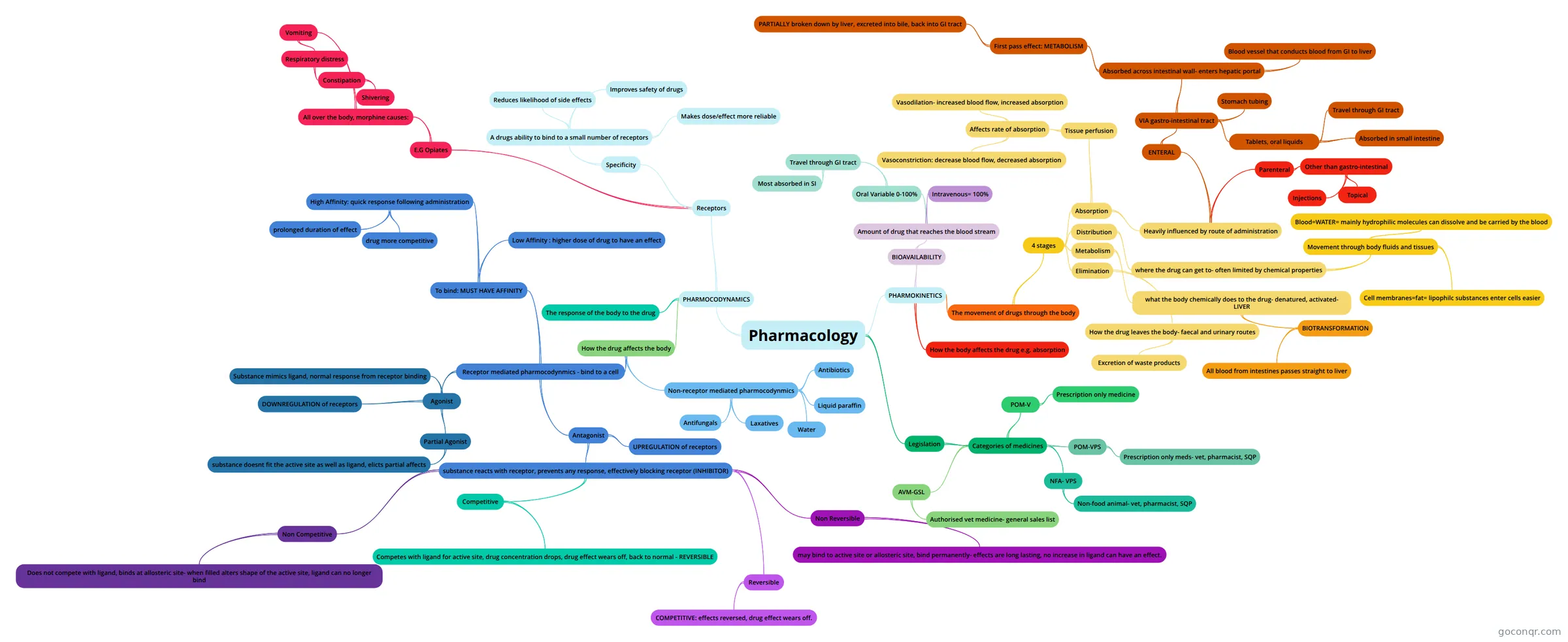
Flashcards
See all 181 flashcards-
68 cardsDrug absorption, distribution, metabolism and excretion Why is it important to know about ADME of a drug?
-
58 cardsDrug receptor interactions and distribution If a X amount of a drug is absorbed what % ends up in the: 1) Plasma 2) Fat 3) Plasma protein (bound drug) ...
-
34 cardsPharm I - Pharmacokinetics Volume of Distribution Vd
-
39 cardsCytochrome P450 (CYP) Enzymes What are the seven major cytochrome p450 (CYP) enzymes that are important to know?
-
92 cardsPharmacology
-
41 cardsWeek 6 Define absorption (pharmacological POV)
-
33 cardsDrug Metabolism L14 Name 6 Phase II metabolic pathways.
-
21 cardsrenal drug elimination renal drug elimination what are the three processes involved in renal elimination- renal clearance is the n...
Notes
See all 22 notes-
Pharmacology: Exam 1 1: Routes of Administration - KEY CONCEPTS What are the 3 main categories of Routes of Administration? Enteral: Advantages Disadvantages Examples of oral, sublingual, and rectal routes
-
Definitions Lecture 1 Paracelsus (1493–1541) Poison is in everything Is defined as what the body does to the drug (ADME processes) ADME processes occur simultaneously Significance of PK Dose and Rate Individualiz...
More Pharmacology topics
About Pharmacokinetics
GoConqr OriginalWhat this unit covers
The resources follow the four steps of ADME: absorption, distribution, metabolism and excretion. The mind map Pharmacokinetics sets out the basic definitions, from transfer out of the site of administration to irreversible removal from the body. Other maps and flashcards go deeper into single topics, such as first-pass metabolism, cytochrome P450 enzymes, protein binding and brain penetration.
Where to start
Begin with the quiz Pharmacology Exam 1, which opens with the basic question of what a drug does to the body, or 1807NRS Safe Administration of Medications 1, which asks what pharmacokinetics includes and how drugs are absorbed in the gut. Then read the mind map Pharmacokinetics to see how the four steps connect.
- Take a short quiz and note what you miss.
- Open the matching mind map, such as Drug Metabolism/Excretion or Basic Principles II.
- Work through a flashcard deck on the same topic.
- Return to the quiz and see what has changed.
Routes and delivery
Several resources look at how a drug gets into the body. The mind map ROUTES: PARENTERAL explains that parenteral means any route other than oral, sublingual, buccal or rectal. The quizzes Drug Delivery and Drug Interactions test examples, such as how diazepam may be given, and how food and drugs can interact through the CYP system.
Using quizzes and maps together
Quizzes show what you can recall. Maps show how the ideas link. Use a quiz first to find a weak spot, then read the map for that topic. Teachers can set a quiz as a starter or share a map as a recap. Numbers-based topics, such as clearance, volume of distribution and half-life, have their own quizzes and flashcards.
Where it sits
This unit belongs to the strand Foundations of Pharmacology, within the subject Pharmacology. Pick one topic today and try a quiz, then make a map or deck of your own to keep your notes in one place.
Frequently asked questions
Which resource should I open first?
Try the quiz Pharmacology Exam 1 or 1807NRS Safe Administration of Medications 1. Both start with core definitions, such as what pharmacokinetics is and what it includes. After that, open the mind map Pharmacokinetics to see absorption, distribution, metabolism and excretion laid out together.
What do the mind maps cover?
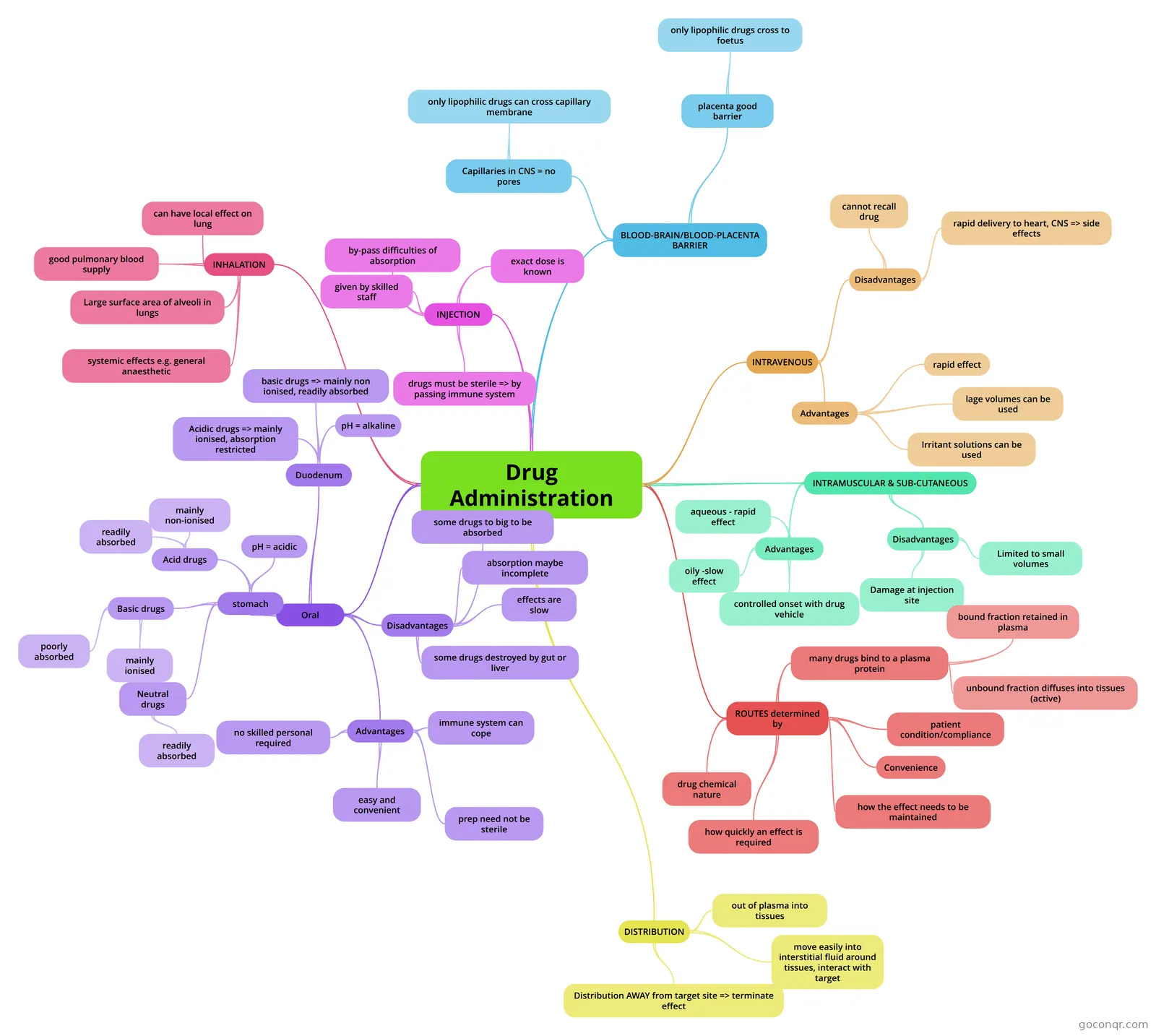
The maps cover the ADME steps and related topics. Examples include Drug Metabolism/Excretion, with first-pass metabolism, P450 and phase II, ROUTES: PARENTERAL, and Basic Principles II, which looks at how drugs are transported across membranes. There are over 140 maps in all.
Are the resources free to use?
Yes. Every resource listed here is free to open, study and take, with no account needed. If you do make a free account, it saves your quiz scores and lets you create your own quizzes, mind maps, flashcards and notes.
Who made these resources?
They were made by GoConqr users, not by GoConqr itself. More than 270 contributors have shared quizzes, maps, flashcards and notes here. Because they come from different courses, you may find the wording or emphasis differs from your own lectures, so check against your course materials.
Which topics have quizzes on numbers and rates?
There are quizzes on clearance, volume of distribution, systemic availability and half-life, as well as L12 Non-linear kinetics. The flashcard deck on factors influencing drug clearance, half-life, bioavailability, volume of distribution and first pass is a good companion.
Who is this page for?
It suits university students revising pharmacokinetics or filling gaps, and teachers looking for ready-made material to set or share. Most resources are at university level, with a small share aimed at professional study.