
Mapa mental
Th01L02 Meningitis
Contenido del mapa
Th01L02 Meningitis
- Almost 50% of children presenting to GP with MCD were sent home on 1 visit: more likely to die
Pathology
- Common causes investigate with gram stain
- Listeria (+)
- Pneumococcus (-)
- Neisseria (-)
- Herpes simplex virus
- Spectrum of colonisation
- Gram positive bacteria that invade neutrophils
- Endotoxins = inflammatory response o Widespread vasodilation > CV shock
- Myocardial damage > septic shock
- Intravascular coagulation > blocked blood vessels
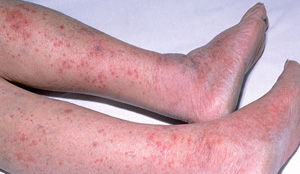
- Vessel damage - haemorrhage into tissues (e.g. petechial rash
- Basically, disruption of normal CV system physiology and its role in delivering oxygen nutrients to tissues
- Vessel damage - haemorrhage into tissues (e.g. petechial rash
- Intravascular coagulation > blocked blood vessels
- Myocardial damage > septic shock
- Endotoxins = inflammatory response o Widespread vasodilation > CV shock
- Evidence usually picked up by CSF but in this case using Polymerase Chain Reaction to ID DNA of meningococcus
- Uusually evidence of septicaemia
- Gram positive bacteria that invade neutrophils
- Lab work
- Polymerase chain reaction for DNA detection
- High RBC count (610/ cu mm) - normal <5
- High WBC count (4000 cells/cu mm) - normal <5 o 2% lymphocytes, 98% polymorphs
- Low BGL (0.9 mmol/L) - normal 5.8
- High protein levels (5359g/L) - normal 150-400
- Clotting high (>6.0g/L) - normal 1.5-4.5
- Common causes investigate with gram stain
Immediate managment
- Penicillin from GP according to NICE guidelines
- First line of defence
- Erythromyocin is used for pneumoccus too esp. with penicillin allergies
- Empiric antibodies for suspected pneumococcus
- e.g. IV Ceftiaxone
- Anti-viral e.g. Aciclovir
- for suspected viral encephalitis
- Corticosteroid e.g. Dexamethasone
- Rare, only used in some cases
- Penicillin from GP according to NICE guidelines
Physical signs and symptoms
- Drowsy, unrousable
- Glasgow coma score 7/15
- Small haemorrhagic lesion on foot
- Evidence of septicaemia
- blood poisoning/ toxicity resulting in deranged blood clotting and rash
- Evident in advanced cases but less obvious early on
- Signs and symptoms
- Headache, nausea, vomiting
- Photophobia
- Stiff neck
- Non-blanching rash
- These 'spots' are a well-publicised feature of meningococcal infections
- Glass test check if the spots are blanching vs. non-blanching
- Evidence of septicaemia
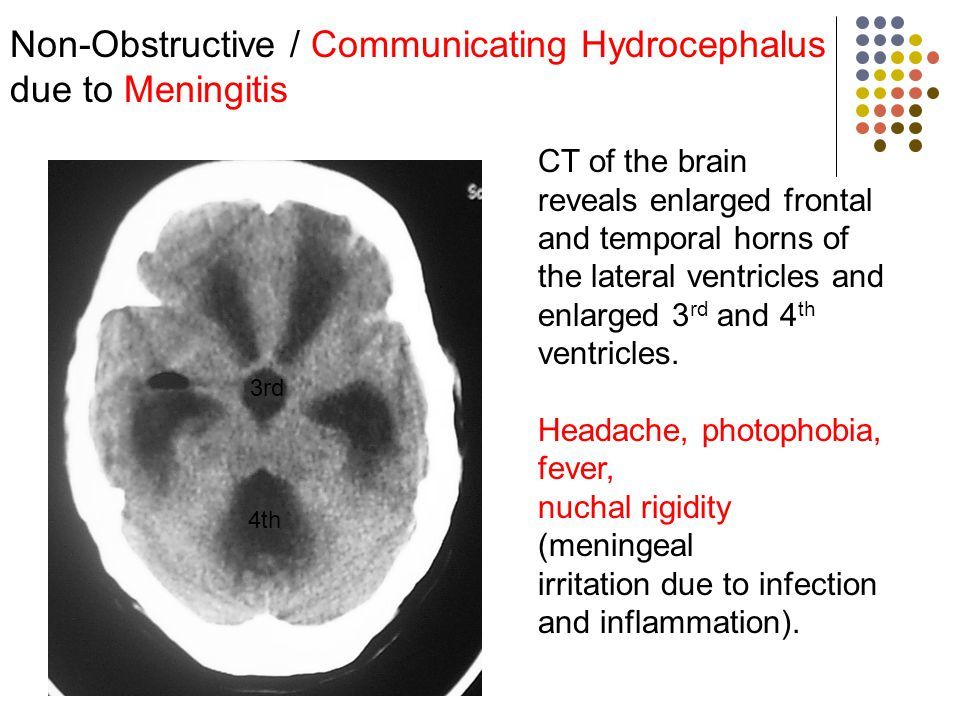
- Dialated temporal horns
- Possible evidence of cerebral oedema
- Prodrome phase in self-limiting viral illness
- Lasts up to 4 hours in young children
- Lasts up to 8 hours in adolescents
- Symptoms from hours of onset (RED FLAG symptoms)
- Fever earliest symptom across ages and most common
- Sepsis features second earliest symptom and most common
- Impaired mental status, meningism and haemorrhagic rash takes longer across ages and develops slower (also occurs in less people)
- Importance
- Identifying these could reduce proportion of missed cases in first consultation by half
- Recognising symptoms after 19 hours of onset, brings prognosis forward 11 hours
- Identifying these could reduce proportion of missed cases in first consultation by half
- Long term
- Gangrene due to obstructed circulation
- Severe septicaemia
- Drowsy, unrousable
Public health importance
- Public health (CCDC) needs to be notified
- Pt must have picked up bacteria from close contact Bacteria often colonises throat but in this case
- Type A
- Meningitis type A (Meningitis belt) of Africa, type B not so common Africa
- Type A found in Asia far more than other types
- Responsibilities of public health officials
- Follow up family o Follow up staff who performed intubation of pt. in A&E (low risk but need to be given antibiotic cover) o Follow in flat or halls - need to consider flatmates and any possible close contacts:
- Type B
- rates of type B quite steady from 1999-2009
- Type B far more common 2005-2015 in England vs. type C, Y and other regardless of age
- Type B most common in children age 1-4, then <1, and then 15-19 years
- New vaccine!
- In infants born since 01 July 2015 o Type C particularly used to be in teenagers/students but vaccine now o New this month, meningococcus type ACWY vaccine in adolescents
- Public health (CCDC) needs to be notified
Prevention
- Friends and relatives
- Parents need to get their children vaccinated A+C, ACYW or C- conjugate, B
- Contact tracing and giving antibiotic prophylaxis for close contacts
- Surveillance and notifiable disease reporting
- Friends and relatives
Meninges are the three membranes (the dura mater, arachnoid, and pia mater) that line the skull and vertebral canal and enclose the brain and spinal
Imágenes y archivos del mapa
Información
- Descripción
- Treatment, symptoms and public health importance of meningitis
- Creado por
- Usuario eliminado · ago 2016
- Actualizado
- 27 ago 2016
- Visitas
- 43
- Etiquetas
- Historial
-
- Creado por Emma Allde · 15 ago 2016
- Copiado por Emma Allde · 26 ago 2016
- Valoración