
Apuntes
Rivers
Contenido del apunte (1)
Página 1
Introduction
Transportation
traction- when material is rolled along the river bed
saltation- small pebbles and stones are bounced along the river bed
suspension- particles are "suspended" in the water
solution- material is dissolved into the water
Erosion
attrition- where material is moved along the bed of the river, collides with other material, breaks down
corrasion (abrasion)- material rubs against the river bank
corrosion (solution)- some rocks forming the banks of river are dissolved by acids in the water
hydraulic action- the force of water hitting the banks of the river
Vocabulary
drainage basin- an area of land drained by a river and its tributaries
source- where the river starts
mouth- where the river ends
tributary- a river joins a larger river
confluence- point where rivers meet
watershed- the boundary dividing one drainage basin from another
discharge- volume of water that passes through cross-section*speed
occupied channel width- distance across channel, measured at water surface, increases down stream
area of greatest depth- thalweg
hydrolic-radius- how much volume is in contact with banks, higher number=less contact (flowing faster), cross-section/sides
load quantity- amount of material in the river
rising limb- amount of discharge and at which speed it is increasing
lag time- time interval between peak rainfall and peak discharge
runoff- shows the relationship between overland flow and through flow
floodplain- area surrounding a river that is covered during a time of flood
levee- an enmabkment to prevent the overflow of a river
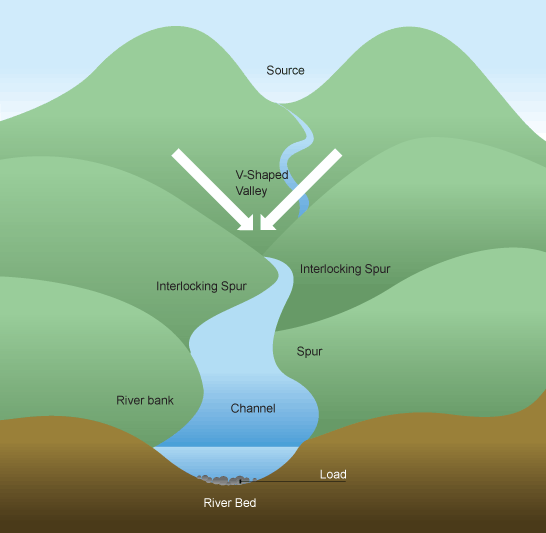
V-shaped valley/interlocking spur
As the river erodes the landscape in the upper course, it winds and bends to avoid areas of hard rock, creating interlocking spurs
v-shaped valley is a hill
Hydrological Cycle
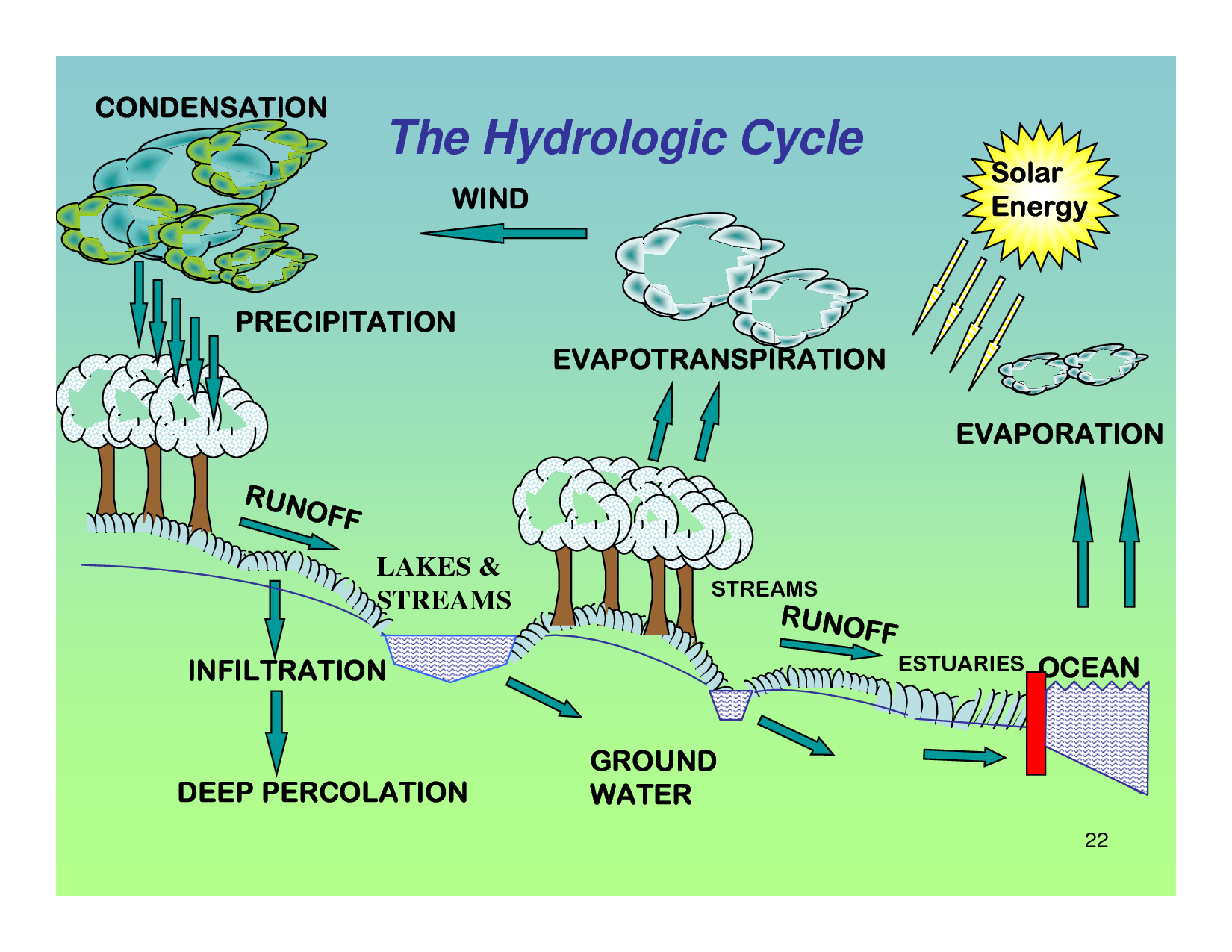
Inputs: precipitation
Stores: ground water
depression in storage (lakes, rivers)
interception
Flows: infiltration
surface runoff
percolation
channel flow
stem flow
groundwater flow
Outputs: evaporation
transpiration
Vocabulary
inputs- where water enters system
outputs- where water is lost to system
evapotranspiration- the loss of water directly from rivers or lakes
transfers- the process by which water flows or moves through the system
infiltration- the downward movement of water through tiny pores in the soil
percolation- movement of water downwards
surface runoff- when water runs on the surface
channel flow- how much water flows through a channel
stem flow- the flow of intercepted water
ground water- water stored at depths of rocks
transpiration- the loss of water from vegetation into the atmosphere
Water Falls
The water flows down wards due to gravity. Over time it erodes through the hard rock and then through the soft rock. it then creates a Plunge Pool and undercuts the rock, creating an over hang. This over hang with then fall, and the process will start again
Rapids
The water erodes soft rocks, but not the hard rock, creating bumps along the surface
Cross-section
width of river TIMES depth
increases as you go down stream
Oxbow lakes
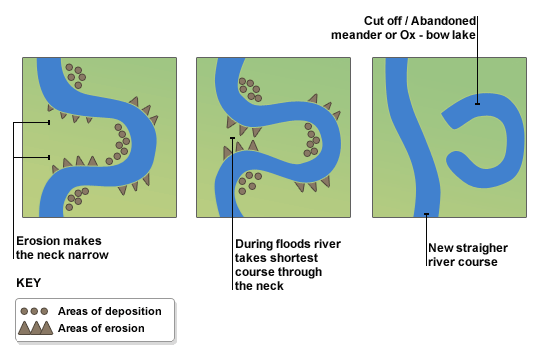
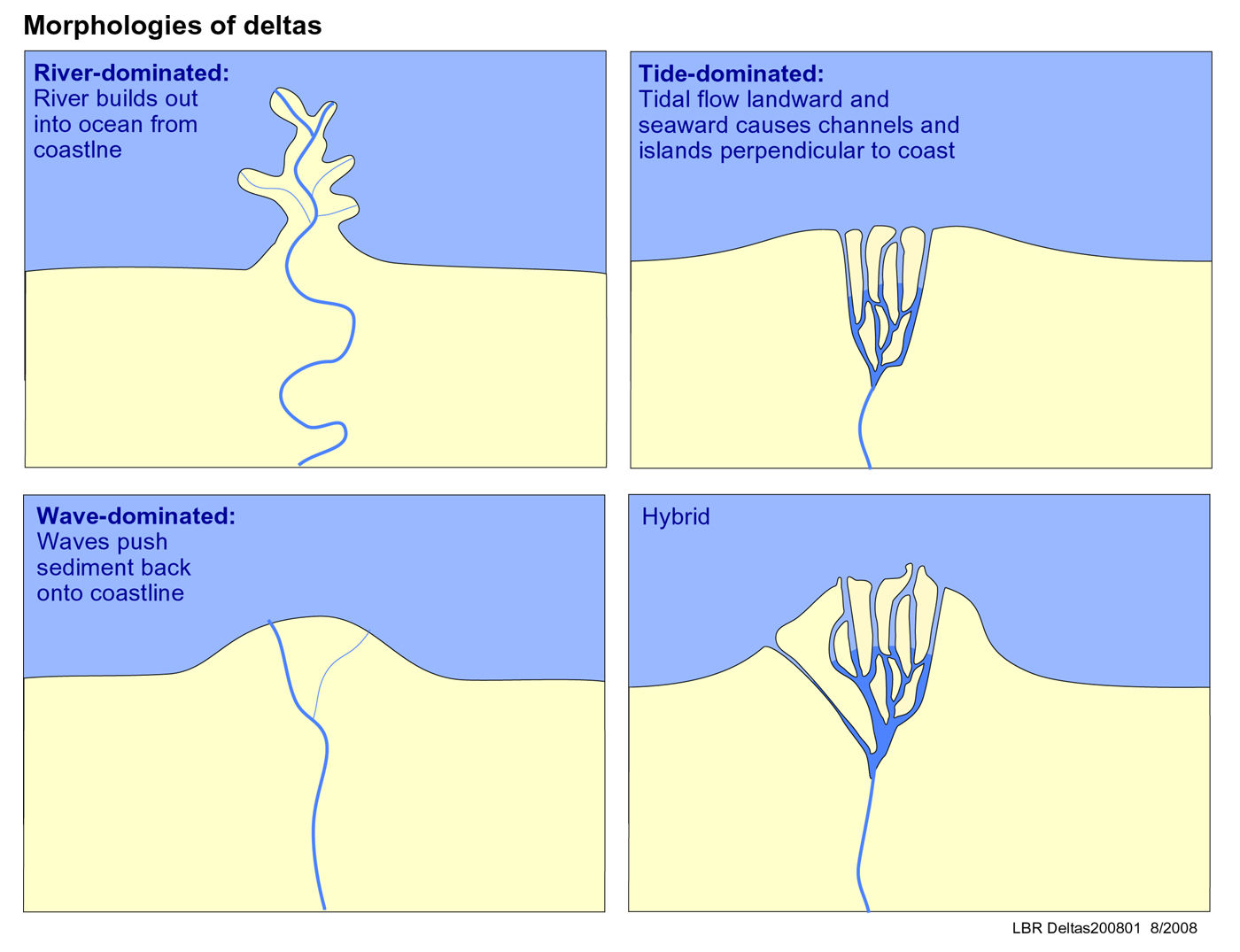
upper-cource features- v-shaped valleys, interlocking spurs, rapids, waterfalls, gorges
middle-cource features- wider, shallower valleys, meanders, oxbow lakes
lower-cource features- flat bottomed valleys, flood plaines, deltas
ADVANTAGES OF LIVING IN MEKONG DELTA
Fertile land for farming, especially crops like rice
Plenty of water for fishing or aquaculture. This can feed families or provide an economic income.
Abundant drinking water
Water for cooking, washing, etc.
Tourism opportunities e.g. Mekong Delta
Houses can be built on water and are then transportable and they do not flood
Good transport links, possible to trade
DISADVANTAGES OF LIVING IN MEKONG DELTA
Hard to make transport links by roads - cost of bridges
Areas are at constant risk of flood
Vulnerable to rising sea levels
Water is often dirty and polluted (industry, agriculture, sewers)
Mosquitoes are attracted to water (Malaria, Dengue)
Storm surges from tropical storms
Cost of building defences
Case study- Mekong Delta, Vietnam
Case study- Tewkesbury, England
Human causes- very developed, lots of concert, water cant be absorbed
pluvial flooding (drainage system cant keep up with rain)
Natural causes- two tributaries (Seven+Avon rivers)
flat land
rainfall (also had rain before, so no space in ground)
Consequences- destroyed homes
destroyed water plant, no clean water, 150,000 homes had no water
5,000,000 litres of water
25,000,000 pounds to fix the water plant
insurance companies won't insure houses, houses cost less
5.43 meters of rain
Good things- it helped farming (alluvium from river)
fixed drainage system
Prevention- move stuff upstairs
by own flood gates
computer with flood warning
New Page
New Page
Información
- Descripción
- 11 Geography Apunte sobre Rivers , creado por mackiecaity el 02/04/2014.
- Creado por
- mackiecaity · abr 2014
- Actualizado
- 19 feb 2016
- Visitas
- 51
- Etiquetas
- Valoración