
I.C Engines
Diapositivas del conjunto (14)
-
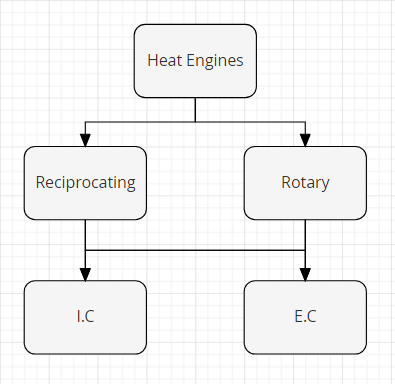
- Heat engine is a system which converts heat energy into mechanical work
- Heat Engines are classified on the basis of
- Combustion
- Internal Combustion (IC) Engines
- External Combustion Engines (EC) Engines
- Motion
- Reciprocating
- Rotary
-
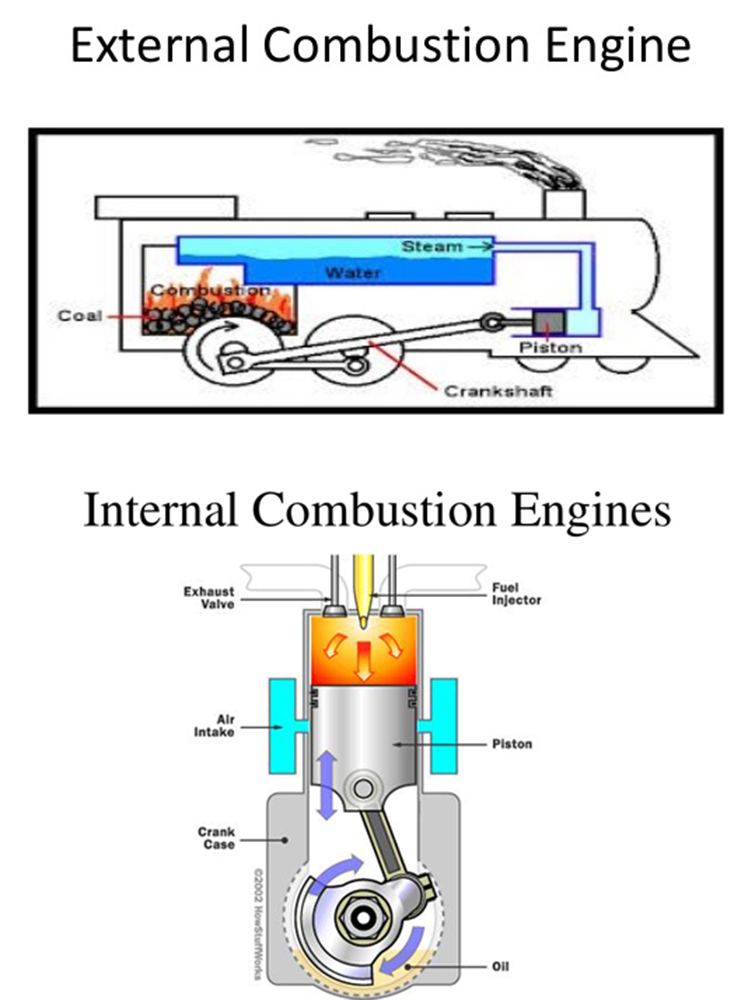
- I.C Engines
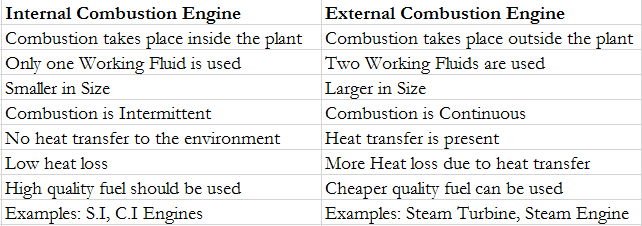
- Combustion takes place inside the plant
- All processes take place inside the plant
- Examples: Spark Ignition (SI), Compression Ignition(CI) Engines
- E.C Engines
- Combustion takes place outside the plant
- All processes except Expansion take place outside the plant
- Examples: Steam Engines, Steam Turbines
-
-
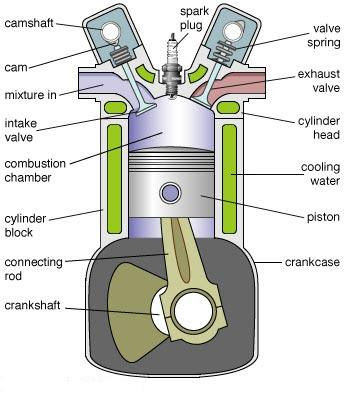
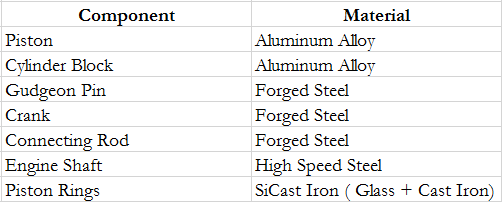
- Piston
- Piston Rings
- Cylinder Block
- Combustion chamber
- Cylinder Head
- Intake and Exhaust valves
- Cam and Camshaft
- Gudgeon Pin
- Crankshaft
- Connecting Rod
-
-
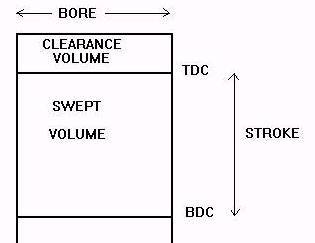
- Top Dead Center (TDC) - The position where the Piston is farthest from the Crankshaft
- Bottom Dead Center (BDC) - The position where the Piston is nearest from the Crankshaft
- The length covered by the Piston from BDC to TDC is known as Stroke length or Stroke
- The diameter of the cylinder block is given by Bore
- The volume covered by the piston covered in a stroke is given by Swept Volume
- Clearance volume is provided as to not let the piston hit the Cylinder head
- Optimal Clearance is important because
- Higher clearance results in Power Loss
- Lower Clearance results in Knocking
-
Compression and Clearance Ratio
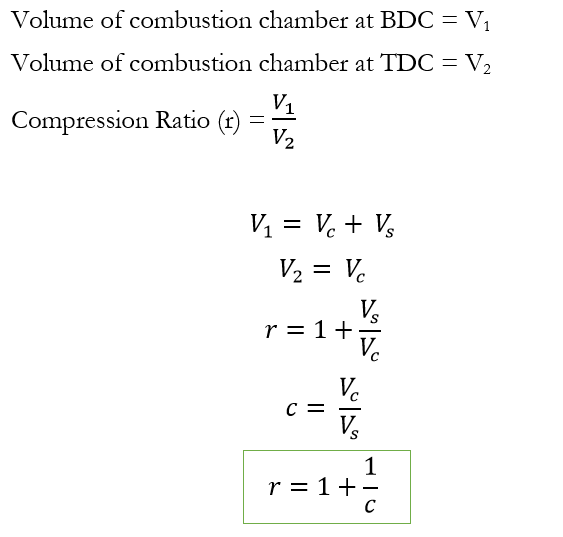
- Volume Ratio - Ratio of larger volume to smaller volume in any process in a cycle
- Volume Ratio for Compression - Compression Ratio
- Volume Ratio for Expansion - Expansion Ratio
- Clearance Ratio (c) - Ratio of Clearance Volume to Swept Volume
-
List of Processes of an Air Standard Cycle
- Heat Addition
- If Volume is Constant then Otto Cycle
- If Pressure is Constant then Diesel Cycle
- If Constant Pressure and Constant Volume Processes are used then Semi - Diesel or Dual Cycle
- Expansion
- Isentropic
- Heat Rejection
- IsoChoric
- Compression
- Isentropic
-
- Heat Addition
- Adiabatic
- Isothermal - Change in Temperature exists during Heat addition and Rejection
- Polytropic - Final Volume is less than Clearance Volume which is not permitted
- Heat Rejection
- Isobaric - Gas can't flow with no pressure difference
- Adiabatic
- Isothermal
- Polytropic
-
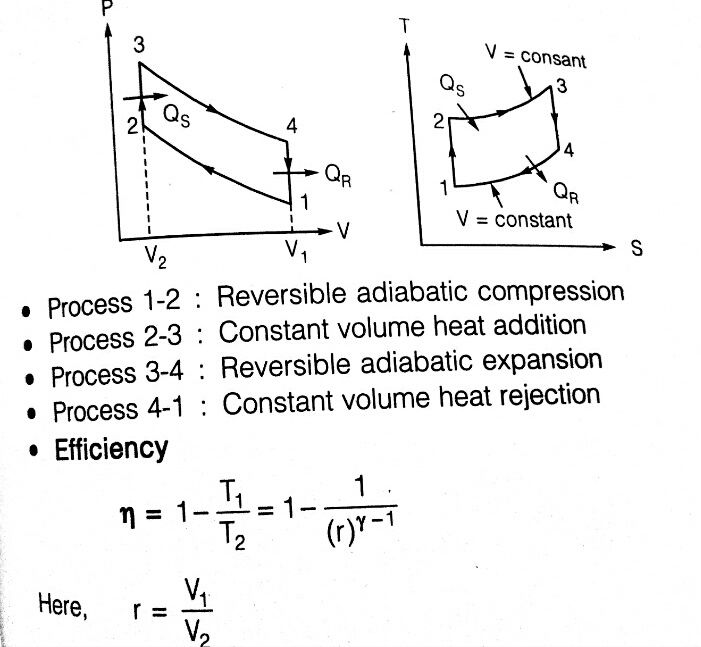
- Used in SI Engines
- Compression Ratio = 6-10
-
- Used in CI Engines
- Compression Ratio = 16 - 20
- Has higher Efficiency as Compression Ratio is higher
-
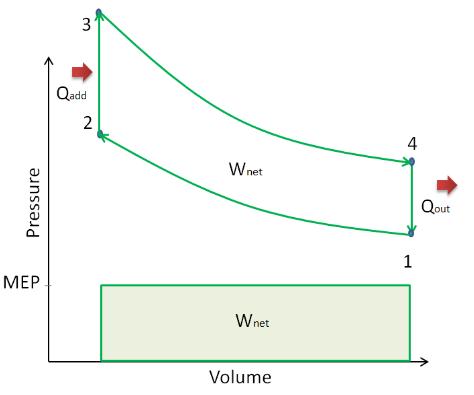
- MEP is an imaginary Pressure value which gives the same work done in a cycle under the same Swept Volume
- MEP is an indicator of the Capacity of an engine and is used for comparison of various other cycles and engines.
-
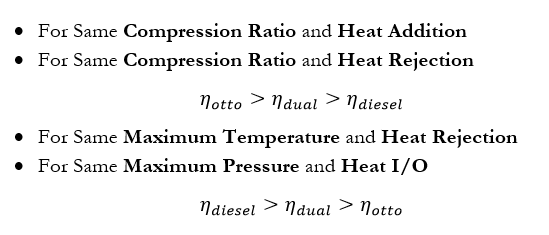
Comparison of Cycle Efficiencies
Información
- Descripción
- GATE (Power Engineering) Mechanical Engineering Diapositivas sobre I.C Engines, creado por Lalithej Vvk el 25/06/2017.
- Creado por
- Lalithej Vvk · jun 2017
- Actualizado
- 25 jun 2017
- Visitas
- 21
- Valoración