
Test
CVS Embryology
Este test tiene tipos de pregunta que se abren en el reproductor de siempre.
Preguntas del test (50)
1The Cardiovascular System is the second major system to function in the embryo
- AVerdadero
- BFalso
2In the early development of the cardiovascular system:
- APaired angioblastic cords appear in the mesoderm
- BThe heart develops from the foregut
- CThe heart begins to beat at day 22
- DThe primitive CVS begins to appear in the second week of development
- EThe pharyngeal arches are the first structure to appear
3The Venous ends of the heart are fixed by
- AThe septum transversum
- BThe pharyngeal arches
- CThe bulboventricular loop
- DThe sinus venosis
4The arterial ends of the heart are fixed by
- AThe septum transversum
- BThe pharyngeal arches
- CThe truncus arteriosus
- DThe bulbus cordis
5Label the following section of the heart tube
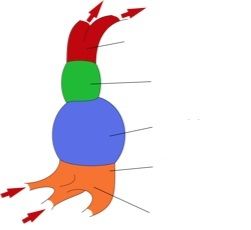
- ABulbus cordis
6Label the following section of the heart tube
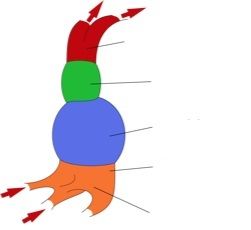
- ASinus venosus
7Label the following section of the heart tube
- AAtrium
8Label the following section of the heart tube
- ATruncus arteriosus
9Label the following section of the heart tube
- AVentricle
10The Bulbus Cordis and the Ventricle grow and bend to become
- AThe Bulboventricular loop
- BThe Pharyngeal Arches
- CThe Septum Transversum
- DThe Aortic Sac
11The Vitelline Veins
- Areturn low O2 blood from the yolk sac
- Bcarry blood from the chorion to the embryo
- Cdrain poor o2 blood from the embryo
- Ddrain the amniotic cavity
12While there is originally both a right and left umbilical vein, only the right persists
- AVerdadero
- BFalso
13The Common Cardinal veins
- Adrain poor O2 blood from the body of the embryo
- Breturn low O2 blood from the yolk sac
- Ccarry blood from the chorion to the embryo
- Ddrain the amniotic cavity
14The Umbilical Veins
- Acarry blood from the chorion to the embryo
- Breturn low O2 blood from the yolk sac
- Cdrain poor O2 blood from the body of the embryo
- Ddrain the amniotic cavity
15Label the following embryonic veins
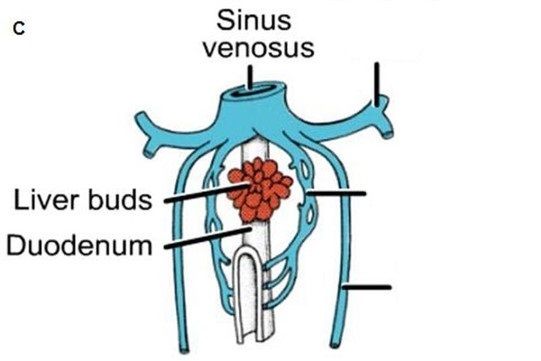
- ACardinal veins
16Label the following embryonic vein
- AUmbilical vein
17Label (specifically) the following embryonic vein
- ALeft Vitelline vein
18The primordial myocardium forms from [blank_start]splanchnic mesoderm[blank_end]
- Asplanchnic mesoderm
19During lateral folding, the 2 heart tubes fuse to form one cranio-caudally
- AVerdadero
- BFalso
20As the primitive heart bends:
- AThe two horns of the sinus venosus fuse
- BThe atrium and sinus venosus end up behind the bulbus cordis, truncus arteriosus and ventricle.
- CThe heart gradually invaginates the pericardial cavity
21Partitions of the heart develop around week [blank_start]4[blank_end] and are essentially finished by the end of week [blank_start]5[blank_end]
- A4
- B5
22The Aorta is formed from the coalescence of:
- AThe Umbilical Arteries
- BThe Embryonic Arteries
- CThe Atrioventricular Arteries
23Aortic Arches are:
- ANot all are present simultaneously
- BAll permanent structures
- CProfoundly different to the Pharyngeal Arch arteries
24The 4th Aortic Arch becomes the Arch of the Aorta on the right and the Subclavian Artery on the left
- AVerdadero
- BFalso
25The 3rd Aortic Arch gives rise to:
- ACommon Carotid
- BProximal Internal Carotid
- CExternal branches of the 3rd arch
- DPulmonary trunk
- ERight subclavian artery
26Which of the following Aortic Arches disappear?
- A1st
- B2nd
- C3rd
- D4th
- E5th
- F6th
27The 6th Aortic Arch gives rise to:
- AArch of the Aorta and Pulmonary Trunk
- BPulmonary Trunk and Ductus Arteriosus
- CBrachiocephalic Artery and Arch of the Aorta
- DInternal and External Carotid Arteries
- EPulmonary and Left Subclavian Veins
28Fusion of the outflow tract cushions results in separation of the blood flow
- AVerdadero
- BFalso
29The truncus arteriosus divides to form the [blank_start]Aorta[blank_end] and the [blank_start]Pulmonary[blank_end] Trunk
- AAorta
- BPulmonary
30In right atrial septum formation:
- ASome of the wall is formed from the sinus venosus
- BThe Atrium decreases in size
- CThe entrance of the sinus venosus is shifted over to the right
31During septum formation, for a brief period the left atrium has no venous inflow
- AVerdadero
- BFalso
32The pulmonary veins bud from the [blank_start]left atrium[blank_end]
- Aleft atrium
33Atrial Septation is complete at week 8
- AVerdadero
- BFalso
34The Septum Primum:
- Ais incomplete
- Bis sickle shaped
- Cgives rise to the ostium primum
- Dgives rise to the ostium secondum
- Egrows from the roof of the atrium into the lumen
35The Septum Secundum:
- AFuses with the Endocardial Cushions
- BGrows from the interventricular septum
- CGives rise to the foramen ovale at its lower free edge
36In pre-natal development, blood flows from right to left through the interatrial septum
- AVerdadero
- BFalso
37In Atrial Septal Defects, Left-to-right shunting of blood:
- AMay be asymptomatic
- BPresents with an ejection systolic murmur
- CCauses raised O2 saturation in the right atrium
38Ostium Primum defects cause 70% of ASDs
- AVerdadero
- BFalso
39Select the correct statements about Ostium Secundum defects:
- AThey occur in the region of fossa ovalis
- BThey can be caused by underdevelopment of the septum secundum
- CThey can be caused by excessive resorption of the septum primum
40The [blank_start]Common Atrium[blank_end] condition is caused by the absence of the [blank_start]septum primum[blank_end] and septum secondum.
- ACommon Atrium
- BLeft-to-right shunting of blood
- Cseptum primum
- Dseptum secondum
- Efossa ovalis
- Fostium secundum
41The muscular portion of the Interventricular septum:
- Ais formed by the medial walls of the expanding ventricles
- Bmakes up about 10% of the septum
- Chas a foramen close to the inferior border
42Tissue from the [blank_start]inferior endocardial cushion[blank_end] close the interventricular foramen, and making up the [blank_start]membranous[blank_end] part of the septum.
- Ainferior endocardial cushion
- Blateral walls of the ventricles
- Cmembranous
- Dmuscular
- Etendonous
43Select the correct statements regarding Ventricular septal defects:
- ASpontaneous closure may occur before 2 years of age
- B2 main forms exist: Membranous and Valvular
- CLeft-to-right shunting of blood does not occur
- DMuscular VSDs are less common in adults than in children
- EVSDs may present with a pansystolic murmur
44In healthy foetal circulation, Left-to-right shunting of blood does not occur
- AVerdadero
- BFalso
45The closure of the atrial septum is due to anatomical changes
- AVerdadero
- BFalso
46Select the INCORRECT statements regarding the closure of the atrial septum:
- AHigh pulmonary peripheral vascular resistance and arterial pressures cause right to left shunting pre-natally
- BPulmonary peripheral vascular resistance and pulmonary arterial pressures drop post-natal
- CPre-natal lungs are deflated
- DPressure gradient post- natal is LA<RA
- EThere is no post-natal evidence of the pre-natal foramen
47Which of the following are symptoms of Patent Ductus Arteriosus?
- APulmonary Hypertension
- BRight Atrium Hypertension
- CMurmur in both Diastole and Systole
- DPost-natal blood flow from left to right
- EParasystolic murmur
48Bradykinin release causes smooth muscle contraction with results in opening of the ductus arteriosus
- AVerdadero
- BFalso
49Upon anatomical closure, the Ductus Arteriosus becomes the [blank_start]Ligamentum Arteriosum[blank_end]
- ALigamentum Arteriosum
50Which of the following is not associated with the Tetralogy of Fallout?
- AUnequal division of conus cordis
- BPulmonary Stenosis
- CDual murmur in Systole and Diastole
- DLarge VSD
- EOverriding Aorta
- FHypertrophy of the right ventricle
Información
- Descripción
- 1MB MD121 Embryology Study Quiz 2018 (up to IV septum formation)
- Autor
- Emer Lyons
- Idioma
- English
- Visitas
- 2.970
- Etiquetas
- Valoración
- Aún sin valoraciones Valora este test