
Test
Understanding the Atom - Quiz 2
Este test tiene tipos de pregunta que se abren en el reproductor de siempre.
Preguntas del test (7)
1Where is majority of the mass of an atom?
- AThe cloud
- BThe nucleus
- CThe electron
- DThe mitochondria
2The name of Rutherford's experiment was called the [blank_start]Gold Foil[blank_end] experiment which provided evidence for the existence of the [blank_start]nucleus[blank_end] of the atom.
- AGold Foil
- BSilver Foil
- CScotch Tape
- DElectron Gun
- Eelectron
- Fproton
- Gnucleus
- Hatom
- Ishape
- Jneutron
3Label the picture with the appropriate terms. Each dot only needs one term.
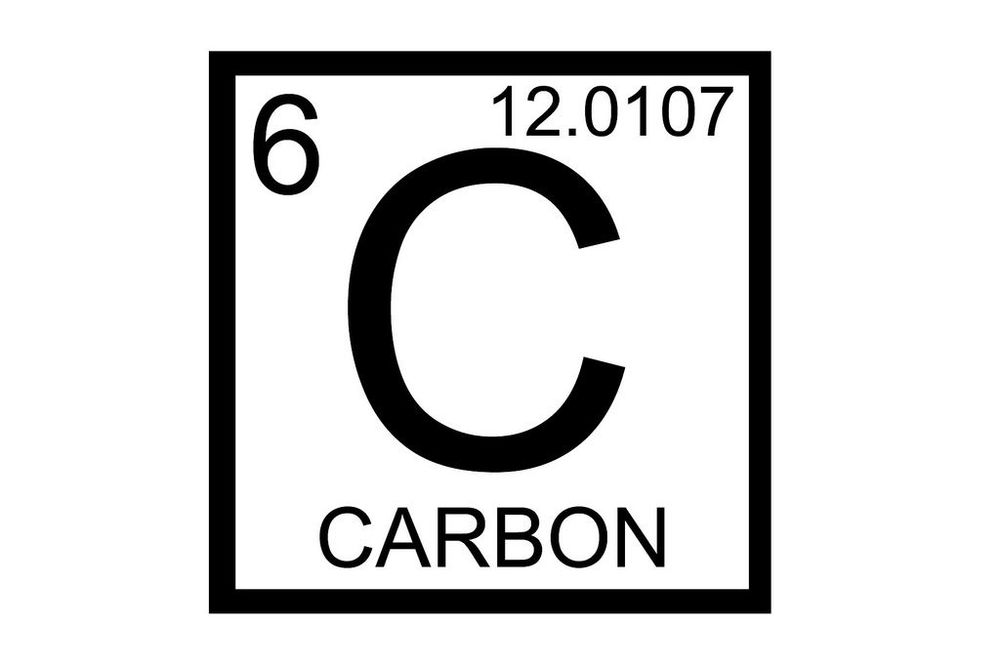
- AAtomic mass
- BAtomic address
- CAtomic radioactivity
- DAtomic Number
- EJust a pointless number
- FAbundance
- GChemical symbol
- HAlgebra representing the element
- IRepresents an ion
4A proton has a mass of 1. So Hydrogen, being the first element, has a mass of 1. Chemists hypothesised, that the proton (being almost 2000 times heavier than the electron) contributed all the mass of an atom. As such, an element like helium, which has 2 protons, would be twice as heavy as a hydrogen atom. However, it was found that it was 4 times as heavy compared to hydrogen. Why is this?
- AThe presence of dark energy.
- BThe existence of an uncharged subatomic particle known as a neutron.
- CThe mass of electrons was actually incorrect, it is the same as a proton.
- DThe helium sample in experiments may have been dirty, altering the results.
5Round numbers to the nearest whole number. (eg 1.5 -> 2)
Magnesium has an atomic number of [blank_start]12[blank_end]. This means it has [blank_start]12[blank_end] protons. Furthermore, Magnesium is known to have an atomic mass of [blank_start]24[blank_end]. Therefore, it must have [blank_start]12[blank_end] neutrons. In order for Magnesium to have an ionic charge of +1, it must have [blank_start]11[blank_end] electrons orbiting.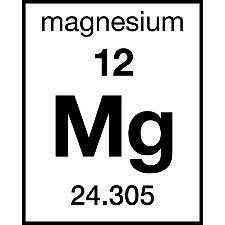
- A12
- B12
- C12
- D24
- E11
6An isotope is: (may be more than one correct)
- AAn atom
- BDepends on number of electrons
- CDepends on number of protons
- DDepends on number of neutrons
- EMakes atoms safe
- FMakes atoms unstable
- GCan cause radioactivity
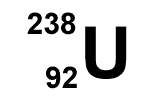
7Uranium has an atomic number of [blank_start]92[blank_end]. It has [blank_start]92[blank_end] protons, but has [blank_start]146[blank_end] neutrons.
- A92
- B92
- C146
Información
- Descripción
- The second quiz for unit 1/2 chemistry. This is to gain an understanding on how to use the periodic table based on the structure of the atom.
- Autor
- Noam Marom
- Idioma
- English
- Visitas
- 64
- Etiquetas
- Valoración
- Aún sin valoraciones Valora este test