
Test
Switching Midterm Chapters 2 & 3
Este test tiene tipos de pregunta que se abren en el reproductor de siempre.
Preguntas del test (51)
1Which of the following statements is true about campus networks? Pg. 34
- AThe campus network describes the interconnections of servers in a data center
- BThe campus network describes the WAN inter-connectivity between two remote sites and head office
- CThe campus network describes the network devices that interconnect end users to applications such as e-mail, the intranet, or the internet over wire or wireless connections.
2Which of the following is a disadvantage to using flat Layer 2 networks? Pg. 35
- ABroadcast packets are flooded to every device in the network.
- BNo IP boundary to administer IP-based access control.
- CA host flooding traffic onto the network effects every device.
- DScalability is limited.
- EAll of the above.
3Why are network designed with layers? Pg. 36
- AAllow focus within specific layers due to grouping, segmentation, and compartmentalization.
- BSimplification of network design.
- COptimizes use of physical interconnects (links).
- DOptimizes application of policies and access control.
- EEases network management.
- FAll of the above.
4Identify the three layers of hierarchical model for designing networks. Pg. 36
- ACore
- BAccess
- CDistribution
- DEnterprise edge
- EWAN
- FWireless
5What is another common name for the core layer? Pg. 36
- ABackbone
- BCampus
- CData center
- DRouting layer
6In newer terminology, what layers are referred to as the spine layer and the leaf layer? Pg. None
- AThe spine layer is the equivalent to the core layer, and the leaf layer is equivalent to the distribution layer.
- BThe spine layer is equivalent to the access layer, and the leaf layer is equivalent to the distribution layer.
- CThe spine layer is equivalent to the distribution layer, and the leaf layer is equivalent to the access layer.
- DThe spine layer is equivalent to the core layer, and the leaf layer is equivalent to the access layer.
7Match each layer to its definition.
[blank_start]Access[blank_end] - Connects PCs, wireless access points, and IP phones.
[blank_start]Core[blank_end] - High-speed interconnectivity layer that generally supports routing capability.
[blank_start]Distribution[blank_end] - Aggregates access layer switches and provides for policy control.- AAccess
- BDistribution
- CCore
- DAccess
- EDistribution
- FCore
- GAccess
- HDistribution
- ICore
8Which of the following are generally true about recommended core layer designs? Pg. 39
- ARequires high-availability and resiliency
- BConnects critical application servers directly for optimal latency and bandwidth
- CLeverages fixed form factor switches in large enterprises
9In which layer are you most likely to find fixed Catalyst switches?
- AAccess Layer
- BDistribution Layer
- CCore Layer
10In which layer are you most likely to find modular Catalyst switches? Pg. 41
- AAccess layer
- BDistribution layer
- CCore layer
11Which of the following are benefits to using Layer 3 in the access layer? (Choose two.) Pg. 42
- AReduced cost
- BReduce Layer 2 domain
- CReduce spanning-tree domain
- DMobility
12Which of the following is the biggest disadvantage with using Layer 3 in the access layer using current technologies? Pg. 42
- AMore difficult troubleshooting
- BLack of broadcast forwarding
- CNative mobility without additional features
- DLack of high availability
13A Layer 2-only switch makes forwarding decisions based on what? Pg. 47
- ASource MAC address
- BDestination MAC address
- CSource IP address
- DDestination IP address
14What does a switch do when it does no know how to forward a frame? Pg. 47
- ADrops the frame
- BFloods the frames on all ports in the same Layer 2 domain except the source port
- CStores the frame for later transmission
- DRe-sends the frame out the port where it was recieved
15The layer 2 forwarding table of Cisco switches is also referred to as which of the following? Pg 47
- ACAM table
- BRouting table
- CMAC address table
- DFIB table
16Which of the following look-ups does a Layer 2-only Cisco Catalyst switch perform on an ingress frame? Pg. 49
- ALayer 2 forwarding for destination port
- BACL for access control
- CNetFlow for statistics monitoring
- DQoS for classification, marking, or policing
17Which of the following are true about CAM and/or TCAM (Choose three.) Pg. 49
- ATCAM stands for ternary content-addressable memory
- BCAM provides three results: 0, 1, and don't care
- CLeveraging CAM and TCAM ensures line-rate performance of the switch
- DCAM and TCAM are software-based tables
- ETCAM is leveraged by QoS and ACL tables
18Why is TCAM necessary for IP routing tables over CAM? Pg. 49
- ATCAM supports longest matching instead of match or not matched
- BTCAM is faster than CAM
- CTCAM memory is cheaper than CAM
19Cisco Catalyst switches leverage which of the following technologies for Layer 3 forwarding? Pg. 52
- ARoute caching
- BProcessor/CPU switching
- CNetFlow
- DCEF
20Cisco Catalyst switches relay routing information to hardware components for additional performance and scalability (line-rate forwarding). What are the two common hardware types that receive routing information? Pg. 55
- ACentralized
- BDistributed
- CAggregated
- DCore-based
21With regard to load balancing, what term describes the situation where less than optimal use of all links occurs? Pg. 54
- AReverse path forwarding (RPF)
- BPolarization
- CInverse routing
- DUnicast flooding
22What is the default load-balancing mechanism found on Cisco Catalyst switches? Pg. 54
- APer-flow
- BPer-destination IP address
- CPer-packet
- DPer-destination MAC address
23It is important to have the same native VLAN on both switch link partners for ISL trunking. Pg. 67
- AVerdadero
- BFalso
24The Cisco Catalyst 6500 supports up to 1024 VLANs in the most recent software releases. Pg. 72
- AVerdadero
- BFalso
25When removing the native VLAN from a trunk port, CDP, PAgP, and DTP, use the lowest-numbered VLAN to send traffic.
- AVerdadero
- BFalso
26In VTP client mode, switches can add and delete VLANs. Pg. 88-91
- AVerdadero
- BFalso
27Token Ring support is available in VTY version 1. pg. 88
- AVerdadero
- BFalso
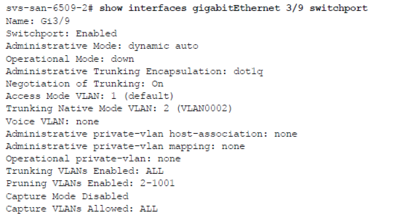
28If the interface in the example negotiates trunking, what would be the native VLAN?
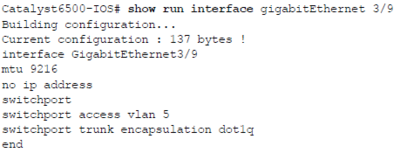
- AVLAN 1
- BVLAN 5
- CVLAN 9216
- DNo native VLAN if the port negotiated trunking
29Under what condition can the interface in the example negotiate ISL trunking?
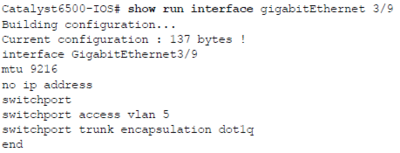
- AIf the port is a member of an EtherChannel
- BIf the link partner defaults to ISL trunking or negotiated ports
- CIf the link partner is configured for trunking in the on mode
- DThe interface cannot negotiate trunking because it is configured statically for 802.1Q trunking
30Which statement is true for the configuration of the interface in the example?
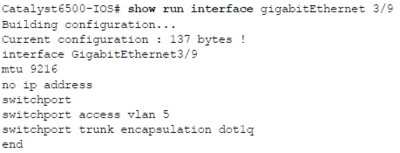
- AThe interface is a member of VLAN 5 and may negotiate to a trunk port
- BThe interface may negotiate to an ISL trunk with a native VLAN of 5
- CThe interface may negotiate to an 802.1Q trunk and operate with a native VLAN of 1
- DThe interface will not negotiate to a trunk port because it is configured in access VLAN 5
- EIf a host workstation is connected to the interface, it must be configured for trunking
31What is the trunk native VLAN based on the example?
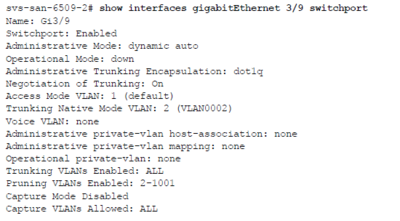
- AVLAN 1
- BVLAN 2
- CVLAN 5
- DNo Native VLAN if the port negotiated trunking
32Based on the example, what statement is true if the link partner (peer switch) is configured for the dynamic trunking mode?
- AThe interface cannot negotiate to a trunk port because it is configured for dot1Q encapsulation
- BThe interface cannot negotiate a trunk port because the native VLAN and access VLANs are mismatched
- CThe interface can negotiate to a trunk port if the peer is configured for the dynamic desirable trunking mode
- DThe interface can negotiate to a trunk port if access VLAN is the same on both sides
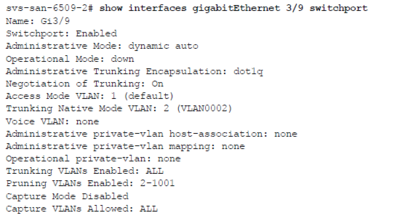
33What is the interface's access mode VLAN in the example?
- AVLAN 1
- BVLAN 2
- CVLAN 5
- DVLAN 1001
34How does implementing VLANs help improve the overall performance of the network? Pg 89
- Aby isolating problem employees
- BBy constraining broadcast traffic
- CBy grouping switch ports into logical communities
- DBy forcing the Layer 3 routing process to occur between VLANs
35What are the advantages of using local VLANs over end-to-end VLANs? (Choose two.)
- AEases management
- BEliminates the need for Layer 3 devices
- CGroups users by logical commonality
- DKeeps users and resources on the same VLAN
- EAllows for a more deterministic network
36Which prompt indicates that you are in VLAN configuration mode of Cisco IOS?
- ASwitch#
- BSwitch(vlan)#
- CSwitch(config)#
- DSwitch(config-vlan)#
37Which switch port mode unconditionally sets the switch port to access mode regardless of any other DTP configurations?
- AAccess
- BNonegotiate
- CDynamic auto
- DDynamic desireable
38What information is contained in the FCS of the ISL-encapsulated frame?
- ACRC calculation
- BHeader encalsulation
- CASIC implementaion
- DProtocol-independence
39802.1Q uses an internal tagging mechanism, where a tag is inserted after the ____ field.
- AType
- BSA
- CData
- DCRC
40Which command correctly configures a port with the ISL encapsulation in Cisco IOS?
- ASwitch(config-if)# switchport mode trunk isl
- BSwitch(config-if)# switchport mode encapsulation isl
- CSwitch(config-if)# switchport trunk encapsulation isl
- DSwitch(config-if)# switchport mode trunk encapsultation isl
41Which command correctly sets the native VLAN to VLAN 5
- Aswitchport native vlan 5
- Bswitchport trunk vlan 5
- Cswitchport native trunk vlan 5
- Dswitchport trunk native vlan 5
42If the Layer 2 interface mode on one link partner is set to dynamic auto, a trunk will be established if the link partner is configured for which types of interface modes in Cisco IOS? (Choose two.)
- ATrunk
- BAccess
- CNonegotiate
- DDynamic auto
- EDynamic desireable
43What is the default VTP mode for a Catalyst switch?
- AClient
- BAccess
- CServer
- DTransparent
44When is a consistency check performed with VTP Version 2?
- AWhen information is read from NVRAM
- BWhen the digest on a received VTP message is correct
- CWhen new information is obtained from a VTP message
- DWhen you enter new information through CLI or SNMP
45Which command correctly sets the VTP version to Version 1 in Cisco ISO global configuration mode?
- Avtp v1-mode
- Bvtp v2-mode
- Cno vtp version
- Dno vtp version 2
46Which of the following are valid VTP Version 1 and 2 modes? (Choose all that apply.)
- APrimary server mode
- BServer mode
- CClient mode
- DTransparent mode
47After you complete the VTP configuration, which command should you use to verify your configuration?
- Ashow vtp status
- Bshow vtp counters
- Cshow vtp statistics
- Dshow vtp status counters
48What command might correct a problem with incorrect VTP passwords?
- Apassword vtp 0
- Bclear vtp password
- Cclear password vtp
- Dvtp password password_string
49The EtherChannel would come up if one side of the EtherChannel mode is set to auto and the other to on.
- AVerdadero
- BFalso
50Which of the following solutions are provided by EtherChannel (Choose two.)
- AProvide redundancy
- BHelp to overcome bandwidth limitation
- CBecause of EtherChannel, can transmit more than one VLAN over links between switches
- DCan limit the broadcast to the local switches
51Which statement about transparent VTP mode is true?
- ACreates, modifies, and deletes VLANs on all switches in VTP domain
- BCreates, modifies, and deletes local VLANs only
- CDoes not forward advertisements to other switches in VTP domain
- DSynchronizes VLAN configurations from other switches in VTP domain
Información
- Descripción
- Test sobre Switching Midterm Chapters 2 & 3, creado por Ian Organ el 08/02/2017.
- Autor
- Ian Organ
- Idioma
- English
- Visitas
- 18
- Valoración
- Aún sin valoraciones Valora este test
Más sobre Hierarchical Network Design