
Test
C4 Quiz
Este test tiene tipos de pregunta que se abren en el reproductor de siempre.
Preguntas del test (22)
1An element contains all the same type of atoms.
- AVerdadero
- BFalso
2The modern periodic table is based on the ideas of which chemist?
- ADmitri Mendeleev
- BJohann Döbereiner
- CJohn Newlands
3Mendeleev left gaps for undiscovered elements and predicted properties of missing elements.
- AVerdadero
- BFalso
4Why did other scientists reject Döbereiner's triads and Newlands' octaves?
- AAs most elements did not fit their 'patterns'.
- BAs they were not qualified scientists.
- CAs they were the first such predictions.
5Each atom has a unique flame-test colour and line spectrum.
- AVerdadero
- BFalso
6Label the sub-atomic particles with their name. What element does the diagram show?
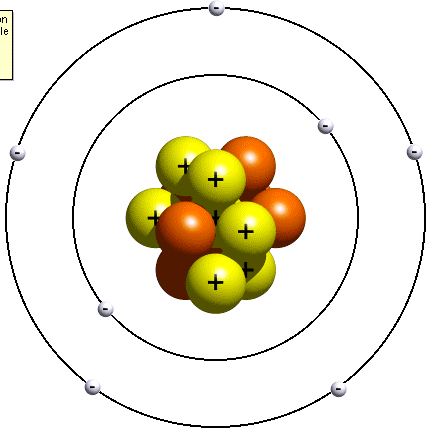
- AProton
- BNeutron
- CElectron
- DNitrogen
7Use the periodic table to answer.
What element has the electron configuration 2.8.1?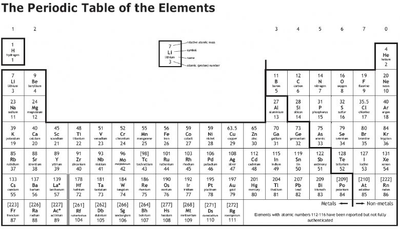
- ALithium
- BSodium
- CBoron
8A period is a row across the Periodic Table. There are trends in properties from left to right, e.g. metals to non-metals.
- AVerdadero
- BFalso
9The reactivity of Group 1 metals (alkali metals) increases.....
- A....up the group (the lowest is the least reactive)
- B....down the group (the highest is the least reactive)
10Why does the reactivity of alkali metals increase as you go down the group?
Choose the three that provide the best explanation when used together.- Athe atoms get larger as you go down the group
- Bthe outer electron gets further from the nucleus as you go down the group
- Cthe attraction between the nucleus and outer electron gets weaker as you go down the group - so the electron is more easily lost
- Dthe larger the atom, the easier it hits other particles when reacting, therefore increasing the reactivity
- EThe outer electron is further from the nucleus, so it is harder to lose
11All the Group 1 elements are very [blank_start]reactive[blank_end]. They must be stored under [blank_start]oil[blank_end] to keep air and water away from them. Group 1 elements form alkaline [blank_start]solutions[blank_end] when they react with water, which is why they are called alkali metals. All the alkali metals react [blank_start]vigorously[blank_end] with cold water. In each reaction, [blank_start]hydrogen[blank_end] gas is given off and the metal hydroxide is produced. The speed and violence of the reaction [blank_start]increases[blank_end] as you go down the group. The hydroxides formed in all of these reactions [blank_start]dissolve[blank_end] in water to form alkaline solutions. These solutions turn universal indicator [blank_start]purple[blank_end], showing they are strongly [blank_start]alkaline[blank_end].
- Areactive
- Boil
- Csolutions
- Dvigorously
- Ehydrogen
- Fincreases
- Gdissolve
- Hpurple
- Ialkaline
12What would you expect to see when a piece of potassium is placed into a large bowl of water?
- AFloats, fizzes, moves around quickly, sparks
- BSinks, no reaction
- CFloats, moves around slowly
13What hazard symbol might you see on sodium hydroxide or potassium hydroxide?
- ACorrosive
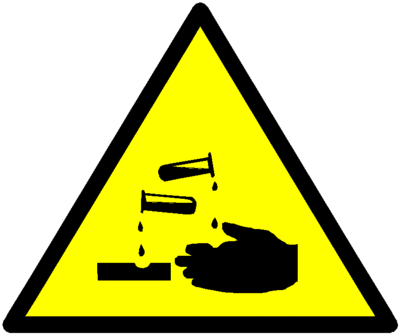
- BFlammable
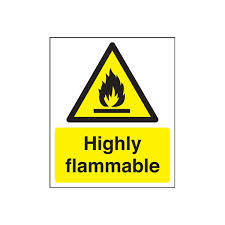
- COxidising agent
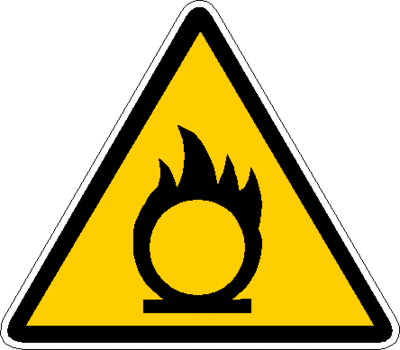
- ACorrosive
14The halogens have low melting points and low [blank_start]boiling[blank_end] points. This is a typical property of [blank_start]non-metals[blank_end]. Fluorine has the lowest [blank_start]melting[blank_end] and boiling points. The melting and boiling points then increase as you go [blank_start]down[blank_end] the group. Room temperature is usually taken as being 25°C. At this temperature, fluorine and chlorine are [blank_start]gases[blank_end], bromine is a [blank_start]liquid[blank_end], and iodine and astatine are [blank_start]solids[blank_end]. There is therefore a trend in state from gas to liquid to solid as you go down the group. The halogens become [blank_start]darker[blank_end] as you go down the group. Fluorine is very pale yellow, chlorine is yellow-green, and bromine is red-brown. Iodine crystals are shiny purple - but easily turn into a dark purple [blank_start]vapour[blank_end] when they are warmed up.
- Aboiling
- Bmelting
- Cnon-metals
- Ddown
- Egases
- Fliquid
- Gsolids
- Hdarker
- Ivapour
15Which of these is a use for chlorine?
- AIn plastics
- BAs a food additive
- CIn cosmetics
16Which is the correct ionic equation for the reaction of chlorine with potassium bromide?
- ABr2 + 2Cl- → Cl2 + 2Br-
- BCl2 + 2Br- → Br2 + 2Cl-
- CCl2 + Br- → Br2 + Cl-
17For non-metals, the smaller the atom (and so the fewer the electron shells) the more reactive the element.
- AVerdadero
- BFalso
18[blank_start]Ions[blank_end] are electrically charged particles formed when [blank_start]atoms[blank_end] lose or gain electrons. This loss or gain leaves a full outer shell, so the [blank_start]electronic[blank_end] structure of an ion is the same as that of a noble gas (such as helium, neon or argon).
Metal atoms and non-metal atoms do different things when they [blank_start]ionise[blank_end].
Metal atoms [blank_start]lose[blank_end] the electron, or electrons, in their highest energy level and become positively charged ions.
Non-metal atoms [blank_start]gain[blank_end] an electron, or electrons, to become negatively charged ions.- AIons
- Batoms
- Catomic
- Dionise
- Elose
- Fgain
19In ionic bonding, the metals are oxidised and the non-metals are reduced.
- AVerdadero
- BFalso
20What will be the formula of an ionic compound formed from calcium and oxygen?
- ACaO
- BCaO2
- CCaO3
21Why do ionic compounds usually have high melting points?
- AThe forces between the ions are very strong
- BThe ions are very heavy
- CThe ions are arranged in a very regular pattern
22When would sodium chloride conduct electricity?
- AWhen molten.
- BWhen dissolved.
- CWhen solid.
Información
- Descripción
- GCSE Chemistry Test sobre C4 Quiz, creado por Leah Firmstone el 13/11/2015.
- Autor
- Leah Firmstone
- Idioma
- English
- Visitas
- 190
- Etiquetas
- Valoración
- 3,0 de 5 · 1 valoración Valora este test