
Test
German Expressionism
Este test tiene tipos de pregunta que se abren en el reproductor de siempre.
Preguntas del test (10)
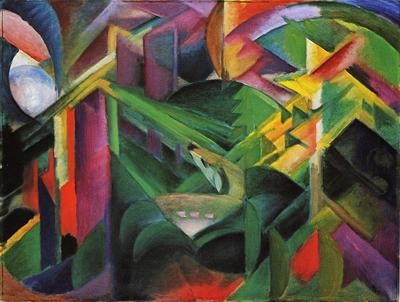
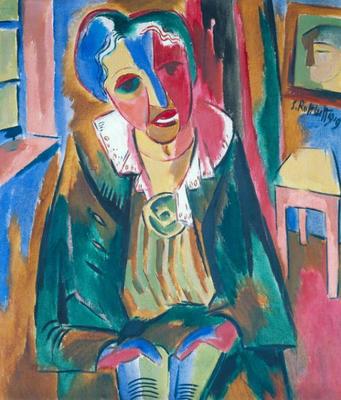
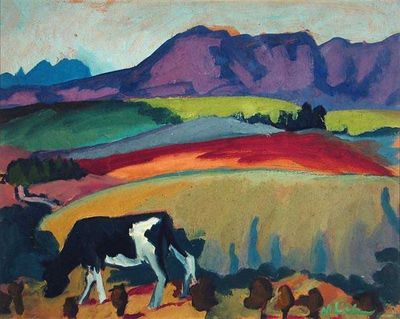
1Franz Marc painted the following image:
- A'Deer in a Monastery Garden'
- B'Dr Rosa Schapire'
- C'Landscape With Cow'
- A'Deer in a Monastery Garden'
2Edvard Munch was influential to the German Expressionists because of the following 3 reasons:
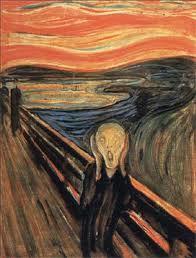
- AHis emotive use of colour
- BHis raw, expressive style
- CHis interest in the darker sides of the human mind
- DHis interest in God and the devil
- EHis love of poetry and the Viking sagas
- FThe philosophical essays he wrote about the power of female sexuality
3Label the expressive elements of this woodcut print by Karl Schmidt-Rottluff, 'Young Woman With Pigtails' (1917) with the appropriate effect.
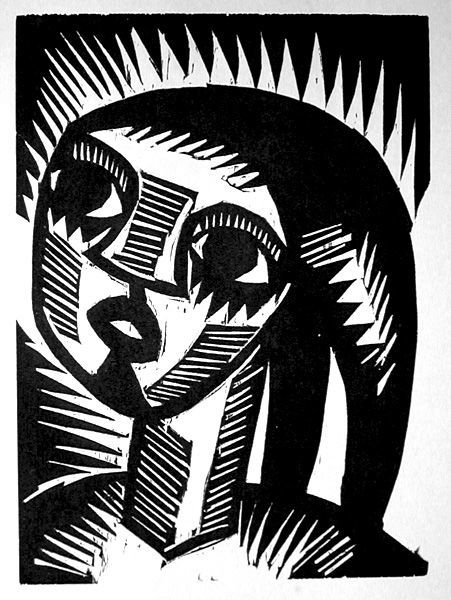
- ACreates an effect of energy and movement
- BShows the influence of primitivism
- CDecorative to break up the black space
- DPattern to add interest
- EImplies her youth
- FCreates a tension of emotion
- GMakes it appear primitive
- HMakes a throat for the figure
- ISavagery derived from primitive art
- JSimplified form
4Kandinsky was born in Germany
- AVerdadero
- BFalso
5In this work by Kandinsky, 'Composition IV' (1911) it is purely coincidence that you see anything that appears to be a recognisable object. That is why he gave it such an enigmatic title.
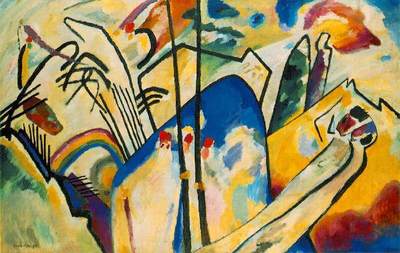
- AVerdadero
- BFalso
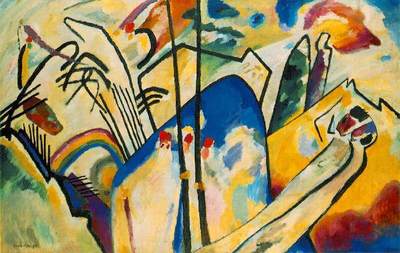
6Hidden within the bright swaths of color and the clear black lines of Composition IV, Kandinsky portrayed several [blank_start]Cossacks[blank_end] with [blank_start]lances[blank_end], as well as boats, reclining figures, and a castle on a hilltop. As with many paintings from this period, he represented the [blank_start]apocalyptic[blank_end] battle that would lead to eternal peace. The notion of battle is conveyed by the Cossacks, while the calm of the flowing forms and reclining figures on the right alludes to the peace and redemption to follow. In order to facilitate his development of a non-objective style of painting, as described in his text [blank_start]Concerning the Spiritual in Art (1912)[blank_end], Kandinsky reduced objects to pictographic [blank_start]symbols[blank_end]. Through his elimination of most references to the outside world, Kandinsky expressed his vision in a more universal manner, distilling the [blank_start]spiritual essence[blank_end] of the subject through these forms into a visual vocabulary. Many of these symbolic figures were repeated and refined in later works, becoming further and further abstracted as Kandinsky developed his mature, purely abstract style.
- ACossacks
- Bsoldiers
- Criders
- Dlances
- Erifles
- Fflags
- Gapocalyptic
- HNapoleonic
- Ispiritual
- JConcerning the Spiritual in Art (1912)
- KOn the Spiritual in Art (1911)
- Lspiritual essence
- Mtrue nature
- Nhidden truth
- Osymbols
- Preferences
- Qvalues
7The Nazi party rose to power during the 1930's due to the economic pressure created by the Great Depression, coupled with what the Germans saw as the unfair terms of the Treaty of Versailles after WWI. As such, they were intensely nationalistic and so embraced anything German - especially the homegrown art of Die Brucke and Der Blaue Reiter.

- AVerdadero
- BFalso
8Label 'Two Men at a Table' (1912) by Erich Heckel with the appropriate aspects that identify it as belonging to Die Brücke.
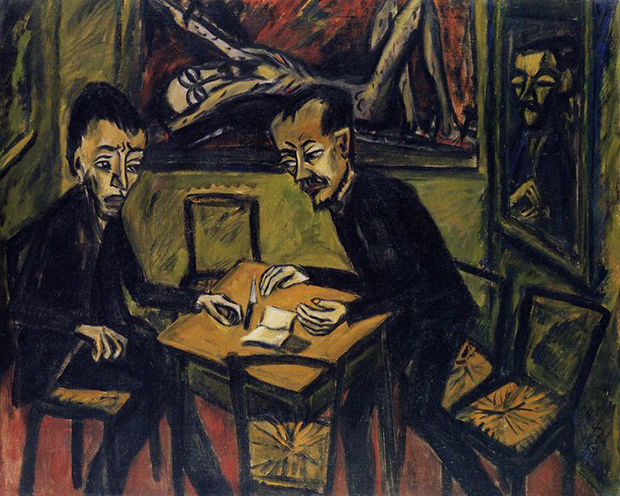
- ADark and brooding imagery
- BImages of Holy redemption
- CInterest in the human form
- DSymbolic figures
- EAngular and distorted foms
- FModern figures in a modern environment
- GSimple furnishings
- HPure colour
- IDistorted space
- JExpressive brushwork
- KClean colour
- LUse of symbols
- MIntense psychological subject matter
- NInterest in poetry
- OInterest in colour theory
- PInfluence of primitive art in forms
- QExtra detail to influence emotion
- RDirty colours convey emotion and offend
- SDirty colours show lazy technique
- TArbitrary use of colour
9German Expressionism is a cultural movement that is challenging to define as it is not distinguished by a singular style or method of creation, but rather is better described by both the mindset of the artist creating the work and the generation he or she lived in. The German Expressionists were artists, writers, and thinkers who were of age in Germany prior to World War II, and lived during Wilhelm II’s reign. German Expressionism developed as a result of the younger generation’s reaction against the [blank_start]bourgeois culture[blank_end] of Germany during this time period.
While German Expressionism is generally considered to be a pre-World War II movement, it came back into fashion in some circles after the war ended. The German Expressionist movement was more than just a style of creating works of art or of telling a story, rather it was more of a [blank_start]mindset[blank_end] that had social, cultural, and political aspects. German Expressionism can be understood as a means of approaching life and, in particular, change. A number of Expressionists shared the “belief that literature was capable of effecting profound changes in society.” German Expressionist literature frequently focused on the individual and his or her role in the story being told. The Expressionists sought to “arouse man against his temporal masters by constantly reminding him of his inalienable humanity.” German Expressionism was an all-encompassing movement that “extended into more areas of human intellectual endeavor, its adherents participating in agitation for and implementation of change in politics, economics, social structures, publishing, music, film, theatre, architecture, painting and literature.”
The significance of German Expression is in its ephemeral nature. Many of the publications that resulted from the movement were serials printed on [blank_start]cheap paper[blank_end] or items that were burned in the later half of the 1930s. The movement as a whole was transitional, and it reflected German culture in that moment of change. The movement did not last an especially long time, and started to fade out as its artists and writers [blank_start]aged[blank_end]. Expressionism has been described as a “movement of [blank_start]young[blank_end] people.” This is supported in that as the people who created Expressionist works grew older, a good number of them “ceased to write.” Expressionism was a movement that bridged the time between Wilhelm II’s reign and the start of World War II. As the National Socialists gained power in Germany, Expressionism was rejected and condemned, and many of the works produced in the style of the movement were burned and destroyed.
Even though Expressionism is frequently considered to be an art movement, German Expressionists included novelists, poets, and playwrights in addition to artists. The German Expressionist collection housed in Hornbake Library’s great strength is the literary aspect of the movement. The collection is a mix of serials and monographs of arts journals, political journals, novels, and plays.
German Expressionism is linked to a number of other contemporary movements whose goals were overturning traditional society. These movements all shared a desire to bring about changes in society, frequently with a focus on overcoming the bourgeois class and the strength of the individual. Expressionism itself, especially since it has been placed within the context of Modernism, is hard to specifically differentiate and so it does have a number of connections to other movements of its time. The Expressionists from the beginning “were divided into two groups: one which was [blank_start]metaphysically[blank_end] inclined and one in which political action and expediency predominated.” These two groupings were widespread enough that over time, German Expression has been grouped in with German Modernism. This form of Expressionism also shared ideas with and was influenced by Futurism, Dada, and other Expressionist movements- Abourgeois culture
- Bexpensive standard of living
- Cexploitative upper class
- Dmindset
- Ecult
- Fexclusive club
- Gcheap paper
- Hposters
- Irecycled cardboard
- Jgave up
- Kaged
- Lgot proper jobs
- Myoung
- Ndisaffected
- Odigusting
- Preligiously
- Qmetaphysically
- Resoterically
10Label the image 'Self Portrait with His Model' (1907), by Ernst Kirchner, with the appropriate techniques and effects
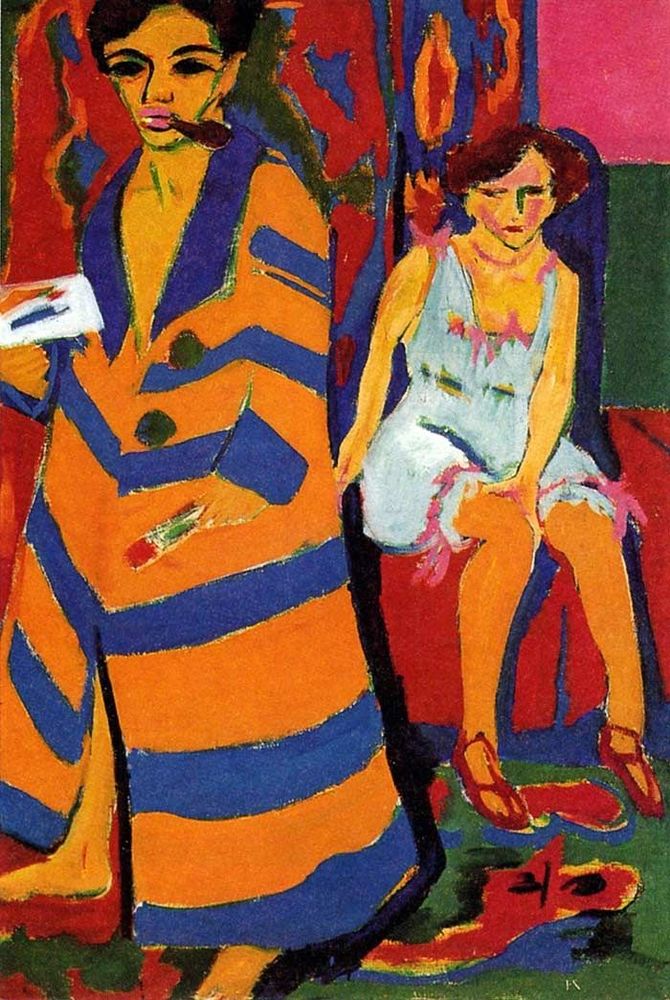
- AContrasting colours pull the eye
- BStripes create interest
- CColours create harmony
- DHot and cold scheme makes shadow
- EOutline to describe form
- Fpure colour
- GRaw canvas creates unfinished effect
- HRaw canvas to be filled later
- IWhite paint added to contrast the blue
- JPink ties the model to her surroundings
- KCreates heat
- LPulls the eye away from centre
- MSimplified face give nothing to focus on
- NInfluence of primitivism
- OGreen to remind viewer of Matisse
- PBlacked-out eyes reminiscent of mask
- QEyes dark to focus attention
- REyes outlined to make them clearer
- SClothing of both implies sexual freedom
- TClothing shows how fashionable they are
- UClothing shows how unusual Kirchner was
- VHeavy outline separates Kirchner
- WOutline emphasises pattern
- XOutline adds interest to the image
Información
- Descripción
- NCEA Level 3 art history Test sobre German Expressionism, creado por Erica Smith el 27/03/2017.
- Autor
- Erica Smith
- Idioma
- English
- Visitas
- 470
- Etiquetas
- Valoración
- Aún sin valoraciones Valora este test