
Test
Gas exchange and circulation
Crea una cuenta gratis para terminar este test
Guarda tu progreso y consulta tu resultado final.
¿Ya tienes cuenta? Inicia sesión
Preguntas del test (58)
1WATER CAN BE USED AS A RESPIRATORY MEDIUM
- AVerdadero
- BFalso
2DESCRIBE THE CONDITIONS OF THE RESPIRATORY SURFACE
- ASMALL
- BLARGE
- CDRY
- DMOIST
- ETHICK
- FTHIN
3GILLS ON THE BODY OF AQUATIC ANIMALS REDUCE THE SUFACE AREA FOR GAS EXCHANGE
- AVerdadero
- BFalso
4WHICH OF THE FOLLOWING IS NOT PART OF THE VENTILATION PROCES IN MARINE ANIMALS
- ATHE ANIMAL MOVES AROUND IN THE WATER
- BBLOOD FLOWS IN THE DIRECTION OF THE WATER PASSING OVER THE GILLS TO DIFFUSE THE HIGH OXYGEN CONCENTRATION
- CLOW OXYGEN CONCENTRATED BLOOD FLOWS TOWARDS OXYGEN RICH BLOOD THROUGH THE CAPILLARIES IN THE LAMELLA
- DWATER FLOWS THROUGH THE GILL FILLAMENTS
5ACCORDING TO SCIENCISTS GILL SLITS AND TAILS ARE EVEIDENCE OF EVOLUTION
- AVerdadero
- BFalso
6DESCRIBE THE TRACHEAL SYSTEM
- ATINY BRANCHING TUBES THAT PENETRATE THE BODY
- BTHICK RODS OF CHITIN
- CMUSCULAR CAPILLARIES THAT RUN THROUGH THE BODY
7THE TRACHEAL TUBES SUPPLY OXYGEN DIRECTLY TO THE HEART
- AVerdadero
- BFalso
8THE REPITORY AND CIRCULATORY SYSTEMS ARE SEPERATES
- AVerdadero
- BFalso
9IN ORDER TO MEET THEIR OXYGEN DEMANDS THE LARGER INSECTS MUST...
- AMOVE ABOUT MORE
- BVENTILATE THEIR TRACHEAL SYSTEM
- CDRINK MORE WATER
10LUNGS ARE AN OUTER FOLDING OF THE BODY SURFACE
- AVerdadero
- BFalso
11THE CIRCULATORY SYSTEM TRANSPORTS GASES BETWEEN THE LUNGS AND THE ....
- AALL MAJOR ORGANS SUCH AS THE SKIN THE BRAIN, LIVER ETC
- BTHE REST OF THE BODY
- CBRAIN AND MUSCLES
12WHICH FACTORS AFFECT AN ANIMALS METABOLIC RATE....
- ATHE SIZE AND THE COMPLEXITY OF THE LUNGS
- BWHETHER THEY LIVE ON LAND OR ARE MARIN ANIMALS
- CHOW MUCH FOOD THEY EAT
- DHOW FAST THE ANIMAL MOVES
13In Mammalian Respiratory Systems describe the conveying of gases
- AAir inhaled through the nostrils passes through the pharynx via the larynx, trachea, alveoli, where gas exchange occurs
- BAir inhaled through the nostrils passes through the pharynx via the alveoli larynx, trachea, bronchi, bronchioles, and , where gas exchange occurs
- CAir inhaled through the nostrils passes through the pharynx via the larynx, bronchi,bronchioles, and alveoli, where gas exchange occurs
- DAir inhaled through the nostrils passes through the pharynx via the larynx, trachea, bronchi, bronchioles, and alveoli, where gas exchange occurs
14Exhaled air passes in and out the vocal cords to create sounds
- AVerdadero
- BFalso
15what is the name of the secretion on the surface of the alveoli
- AADH
- Bamylase
- C surfactants
16what is the name of the blood vessel which carries oxygen rich blood to the body cell from the alveoli and what is the name of the blood vessel which carries oxygen poor blood from the cells to the alveoli surface
- Apulmonary artery and pulmonary capillary
- Bpulmonary vein and pulmonary artery
17Air is drawn down into the lungs as there is positive pressure in the lungs
- AVerdadero
- BFalso
18What is the name of the volume of air inhaled with each breath
- Avital capacity
- Bresidual volume
- Cpeak flow
- DTidal volume
19Where is the control center for regulating breathing
- AThe medulla oblongata and the pons in the brain
- BHypothalmus and anterior pituitary gland in the brain
- CThe cerebral cortex and posterior in the brain
20Which of the following are involved in the regulating of breathing?
- AThe medulla regulates the rate and depth of breathing in response to pH changes in the cerebrospinal fluid
- BThe medulla adjusts breathing rate and depth to match metabolic demands
- CThe pons regulates the tempo
- DSensors in the aorta and carotid arteries monitor O2 and CO2 concentrations in the blood
- EThese sensors exert secondary control over breathing
- FAll of them
21Describe the pressure in the lungs relative to the pressure in the alveoli
- Ahigh partial pressure of of O2 to high partial pressure of CO2
- Bhigh partial pressure of O2 to high partial pressure of CO2
22In tissue capillaries, partial pressure gradients favor diffusion of O2 into the interstitial fluids and CO2 into the blood
- AVerdadero
- BFalso
23 hemoglobin, blood plasma, binds to the ..... which diffuses into the blood
- ACO2
- BN
24Unicellular organism can exchange material directly with their envrionment
- AVerdadero
- BFalso
25Transport systems connect the organs of exchange with other organs
- AVerdadero
- BFalso
26More complex animals have a transport system that circulate fluids
- AVerdadero
- BFalso
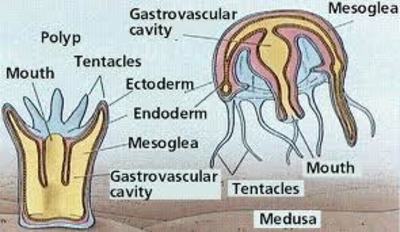
27Simple animals like cnidarians have a body wall of how many cells thick? Which enclose a gastrovascular cavity.
- A1
- B2
- C3
- D4
- Emultiple
28Distribution of substances and digestion in simple animals take place in 2 different cavities
- AVerdadero
- BFalso
29Describe the three basic characteristics of open or closes circulatory system
- AThey have 4 chambers to the heart
- BA set of tubes (blood vessels)
- C A muscular pump (the heart)
- DBlood can be mixed
- EA circulatory fluid (blood or hemolymph)
30Blood covers the organs directly in an open circulatory of which organism
- Ainsects other arthropods and most molluscs
- Bbirds, reptiles and fish
- Cmammals
31Blood covers the organs directly in an open circulatory of which organism
- Ainsects other arthropods and most molluscs
- Bbirds, reptiles and fish
- Cmammals
32The general bodily fluid mixture of blood and interstitial fluid, of open circulatory systems is known as Hemaglobin
- AVerdadero
- BFalso
33Which of the following is not considered a function of an open system
- ABlood flows in vessels under high pressure
- BOpen in to common cavities called hemocoel
- CFew blood vessels, but not extensive
- DExchange of material between cells and blood (or hemolymph) is direct
- EFew blood vessels, but not
extensive
34Describe which of the following doesn't describe the function of an closed circulartory system organsim
- ABlood is confined to vessels and is distinct from the interstitial fluid
- BMaterial enters and exits via the blood vessels
- CThe blood vessels have thin walls
- DBlood transport is efficient as it flows blood at high pressure
- EBlood vessels are branched into fine capillaries which are involved in the exchange of materials
35Earth worms have 3 auxillary heart pumps which pump blood down to 2 ventral vessels
- AVerdadero
- BFalso
36All of the following describe an open circulatory system:
Little or no pressure (heart)
Slower circulation (body movements)
Little control of flow direction
More direct exchange- AVerdadero
- BFalso
37All of the following describe a closed circulatory system:
Higher pressure (heart, arteries)
Faster circulation
Precise control of path of blood flow
Faster exchange- AVerdadero
- BFalso
38Which organisms have a closed circulatory system called the cardiovascular system
- Ahumans and other vertebrates
- Bfish and crustaceans
39What is the missing word in this sentence. Arteries branch into ...... and carry blood to
capillaries- A Arterioles
- Baorta
- CPurkinje fibers
40The capillary bed is the..
- ANetworks of capillaries which are the chemical site exchange between the blood and the interstitial fluid
- BNetworks of capillaries which are the chemical site exchange between the blood and the cells
- CNetworks of capillaries which are the chemical site exchange between the blood alveoli
41Wis the name of the very small blood vessels which converge into veins and return blood from
capillaries to the heart- AVenules
- Bventricles
42In single circulation system, blood leaving the heart passes through two capillary beds before returning
- AVerdadero
- BFalso
43In single circulation system, blood leaving the heart passes through two capillary beds before returning
- AVerdadero
- BFalso
44What are the names of the two sets of capillaries in single circulation
- Agill capillaries
- Blungs
- Csystematic capillaries
45Other than humans which other animals have a double circulatory systems
- Aathropods
- B bony fish
- Creptiles
- Damphibians
46Which of the three don't have a double circulatory system where the blood mixes
- Aamphibians
- Breptiles
- Cmammals and birds
47In the cardiac cycle the relaxing of the muscles is called the systole
- AVerdadero
- BFalso
48The stroke volume is the
- AAmount of blood pumped in a 60 contraction
- B Amount of blood pumped in a single contraction
- CAmount of blood pumped without a single contraction
49The cardiac output is the volume of blood pumped into the systemic circulation per minute and
depends on both the heart rate and stroke volume- AVerdadero
- BFalso
50Arteries have a thicker wall than the veins... Why?
- Ato accommedated for the higher pressure of blood being pumped around the body
- Bthe lumen is large
- Chigh pressure in the vessel could lead to a rupture in the thinner vein
- Dthe blood is only moving in one direction
51 The contraction of smooth muscle in arteriole walls; it increases blood pressure is known as
- AVasodilation
- BVasoconstriction
52The relaxation of smooth muscles in the arterioles; it causes blood pressure to fall is know as
- AVasoconstriction
- BVasodilation
53 Giraffes cope with having long necks an pumping blood round their body and their head by having an extremely high blood pressure (280/180 mm Hg) which is twice that found in humans
- AVerdadero
- BFalso
54Which of the flowing is NOT affected by blood being moved through veins
- Asmooth muscle contraction
- Bexpansion of the vena cava with inhalation
- Cskeletal muscle contraction,
- Dveins expand
55What condition is not caused from a build up of fatty deposits in the coronary arteries (atherosclerosis)
- Aheart murmur
- BArteriosclerotic Cardiovascular Disease (ASCVD)
- C, Ischemic Heart Disease (IHD
- DCoronary Heart Disease (CHD
- ECoronary Artery Disease
56lack of oxygen tot he heart is called an infarction
- AVerdadero
- BFalso
57Hardening of the arteries (atheriosclerosis) can cause.. select 4
- Ahigh blood pressure
- Bdamaged veins
- C(angina) in the coroanary artery
- Dcomplete blockages a heart attack
- Eartery near the brain stroke
- Fartery in the leg – peripheral vascular disease
58The percentage composition of blood is 60 plasma and 40 cellular elements
- AVerdadero
- BFalso
Información
- Descripción
- Describe the exchange of gases Things in common i.e. ventilation and gas exchange Specifically focus on the lungs and in tissues in humans
- Autor
- michelle_simms_w
- Idioma
- English
- Visitas
- 136
- Valoración
- Aún sin valoraciones Valora este test