
Cost measurement

Diapositivas del conjunto (7)
-
-
- DEFINITION of 'Historical Cost' A measure of value used in accounting in which the price of an asset on the balance sheet is based on its nominal or original cost when acquired by the company.
- For example, land purchased in 1992 at cost of £80,000 and still owned by the buyer will be reported on the buyer's balance sheet at its cost or historical cost of £80,000 even though its current cost, replacement cost, and inflation-adjusted cost is much higher today.

-
- A method of accounting in which assets are valued on the basis of their current replacement cost, and increases in their value as a result of inflation are excluded from calculations of profit.
- For example
- Time Spent on Accounting = 15 hours What You Earn Per Hour = £65 Per hour Cost of doing your own accounting = £975 (£65 x 15) Less: Our Accounting Fee = £400 Your Net Savings = £575 (£975-£400)
-
- Net realizable value (NRV) is a method of evaluating an asset's worth when held in inventory.
- NRV is part of the Generally Accepted Accounting Principles and International Financial Reporting Standards (IFRS) that apply to valuing inventory, so as to not overstate or understate the value of inventory goods.
- Net realizable value is generally equal to the selling price of the inventory goods less the selling costs (completion and disposal).
- It is expected sales price less selling costs (e.g. repair and disposal costs).

-
Example of Net Realisable Value
- ABC International has a green widget in inventory with a
- cost of £50.
- The market value of the widget is £130. The cost to prepare the
- widget for sale is £20, so the net realizable value is £60 (£130 market value -
- £50 cost - £20 completion cost).
- Since the cost of £50 is lower than the net realizable
- value of £60, you continue to record the inventory item at its £50 cost.
- In the
- following year, the market value of the green widget declines to £115. The cost
- is still £50, and the cost to prepare it for sale is £20, so the net realizable
- value is £45 (£115 market value - £50 cost - £20 completion cost).
- Since the net realizable value of £45 is lower than the
- cost of £50, you should record a loss of £5 on the inventory item, thereby
- reducing its recorded cost to £45.
-
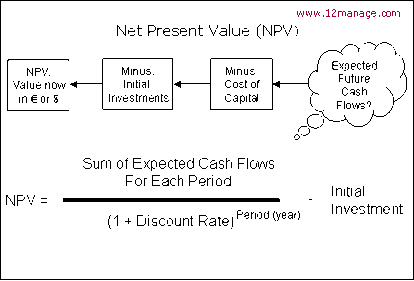
- Definition
- The
- difference between the present value of the future cash flows from an
- investment and the amount of investment.
- Present value
- of the expected cash flows is computed by discounting them at the required rate
- of return.
-
Example of Net Present Value (NPV)
- The difference
- between the market value and it’s cost = Value Added.
- Example:
- ·
- Point
- of view = Asset Buyer
- ·
- If:
- ·
- Cost
- = £200,000
- ·
- Market
- Value (Present Value Future Cash Flows) = £201,036
- ·
- NPV
- = £201,306 - £200,000 = £1,036
Información
- Descripción
- Question 4 Measurement bases
- Creado por
- shuma32
- Visitas
- 79
- Etiquetas
- Valoración