
Fichas
semantics
Fichas del conjunto (32)
- 1the sameness of meaningsynonymy
- 2similarity of meaningnear synonymy
- 3flat/apartment SYNONYMS or NEAR SYNONYMSsynonyms
* they have the same TRUTH VALUE CONDITIONS
* "He lives in a good apartment" ENTAILS and is entailed by "He lives in a good flat"
* it will be SELF-CONTRADICTORY to say: "he lives in a good apartment but not a good flat"
* So, flat and apartment are identical in meaning - 4time/tense SYNONYMS or NEAR SYNONYMSnear synonyms
* for example, "this is the right time" neither entails nor is entailed by "this is the right tense"
* it will NOT be self-contradictory to say: "this is the right time, but not the right tense"
* so, time and tense only have similar meanings - 5ABSOLUTE / PARTIAL SYNONYMYconditions of absolute synonymy:
1. identical meaning
2. under all conditions (+ve/-ve)
3. in all contexts (collocation range)
4. at all levels of meaning (intended & literary)
if any of these conditions are not met, it's partial synonymy - 6large / big commence / begin nuts / crazy father / dad fright / fearSYNONYMS
- 7fog / mist hotel / motel flower / rose read / recite dive / plungenear synonyms
- 8The semantic relation that holds between two lexemes that can (in a given context) express OPPOSITE MEANINGSANTONYMY
- 9* The assertion of one (member of a pair) entails the negation of the other (member). * The negation of one does not entail the assertion of the other. There is always some middle ground.GRADABLE ANTONYMS
strong/weak
If John is strong is true then John is weak is necessarily false.
being not weak does not necessarily mean being strong - 10The assertion of one (member of a group) entails the negation of all the other (members of the group). The negation of one member does not entail the assertion of any other particular member of the group. There are always other members, some middle ground.ANTONYMOUS GROUPS
east / west / north / south
If 'This is RED' is true then 'This is Blue, Green or Yellow' must be necessarily false
being not RED does not necessarily mean being Green, being Yellow or
being Blue - 11Not only does the assertion of one (member of a pair) entail the negation of the other, but the negation of one also entails the assertion of the other. There is no middle ground between the two members of a pair.COMPLEMENTARY ANTONYMS
dead / alive
If John is not alive then
he must be dead and vice versa - 12A logical relation such that two propositions are contraries if both cannot be true but both can be false.CONTRARIETY (~تناقض)
no angles can fly / all angels can fly
the assertion of one proposition entails the negation of the other, but the
negation of one does not entail the assertion of the other- There is always some
middle ground. If (No ...can ...) is false then it is not necessarily the case that (All
...can ...) is true. - 13A logical relation of words or propositions so related that both cannot be true and both cannot be false at the same time.CONTRADICTION (~تضاد)
no angles can fly / some angels can fly
Not only does the assertion of one proposition entail the negation of the other, but the
negation of one also entails the assertion of the other. If (No ... can ...) is false, the
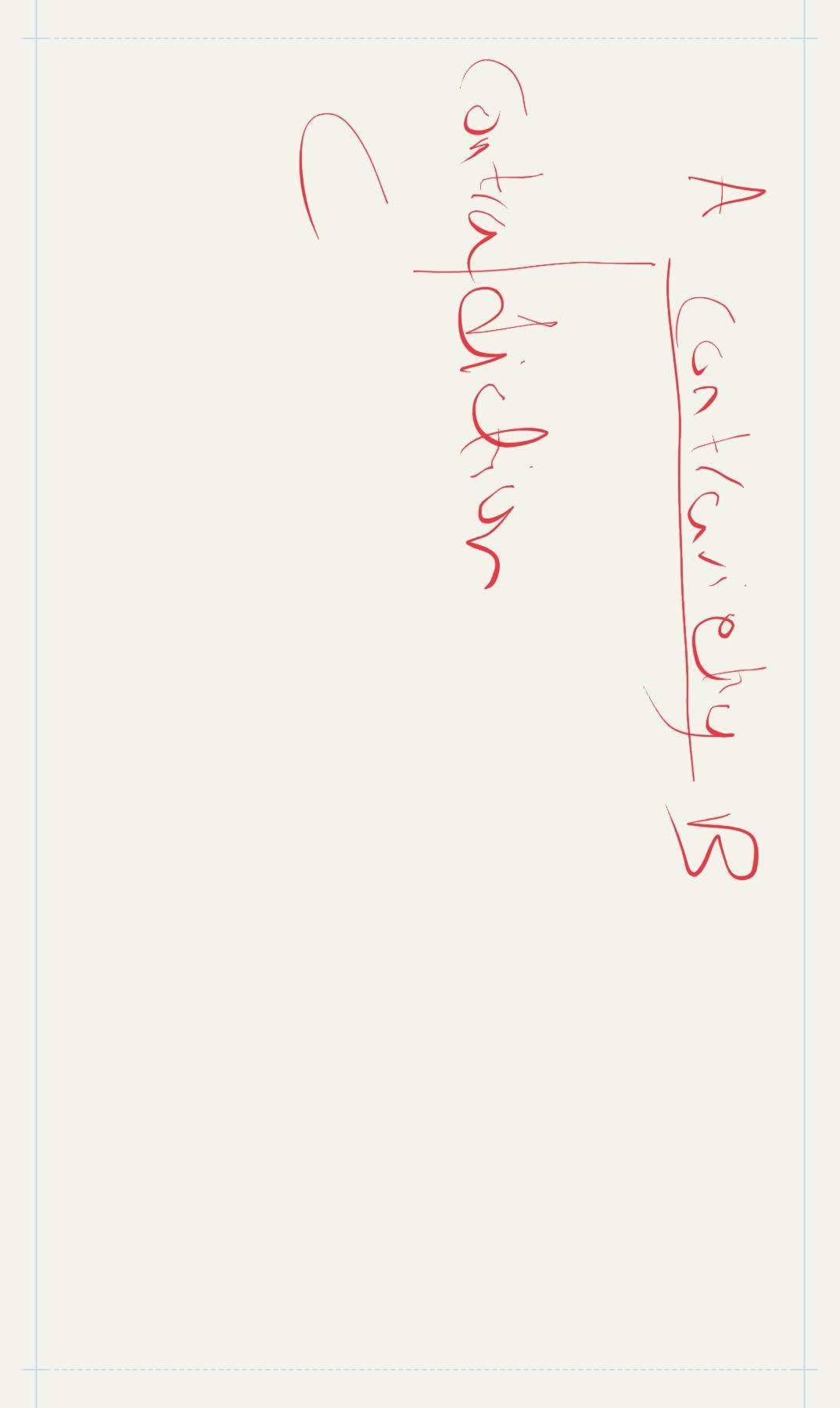
(Some ...can ...) must be true, and vice versa. - 14--N.B.-- contrariety and contradictionWe are concerned with propositions or statements here rather than individual lexical
items.
A no--- contrariety --- B all
l
l
l
contradiction
l
l
l
C some - 15HYPONYMY...* a relation of inclusion closely related to culture (cz not always logical)
* hierarchical - unmarked hypernym superordinate / marked hyponym subordinate
- unmarked: the norm, general
- marked: specified by adding extra feature, meaning
* knowing the marked blocks the unmarked - 16literature / poetry / sonnetitem - hyponymous relation - markedness V unmarkedness
1. literature - hypernym - unmarked
2. poetry - hyponym / hypernym - marked / unmarked
3. sonnet - hyponym - marked - 17hyponymy examples...colour - red - crimson
mammal - elephant - mammoth
literature - poetry - sonnet
prose - narrative - novel/novela/short story/fitction
plant - vegetable - potato - 18cultural examples of hyponymy...* sea insects - shrimp KSA
sea food - shrimp EGY
* starchy food - potato EUR
vegetables - potato - 19--N.B.-- homonymy and polesymySemantic phenomena arising from ambiguity are quite common. Ambiguity
is used herein as a general term to describe the state of uncertainty regarding
the meaning of a passage, an expression, a sentence, or a phrase, owing to
the lack of clarifying clues or hints.
For the purpose of this (semantics) course, however, the basic semantic phenomena
arising from ambiguity which we shall discuss can be fairly be classified into
two major types: homonymy and poelsymy - 20ABSOLUTE HOMONYMYAbsolute homonymy is the case of two or more lexical items
that
(1) Are identical in form but have different unrelated meanings.
(2) All
their forms are identical.
(3) All their identical forms are grammatically
equivalent. - 21PARTIAL HOMONYMYIf the second and/or third condition (of absolute homonymy) may be missing, it is a case of partial
homonymy. - 22Bank absolute or partial homonymy?absolute
(A financial institution or the side of a river).
All the forms are identical, and all the identical forms are grammatically
equivalent too (Noun singular & noun plural) - 23found absolute or partial homonymypartial
(Found (past tense of to find) & وجد
Found (present simple of “to found” =”to establish”). Not all the forms are
identical and even the identical ones are NOT grammatically equivalent. - 24POLESYMYIt is the case of one lexical item that covers a wide range of
related meanings.
Examples in English are lexemes such as (uncle or aunt),
each of which may refer to two related concepts: brother of the mother or
brother of the father in the case of “uncle” and sister of the mother or the
father in the case of “aunt”. - 25FULL IDIOMS V. PARTIAL IDIOMSfull idioms can only be interpreted at the idiomatic level
ex: kick the bucket
partial idioms can be understood at the idiomatic level as well as the literal level
ex: give me a hand - 26COLLOCATION RESTRICTION TYPES semantic arbitrary by rangesemantic - black tea - darkest shade of color tea could have
arbitrary - rancid bacon - no logical reason whatsoever
by range - flock of birds - only used with reference to a group of birds - 27TIME TENSE ASPECTTime= A general philosophical concept that is common to all cultures, all peoples
and all languages
Tense= A grammatical category closely associated with verb conjugation.
Aspect= Usually formed through the use of auxiliary verb/s with no particular
interest in the exact time of the action. (Perfect- Progressive) - 28SER anaylsis
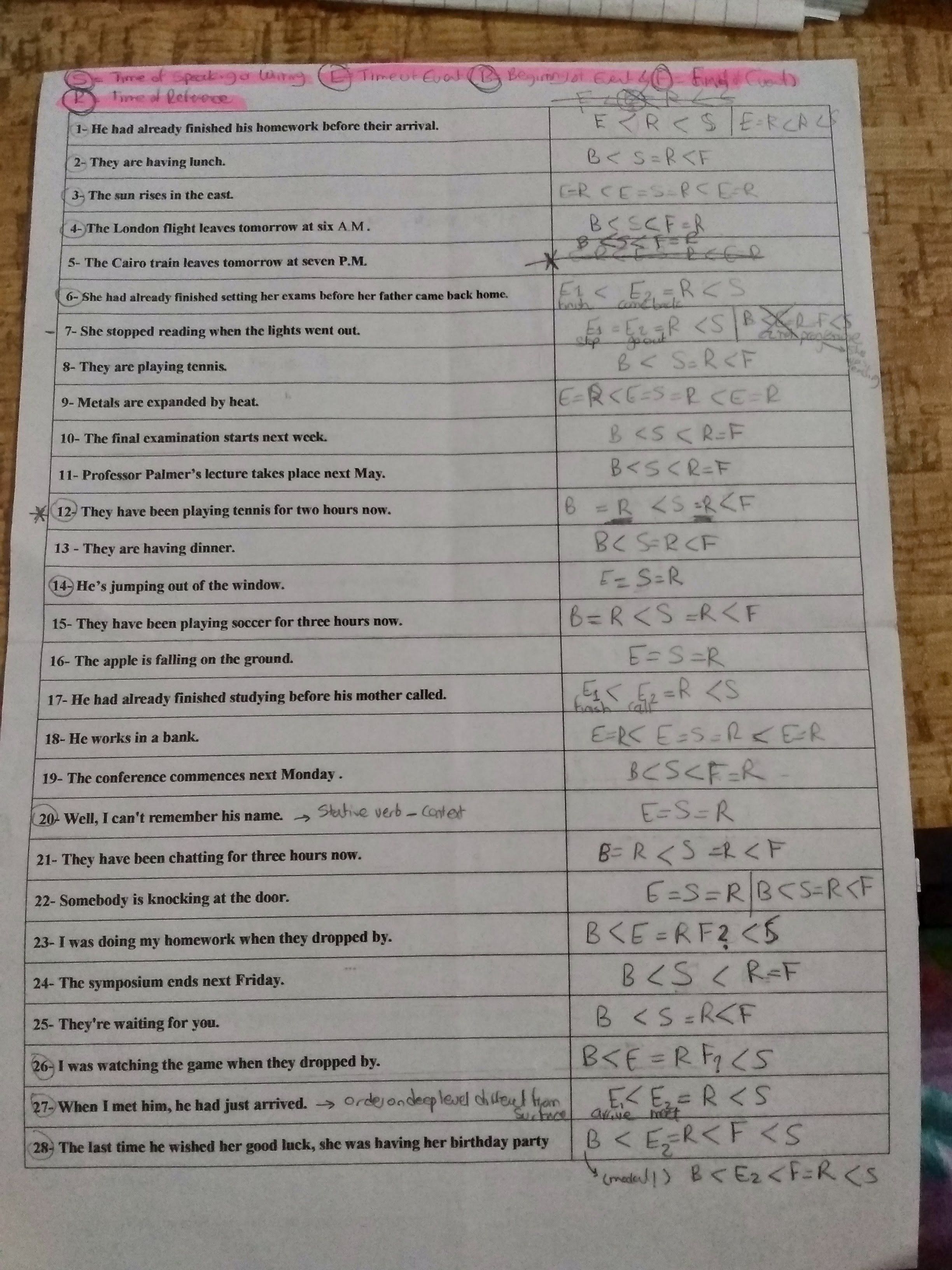
- 29DEICTIC SYSTEMS...
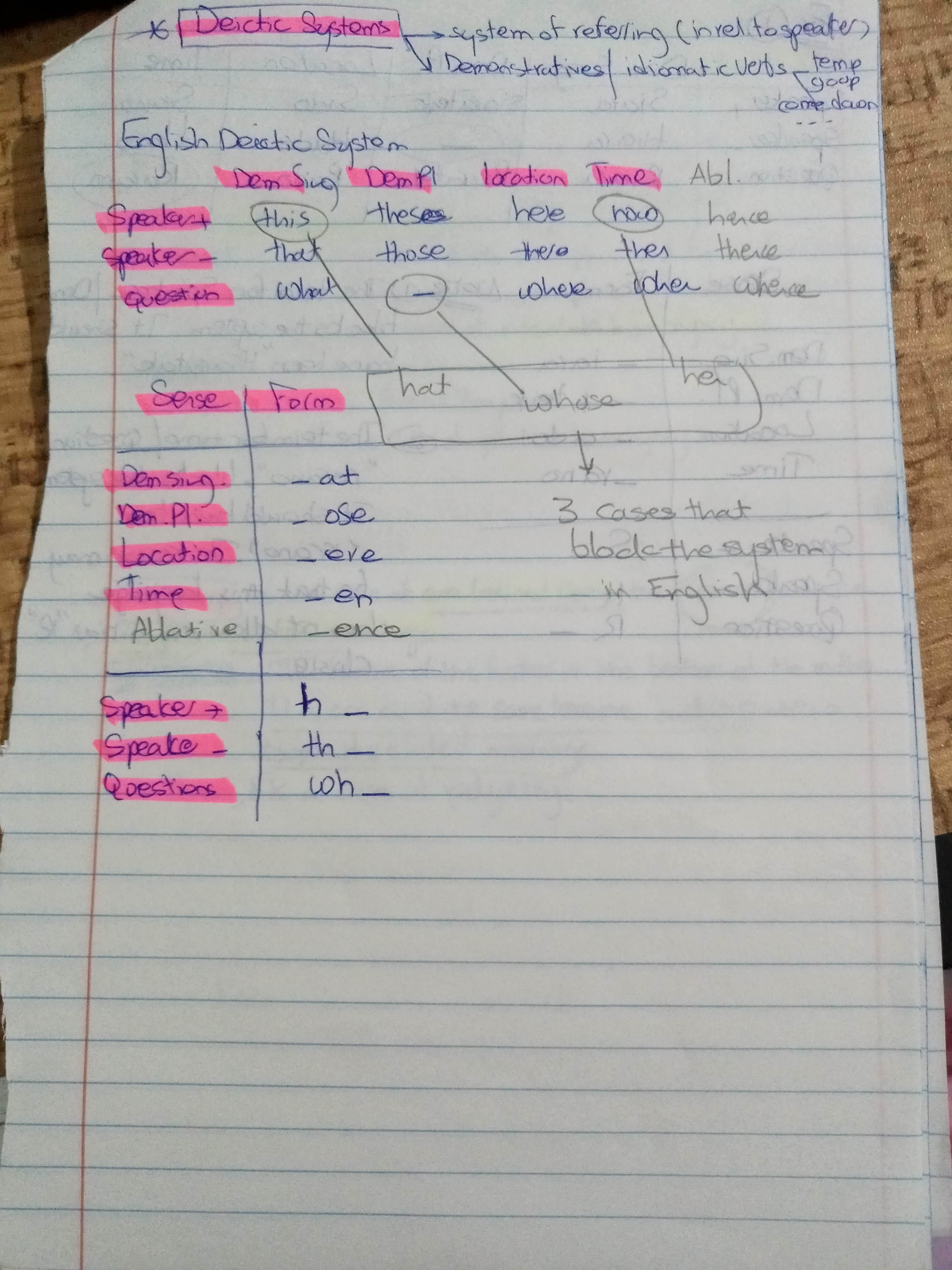
- 30DEICTIC SYSTEMS...
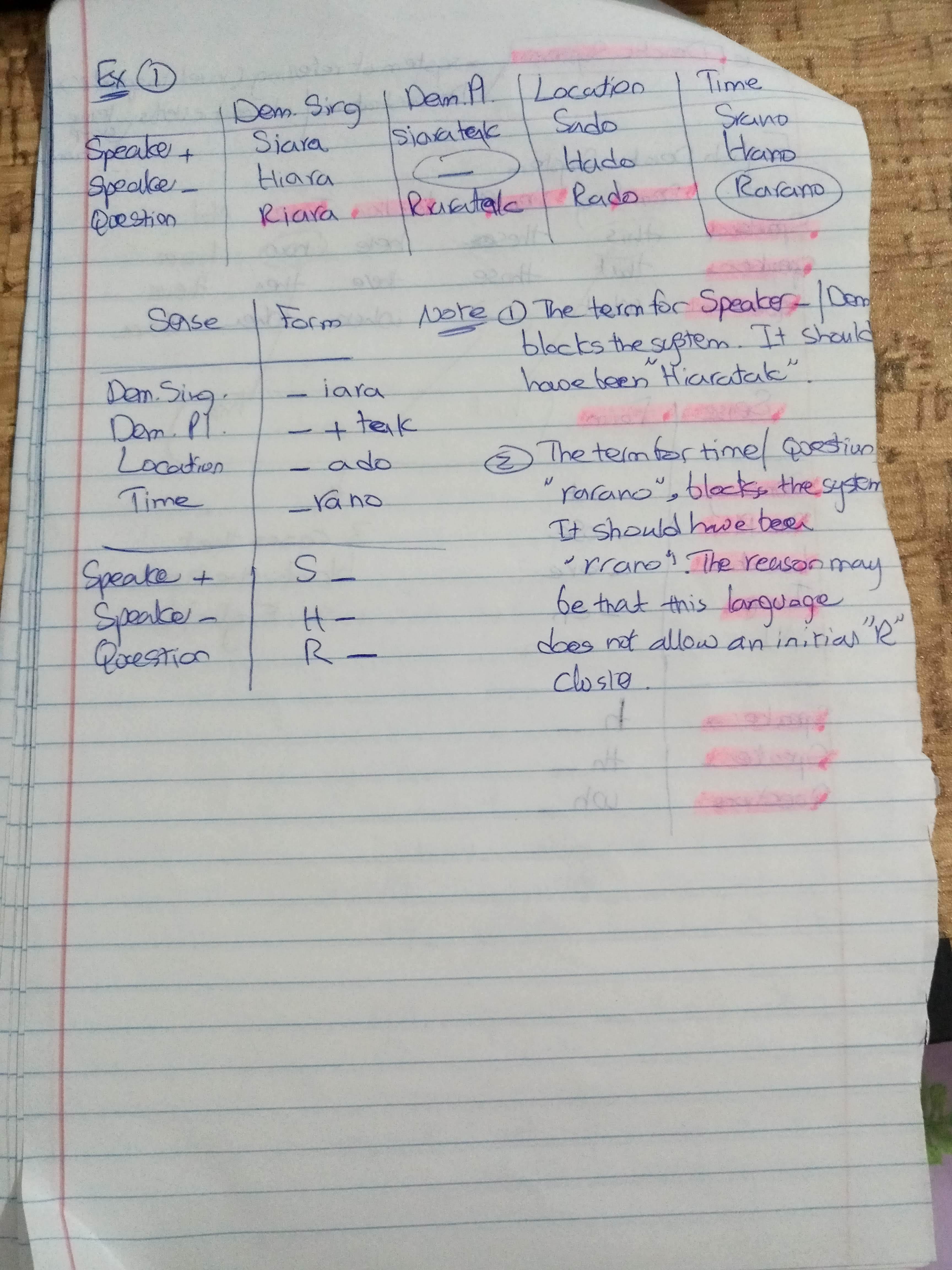
- 31...modality...* modal verbs / auxiliary verbs - Germanic
* give info on the "mood" of the main verb that follows
* two distinct interpretations - epistemic (factual status) / deontic (logic of obligation and permissablitlity)
* must = obligation / should = recommended / can = possible / may = choice
* ...properties... - 32...natural V nominal kind terms?!
* hyponomy & taxonomy
* natural - cat
nominal - stallion
Información
- Descripción
- Fichas sobre semantics, creado por Omnia M el 08/10/2019.
- Creado por
- Omnia M
- Visitas
- 10
- Etiquetas
- Valoración