
Fichas
ocr gcse computing - chapter 1
Fichas del conjunto (34)
- 1What is a computer?An electronic, programmable data processing machine
- 2What is a system?A collection of parts that work together for some defined purpose
- 3What is a computer systemA collection of hardware and software that works together to achieve some data processing task
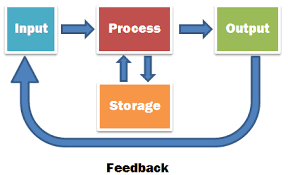
- 4What is the outline of a system?
- 5What is an interface?A system boundary that seperates the system from the outside world.
- 6What the importance of computer systems and what have they led to?Improved quality of manufacturing - more accurate robots
Cheaper manufacturing
Faster access to information
Better decision making - lots of facts available
New ways of doing business - e.g. buying online
New ways of communicating - 7What is an example of a computer system?Washing machine
Input: temperature, water levels
Processing: check values, determine parameters
Output: Signals to washer, heater, and timer - 8What are general - purpose systems?Personal computers, such as PCs, laptops, mobile phones etc
Designed to perform multiple tasks
Various applications can be loaded to broaden purposes of computer - 9What are dedicated computers?Computer systems specially produced to perform a single function or set of functions, e.g. a train ticket vending machine
- 10What are control systems?Control systems control machinery, rather than producing output for humans to read or respond to.
Particularly important in manufacturing processes and domestic personal gadgets - 11What are embedded systems?Computer systems that are part of a larger system - usually control systems.
Can be both simple and high - complex
Found in portable devices, machinery control, traffic lights, cars and aircrafts etc - 12What are expert systems?Computer systems used to behave like a human expert.
3 component parts: knowledge base, inference engine, interface.
Used for diagnosing diseases, finding faults in machinery, suggesting purchases to customers etc - 13What are management information systems?Bring together the information from different parts of an organisation so managers can make sensible decision.
They cover technology, data etc
Produce regular reports on data.
E.g. Office automation systems - automate workflow and maximize the efficiency of data movement. - 14Why do computers need to be reliable?They can play a part in life-or-death situations.
E.g. aircraft navigation controls, railway signaling, medical record keeping, medical CAT scans
Reliability is expected when new computer systems are commissioned. - 15What is data integrity?Stored data reflects real world reality, and data is accurate and consistent throughout its life.
Databases have rules that prevent inconsistent changes. - 16What do computer reliability faults lead to?down time
expensive errors
data loss
compromised privacy - 17What can data integrity be compromised by?human error when data is entered
errors when data is transmitted from one computer to the other
software bugs
viruses/malware
hardware malfunctions
natural disaster
reduce risks by: regular back ups, controlling data access, using validation rules - 18How is system reliability improved?Through tests that are designed to uncover errors
There are usually errors as there are huge numbers of pathways through modern computers. - 19What are standards?These are conventions and rules that are normally defined by a responsible organisation.
Standards exist for programming languages, operating systems, data formats, communication protocols, electrical interfaces - 20Why are standards important?Enable equiptment from different manufacturers to work together
make learning new systems easier due to similar characteristics
minimize waste
help ensure fair play and access to markets
bring costs down - 21What are de facto standards?Standards used by the majority of computer systems and organisations due to common use over time,
e.g. PostScript, QWERTY keyboard, Microsoft Word - 22What are de jure standards?De facto standards that have have become so universally accepted that they have to be used otherwise communication with other systems in impossible
e.g. TCP/IP, ASCII, PDF - 23What are proprietary standards?Standards owned by an organisation that ensure compatibility between a company's products
Also used to reduce competition between rivals
Are often widely used but not approved by an independent standards body.
e.g. any developers who want to sell products to windows users have to be compatible to microsoft proprietary standards/ - 24What are industry standards?Set by recognized non-commercial organisations
E.g. ANSI-for some programming languages , IEEE-for electrical interfaces, ITU-communication protocols - 25What are open standards?Publicly available
produced collaboratively
not dominated by any one interest group
not for profit and available for free or for small cost
ensure that access to resources do not depend on a single application or a particular hardware platform
e.g. HTML, HTTP, TCP/IP - 26What is an ethical act?One that is morally 'right'
- 27What is a lega act?One that does not break laws
- 28What ethical challenges has wide spread computer use created?Privacy
Data security
Acces to sensitive data
Copyright
Terrorism - 29Why legislation is produced to protect data on computer systems?As it is very easy to copy data, transmit data, and match data.
Governements have produced laws to protect individual privacy when data is stored on computer systems, e.g. UK Data Protection Act - 30What do typical data protection laws include?Allowing people to view data held about them
correct information when requested
Not use data in damaging/distressing ways
only collect data for law purposes - 31What is cyber crime?Crimes committed with the aid of computers.
Hard for the police to catch criminals as the internet crosses international boundaries where laws can differ. - 32How are computer systems good for the environment?Reduce the need for travel and transport of goods
Manufactured goods can be produced by robots, increasing accuracy and producing more efficient products that last longer and use energy more efficiently - 33How are computers bad for the environment?Produce large amoutns of e-waste from disposed of hardware.
e-waste is shipped to developing countries that have fewer safeguards
Produces landfill and toxic chemicals
Produce dangerous chemicals from dioxins - 34What are ways to reduce energy usage from computers?Virtual servers reduce the number of physical servers in data centre
solid state storage used less energy then rotating disk drives
automatic standby switching turn off computers when not in use
laying out hardware efficiently to increase cooling
set air conditioning to optimum level
Información
- Descripción
- GCSE Computer Science Fichas sobre ocr gcse computing - chapter 1, creado por Alice Lang el 05/03/2017.
- Creado por
- Alice Lang
- Visitas
- 15
- Valoración