
2666816
Description

Flashcards by Ringisai Campbell, updated more than 1 year ago
|
|
Created by Ringisai Campbell
over 10 years ago
|
|
| Question | Answer |
| Circle | Area= πr2 Circumference= 2πr |
| Probility | Put in percentage, or fraction or decimal. P= the number of ways an event can occur/ the total number of possible outcomes |
| Measurement Units | 100mm=1cm 100cm=1M 1000M=1km kilo-> 1000 |
| Persentages | converting: 65%=0.65=16/25 In/decrease: actual de(in)crease/orginal amount *100 |
| Numbers | Rational: is a number that can be written as a simple fraction Multiples: is the product of any quantity and an integer Fractors: numbers that you can multiply together to get another number Primes: can only be divided by 1 or itself. LCM: lowest common multiple HCF: highest common factor |
| Factorising | 2x²-1x-6 =(2x+3)(x-2) |
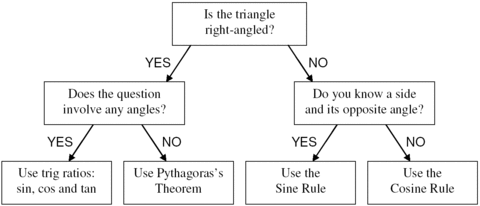
| Triganometry (SOHCAHTOA) | SOHCAHTOA Silly Old Hagrid Caught A Hippogriff Trotting Over Apples Sin=oposite/hypothenuse Cos= ajasent/hypothenuse tan= opposite/ajasent |
| Trigonometry Area | If we know the height we can use: A= 1/2×ab×sin(c |
| Averages | Mode: most common Median: the middle number when arranged in acceding order. Range: spread of data mean: all numbers divided by amount of numbers. |
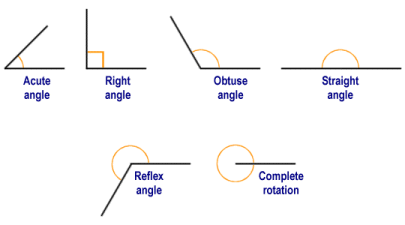
| Angles | acute= 0° to 90° obtuse=90° to 180° reflex=180° to 360° right angle=90° |
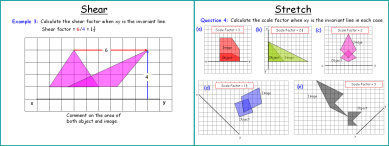
| Shears & Stretch | |
| Pie charts and Percentage. | Percentage= frequency/total frequency ×100 |
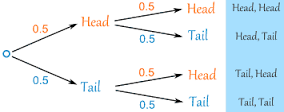
| Probability tree | |
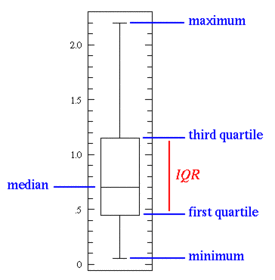
| Box Plots | |
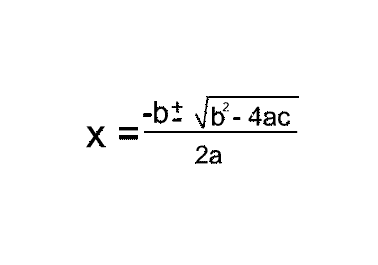
| Quadratic Equations | ax ²+bx+c=0 |
| Shapes | 3 side- triangle-180° 4-quadrilateral-360° 5-pentagon-540° 6-hexagon-720° 7-heptagon-900° 8-octagon-1080° 9-nonagon-1260° 10-decagon-1440° |
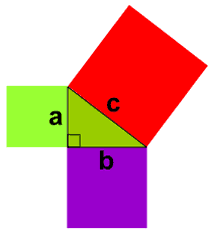
| Pythagoras therum | a²+b²=c² |
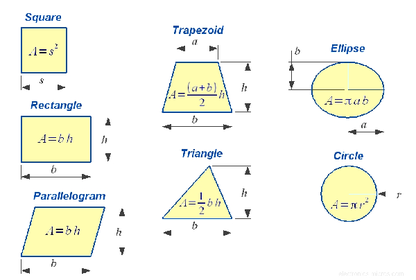
| Area | |
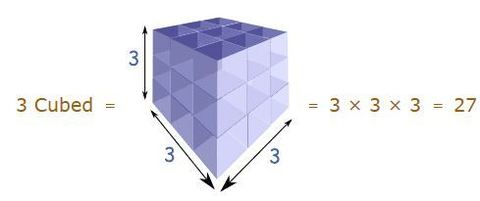
| Volume | cube = a ³ rectangular prism = a b c irregularprism = b×h cylinder = b h = pi r ² h pyramid = (1/3) b h cone = (1/3) b h = 1/3 pi r ² h sphere = (4/3) pi r ³ |
| Transforming Curves | In general, if we start with y = f(x), then:- y = f(x) + a translates f(x) 'a' units in the y-direction (translation 0 over a) |
| Quadratic sequences | If you use the formula n2 + n to make a sequence, it means that: When n = 1 you get 12 + 1 = 2 When n = 2 you get 22 + 2 = 6 When n = 3 you get 32 + 3 = 12 |
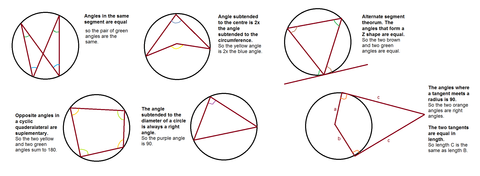
| Circle thereoms | |
| Trigonometry (flowchart) | |
| Sine and Cosine Rules | The sine rule: a/SinA= b/SinB= c/SinC or SinA/a= a/SinA= b/SinB The cosine rule: a ²=b ²+c ²-2bc×Cos(c |
| Upper and lower bound | Upper bound: the highest possible number when rounding Lower bound: the lowest possible number when rounding ie- 75 Upper= 75.499 Lower= 54.5 |
| Fractions | Add:1/2 + 2/3 = 3/6 + 4/6 =7/6 = 1 1/6 Subtract: 2/3 - 1/2 =4/6 -3/6= 1/6 Multiply: 1/2 × 2/3 =2/6 =1/3 Divide: 1/2 ÷ 2/3=1/2 × 3/2= 3/4 Fractions of amounts: 2/5 of 100 100 ÷ 5=20 20×2= 40 |
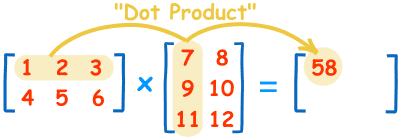
| Multiplying Matrix | |
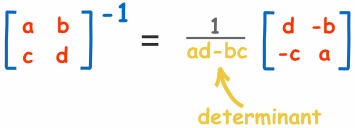
| 2×2 Matrix | Step 1 calculate ad-bc Step 2 Swap the positions of a and d, change the signs of b and c. Step 3 Multiply the new matrix by 1/determinant |
| Adding Matrices | |
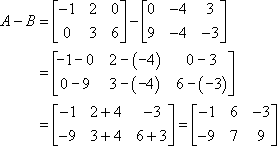
| Subtracting Matrices | |
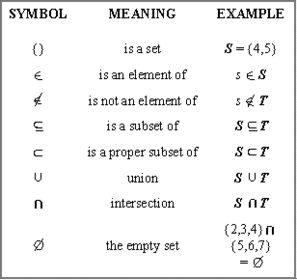
| Sets and Vendiagrams | |
| Rectangle | area= length x width perimeter=(length*2) + (length*2) |
| Triangle | area= 1/2 * base * height perimeter= add up all sides |
| Trapezium | area= sum of parallel/2 *height |
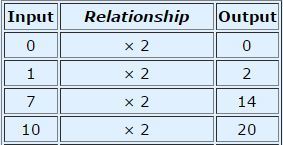
| Functions | f(x)= |
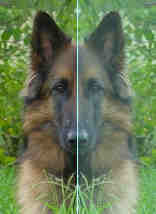
| Symetry | Line of symmetry> Rotational symmetry (how many times do you have to turn it to be the same) |
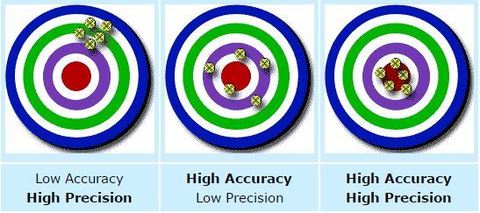
| Accuracy | |
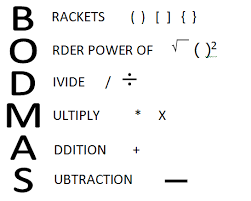
| The four rules (BODMAS) | |
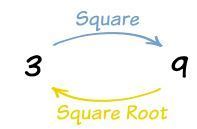
| Squares and Square-roots | (−5) × (−5) = 25 5 × 5 = 25 6 × 6 = 36, so √36 = 6 |


Want to create your own Flashcards for free with GoConqr? Learn more.