
Flashcards
Civics chapter 3

Cards in this deck (40)
- 1enlightenmentthe action of enlightening or the state of being enlightened.
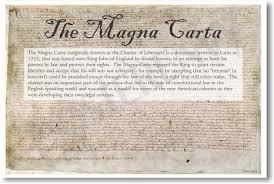
- 2magna cartacharter of liberties to which the English barons forced King John to give his assent in June 1215 at Runnymede. 2 : a document constituting a fundamental guarantee of rights and privileges.
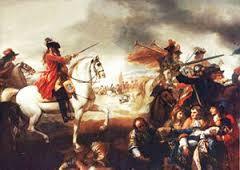
- 3glorious revolution1688, was the overthrow of King James II of England (James VII of Scotland and James II of Ireland) by a union of English Parliamentarians with the Dutch stadtholder William III of Orange-Nassau (William of Orange).
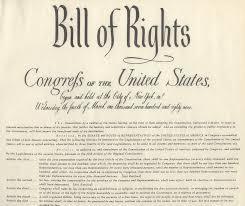
- 4english bill of rightscreates separation of powers, limits the powers of the king and queen, enhances the democratic election and bolsters freedom of speech.
- 5mayflower compactwas the first governing document of Plymouth Colony. It was written by separatist Congregationalists who called themselves "Saints". Later they were referred to as Pilgrims or Pilgrim Fathers. They were fleeing from religious persecution by King James of England.

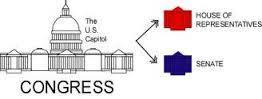
- 6house of representativesWith 435 popularly elected officials, the House (as it is often called) is the most representative body in the federal government. House seats are apportioned (see apportionment) relative to each state's population.

- 7bicameralhaving two branches or chambers.
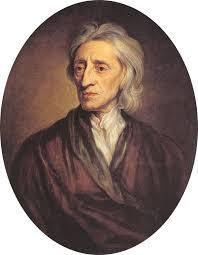
- 8john lockeA seventeenth-century English philosopher. Locke argued against the belief that human beings are born with certain ideas already in their minds. He claimed that, on the contrary, the mind is a tabula rasa (blank slate) until experience begins to “write” on it.
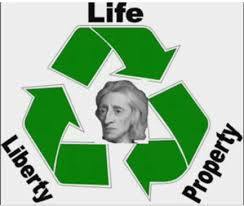
- 9natural rightsRights that people supposedly have under natural law. The Declaration of Independence of the United States lists life, liberty, and the pursuit of happiness as natural rights.
- 10social contractan implicit agreement among the members of a society to cooperate for social benefits, for example by sacrificing some individual freedom for state protection. Theories of a social contract became popular in the 16th, 17th, and 18th centuries among theorists such as Thomas Hobbes, John Locke, and Jean-Jacques Rousseau, as a means of explaining the origin of government and the obligations of subjects.
- 11baron de montesquieuwas a French lawyer, man of letters, and political philosopher who lived during the Age of Enlightenment.

- 12separation of powersan act of vesting the legislative, executive, and judicial powers of government in separate bodies.

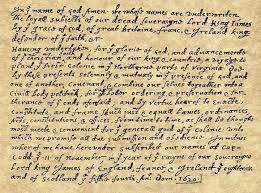
- 13fundamental orders of connecticutJanuary 15, 1639 OS (January 24, 1639 NS). The orders describe the government set up by the Connecticut River towns, setting its structure and powers.
- 14triangular tradeusually evolves when a region has export commodities that are not required in the region from which its major imports come.
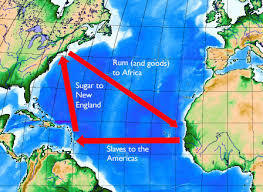
- 15salutary neglectwas Britain's unofficial policy, initiated by prime minister Robert Walpole , to relax the enforcement of strict regulations, particularly trade laws, imposed on the American colonies late in the seventeenth and early in the eighteenth centuries

- 16french and indian war. A series of military engagements between Britain and France in North America between 1754 and 1763. The French and Indian War was the American phase of the Seven Years' War, which was then underway in Europe.
- 17mercantilismbelief in the benefits of profitable trading; commercialism.
- 18stamp actan act of the British Parliament in 1756 that exacted revenue from the American colonies by imposing a stamp duty on newspapers and legal and commercial documents. Colonial opposition led to the act's repeal in 1766 and helped encourage the revolutionary movement against the British Crown.
- 19boycottwithdraw from commercial or social relations with (a country, organization, or person) as a punishment or protest.
- 20boston massacrewas a street fight that occurred on March 5, 1770, between a "patriot" mob, throwing snowballs, stones, and sticks, and a squad of British soldiers. Several colonists were killed and this led to a campaign by speech-writers to rouse the ire of the citizenry.
- 21boston tea party"the Destruction of the Tea in Boston") was a political protest by the Sons of Liberty in Boston, on December 16, 1773.
- 22coercive actsare names used to describe a series of laws relating to Britain's colonies in North America, and passed by the British Parliament in 1774. Four of the acts were issued in direct response to the Boston Tea Party of December 1773.
- 23proclamation of 1763was issued October 7, 1763, by King George III following Great Britain's acquisition of French territory in North America after the end of the French and Indian War/Seven Years' War, which forbade all settlement past a line drawn along the Appalachian Mountains.
- 24first continental congresswas a meeting of delegates from twelve of the thirteen colonies that met on September 5 to October 26, 1774 at Carpenters' Hall in Philadelphia, Pennsylvania, early in the American Revolution.
- 25parliamentthe british legislature
- 26legislaturegroup of people that makes laws
- 27independenceself-reliance freedom
- 28confederationgroup of states that band together fora common purpose
- 29indentured serventperson to agrees to work for 7 years and then be freed
- 30middle passagejourney across the atlantic ocean made by slave ships
- 31quartering actpart of the intolerable acts made colonist house soldiers
- 32common sensewritten by thomas pained that was widely read in the colonies and said they should be free
- 33battle of lexington and concord"shot heard around the world "
firsst battle - 34second continental congressmeeting of delegates in may 1775 and 5 men were appointed to write a document declaring independence
- 35declaration of independencesent to king george to declare independence
- 36thomas jeffersonhe wrote the declaration of independence
- 37articles of confederation1st government we had lasted for about 10 years but it was a weak government
- 38daniel shays rebellionwake up call for america led farmers against the government under the aoc
- 39philadelphia conventionaka constitutional convention sept 1787 delegates suppose to amend to fix the AOC
- 40james madisonfather of constitution
Information
- Description
- Civics chp 3 voc
- Created by
- bryanharo444 · Feb 2016
- Updated
- Feb 19, 2016
- Views
- 24
- Tags
- Rating