
6693889
Description

Flashcards by Lisza Neumeier, updated more than 1 year ago

|
Created by Lisza Neumeier
about 10 years ago
|
|
| Question | Answer |
| What is linguistics? | study of language |
| What's the focus? | Focus on forms and functions of language -What form does language take? -How is language used? |
| Synchronic vs. Diachronic study of language | synchronic: studies language at a certain point in time diachronic: studies languge over time |
| Prescriptive vs. Descriptive approach | Prescriptive (normative): tells people how to use language Descriptive: describes how people actually use language (no value judgement) |
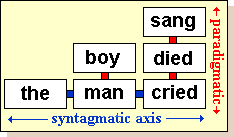
| Syntagmatic vs. Paradigmatic | syntagmatic: -'horizontal' relationships between linguistic elemts -how linguistic elements can be combined paradigmatic: 'vertical' relationships between linguistic elements -what linguistic elements can be used in place of others |
| Axis of selection | paradigmatic |
| Axis of combination | syntagmatic |
| Langue vs. Parole | Langue: language system -All people who speak a certain language share a langue. Parole: Language usage -the individual use of the language system in any given situation |
| Semiotics | the study of signs |
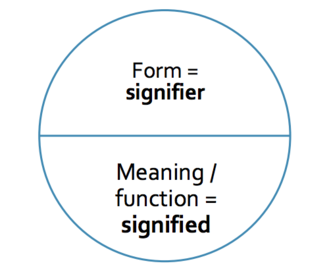
| What is a sign? | combination of form & meaning |
| signifier vs. signified | signifier (sound sequence) signifies (concept) |
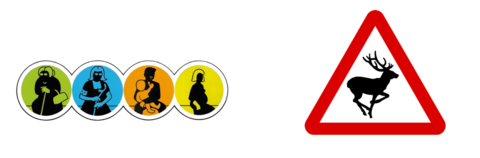
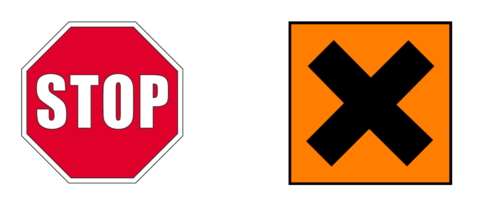
| three main types of sign | Icon (iconic) Index (indexical) Symbol (symbolic) |
| Icon | Form-meaning relation is one of similarity |
| Index | Form-meaning relation is one of cause and effect; symptom |
| Symbol | Form-meaning relation is arbitrary |

Want to create your own Flashcards for free with GoConqr? Learn more.