
Mind map
Causes of Collapse at Christchurch
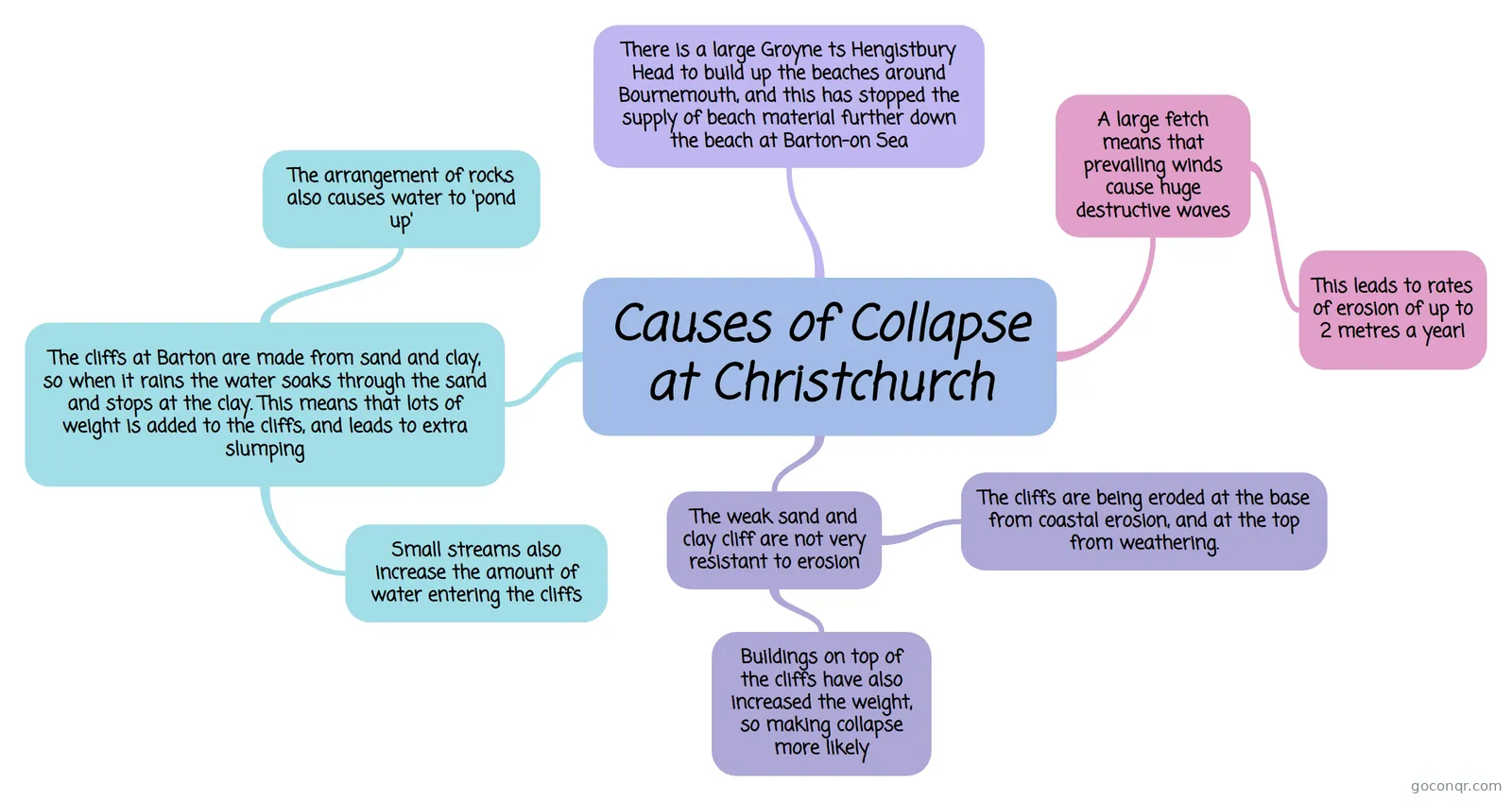
Mind map: causes of collapse at Christchurch
Map content
Causes of Collapse at Christchurch
A large fetch means that prevailing winds cause huge destructive waves
- This leads to rates of erosion of up to 2 metres a year!
The weak sand and clay cliff are not very resistant to erosion
- Buildings on top of the cliffs have also increased the weight, so making collapse more likely
- The cliffs are being eroded at the base from coastal erosion, and at the top from weathering.
There is a large Groyne ts Hengistbury Head to build up the beaches around Bournemouth, and this has stopped the supply of beach material further down the beach at Barton-on Sea
The cliffs at Barton are made from sand and clay, so when it rains the water soaks through the sand and stops at the clay. This means that lots of weight is added to the cliffs, and leads to extra slumping
- Small streams also increase the amount of water entering the cliffs
- The arrangement of rocks also causes water to 'pond up'