
Mind map
Breast Lump
Map content
Breast Lump
Normal structure and function of breast
- Pair of modified sweat glands
- Location
- Superficial fascia of pectoral region
- Functional parts
- Epithelial part
- Milk production
- Connective tissue part
- Make up and support
- Coopers Ligament
- Epithelial part
- Location
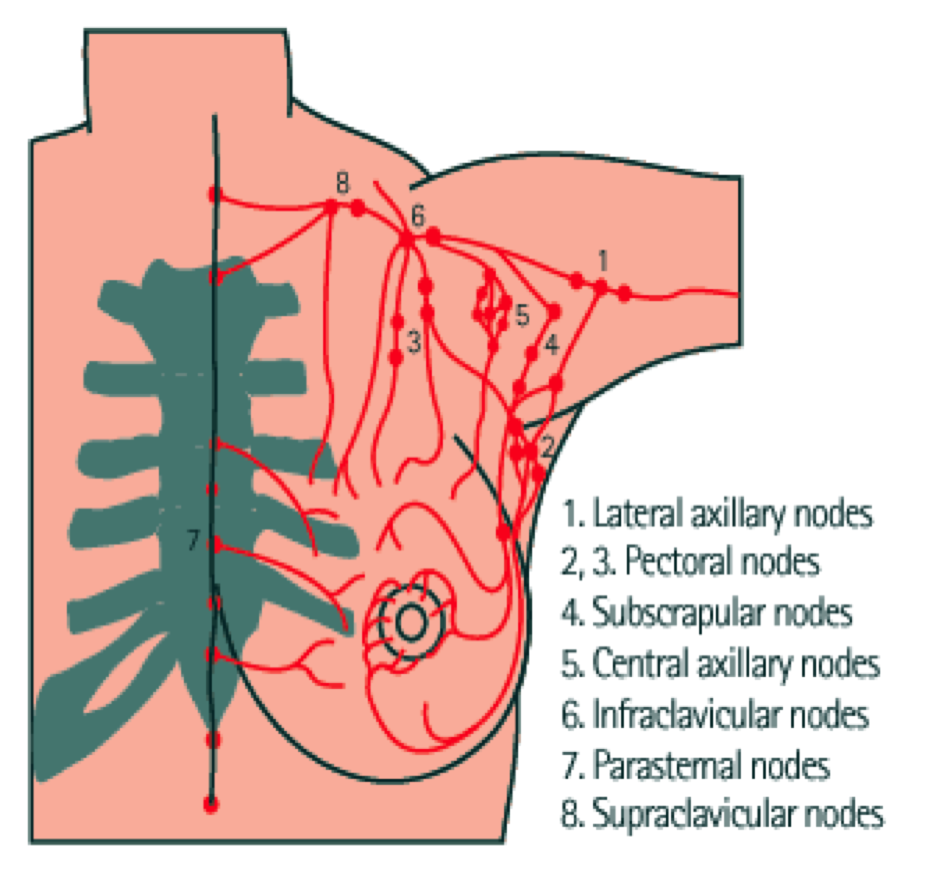
- Lymph drainage
- Hormones
- Estrogen
- Ductal development
- Progesterone
- Lobular development and differentiation of epithelium
- Prolactin
- Lactogenesis
- Estrogen
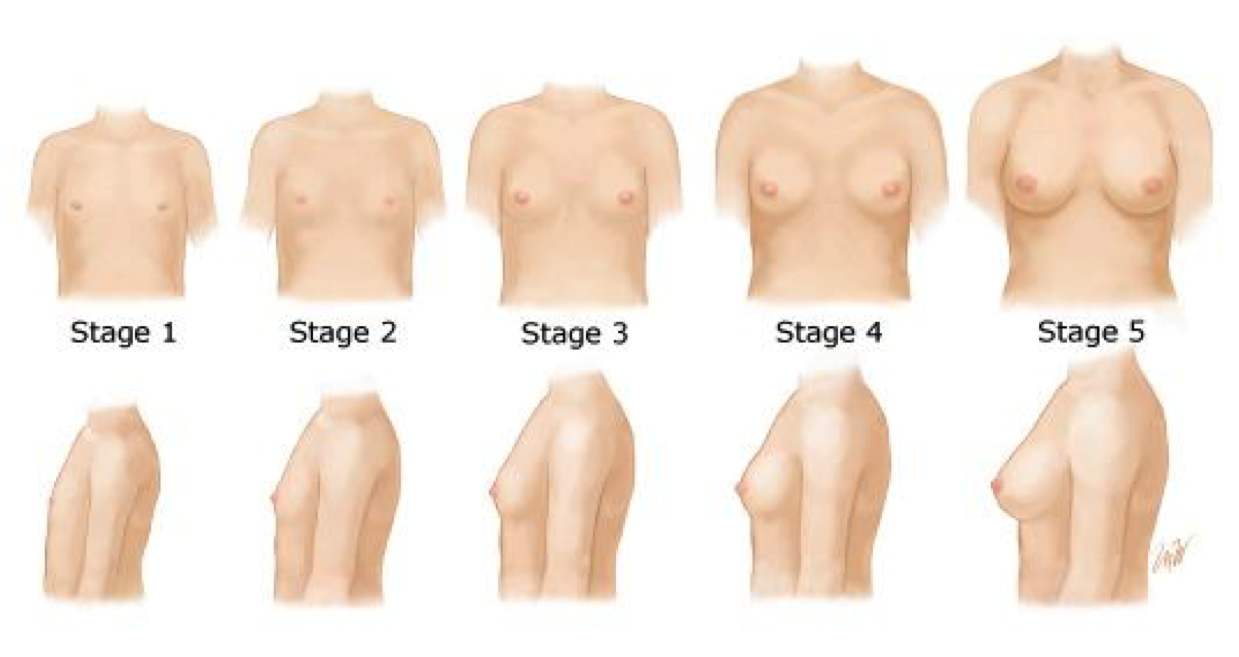
- Tanner stages
- Pair of modified sweat glands
Cancer
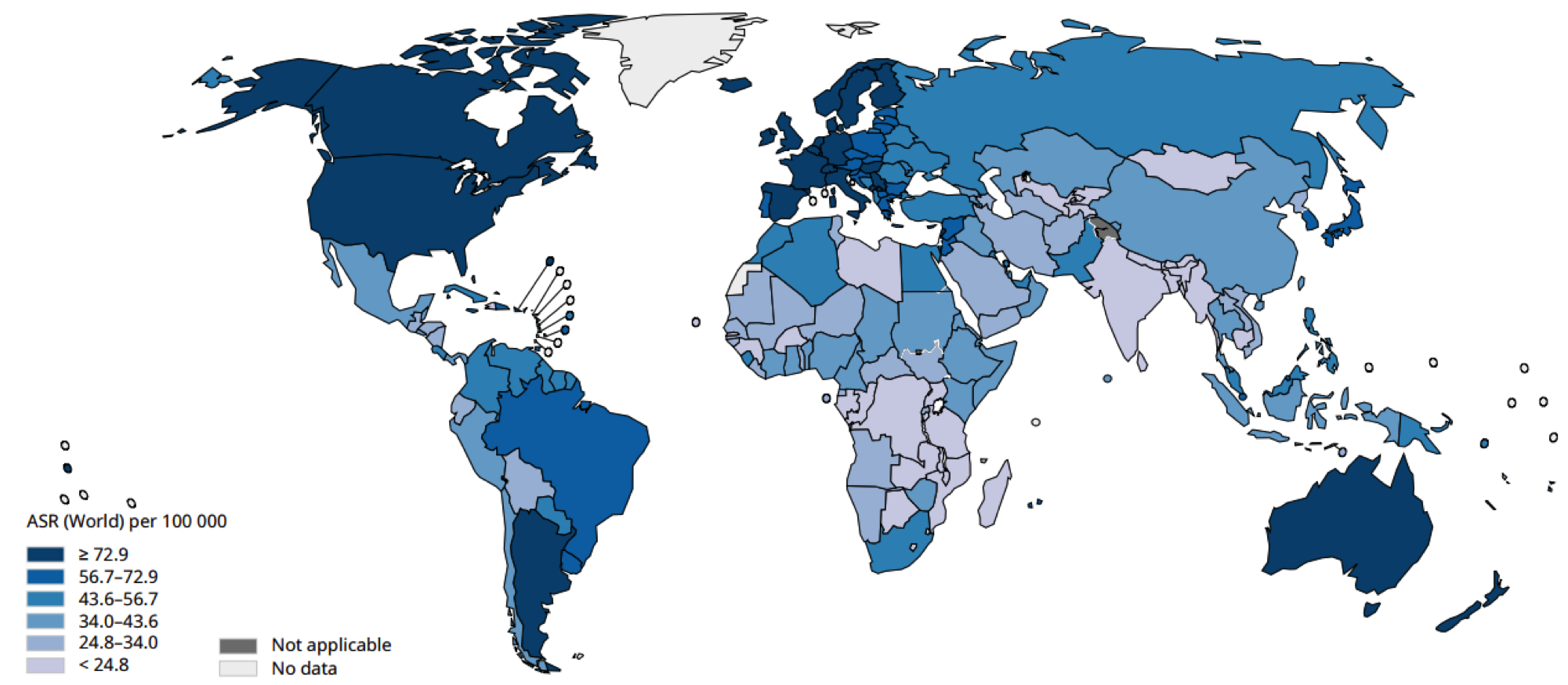
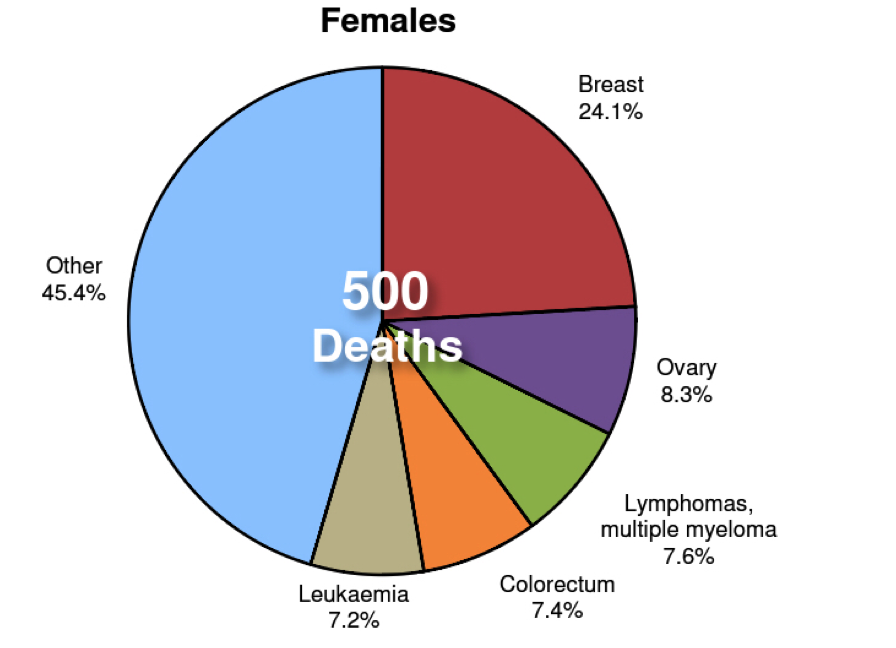
- Epidemiology
- Estimated Mortality rate worldwide (All ages)
- UAE
- Estimated Mortality rate worldwide (All ages)
- Classification
- Ductal
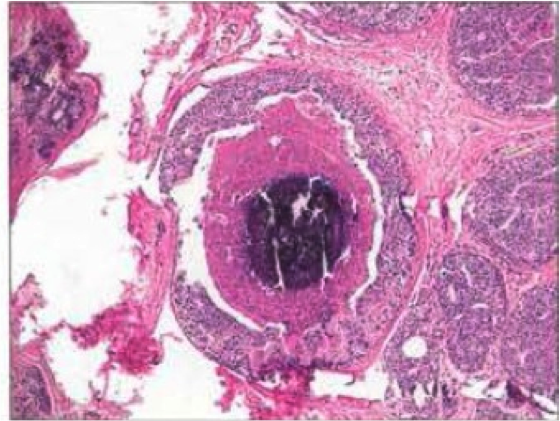
- In situ (DCIS)
- Malignant proliferation of the cell in ducts
- No invasion
- Mammography > calcification > biopsy
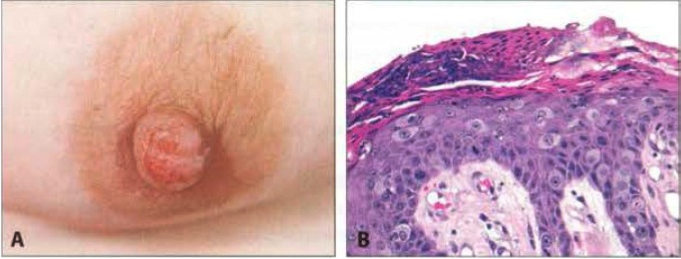
- Paget's disease
- DCIS involve the nipple
- DCIS involve the nipple
- Invasive
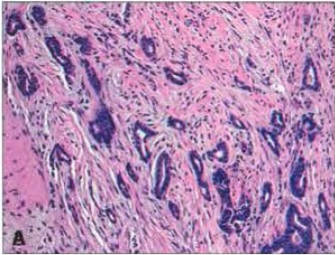
- Duct-like structure and desmoplastic stroma
- Present as a mass
- 4 subtypes
- Tubular
- Tubule lacks myoepithelial cells
- Good prognosis
- Tubule lacks myoepithelial cells
- Medullary
- High-grade cells / Lymphocytes / Plasma cells
- Good prognosis
- BRCA 1
- Mucinous
- Tubule in mucus pools
- Good prognosis
- Older women
- Tubule in mucus pools
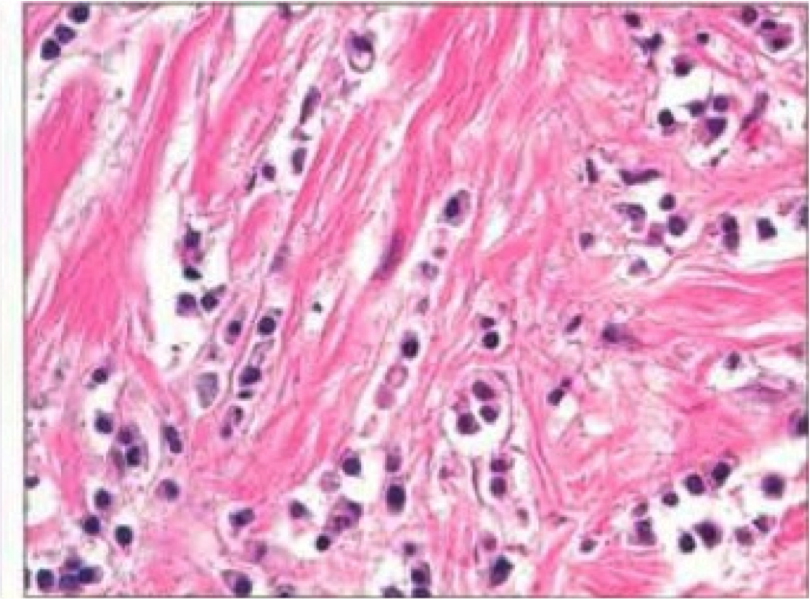
- Inflammatory
- In dermal lymphatics
- Inflamed swollen breast
- Poor prognosis
- Tubular
- In situ (DCIS)
- Tubular / Lobular
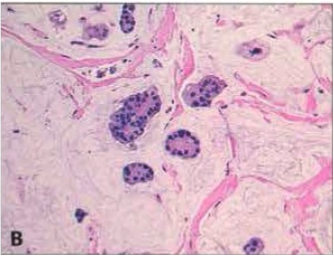
- In situ (LCIS)
- Malignant proliferation of the cell in lobule
- No invasion
- No mass or calcification
- Dyscohesive cells
- Multifocal and bilateral
- Responsd to tamoxifen
- Invasive
- Single file pattern
- Signet cell morphology
- No duct formation
- Lack E-cadherin
- Single file pattern
- In situ (LCIS)
- Ductal
- Staining
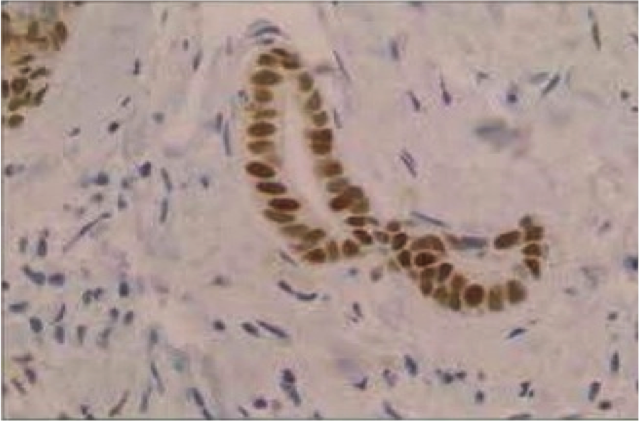
- Estrogen and progesterone receptor
- Designed antibodies against them
- Inside the nucleus
- Designed antibodies against them
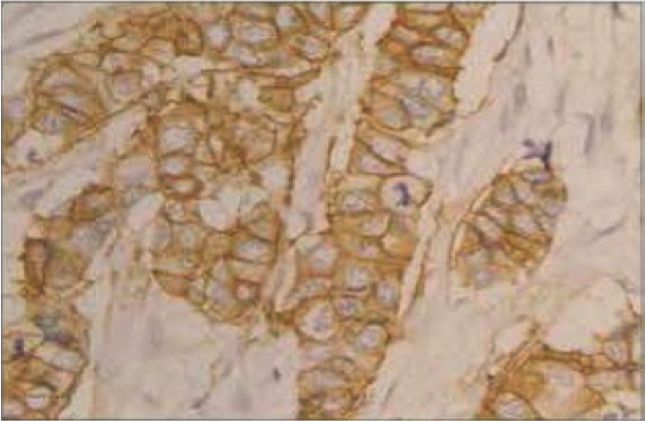
- HER2/neu amplification
- A growth factor receptor
- Designed antibodies against HER2 receptor
- On the cell surface
- Estrogen and progesterone receptor
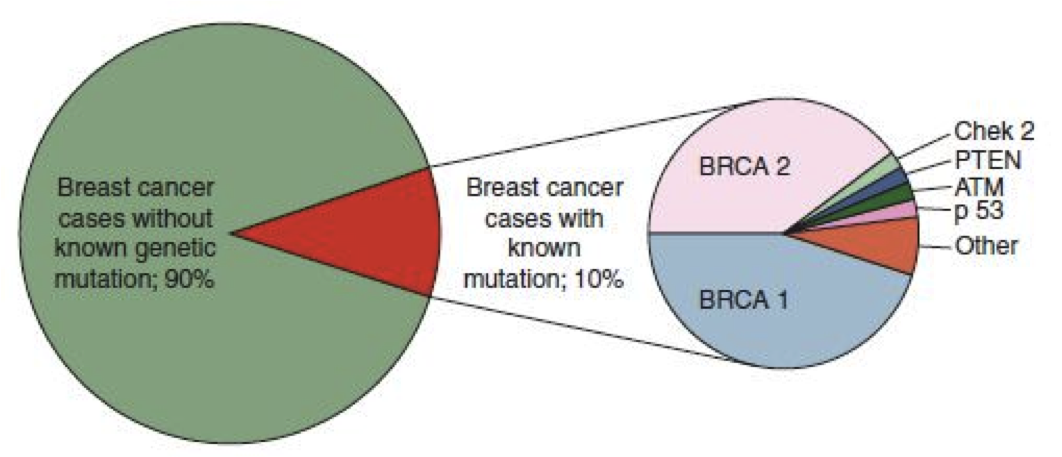
- Genetic mutations
- Repair DNA damage
- BRCA1 and BRCA2
- ATM
- Ataxia-telangiectasia
- BRIP1
- BARD1
- Works with BRCA1
- MRE11A
- Ataxia-telangiectasia-like disorder
- NBN
- Nijmegen breakage syndrome
- RAD50
- MSH6 and PMS2
- Mismatch repair genes
- Lynch syndrome
- PALB2
- Partner and localizer of BRCA 2
- Breast cancer
- RAD51C
- Breast and ovarian cancer
- BRCA1 and BRCA2
- Tumor suppressor gene
- TP53
- Li-Fraumeni syndrome
- CHEK2
- Cancer: breast / colon / prostate
- PTEN
- Cowden syndrome
- STK11
- Peutz Jegher syndrome
- TP53
- Helps cells to bind together
- CDH1
- Stomach cancer / Invasive lobular breast cancer
- CDH1
- Screening
- DNA Microarrays Technology
- Show the expression of the genes
- DNA Microarrays Technology
- Repair DNA damage
- Grading
- Grade 1
- Well differentiated
- Most like normal breast cells and usually slow-growing
- Well differentiated
- Grade 2
- Moderately differentiated
- Less like normal cells and is growing faster
- Moderately differentiated
- Grade 3
- Poorly differentiated
- Different to normal breast cells and is usually fast-growing
- Poorly differentiated
- Grade 1
- Staging
- TNM staging system
- 5 stages
- T: Tumor
- N: Lymph node
- M: Metastasis
- TNM staging system
- Molecular classification
- Luminal A
- Hormone-receptor positive (ER and/or PR positive)
- HER2 negative
- Luminal B
- Hormone-receptor positive (ER and/or PR positive)
- Faster than luminal A
- HER2 either positive or negative
- Triple-negative/basal-like
- Hormone-receptor negative (ER and PR negative)
- Common in BRCA 1mutation
- HER2 negative
- HER2-enriched
- Hormone-receptor negative (ER and PR negative)
- HER2 positive
- Normal-like
- Similar to luminal A
- Worse prognosis than luminal A
- Luminal A
- Factors
- Risk
- Female gender
- Advancing age
- Family history
- Ethnicity
- Early menstrual period
- Protective
- Healthy weight
- Breastfeeding
- Limiting alcohol intake
- Exercise
- Multiple pregnancy
- Risk
- Diagnosis
- Examinations
- Physical
- Self
- Investigations
- Mammogram
- Types
- Screening
- Diagnostic
- Disadvantages
- False-positive results
- Overdiagnosis and overtreatment
- False-negative results
- Types
- Ultrasound
- Detect abnormality type
- MRI
- Screening high-risk women
- Monitoring treatment
- Biopsy
- Fine needle aspiration biopsy
- Core needle biopsy
- Vacuum-assisted breast biopsy (guided)
- Surgical Biopsy
- Blood tests
- Markers
- CA 15.3 / TRU-QUANT/ CA 27.29 / CA125
- Progression / Recurrence / Expensive
- Markers
- Mammogram
- Examinations
- Management
- Local
- Surgery
- Lumpectomy
- Mastectomy
- Subtypes
- Radical mastectomy
- Modified radical mastectomy
- Simple mastectomy
- Skin-sparing mastectomy
- Pre-operative management
- Discontinuation of Aspirin
- Echocardiogram
- Chest X-ray
- Subtypes
- To remove lymph nodes
- Sentinel lymph node biopsy (SLNB)
- Axillary lymph node dissection (ALND)
- Surgery for advanced breast cancer
- Breast reconstruction
- Implant reconstruction
- Autologous or "flap" reconstruction
- Tissue expansion
- Radiation Therapy
- Surgery
- Systemic
- Chemotherapy
- Neoadjuvant
- Adjuvant
- Hormonal therapy
- ER or PR positive breast cancer
- Targeted therapy
- HER2-positive breast cancer
- Chemotherapy
- Post-operative pain
- Short-acting anesthetic bupivacaine
- Psychoeducation
- Follow up
- Doctor visits
- Mammograms
- Pelvic exams
- Bone density tests
- Other tests
- Local
- Prognosis
- Depends on many factors
- 5-year survival rate
- Average is 90%
- Located only in breast is 99%
- In regional lymph nodes is 85%
- In metastasis is 27%
- 10-year survival rate is 83%
- Epidemiology
Images and files in the map
Information
- Description
- Mind Map on Breast Lump, created by Moza Almualla on 02/25/2019.
- Created by
- Moza Almualla
- Views
- 83
- Rating