
Mind map
Cyber Safety
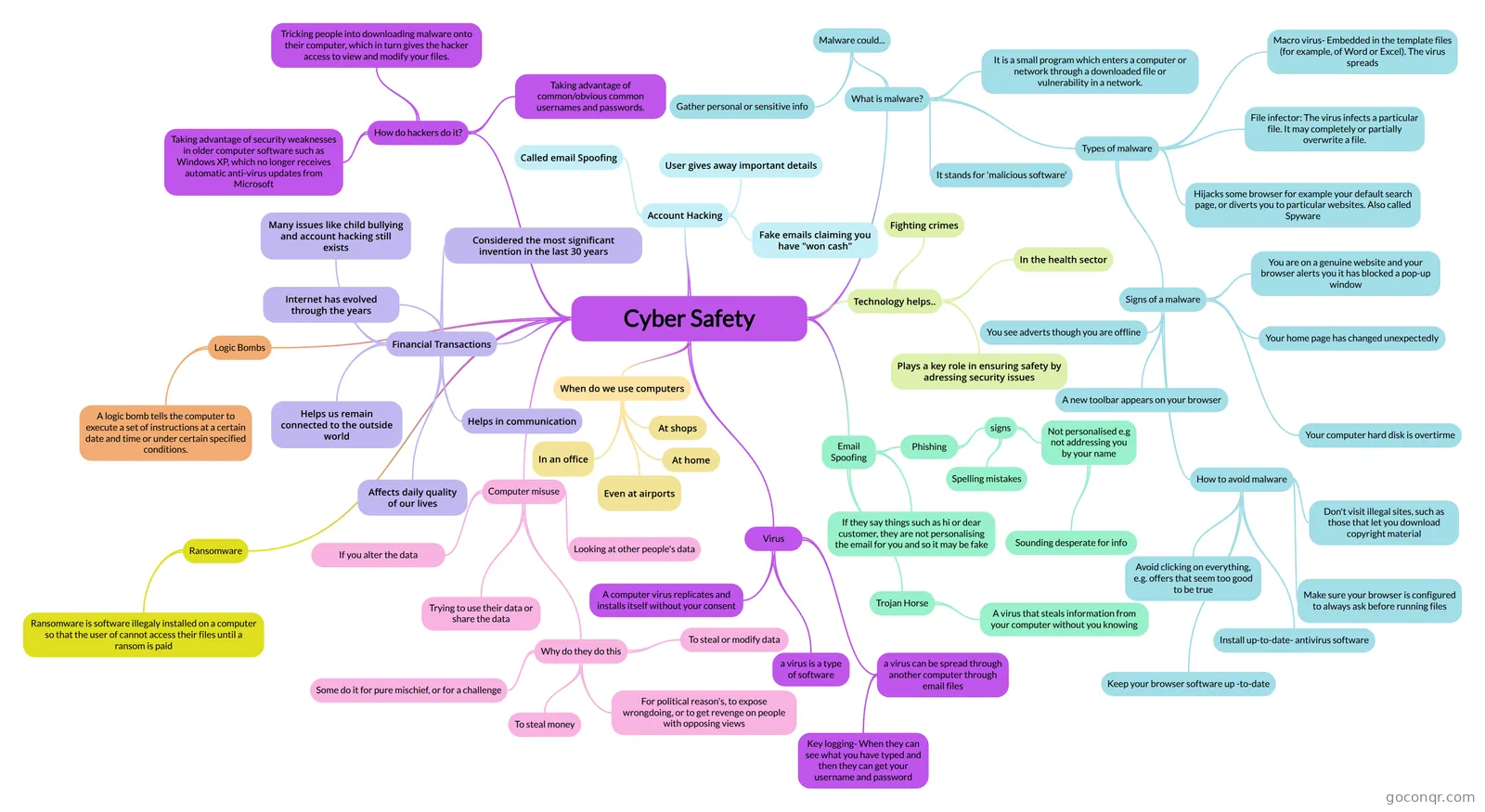
Mind map: Cyber safety
Map content
Cyber Safety
When do we use computers
- In an office
- At home
- At shops
- Even at airports
Technology helps..
- Fighting crimes
- Plays a key role in ensuring safety by adressing security issues
- In the health sector
Financial Transactions
- Helps in communication
- Helps us remain connected to the outside world
- Affects daily quality of our lives
- Internet has evolved through the years
- Considered the most significant invention in the last 30 years
- Many issues like child bullying and account hacking still exists
Account Hacking
- Fake emails claiming you have "won cash"
- User gives away important details
- Called email Spoofing
Email Spoofing
- Phishing
- signs
- Spelling mistakes
- Not personalised e.g not addressing you by your name
- Sounding desperate for info
- signs
- If they say things such as hi or dear customer, they are not personalising the email for you and so it may be fake
- Trojan Horse
- A virus that steals information from your computer without you knowing
- Phishing
Computer misuse
- Looking at other people's data
- Trying to use their data or share the data
- If you alter the data
- Why do they do this
- Some do it for pure mischief, or for a challenge
- To steal money
- To steal or modify data
- For political reason's, to expose wrongdoing, or to get revenge on people with opposing views
How do hackers do it?
- Taking advantage of security weaknesses in older computer software such as Windows XP, which no longer receives automatic anti-virus updates from Microsoft
- Taking advantage of common/obvious common usernames and passwords.
- Tricking people into downloading malware onto their computer, which in turn gives the hacker access to view and modify your files.
What is malware?
- It stands for 'malicious software'
- It is a small program which enters a computer or network through a downloaded file or vulnerability in a network.
- Malware could...
- Gather personal or sensitive info
- Types of malware
- Hijacks some browser for example your default search page, or diverts you to particular websites. Also called Spyware
- File infector: The virus infects a particular file. It may completely or partially overwrite a file.
- Macro virus- Embedded in the template files (for example, of Word or Excel). The virus spreads
- Signs of a malware
- A new toolbar appears on your browser
- Your home page has changed unexpectedly
- You are on a genuine website and your browser alerts you it has blocked a pop-up window
- You see adverts though you are offline
- Your computer hard disk is overtirme
- How to avoid malware
- Avoid clicking on everything, e.g. offers that seem too good to be true
- Don't visit illegal sites, such as those that let you download copyright material
- Make sure your browser is configured to always ask before running files
- Install up-to-date- antivirus software
- Keep your browser software up -to-date
Logic Bombs
- A logic bomb tells the computer to execute a set of instructions at a certain date and time or under certain specified conditions.
Ransomware
- Ransomware is software illegaly installed on a computer so that the user of cannot access their files until a ransom is paid
Virus
- a virus is a type of software
- A computer virus replicates and installs itself without your consent
- a virus can be spread through another computer through email files
- Key logging- When they can see what you have typed and then they can get your username and password
Information
- Description
- A mindmap summarising the video we watched in computing.
- Created by
- sonia :)
- Views
- 98
- Tags
- Rating