
25504683
Description

Mind Map by Mary Margaret Beck, updated more than 1 year ago

|
Created by Mary Margaret Beck
over 5 years ago
|
|
Assessments in the ESL
Classroom
- High-Stakes
Assessments
- Used to make
important decisions
about students. These
decisions include:
graduation, grade
promotion, and
program admittance
- This is part of the
U.S.'s standards
movement.
Administrators,
students, and
teachers are
responsible for a
high standard of
teaching and learning.
- These assessments are
created to measure of
the state has
affectively taught the
content standards as
well as the
performance standards.
- Standardized Testing
- Used to make
important decisions
about students. These
decisions include:
graduation, grade
promotion, and
program admittance
- Authentic
Assessment:
- Uses real-world
tasks to show
application of
knowledge and
skills.
- Often, this type of
assessment
allows the child to
perform a task
and has a rubric
to guide them.
- Allows students
to use the
information,
material, and
content
knowledge after
graduation.
- Integrates teaching,
learning, and
assessing.
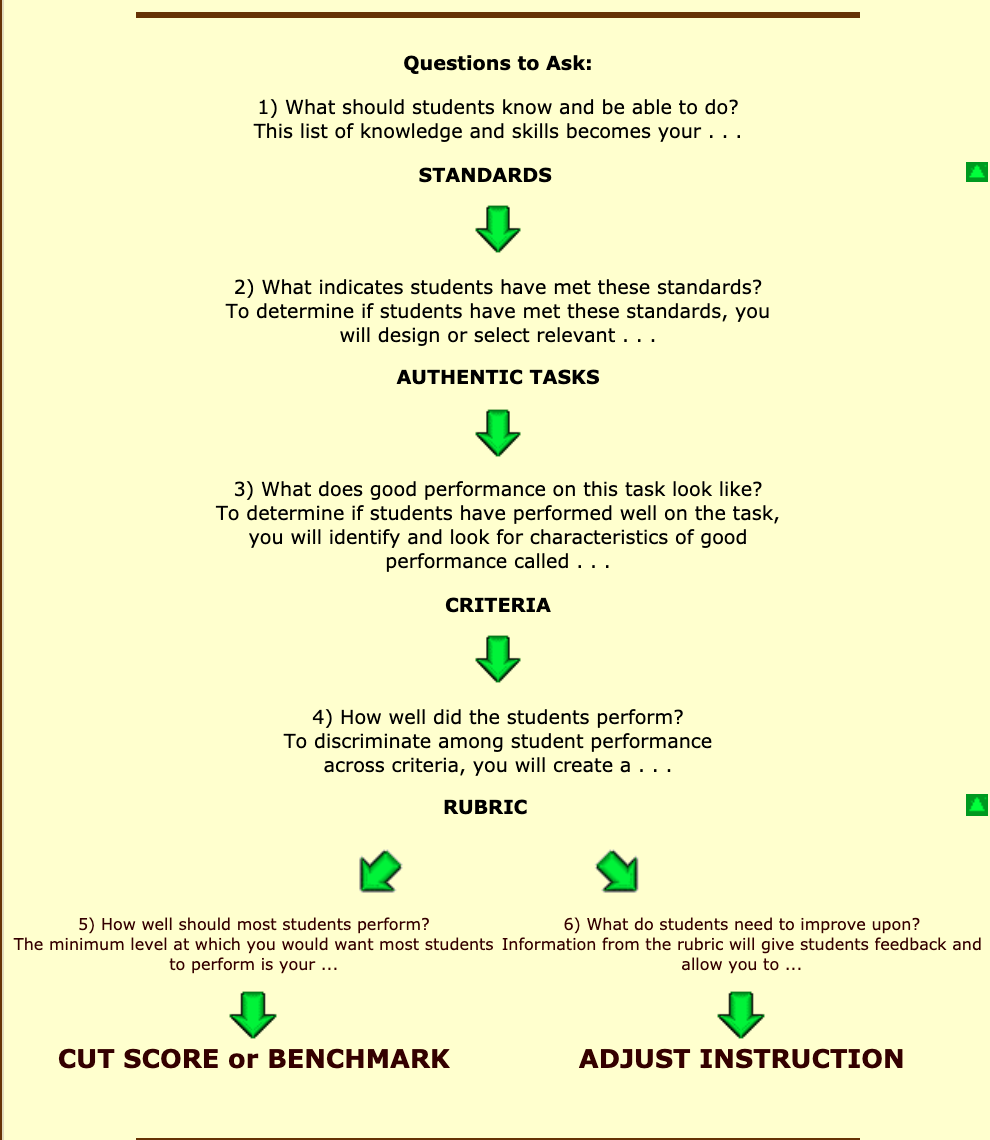
- Authentic Assessment Steps:
http://jfmueller.faculty.noctrl.edu/toolbox/howdoyoudoit.htm
- Uses real-world
tasks to show
application of
knowledge and
skills.
- Portfolio
Assessments
- Use to assess the student
throughout the entire year.
Work can be collected over
time to show the learner's
growth towards a standard.
- Include information,
sample work, examples,
and evaluations. These
samples can include:
writing, drawings, oral
tapes, video tapes, test
data, and more!
- Checklists can be
left in the portfolio
to make
instructional
decisions while
holding the
student and
teacher reliable.
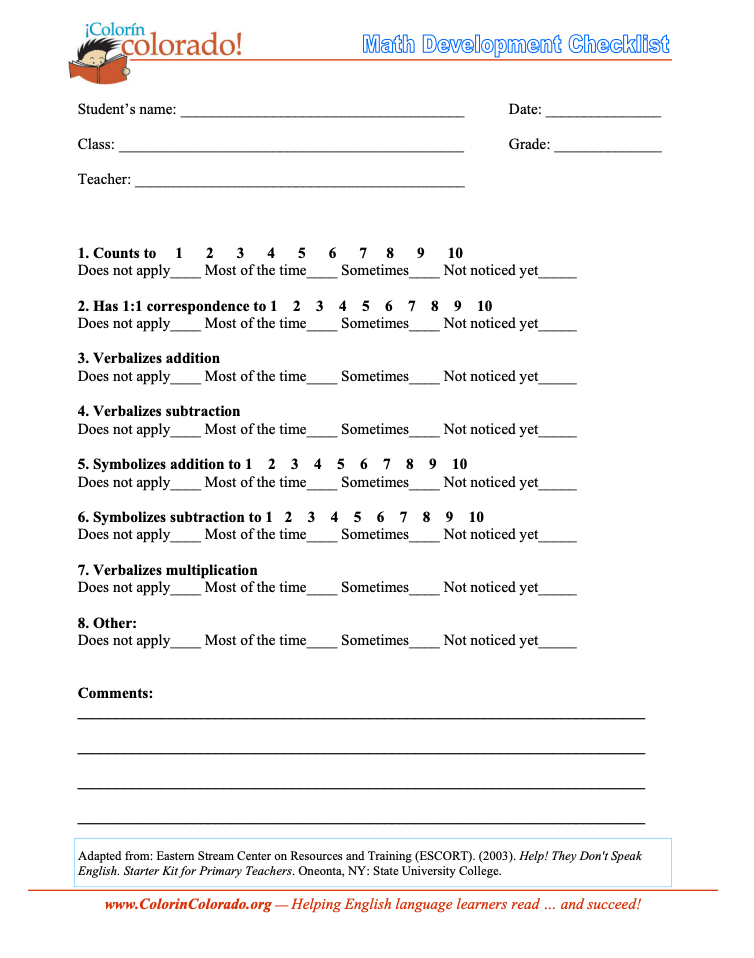
- Math Checklist
- Use to assess the student
throughout the entire year.
Work can be collected over
time to show the learner's
growth towards a standard.
- Assessing
Content
Knowledge
- EL's are still
responsible for learning
content knowledge.
They need help getting
critical thinking skills.
To help, you can
scaffold assessments
and have differentiated
scoring scores, separate
from language
proficiency.
- Initial Assessment: EL
students must first be
tested and identified as
needing special services. A
home language survey is
sent home, and a language
proficiency test is
administered.
- Ongoing Assessment:
This provides feedback
throughout the year to
determine learning needs
and progress. This type
of assessment can be
formal, like a written
test, or it can be
observation based.
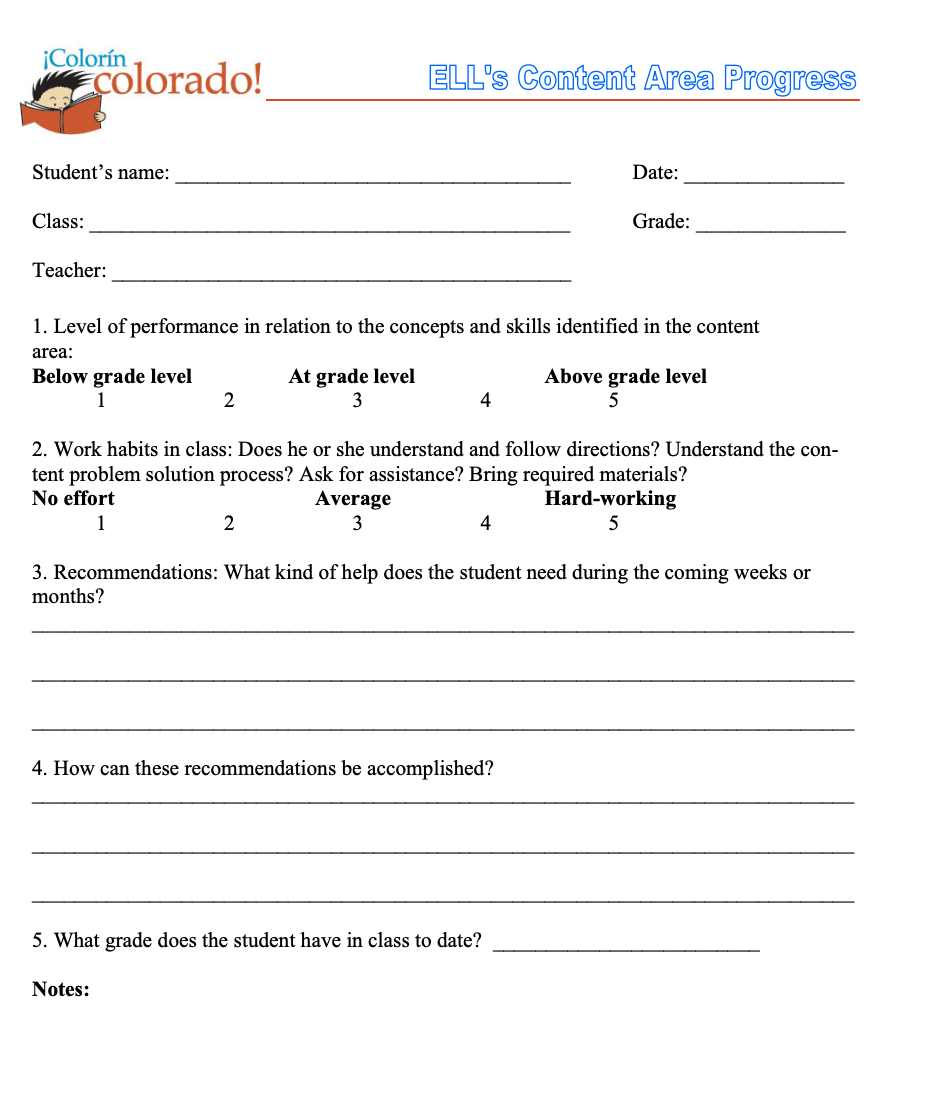
- Content Area Progress Form
- EL's are still
responsible for learning
content knowledge.
They need help getting
critical thinking skills.
To help, you can
scaffold assessments
and have differentiated
scoring scores, separate
from language
proficiency.
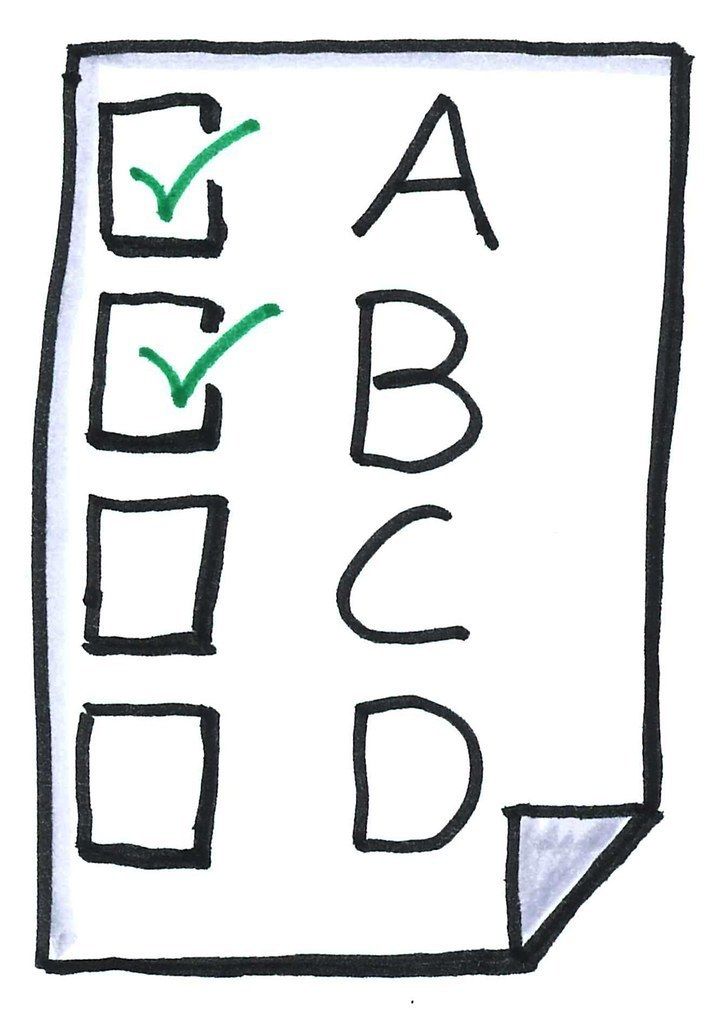
- Traditional
Assessment
- Multiple choice,
fill-in-the-blanks,
short answer type
tests.
- A teacher does
not have to choose
between Authentic
and Traditional. A
mix can
sometimes be
what a child needs.
- Traditional
assessments
involve: selecting a
response while
recalling and
recognizing, It is
teacher structured
and provides
indirect evidence
to further teach
the child.
- Multiple choice,
fill-in-the-blanks,
short answer type
tests.
Media attachments

Want to create your own Mind Maps for free with GoConqr? Learn more.