
518013
Description

Mind Map by sian.allison, updated more than 1 year ago

|
Created by sian.allison
almost 12 years ago
|
|
Electricity
- Mains Electricity
- Electric current is the movement of charge carriers
- Mains supply is AC, Battery supply is DC
- Uk mains supply is approximately 230 volts
- It is an AC supply
(alternating current)
which means the
current is constantly
changing direction
- The frequency of the AC
mains supply is 50 cycles per
second or 50Hz
- It is an AC supply
(alternating current)
which means the
current is constantly
changing direction
- Cells and batteries supply direct current (Dc).
This means the current always keeps flowing
in the same direction
- Uk mains supply is approximately 230 volts
- Electricity supply can be shown on an Oscilloscope
- A cathode ray
oscilloscope (CRO) is
basically a voltmeter
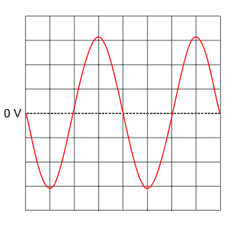
- If you plug an AC supply into an oscilloscope
you get a trace on the screen that shows how the
voltage of the supply changes with time. This
trace goes up and down in a regular pattern
some of the time its positive and some of the time
its negative
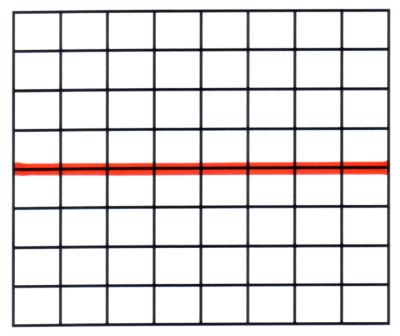
- If you plug in a DC
supply the trace you get
is just a straight line
- The vertical height of the
AC trace at any point shows
the input voltage at that
point. By measuring the
height of the trace you can
find the potential difference
of the AC supply
- For DC its a lot simpler
the voltage is just the
distance from the straight
line trace to the center line
- A cathode ray
oscilloscope (CRO) is
basically a voltmeter
- How to read an oscilloscope
- A DC source is always at the same voltage so you get a straight line
- An AC source gives a regularly
repeating wave. You can work out
the period and the frequency of the
supply
- Frequency = 1 / Time period (s)
- A DC source is always at the same voltage so you get a straight line
- Electric current is the movement of charge carriers
- Electricity in the Home
- Hazards in the home
- Long cables
- Frayed cables
- Cables in contact with something hot or wet
- Water near sockets
- Shoving things into sockets
- Damaged plugs
- Too many plugs into one socket
- Lighting sockets without bulbs in
- Appliances without their covers on
- Long cables
- Most Cables have three separate wires
- Most electrical appliances are
connected to the mains supply by
three core cables. This means that
they have three wires inside them
each with a core of copper and a
coloured plastic coating
- The brown live wire in a mains supply
alternates between a high positive and a
negative voltage
- The blue neutral wire is always at
OV. Electricity normally flows in and
out through the live and neutral wires
only
- The green and yellow earth wire is for
protecting the wiring and for safety it
works together with a fuse to prevent fire
and shocks. It is attached to the metal
casing of the appliance and carries the
electricity to earth should something go
wrong and the live or neutral wires touch
the metal case
- Most electrical appliances are
connected to the mains supply by
three core cables. This means that
they have three wires inside them
each with a core of copper and a
coloured plastic coating
- Three pin plugs and cables
- Get the wiring right
- The right coloured wire is
connected to each pin and
firmly screwed in
- No bare wires
showing
- Cable grip tightly
fastened over the
cable outer layer
- Different appliances need different
amounts of electrical energy. Thicker
cables have less resistance so they
can carry more current
- The right coloured wire is
connected to each pin and
firmly screwed in
- Plug features
- The metal parts are made of copper or brass
because these are very good conducters
- The case, cable grip and
cable insulation are made of
rubber or plastic. Because
they are good insulators and
flexible
- This keeps all the electricity
flowing where it should
- The metal parts are made of copper or brass
because these are very good conducters
- Get the wiring right
- Hazards in the home
- Fuses and Earthing
- Earthing and Fuses prevent electrical overloads
- The earth wire and fuse (or
circuit breaker) are included in
in electrical appliances for
safety and work together like:
- If a fault develops in which the live wire
somehow touches the metal case then
because the case is earthed, too great
a current flows in through the live wire
through the case and out down the
earth wire
- This surge in current melts the fuse (or trips the
circuit breaker in the live wire) when the amount of
current is greater than the fuse rating. This cute off
the live supply and breaks the circuit
- This isolates the whole appliance making it impossible
to get an electric shock from the case. It also prevents
the risk of fire caused by the heating effect of a large
current
- As well as people fuses and earthing are
there to protect the circuits and wiring in
appliances from getting fried if there is a
current surge
- Fuses should be rated as near as
possible but just higher than the
normal operating current
- The larger the current the thicker the
cable you need to carry it. Thats why the
fuse rating needed for cables usually
increases with cable thickness
- The larger the current the thicker the
cable you need to carry it. Thats why the
fuse rating needed for cables usually
increases with cable thickness
- Fuses should be rated as near as
possible but just higher than the
normal operating current
- As well as people fuses and earthing are
there to protect the circuits and wiring in
appliances from getting fried if there is a
current surge
- This isolates the whole appliance making it impossible
to get an electric shock from the case. It also prevents
the risk of fire caused by the heating effect of a large
current
- This surge in current melts the fuse (or trips the
circuit breaker in the live wire) when the amount of
current is greater than the fuse rating. This cute off
the live supply and breaks the circuit
- If a fault develops in which the live wire
somehow touches the metal case then
because the case is earthed, too great
a current flows in through the live wire
through the case and out down the
earth wire
- The earth wire and fuse (or
circuit breaker) are included in
in electrical appliances for
safety and work together like:
- Insulating materials make appliances Double insulated
- All appliances with metal cases are usually earthed to reduce the danger of electric shock
- Earthing just means the case must be
attached to an earth wire
- An earthed conductor can never become
live. If the appliance has a plastic casing
and no metal parts showing then its said
to be double insulated
- Anything with double insulation like that
doesnt need an earth wire. These are known
as two core cables
- Anything with double insulation like that
doesnt need an earth wire. These are known
as two core cables
- An earthed conductor can never become
live. If the appliance has a plastic casing
and no metal parts showing then its said
to be double insulated
- Earthing just means the case must be
attached to an earth wire
- All appliances with metal cases are usually earthed to reduce the danger of electric shock
- Circuit breakers have some advantages over fuses
- Circuit breakers are an electrical
safety device used in some circuits.
Like fuses they protect the circuit
from damage if too much current
flows
- When circuit breakers detect a
surge in current in a circuit they
break the circuit by opening a
switch
- A circuit breaker can easily be reset by
flicking a switch on the device. This makes
them more convinient than fuses which have
to be replaced
- A circuit breaker can easily be reset by
flicking a switch on the device. This makes
them more convinient than fuses which have
to be replaced
- However they are more expensive
- One type of circuit breaker
used instead of a fuse and an
earth wire is a Residual
current circuit breakers
(RCCBs)
- Normally the exact same current flows
through the live and neutral wires. If
somebody touches the live wire a small but
deadly current will flow through them to the
earth. This means the neutral wire carries
less current then the live wire. The RCCB
detects this difference in current and
quickly cuts off the power by opening a
switch
- They also operate much faster
than fuses they break the circuit
as soon as there is a current
surge no time is wasted waiting
for the current to melt a fuse.
This makes them safer
- RCCBs even work for small current
changes that might not be large enough
to melt a fuse. Since even small current
changes could be fatal this means
RCCBs are more effective at protecting
against electrocution
- Normally the exact same current flows
through the live and neutral wires. If
somebody touches the live wire a small but
deadly current will flow through them to the
earth. This means the neutral wire carries
less current then the live wire. The RCCB
detects this difference in current and
quickly cuts off the power by opening a
switch
- Circuit breakers are an electrical
safety device used in some circuits.
Like fuses they protect the circuit
from damage if too much current
flows
- Earthing and Fuses prevent electrical overloads
Media attachments
Want to create your own Mind Maps for free with GoConqr? Learn more.