
Notas
Narrative Structures

Conteúdo das notas (4)
Página 1
Memories in Narratives
Lots of the texts in the Paris Anthology are written from memory or as a reconstruction. This means these accounts are:
Partial - not everything is remembered; what are we being told/not told? Why?
Subjective - own, personal view, everyone approaches and interprets events differently
Unreliable - cannot trust the narrator; exaggeration, lying or leaving too many details out
Selective - cannot present all information about events - selected parts are chosen because of partial and subjective memory, as well as consideration of the audience the text is written for
Página 2
Telling Stories
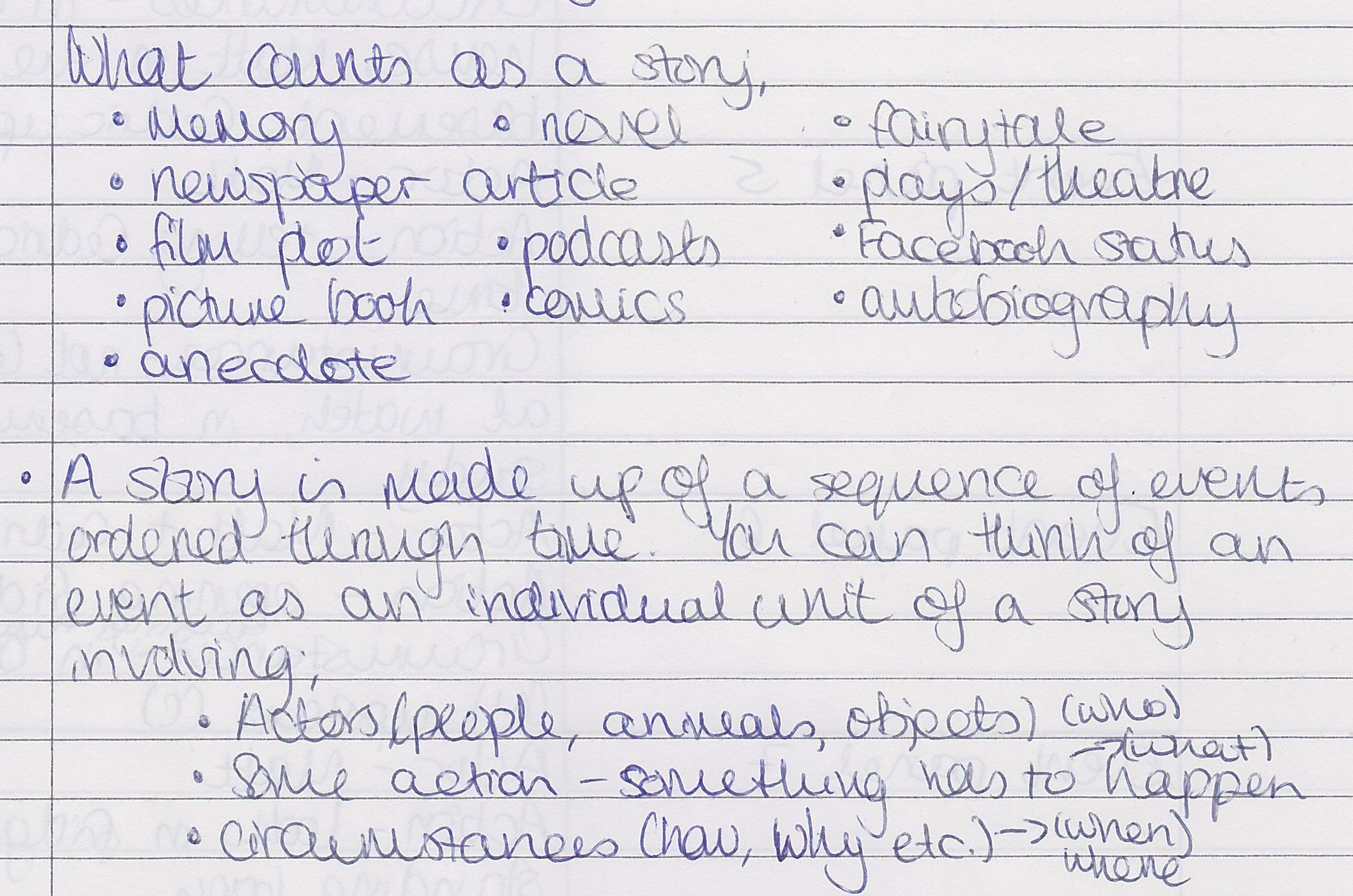

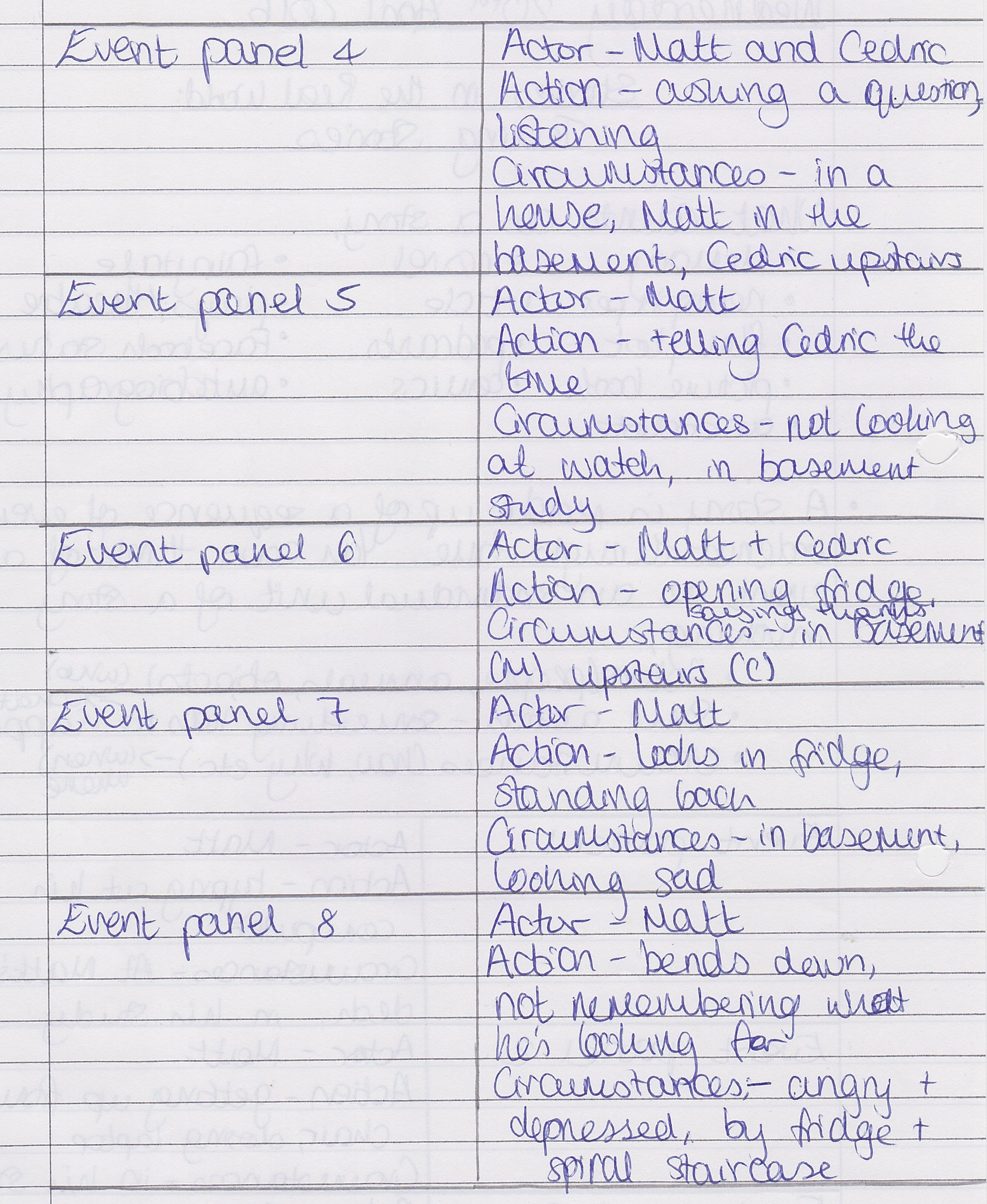
Stories are normally only worth telling if they involve some sort of complication or something out of the ordinary happening.
Why do we tell stories?
to entertain
in response to a situation; e.g. relevant conversation
to instil morals; warning/teaching others
to inform; as a way of remembering
to persuade; presenting political points of view e.g. The Handmaid's Tale
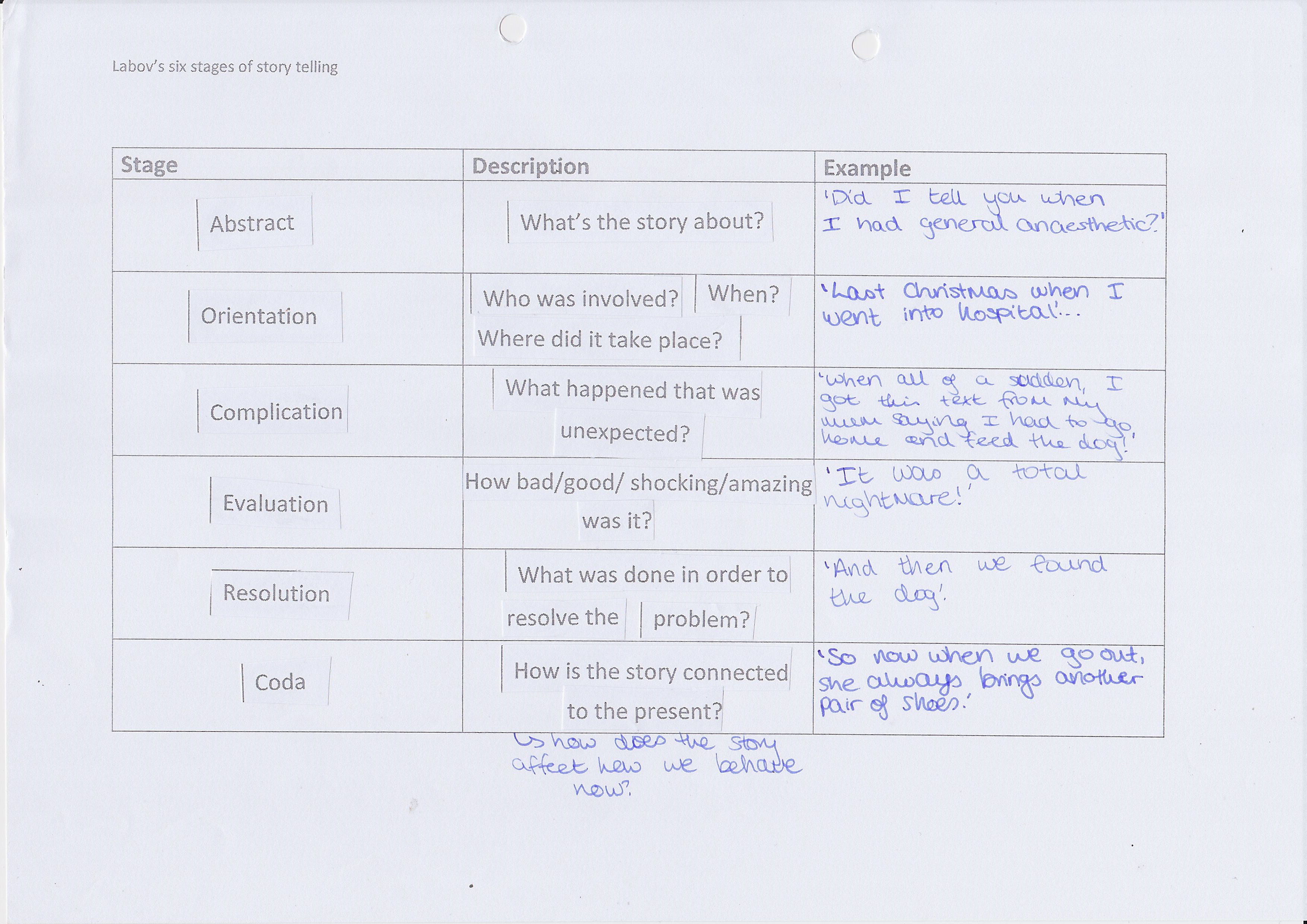
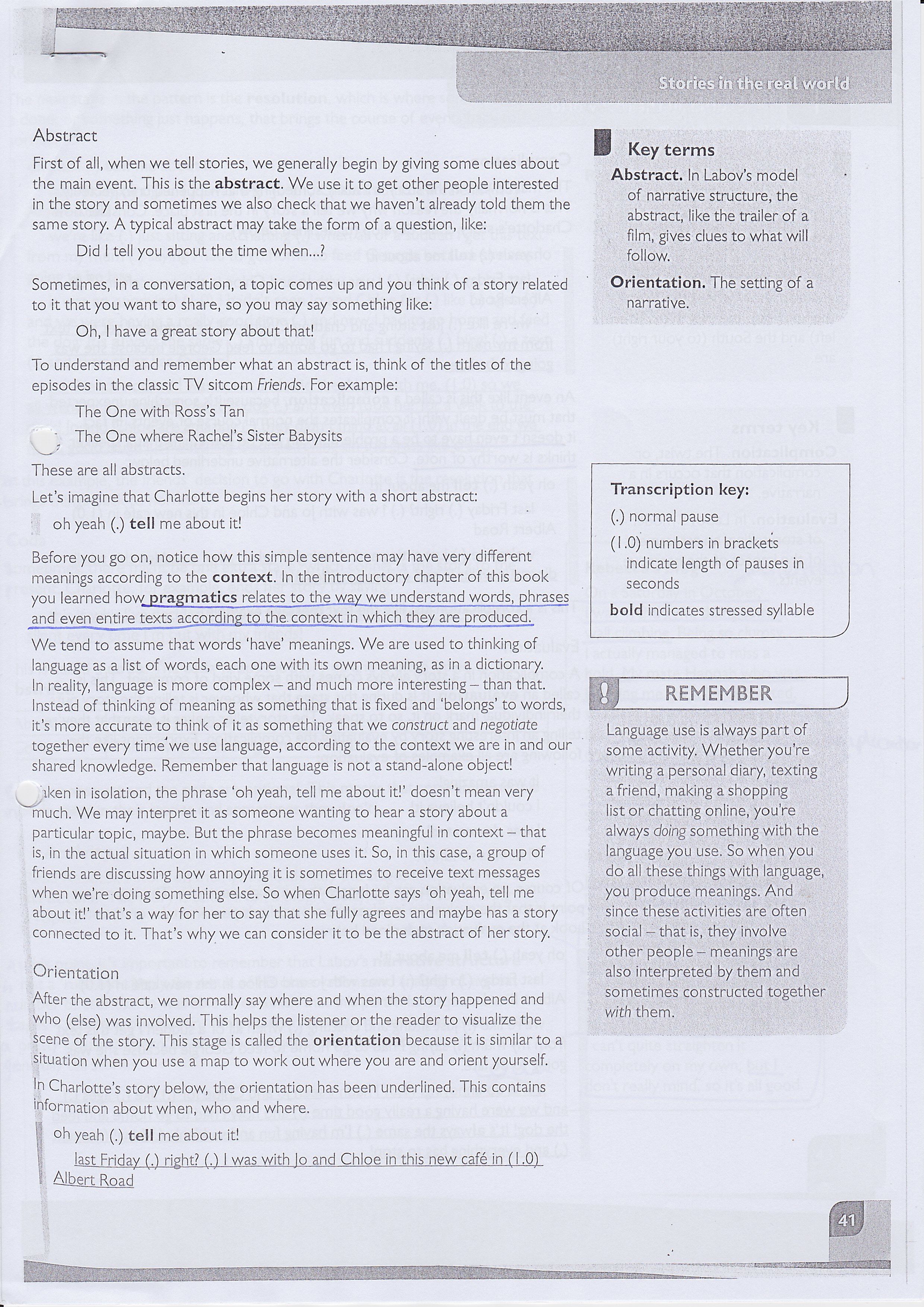
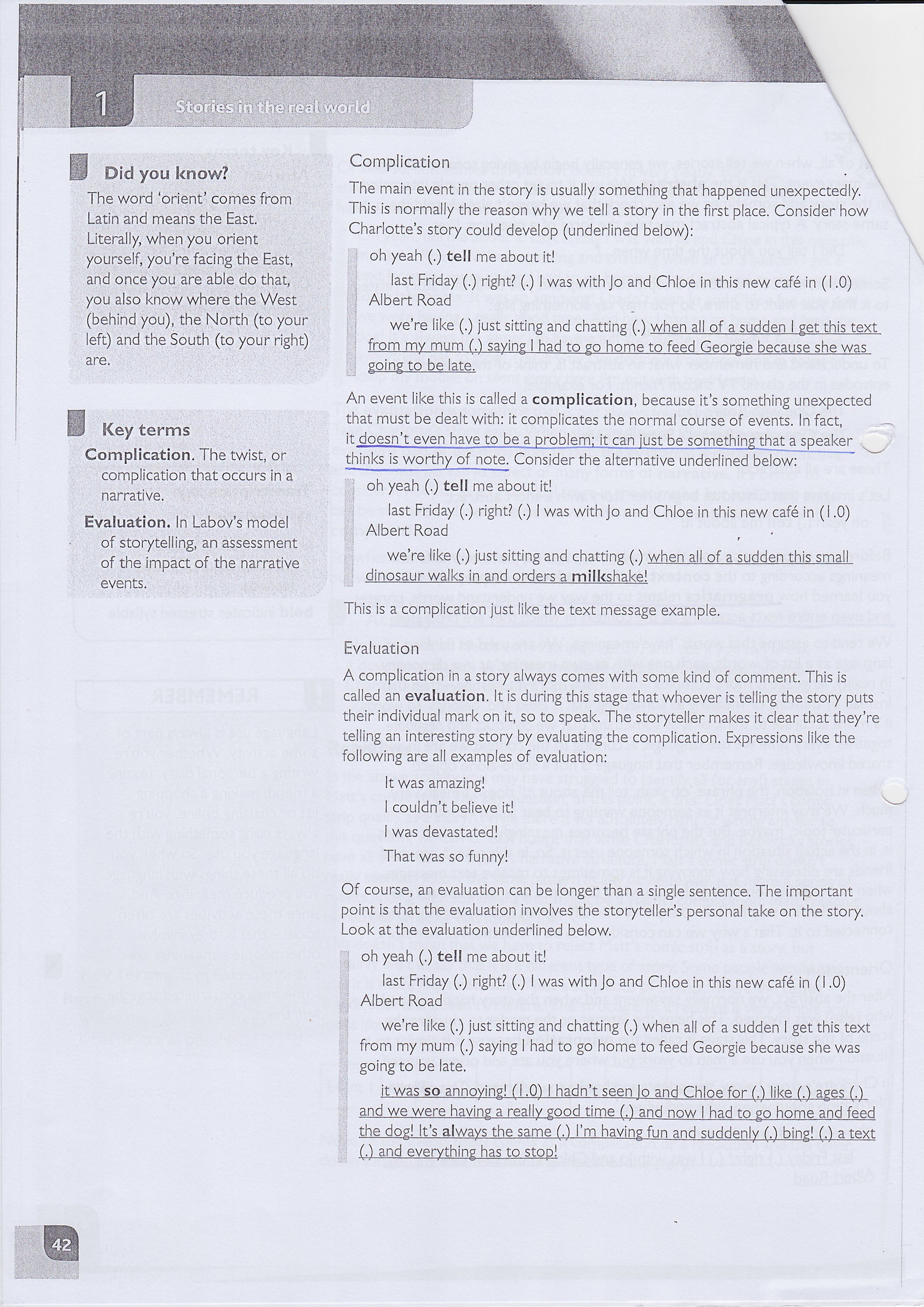
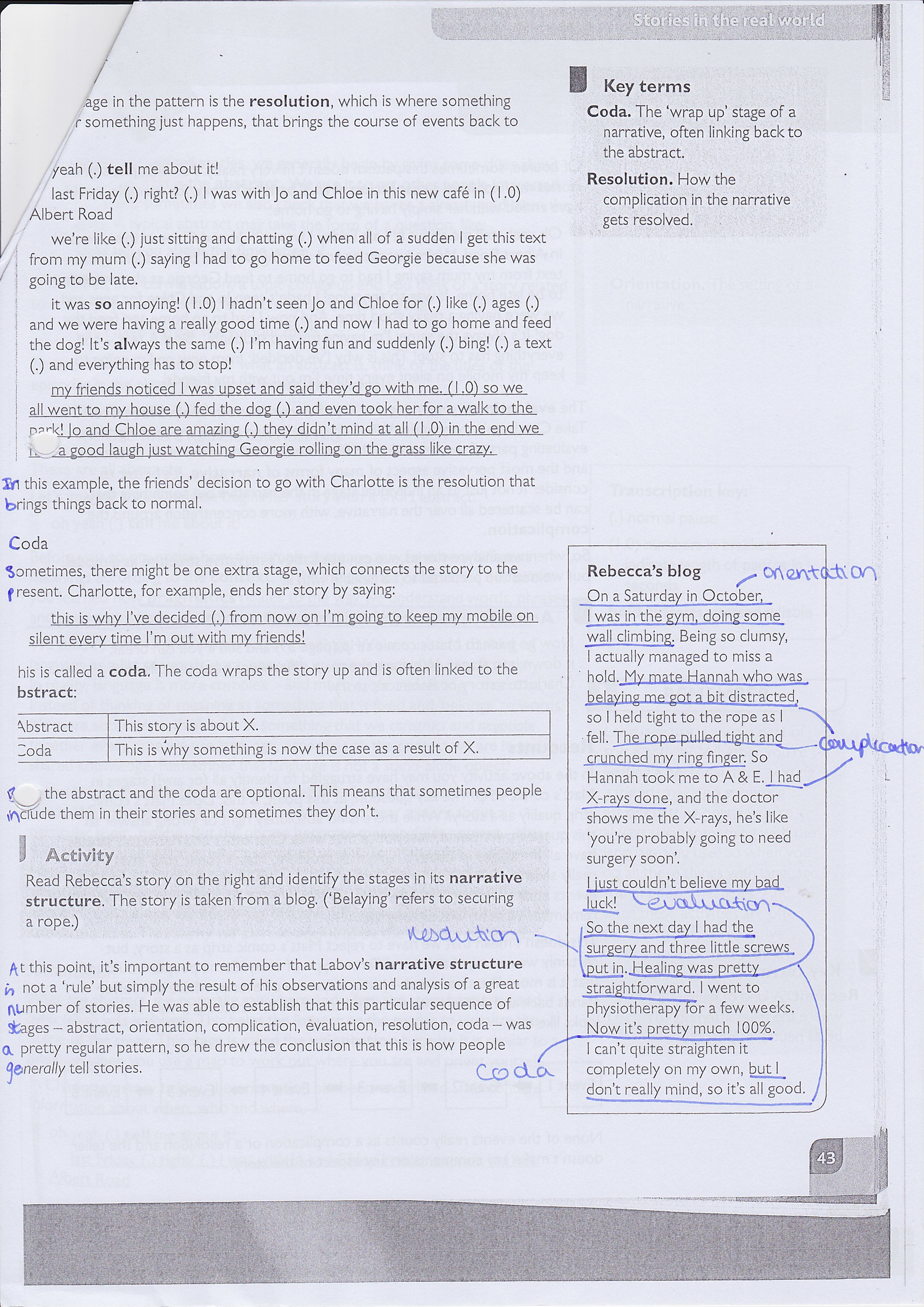
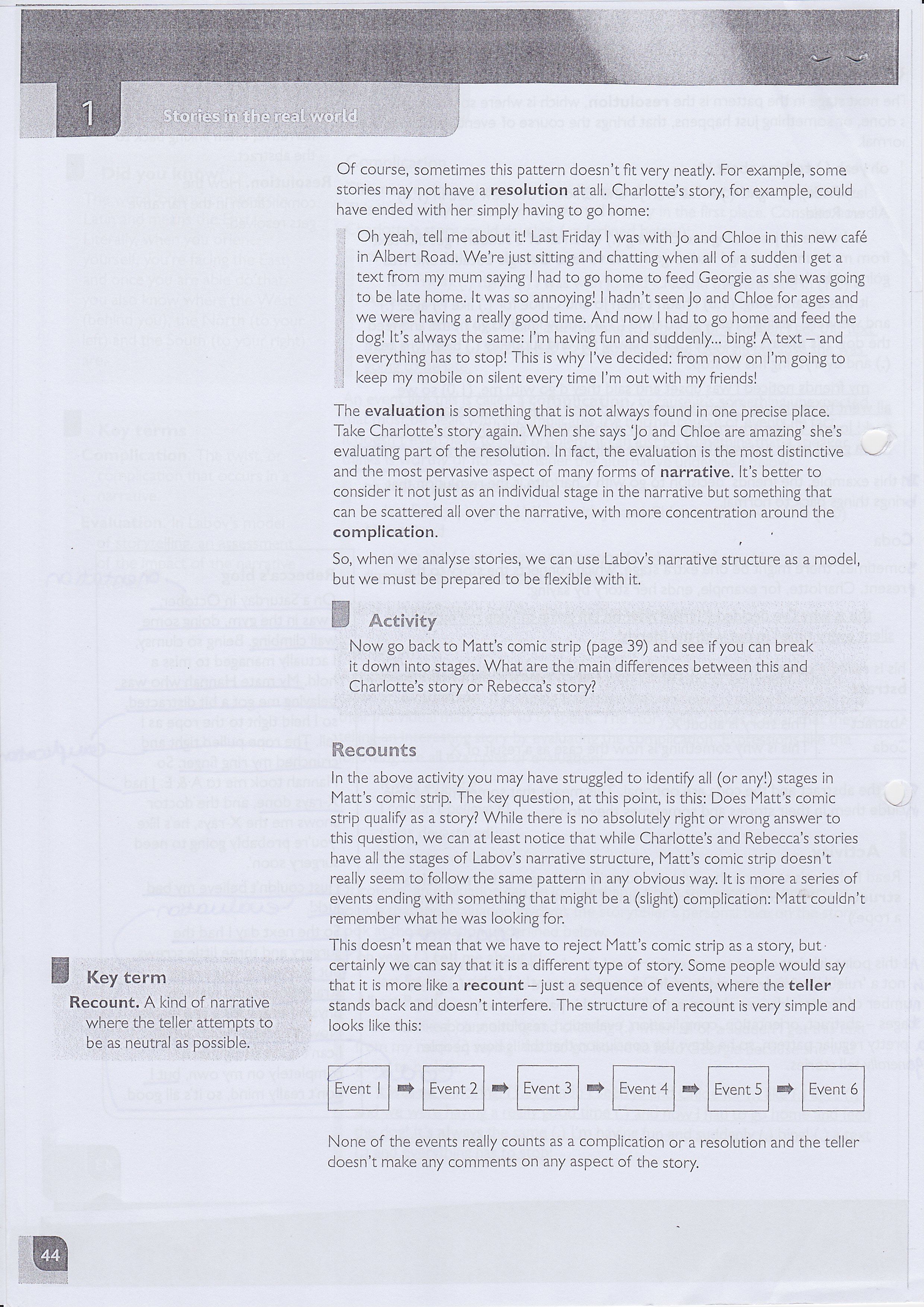
Labov collected a large number of stories from different people during the 1960's, and identified the six different stages of narrtive common to most stories:
Página 3
Role of the Teller
The teller always has an active role in the narrative, even when his/her voice seems to be silent. For example, this may be found in the form of evaluative adjectives and adverbs.
The term 'story' becomes insufficient, because it could refer to one of two things:
events as they 'really' happened
events as they are told by the teller
e.g. a car accident may have really happened, but what you say about it is a representation of it using language
This news article is an example of a story.
'adventurer' - actor is going beyond ordinary life, stimulates interest from readers
'Simon Milward, 38' - factual
'more than 30 miles,' - evaluative
'no energy source other than the sun' - evaluative, makes the achievement seem impressive
Página 4
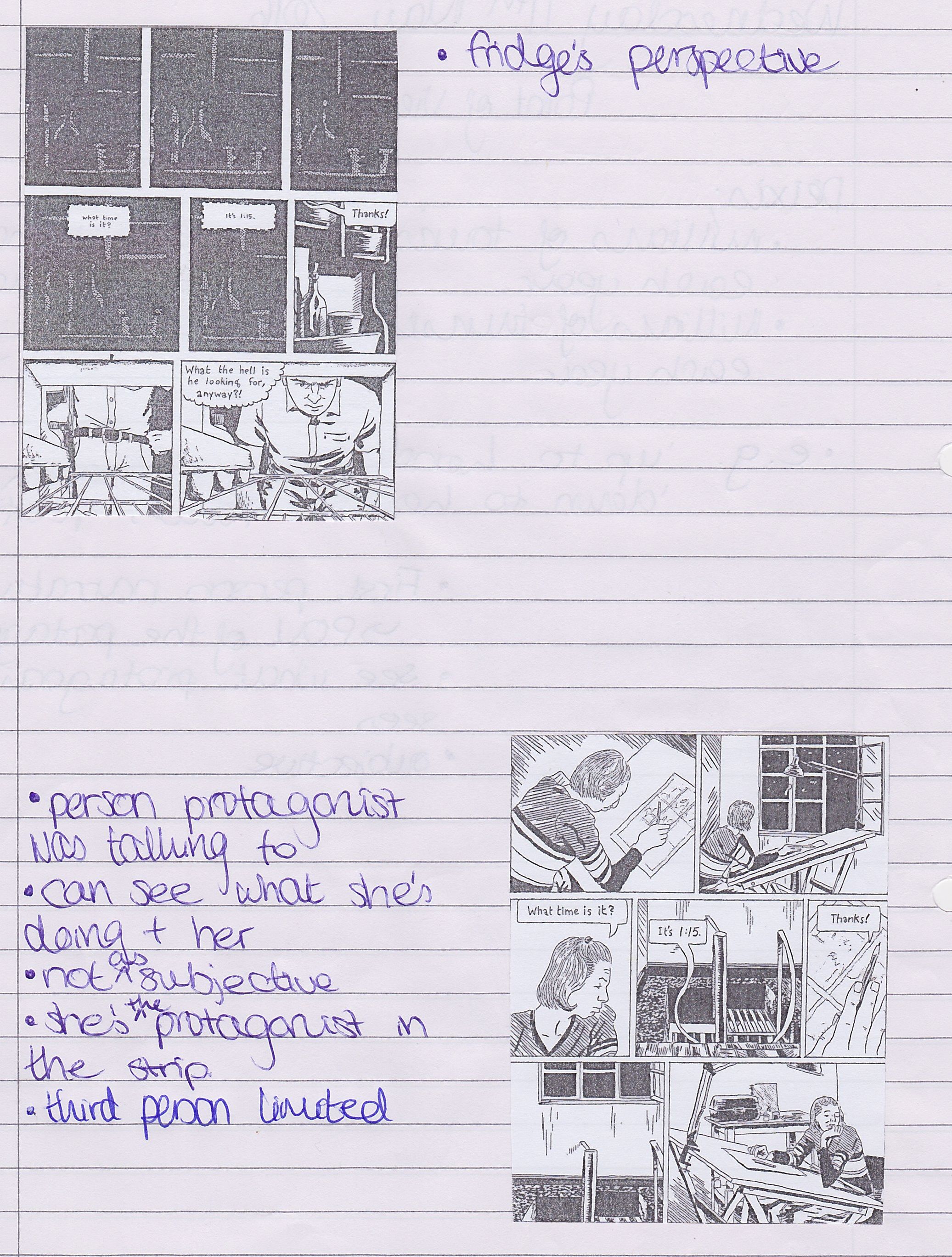
Point of View
Story = actual event
Teller = witness of the event
Discourse = representation of the event
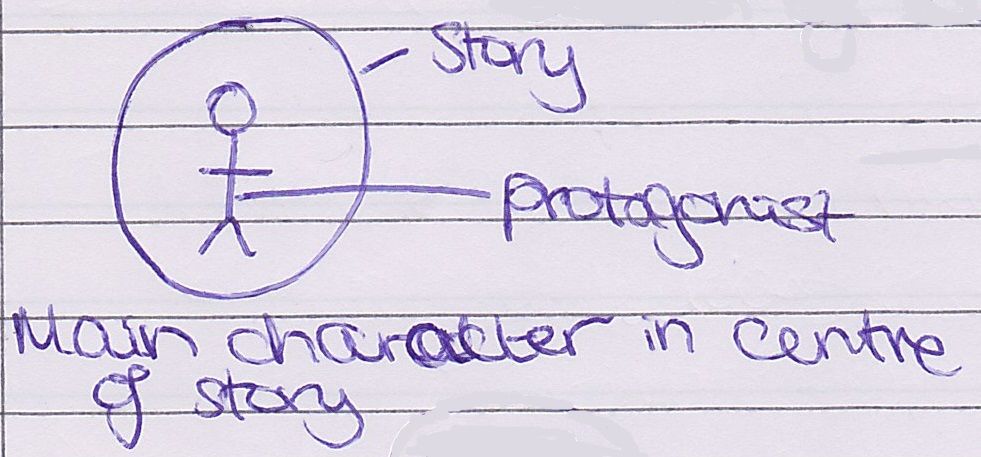
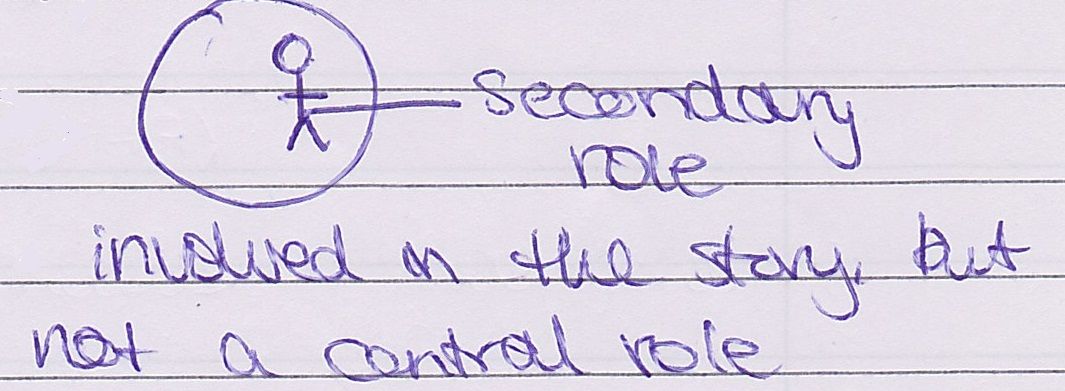
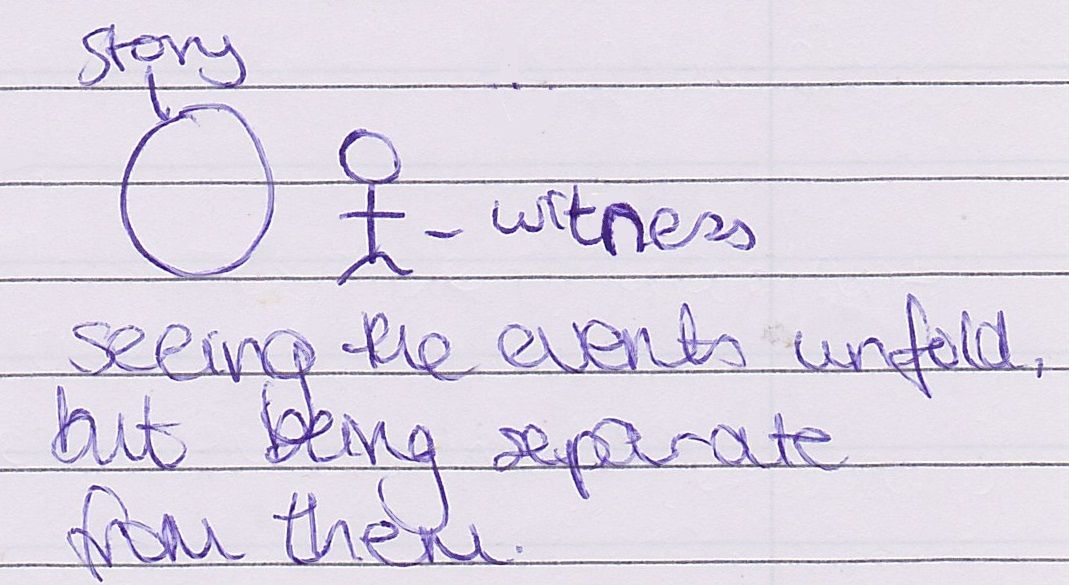
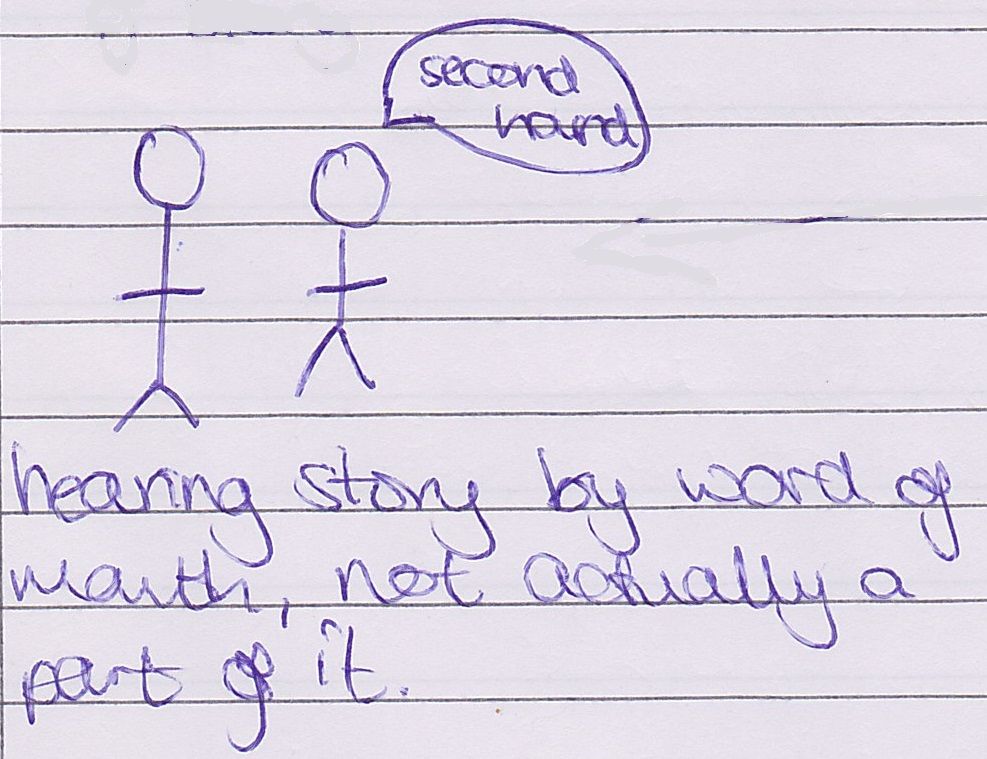
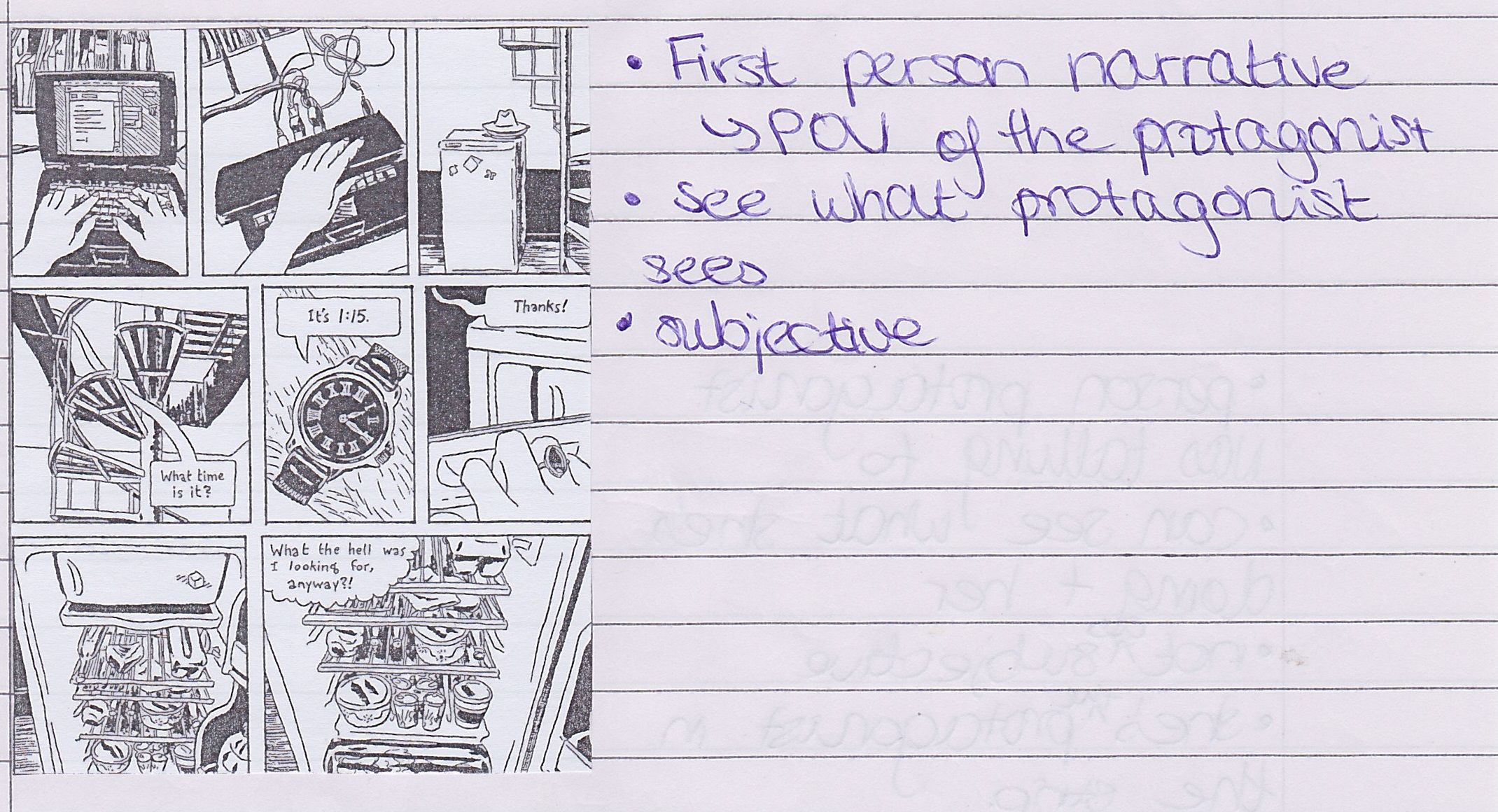
Internal perspective is provided by protagonists.
External perspective is provided by second-hand accounts.
The teller's position can be revealed through use of deixis;
'Millions of tourists come to Thailand every year.' - teller is in Thailand
'Millions of tourists go to Thailand every year.' - teller is outside of Thailand
Similar to going 'up/down to London'.
Informações
- Descrição
- A-Level (Year 1) (Year 1) English Language and Literature Notas sobre Narrative Structures, criado por Summer Pearce em 21-05-2017.
- Criado por
- Summer Pearce
- Visualizações
- 25
- Avaliação