
Quiz
Science 8: Mix and Flow of Matter MEGA QUIZ
Este quiz tem tipos de pergunta que abrem no player de sempre.
Perguntas do quiz (50)
1Matter is made up of ____
- ATiny pieces
- BTiny particles
- CBig pieces
- DBig particles
2What are molecules made up of?
- ANone of these
- BAtoms
- CParticles
- DGases
3Check all states of matter:
- AGas
- BFrozen
- CLiquid
- DSolid
- EPlasma
- FVapor
4Fill in the blanks(all of these are from our notes):
- Solid: Had definite [blank_start]shape[blank_end] and [blank_start]volume[blank_end]
- Liquid: Has a definite [blank_start]volume[blank_end] but no [blank_start]shape[blank_end]
- Gas: Has neither a definite [blank_start]volume[blank_end] nor [blank_start]shape[blank_end]- Ashape
- Bvolume
- Cvolume
- Dshape
- Evolume
- Fshape
5Gases and Solids can flow
- AVerdadeiro
- BFalso
6Check all SIX Particle Model of Matter principles:
- AAll substances are made of tiny particles
- BAll particles in a pure substance are the same. Different pure substances have different particles
- CThe particles have space between them
- DThe particles multiply very fast
- EThe particles are always in motion - vibrating, rotating
- FThe speed of the particle movement is determined by temperature
- GThe particles are attracted to each other. It depends on the particle
- HThe particles vary in size
7What are the terms for changing between a gas and a solid?
- AMelting/Boiling
- BCondensation/Boiling
- CSublimation/Deposition
- DSublimation/Condensation
8What are the terms for changing between a solid and a liquid?
- AMelting/Freezing
- BFreezing/Condensation
- CBoiling/Condensation
- DBoiling/Freezing
9What are the terms for changing between a liquid and a gas?
- ABoiling/Sublimation
- BEvaporation/Melting
- CEvaporation/Condensation
- DDeposition/Freezing
10All substances have the same melting and boiling points.
- AVerdadeiro
- BFalso
11When does a change of state occur?
- ANone of these
- BWhen a substance cools down and gains energy
- CWhen a substance moves quickly
- DWhen a substance heats up and its particles gain energy
12Check every quality of a homogeneous mixture:
- ALook like one substance
- BBecome a solution
- CEg. Soil, blood, milk
- DMeans same
- ETwo parts can be seen
- FDifferent particles stay together
- GEg. Water, vinegar
13Check every quality of a heterogeneous mixture:
- AEg. Water, vinegar
- BLook like one substance
- CBecome a solution
- DEg. Soil, blood, milk
- EMeans same
- FTwo parts can be seen
- GDifferent particles stay together
- HReferred to as "mechanical mixtures"
14Fill in the Blanks for Inbetween Mixtures(these are from notes for help):
- [blank_start]Suspension[blank_end]: a [blank_start]heterogeneous[blank_end] mixture in which the particles [blank_start]slowly[blank_end] settle after mixing. Eg. Salad dressing, Paint
- [blank_start]Colloid[blank_end]: a heterogeneous mixture in which particles do not [blank_start]settle[blank_end]. Eg. Milk, Gelatin
- [blank_start]Emulsion[blank_end]: particles of a [blank_start]colloid[blank_end] disperse even longer. Eg. Mayonnaise, Soapy dishwater- ASuspension
- BColloid
- CEmulsion
- Dsettle
- Eheterogeneous
- Fslowly
- Gcolloid
15How does soap help us clean?
- AIt makes the water's particles more attractive
- BOne end of their molecules attract water while the other attracts greasy substances
- CSoap makes the water move faster and have more pressure
- DSoap smells good
16Please memorize these symbols. They will be on the test.
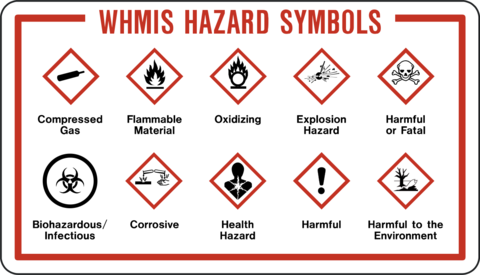
- AOkay
- Bok then
17Check SIX ways you can separate a mixture:
- AFiltering
- BDistillation
- CAir Pressure
- DHeating
- ESettling
- FUsing Soap
- GCleaning
- HFractioning
- IAttraction
18What is a solute?
- ADissolves in a solvent to make a solution
- BDissolves a solute to make a solution
- CCan be dissolved in a specific solution
- DHow fast a solute dissolves into a solvent
19What is a solvent?
- ADissolves in a solvent to make a solution
- BHow fast a solute dissolves into a solvent
- CDissolves a solute to make a solution
- DThe amount that can be dissolved at a certain temperature
20What does "soluble" mean?
- AHow fast a solute dissolves into a solvent
- BA solution where no more solute could be dissolved at that temperature
- CThe amount that can be dissolved at a certain temperature
- DCan be dissolved in a specific solution
21What does "rate of dissolving" mean?
- ACan be dissolved in a specific solution
- BHow fast a solute dissolves into a solvent
- CDissolves in a solvent to make a solution
- DA solution where solute could be dissolved at that temperature
22What does "solubility" mean?
- AThe amount that can be dissolved at a certain temperature
- BCan be dissolved in a specific solution
- CHow fast a solute dissolves into a solvent
- DA solution where no more solute could be dissolved at that temperature
23What is a "saturated solution"?
- ADissolves in a solvent to make a solution
- BA solution where solute could be dissolved at that temperature
- CThe amount that can be dissolved at a certain temperature
- DA solution where no more solute could be dissolved at that temperature
24What is an "unsaturated solution"?
- ADissolves in a solvent to make a solution
- BA solution where no more solute could be dissolved at that temperature
- CCan be dissolved in a specific solution
- DHow fast a solute dissolves into a solvent
25What is a "supersaturated solution"?
- AThe amount that can be dissolved at a certain temperature
- BA solution where solute could be dissolved at that temperature
- CA solution that contains more solute than it would normally dissolve at certain temperature
- DA solution where no more solute could be dissolved at that temperature
26What does "insoluble" mean?
- ADissolves in a solvent to make a solution
- BA solution where solute could be dissolved at that temperature
- CHow fast a solute dissolves into a solvent
- DCannot be dissolved in a specific solvent
27Please identify the solvents and solutes of these substances:
Ink:
Solute - Colored [blank_start]dye[blank_end]
Solvent - [blank_start]water[blank_end]
Saltwater:
Solute - [blank_start]salt[blank_end]
Solvent - [blank_start]water[blank_end]
Milkshake:
Solute - [blank_start]ice[blank_end] [blank_start]cream[blank_end]
Solvent - [blank_start]milk[blank_end]- Adye
- Bwater
- Csalt
- Dwater
- Eice
- Fcream
- Gmilk
28What does agitation do?
- AMakes it dissolve slower
- BMakes it dissolve faster
- CMakes it dissolve less
- DMakes it dissolve more
29Fill in the Blanks for Viscosity(notes will help):
Viscosity is the property that describes a fluid's [blank_start]thickness[blank_end] or [blank_start]thinness[blank_end]. Thicker liquids are [blank_start]more[blank_end] viscous or have a higher [blank_start]viscosity[blank_end]. [blank_start]Flowrate[blank_end] is used to determine viscosity. This is a measure of the [blank_start]time[blank_end] it takes a liquid to travel a certain [blank_start]distance[blank_end]. Viscosity relates to the [blank_start]Particle[blank_end] [blank_start]Model[blank_end] of [blank_start]Matter[blank_end]. Viscosity is thought of as [blank_start]Resistance[blank_end] to [blank_start]flow[blank_end].
- There is [blank_start]internal[blank_end] [blank_start]friction[blank_end] between [blank_start]particles[blank_end]
- [blank_start]Thicker[blank_end] liquids have more attraction between the [blank_start]particles[blank_end], and therefore, more [blank_start]friction[blank_end]
- [blank_start]Heating[blank_end] a substance causes the particles to spread [blank_start]out[blank_end], creating [blank_start]less[blank_end] internal friction
For [blank_start]gases[blank_end], the opposite is true. As they are [blank_start]heated[blank_end], they become more [blank_start]viscous[blank_end].- Athickness
- Bthinness
- Cmore
- Dviscosity
- EFlowrate
- Ftime
- Gdistance
- HParticle
- IModel
- JMatter
- KResistance
- Lflow
- Minternal
- Nfriction
- Oparticles
- PThicker
- Qparticles
- Rfriction
- SHeating
- Tout
- Uless
- Vgases
- Wheated
- Xviscous
30Fill in the Blanks(notes do not apply, but I have said this many times):
The more [blank_start]viscous[blank_end] a substance is, the [blank_start]flow[blank_end] [blank_start]rate[blank_end] would be less.- Aviscous
- Bflow
- Crate
31What is density?
- AMass per unit of volume
- BVolume per unit of mass
- CWeight per mass of volume
- DVolume per mass of weight
32What units do you use to measure capacity?
- ALiters
- BMeters
- CGrams
- DPounds
33What units do you use to measure volume?
- ACm(2)
- BCm(3)
- CGrams
- DGallons
34What determines how many particles can fit in a certain space?
- AThe size of particles
- BThe speed the particles move
- CThe size and shape of the particles
- DThe size and shape of the object
35[blank_start]Solids[blank_end] are generally the most dense. Next is [blank_start]liquids[blank_end] and then [blank_start]gases[blank_end].
- ASolids
- Bliquids
- Cgases
36100g of nickel occupies 11.2 cc. What is the density of nickel?
- A6.23 g/L
- B8 g/cc
- C8.90 cc/g
- D8.90 g/cc
37[blank_start]Bouyancy[blank_end] is the tendancy for materials to rise or float in a [blank_start]fluid[blank_end]. It is also referred to as "[blank_start]Bouyant[blank_end] [blank_start]Force[blank_end]", which is the [blank_start]upward[blank_end] force on objects submerged in fluids. [blank_start]Floating[blank_end] occurs when an object doesn't fall or sink in a fluid, but remains [blank_start]suspended[blank_end].
- ABouyancy
- Bfluid
- CBouyant
- DForce
- Eupward
- FFloating
- Gsuspended
38Check FOUR things that cause floating:
- AArchimedes Principle
- BOccurs because the fluid's particles exert a force opposite of gravity's
- CThe water is less dense than the object
- DThe average density is less than water
- EThe average density is more than water
- FThe object is less dense than water
- GThe object has air in it
- HThe object has no air in it
- IThe object is very heavy
39Fill in the Blanks for Archimedes Principle:
The [blank_start]Bouyant[blank_end] Force acting on an object [blank_start]equals[blank_end] the [blank_start]weight[blank_end](force of gravity) of the [blank_start]fluid[blank_end] displaced by the [blank_start]object[blank_end].- ABouyant
- Bweight
- Cfluid
- Dobject
- Eequals
40If the Bouyant Force is the same as the gravitational force, the object will neither sink nor float.
- AVerdadeiro
- BFalso
41Fill in the Blanks for Pressure(help in notes again):
Refers to applying a [blank_start]force[blank_end] to a given amount of [blank_start]area[blank_end]. Can be calculated by [blank_start]dividing[blank_end] [blank_start]force[blank_end] by [blank_start]area[blank_end].- Aforce
- Barea
- Cforce
- Ddividing
- Earea
42What units do you use to measure force?
- AKilograms
- BPounds
- CNewtons
- DLiters
43What units do you use to measure area?
- AMeters
- BCm(3)
- CGrams
- DCm(2)
44What is the unit used for Pressure?
- APascals(PA)
- BPascals(Pa)
- CStress
- DPounds
45Pascals are a metric unit, so they cannot use prefixes such as kilo and mili
- AVerdadeiro
- BFalso
46Fill in the Blanks for Compression of Gases(notes will help):
[blank_start]Gases[blank_end] are compressible because their [blank_start]particles[blank_end] are spread apart, and can be [blank_start]squeezed[blank_end] together. The particles of [blank_start]solids[blank_end] or [blank_start]liquids[blank_end] are packed as [blank_start]tightly[blank_end] as possible, therefore, solids and liquids are [blank_start]incompressible[blank_end].- AGases
- Bparticles
- Csqueezed
- Dsolids
- Eliquids
- Ftightly
- Gincompressible
47Check THREE things that use HYDRAULICS:
- APistons
- BLoader on a tractor
- CAuger motor
- DAir horn
- ECar horn
- FSyringe
48Name FIVE things that use PNEUMATICS:
- AAerosal cans
- BCar horn
- CAir horn
- DLoader on tractor
- EAuger motor
- FPistons
- GPressurized air
- HSyringe
49On a jello package, it says to boil the water. Why?
- ABecause the water needs to evaporate
- BBecause the water's particles move faster, making it dissolve slower
- CBecause of the water's particles move faster, making it dissolve faster
- DNone of these
50Small bits of steel and gold are mixed into a pile. How would you separate them?
- AFiltering
- BMagnets
- CAir pressure
- DSettling
Informações
- Descrição
- Use this for the Final Exam and midterms.
- Autor
- Riley Babuik
- Idioma
- English
- Visualizações
- 2.065
- Etiquetas
- Avaliação
- Ainda sem avaliações Avalie este quiz