
Flashcards
Module 10.1 Moving Continents
Flashcards do conjunto (42)
- 1Module 10.1 Moving ContinentsBy Rahma Abdelgadir
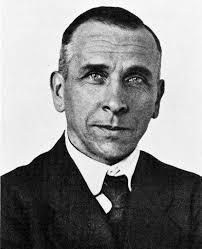
9B - 2Who was Alfred Wegener?Alfred Wegener was the German meteorologist and geophysicist that claimed the continents were once joined together.
- 3What was the continental drift theory by Alfred Wegener?The theory claimed that the continents had once been connected. He called the giant landmass Pangaea. He concluded they must have separated and drifted.
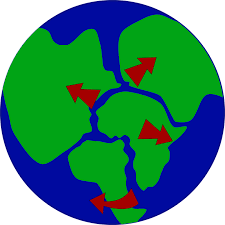
- 4What was one observation Wegener based his conclusions on?The continents seemed to fit together like a jigsaw.
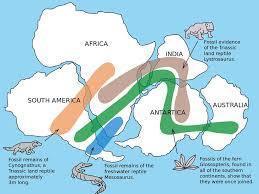
- 5What was one another observation Wegener based his conclusions on?Fossils of the same prehistoric species were found on different continents which would have been impossible since those organisms couldn't have crossed the ocean or flown.
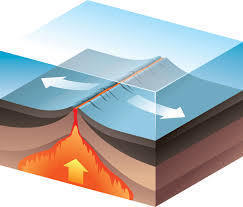
- 6What is seafloor spreading?a geologic process in which tectonic plates split apart from each other.
- 7What were scientists in 1872 doing with ocean research?They were surveying the ocean floor for an undersea telegraph cable to be laid between North America and Europe.
- 8How did they measure ocean depth?They measured it by dropping down very long cables and measuring their length.
- 9What did they discover in the middle of the Atlantic ocean?They discovered a large mountain ridge that extended a long way south.
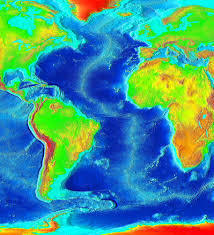
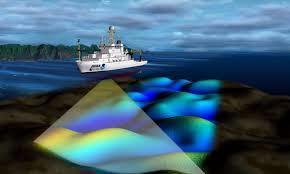
- 10What did German scientists in 1925 do with the ridge found 1872?They used sonar to confirm that this ridge ran though the entire length of the Atlantic Ocean.
- 11In 1945 what did they study further using sonar?They studied the underwater ridge using sonar to find that the ridge continued into other oceans and around the Earth.
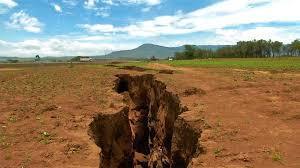
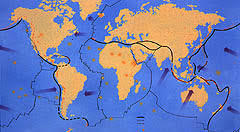
- 12What happened in 1953 with the ridges?The ridges were found to have a series of large cracks along them. The cracks are called rifts.
- 13What was oceans ridges called?They system was named the Great Global Rift system.
- 14Who was Harry Hess?Harry Hess was an American geologist and a United States Navy officer in World War II who is considered one of the "founding fathers" of the unifying theory of plate tectonics.
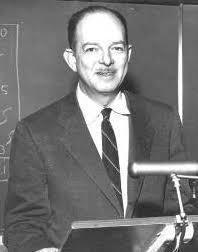
- 15What did Harry Hess try to explain?He was trying to explain what was happening to the ocean ridges.
- 16What did Harry Hess do while serving the US navy during World War ||?He used sonar to map the floor of the Pacific Ocean.
- 17What did he discover there?He had discovered many underwater, flat-topped mountains. When the Rift system was found he looked back to his discoveries.
- 18What did Hess propose?That the new rocky crust was being formed at the ocean ridges and spreading outwards. This process was called seafloor spreading.
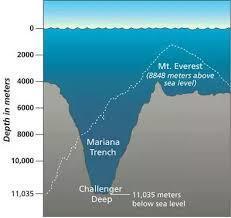
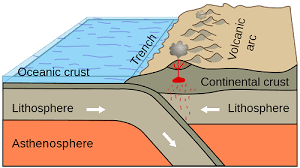
- 19What did Hess also propose?The crust was sinking down into Earth, then forming ocean trenches. As the crust sinks, it melts and is destroyed. This process is called subduction.
- 20What are ocean trenches?They are long, narrow depressions on the seafloor.
- 21Evidence for Hess's theory?1. Magnetic striping
2. Age of the sea floor
3. Sediment thickness - 22What is magnetic striping?Patterns of magnetism trapped in rocks on each side of plate boundaries.
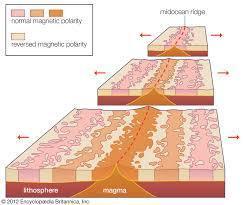
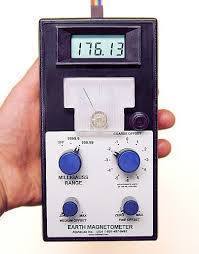
- 23What is a magnetometer?An device used for measuring magnetic forces, especially the earth's magnetism.
- 24Whats more evidence supporting the theory of seafloor spreading came from dating the rocks on the sea floor?1. The further the rocks of the sea floor were from the ridges the older they were, the closer rocks were younger they were.
- 25Whats more evidence supporting the theory of seafloor spreading came from dating the rocks on the sea floor?2. The oldest seafloor rocks found were only about 200 million years old. Some of the rocks in the continents were thousands of million years old. So the seafloor was very young compared to the continents.
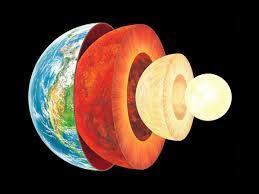
- 26What is the crust?Earth's outermost solid layer
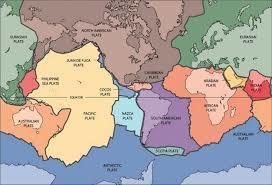
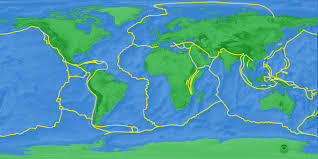
- 27What is tectonic plate?Section of Earth's crust that moves about on Earth's surface.
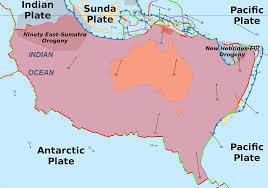
- 28Fact about tectonic plate?The whole of Australia and and parts of New Zealand are on a single tectonic plate.
- 29What are the sizes of the tectonic plates?-There are 7 extremely large plates bigger than most continents
-10 or so medium sized ones
-60 smaller plates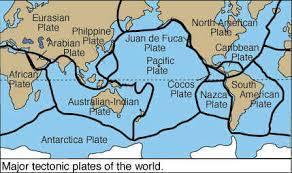
- 30What is the mantle?Layer beneath Earth's crust
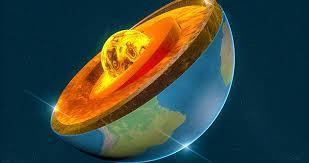
- 31Whats the lithosphere?Name for the crust and the upper mantle together; Earth's tectonic plates
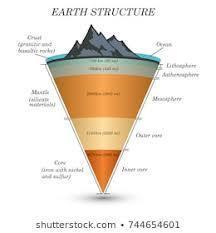
- 32Whats the asthenosphere?A layer of 'plastic' semi-solid rock in the lower mantle on which Earth's tectonic plates move
- 33How is some new heat created?By friction due to moving rocks and also to the decay of radioactive elements
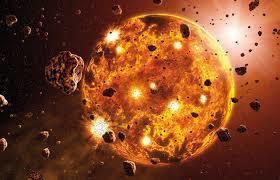
- 34Whats the core?The centre of the Earth
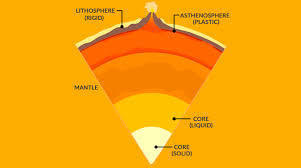
- 35Whats the core like?The core is very dense and is composed mostly of iron and nickel.
The inner core is sold but the outer core is liquid and can flow. Scientists believe this gives Earth's its magnetic field.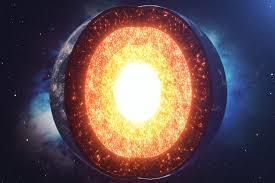
- 36What is the first theory about why do plates move?1. The plates are dragged along as the hot magma in the asthenosphere rises up and then flows under the plates, creating convection currents. As the liquid flows, the friction between it and the plates above may be enough move them
- 37What is the second theory about why do plates move?That gravity is involved in moving tectonic plates. This could happen in two very different ways.
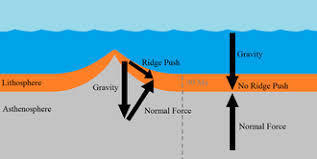
- 38What is the first way gravity could be involved in moving tectonic plates?Slab pull-the ocean crust is denser at the subduction zones near the continents than near the mid-ocean ridges. Gravity pulls the heavy and denser part of the plate downwards at the subduction zone which the pulls the plate into the trench and away from the ocean ridges. This pulls the plates apart at the mid-ocean ridges.
- 39What is the second way gravity could be involved in moving tectonic plates?Ridge push-new ocean crust forms at the ridges above the rest of the crust and so gravity pulls the new crust downwards. This pushes the older crust below it and squeezes it the plates sideways.
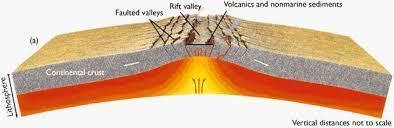
- 40What is the process rifting?The process of continents breaking up, subsiding and allowing in water from the sea.
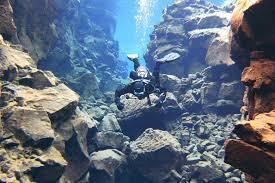
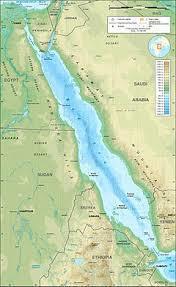
- 41What is one water-filled rift?The Red Sea
- 42Thank you for watching!By Rahma Abdelgadir
Class 9B