
3976799
Descrição

FlashCards por Kaseya Chisala, atualizado more than 1 year ago

|
Criado por Kaseya Chisala
quase 11 anos atrás
|
|
| Questão | Responda |
| What makes up atom? | Sub-atomic particles; protons, neutrons and electrons |
| How is an atom arranged? | Protons and neutrons in the nucleus, and electrons around it in shells. The nucleus is tiny compared to the volume of electrons |
| Describe a proton | Has a mass of 1, a charge of +1 and found in the nucleus |
| Describe a neutron | Has a mass of 1, a charge of 0 and found in the nucleus |
| Describe a proton | Has a mass of 0.00055, a charge of -1 and found around the nucleus in shells |
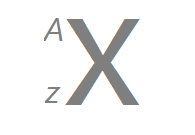
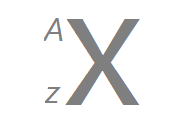
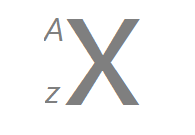
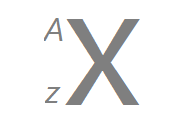
| What does the "X" stand for? | X is the chemical symbol for the element |
| what does the "A" stand for | A is the mass number of element. The number of protons and neutrons |
| What does "Z" stand for? | Z is the atomic number of element . It is the number of protons in element. |
| What is this known as? | It is called a Nuclear symbol and is used to identify an element using; mass number, atomic number and the symbol of an element. |
| What is an Isotope? | Isotopes are atoms of the same element with the same atomic number (number of protons). But different mass number (number of neutrons). |
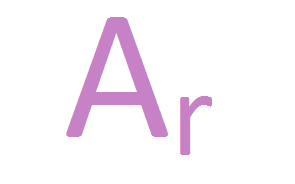
| What does this stand for ? | it is the Relative atomic mass. Which is an average of the relative isotopic masses of isotopes taking into account their abundances. |
| How is relative atomic mass calculated? | Using Mass spectrometry, which measures the atomic mass of different particles and the relative abundance of different isotopes. |
| How does a mass spectra do this? | By ionising sample atoms or molecules so they are positively charged cations. They are then separated on mass to charge ratios (m/z) along with their relative abundance. |
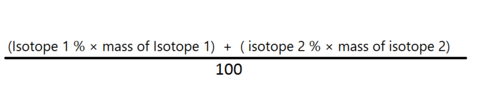
| How to calculate relative atomic mass | |
| How to calculate relative abundance | |
| What is nuclear fusion? | when 2 atomic nuclei fuse together to form a new heavier nucleus of a new element. As well as lots of energy |
| What conditions are needed for nuclear fusion to occur? | needs to be under high temperature and pressure like a star so that repulsion of positive nuclei is overcome |
| what does "γ" stand for? | The release of energy as a result of nuclear fusion |


Quer criar seus próprios Flashcards gratuitos com GoConqr? Saiba mais.