
4420847


| Questão | Responda |
| Hydrophobic Amino Acids | Aromatic: Phenylalanine, Tyrosine, Tryptophan Aliphatic: Alanine, Valine, Isoleucine, Leucine, Methionine |
| Hydrophilic Amino Acids | Lysine, Arginine (+) Aspartic Acid, Glutamic Acid (-) Serine, Threonine, Asparagine, Glutamine |
| Coiled-Coil Motif | Two alpha helices wrapped around one another. Amphipathic Common in DNA binding proteins |
| Zinc-Finger Motif | An alpha helix and 2 beta strands Held in this position by interaction of conserved amino acid residues |
| Beta-Barrel Motif | Large beta sheet that loops back upon itself 1st strand and last strand form hydrogen bonds with one another Amphipathic structure |
| Helix-Loop-Helix Motif | 2 small alpha helices held in a specific orientation relative to one another by non-covalent interactions. Involves a cofactor - calcium |
| Affinity | Strength of binding |
| Specificity | Ability of a protein to preferentially bind to a unique ligand. In some cases, 2/3 closely related ligands. |
| Strong Interaction | Protein and its ligand are associated for a long time. Surfaces are complementary |
| Weak Interaction | Protein and ligand come together and fall apart almost immediately. Shapes of facing surfaces are poor matches. |
| Brightfield Microscopy | |
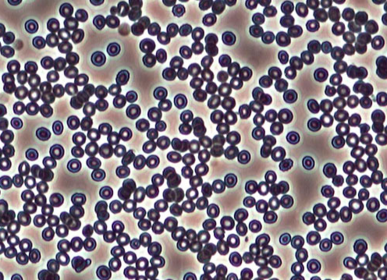
| Phase Contrast Microscopy | |
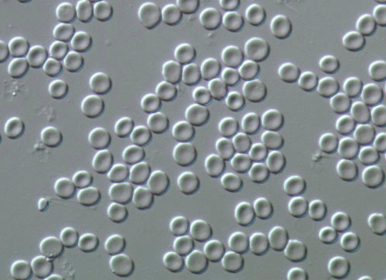
| Nomarski or DIC Microscopy | |
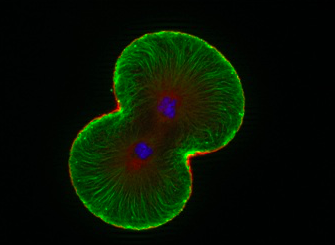
| Confocal Fluorescence | |
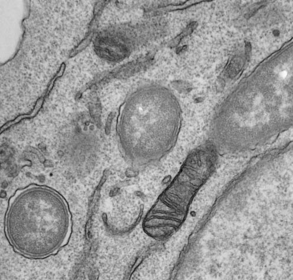
| Electron Microscope | |
| Immunofluorescence | |
| Co-operative Allostery | When binding of one ligand molecule increases the affinity of the enzyme for subsequent ligand molecules. |
| Van der Waals Interaction | Creation of a transient dipole when two atoms are close together. |
| 5 Rules of Protein Transport | 1. A signal sequence is on the targeted protein. 2. A receptor for that signal sequence is on the target organelle. 3. A translocation channel is required to get the protein across the membrane into the organelle. 4. There is a requirement for energy at some step in the process. 5. There has to be a way of targeting a protein to specific and different locations within an organelle. |
| Acetylation | Addition of acetyl group Reversible ~80% of proteins in the cytosol have at least one acetylated amino acid residue. |
| Methylation | Addition of methyl group Reversible |
| Phosphorylation | Transfer of a phosphate group from ATP to the -OH group of only serine, tyrosine, or threonine by kinases. |
| Hydroxylation | Important for changing the structure of proteins |
| Carboxylation | Changes properties of amino acid residues by adding a negative charge. Facilitate ion bond formation or allow positively charged cofactors to bind. |
| Glycosylation | Addition of a carbohydrate Occurs in Golgi apparatus Important for protecting proteins from proteolysis and for proper folding. |
| Lipidation | Addition of a lipid molecule onto a polypeptide. Important for anchoring proteins to hydrophobic biomembranes. |
| Chaperones | Monomeric proteins Prevent the protein from forming incorrect folds due to hydrophobic interactions in an aqueous environment within a protein or with other proteins. |
| Hsp70 Proteins | Found in the cytosol and mitochondria of eukaryotic cells. 2 domains: nucleotide-binding domain and substrate-binding domain. |
| Chaperonins | Large cylindrical, macromolecular complexes allow newly synthesized polypeptides that allow them to fold without interference from other macromolecules. Consists of two large subunits (chambers) |
| Allosteric Regulation | Modification of protein functionary the binding of an effector molecule at a site other than the protein's active site. |
| Phosphorylation | Results in the addition of 2 negative charges |
| Proteolytic Cleavage | Not reversible Peptide bond cannot be reformed Allows a cell to make a lot of protein in an inactive conformation, and then to rapidly cleave the polypeptide at specific points to activate it. |
| E1 | Ubiquitin activating enzyme Recognizes the free ubiquitin in the cytosol and picks it up. |
| E2 | Ubiquitin conjugating enzyme Facilitates the attachment of the ubiquitin to the target protein. |
| E3 | Ubiquitin ligase Recognizes the specific target for degradation and attach ubiquitin to it. |
| Fluid Mosaic Model | Dynamic biomembrane Lipids and proteins diffuse laterally |
| Hydrophobic Binding Groove or Pocket | Associated with the hydrophobic ER-signal sequence |
| Phosphorylation in what amino acids... | Serine, Threonine, Tyrosine |
| Protein Folding is... | Unique Spontaneous Reversible |
| Alipathic Molecules | Contain hydrocarbon chains |
| Molecular Chaperones | Bind and stabilize hydrophobic regions of a nascent polypeptide |
| Western Blot | A technique used by scientists to detect proteins based on their antibody affinity. |
| 3 classes of membrane lipids | Phosphoglycerides Sphingolipids Sterols |
| PKA switches between... | An active monomer and an inactive tetramer. |
| Increase fluidity by... | Increasing temperature Unsaturated bonds Short carbon chains |
| Decrease fluidity by... | Decreasing temperature Saturated bonds Long carbon chains |
| Peroxisome Characteristics | Bound by a single membrane. Responsible for oxidative and synthetic functions in the cell. Does not have its own genetic information Able to reproduce by fission Not static |
| Peroxisome Function | Breakdown of very long chain fatty acids through beta-oxidation. |
| Mitochondria | Primary site of ATP production. Bound by a double membrane. Have their own genomes. Able to reproduce by fission. Dynamic organelles. |
| Rough Endoplasmic Reticulum | Continuous with the outer membrane of the nucleus. Bound by a single membrane. Does not have its own genomes. Not the final destinations for most organelles. |
| Type I | Single-pass membrane proteins N-terminus faces the exoplasmic space C-terminus faces the cytoplasmic space |
| Type II | Single-pass membrane proteins N-terminus faces the cytoplasmic space C-terminus faces the luminal space Lack N-terminal signal sequence |
| Type III | Single-pass membrane proteins N-terminus faces the luminal space C-terminus faces the cytoplasmic space Lack N-terminal signal sequence Short N-terminus |
| Type IV | Pass through the membrane multiple times. Type IVA: N-terminus on cytosolic side Type IVB: N-terminus on luminal side |
| Charged & Polar Residues... | Tend to be on the surface of proteins |
| Phase Contrast & DIC both... | Visualize specimen based on differences in refractive index. Visualize specimen that are alive. |
| Histidine | Shifts between a positive and neutral charge. pH dependent |

Quer criar seus próprios Flashcards gratuitos com GoConqr? Saiba mais.