
Fluxograma
Conducting focus-group interviews
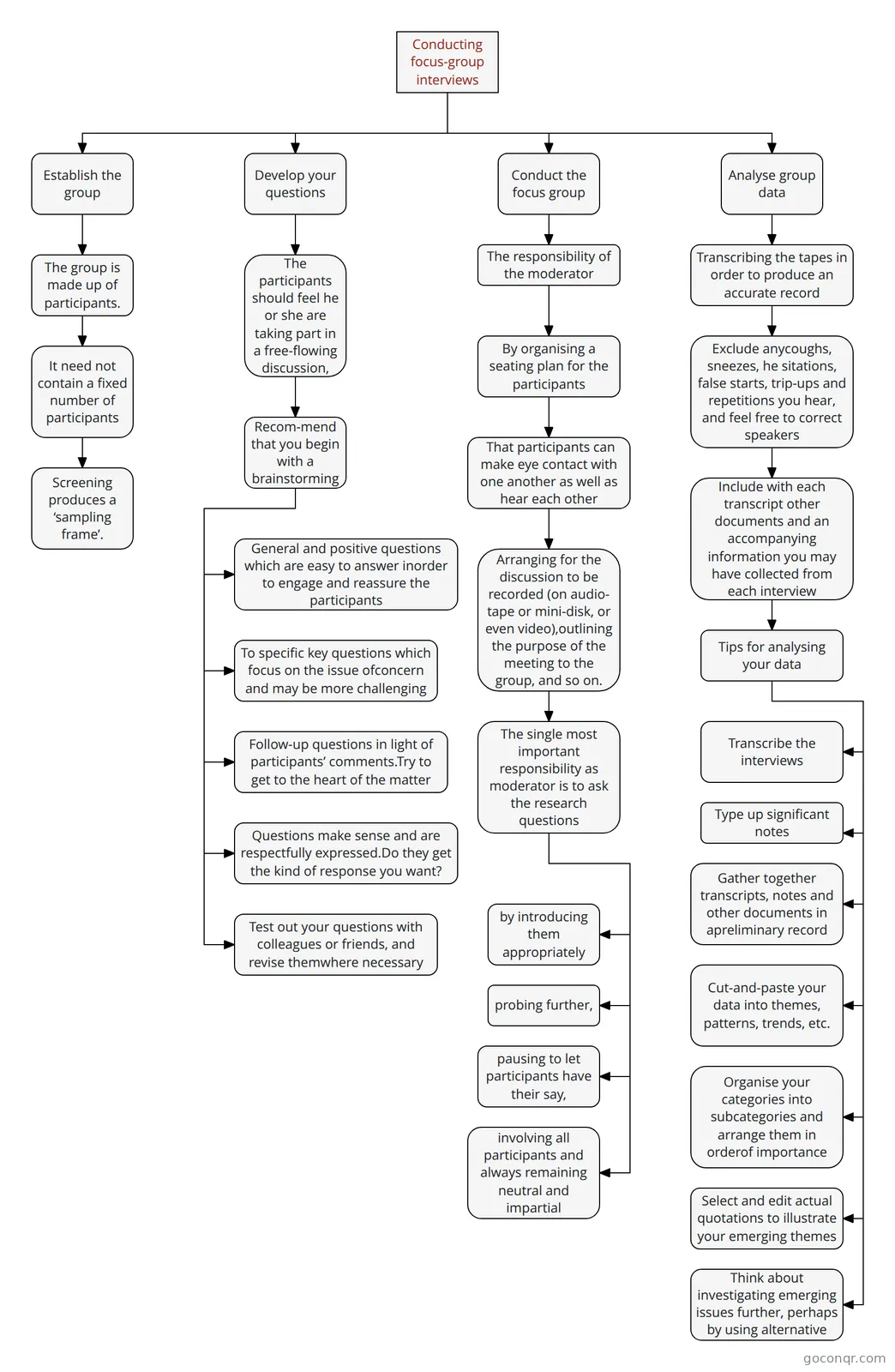
Flowchart: conducting focus-group interviews
Conteúdo do fluxograma
Conducting focus-group interviews
Establish the group
Develop your questions
Conduct the focus group
Analyse group data
The group is made up of participants.
It need not contain a fixed number of participants
Screening produces a ‘sampling frame’.
The participants should feel he or she are taking part in a free-flowing discussion,
Recom-mend that you begin with a brainstorming
General and positive questions which are easy to answer inorder to engage and reassure the participants
To specific key questions which focus on the issue ofconcern and may be more challenging
Follow-up questions in light of participants’ comments.Try to get to the heart of the matter
Questions make sense and are respectfully expressed.Do they get the kind of response you want?
Test out your questions with colleagues or friends, and revise themwhere necessary
The responsibility of the moderator
By organising a seating plan for the participants
That participants can make eye contact with one another as well as hear each other
Arranging for the discussion to be recorded (on audio-tape or mini-disk, or even video),outlining the purpose of the meeting to the group, and so on.
The single most important responsibility as moderator is to ask the research questions
by introducing them appropriately
probing further,
pausing to let participants have their say,
involving all participants and always remaining neutral and impartial
Transcribing the tapes in order to produce an accurate record
Exclude anycoughs, sneezes, he sitations, false starts, trip-ups and repetitions you hear, and feel free to correct speakers
Include with each transcript other documents and an accompanying information you may have collected from each interview
Tips for analysing your data
Transcribe the interviews
Type up significant notes
Gather together transcripts, notes and other documents in apreliminary record
Cut-and-paste your data into themes, patterns, trends, etc.
Organise your categories into subcategories and arrange them in orderof importance
Select and edit actual quotations to illustrate your emerging themes
Think about investigating emerging issues further, perhaps by using alternative instruments
Informações
- Descrição
- References: Wilkinson, D. and Birmingham, P, 2003
- Criado por
- Ale M. P
- Visualizações
- 15
- Tags
- Avaliação