
Fluxograma
Acute Kidney Injury: definition, causes and pathophysiology
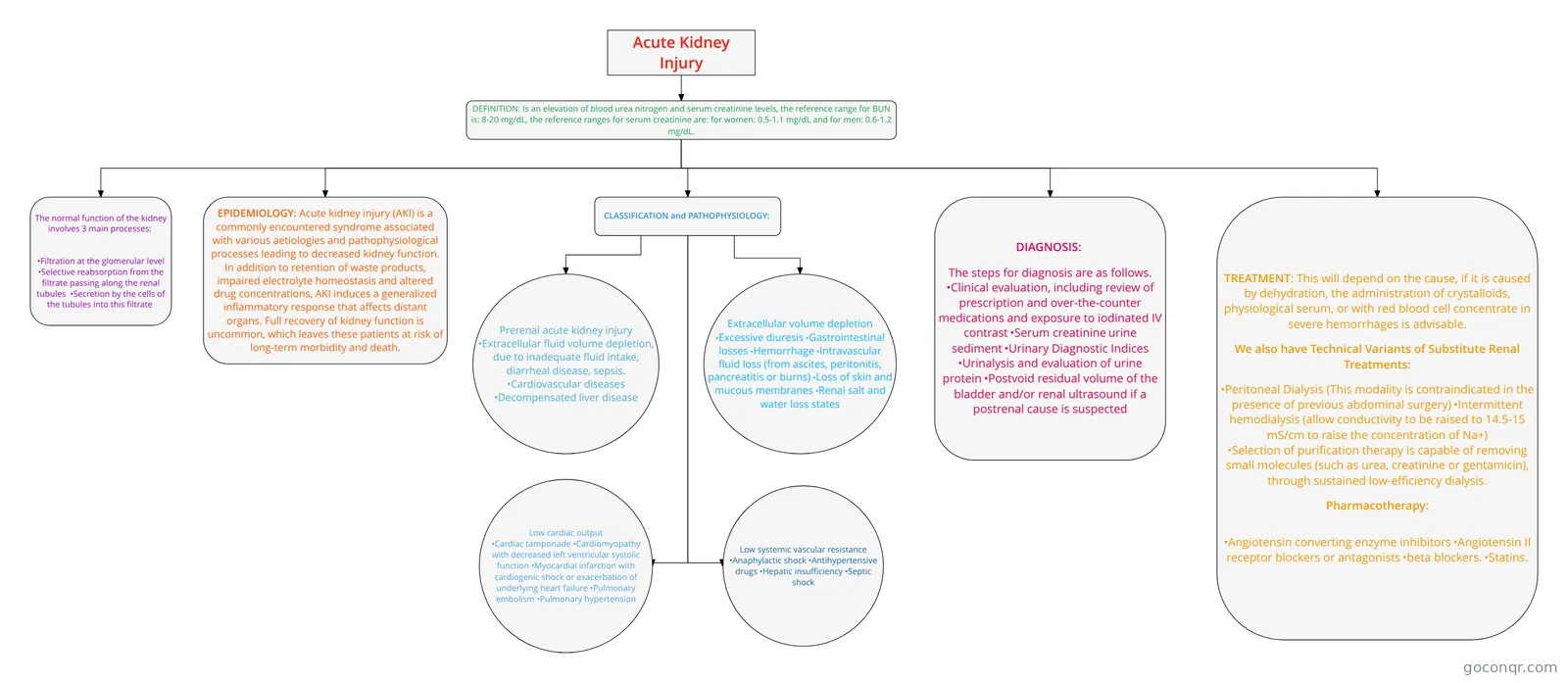
Flowchart: Acute kidney injury
Conteúdo do fluxograma
Acute Kidney Injury
DEFINITION: Is an elevation of blood urea nitrogen and serum creatinine levels, the reference range for BUN is: 8-20 mg/dL, the reference ranges for serum creatinine are: for women: 0.5-1.1 mg/dL and for men: 0.6-1.2 mg/dL.
The normal function of the kidney involves 3 main processes:
•Filtration at the glomerular level
•Selective reabsorption from the filtrate passing along the renal tubules
•Secretion by the cells of the tubules into this filtrate
EPIDEMIOLOGY: Acute kidney injury (AKI) is a commonly encountered syndrome associated with various aetiologies and pathophysiological processes leading to decreased kidney function. In addition to retention of waste products, impaired electrolyte homeostasis and altered drug concentrations, AKI induces a generalized inflammatory response that affects distant organs. Full recovery of kidney function is uncommon, which leaves these patients at risk of long-term morbidity and death.
CLASSIFICATION and PATHOPHYSIOLOGY:
Prerenal acute kidney injury
•Extracellular fluid volume depletion, due to inadequate fluid intake, diarrheal disease, sepsis.
•Cardiovascular diseases
•Decompensated liver disease
Extracellular volume depletion
•Excessive diuresis
•Gastrointestinal losses
•Hemorrhage
•Intravascular fluid loss (from ascites, peritonitis, pancreatitis or burns)
•Loss of skin and mucous membranes
•Renal salt and water loss states
Low cardiac output
•Cardiac tamponade
•Cardiomyopathy with decreased left ventricular systolic function
•Myocardial infarction with cardiogenic shock or exacerbation of underlying heart failure
•Pulmonary embolism
•Pulmonary hypertension
Low systemic vascular resistance
•Anaphylactic shock
•Antihypertensive drugs
•Hepatic insufficiency
•Septic shock
DIAGNOSIS:
The steps for diagnosis are as follows.
•Clinical evaluation, including review of prescription and over-the-counter medications and exposure to iodinated IV contrast
•Serum creatinine
urine sediment
•Urinary Diagnostic Indices
•Urinalysis and evaluation of urine protein
•Postvoid residual volume of the bladder and/or renal ultrasound if a postrenal cause is suspected
TREATMENT: This will depend on the cause, if it is caused by dehydration, the administration of crystalloids, physiological serum, or with red blood cell concentrate in severe hemorrhages is advisable.
We also have Technical Variants of Substitute Renal Treatments:
•Peritoneal Dialysis (This modality is contraindicated in the presence of previous abdominal surgery)
•Intermittent hemodialysis (allow conductivity to be raised to 14.5-15 mS/cm to raise the concentration of Na+)
•Selection of purification therapy is capable of removing small molecules (such as urea, creatinine or gentamicin), through sustained low-efficiency dialysis.
Pharmacotherapy:
•Angiotensin converting enzyme inhibitors
•Angiotensin II receptor blockers or antagonists
•beta blockers.
•Statins.
Informações
- Descrição
- Fluxograma sobre Sem título, criado por Sebastián Valdivieso em 27-06-2022.
- Criado por
- Sebastián Valdivieso
- Visualizações
- 3
- Avaliação
Mais sobre Acute Kidney Injury