
Mapa mental
Engaging ELLs in the Classroom
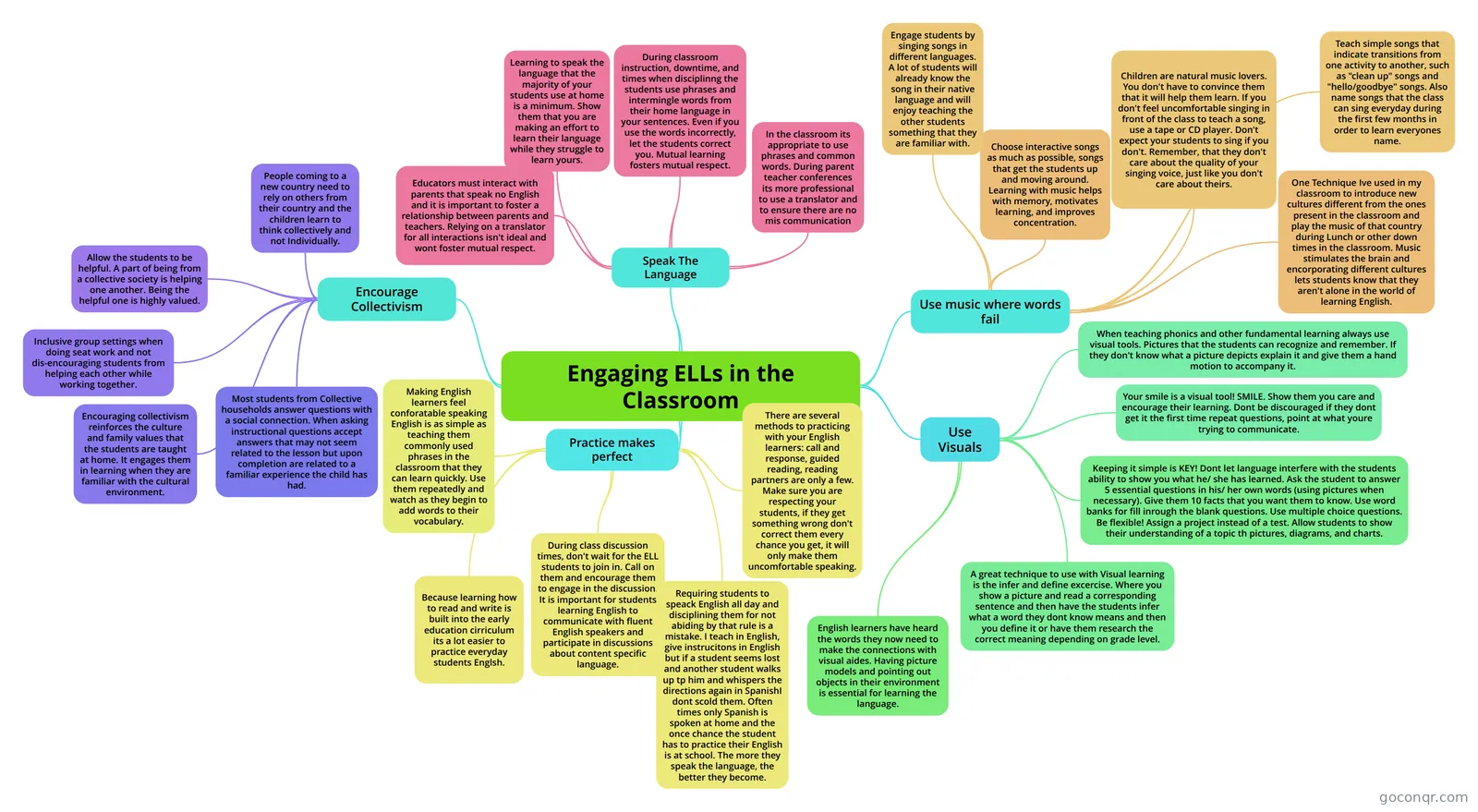
Mind map: Engaging ELLs in the classroom
Conteúdo do mapa
Engaging ELLs in the Classroom
Encourage Collectivism
- People coming to a new country need to rely on others from their country and the children learn to think collectively and not Individually.
- Allow the students to be helpful. A part of being from a collective society is helping one another. Being the helpful one is highly valued.
- Inclusive group settings when doing seat work and not dis-encouraging students from helping each other while working together.
- Encouraging collectivism reinforces the culture and family values that the students are taught at home. It engages them in learning when they are familiar with the cultural environment.
- Most students from Collective households answer questions with a social connection. When asking instructional questions accept answers that may not seem related to the lesson but upon completion are related to a familiar experience the child has had.
Speak The Language
- Educators must interact with parents that speak no English and it is important to foster a relationship between parents and teachers. Relying on a translator for all interactions isn't ideal and wont foster mutual respect.
- Learning to speak the language that the majority of your students use at home is a minimum. Show them that you are making an effort to learn their language while they struggle to learn yours.
- During classroom instruction, downtime, and times when disciplinng the students use phrases and intermingle words from their home language in your sentences. Even if you use the words incorrectly, let the students correct you. Mutual learning fosters mutual respect.
- In the classroom its appropriate to use phrases and common words. During parent teacher conferences its more professional to use a translator and to ensure there are no mis communication
Use music where words fail
- One Technique Ive used in my classroom to introduce new cultures different from the ones present in the classroom and play the music of that country during Lunch or other down times in the classroom. Music stimulates the brain and encorporating different cultures lets students know that they aren't alone in the world of learning English.
- Children are natural music lovers. You don't have to convince them that it will help them learn. If you don't feel uncomfortable singing in front of the class to teach a song, use a tape or CD player. Don't expect your students to sing if you don't. Remember, that they don't care about the quality of your singing voice, just like you don't care about theirs.
- Choose interactive songs as much as possible, songs that get the students up and moving around. Learning with music helps with memory, motivates learning, and improves concentration.
- Teach simple songs that indicate transitions from one activity to another, such as "clean up" songs and "hello/goodbye" songs. Also name songs that the class can sing everyday during the first few months in order to learn everyones name.
- Engage students by singing songs in different languages. A lot of students will already know the song in their native language and will enjoy teaching the other students something that they are familiar with.
Practice makes perfect
- Making English learners feel conforatable speaking English is as simple as teaching them commonly used phrases in the classroom that they can learn quickly. Use them repeatedly and watch as they begin to add words to their vocabulary.
- Because learning how to read and write is built into the early education cirriculum its a lot easier to practice everyday students Englsh.
- During class discussion times, don't wait for the ELL students to join in. Call on them and encourage them to engage in the discussion. It is important for students learning English to communicate with fluent English speakers and participate in discussions about content specific language.
- Requiring students to speack English all day and disciplining them for not abiding by that rule is a mistake. I teach in English, give instrucitons in English but if a student seems lost and another student walks up tp him and whispers the directions again in SpanishI dont scold them. Often times only Spanish is spoken at home and the once chance the student has to practice their English is at school. The more they speak the language, the better they become.
- There are several methods to practicing with your English learners: call and response, guided reading, reading partners are only a few. Make sure you are respecting your students, if they get something wrong don't correct them every chance you get, it will only make them uncomfortable speaking.
Use Visuals
- English learners have heard the words they now need to make the connections with visual aides. Having picture models and pointing out objects in their environment is essential for learning the language.
- A great technique to use with Visual learning is the infer and define excercise. Where you show a picture and read a corresponding sentence and then have the students infer what a word they dont know means and then you define it or have them research the correct meaning depending on grade level.
- Keeping it simple is KEY! Dont let language interfere with the students ability to show you what he/ she has learned. Ask the student to answer 5 essential questions in his/ her own words (using pictures when necessary). Give them 10 facts that you want them to know. Use word banks for fill inrough the blank questions. Use multiple choice questions. Be flexible! Assign a project instead of a test. Allow students to show their understanding of a topic th pictures, diagrams, and charts.
- Your smile is a visual tool! SMILE. Show them you care and encourage their learning. Dont be discouraged if they dont get it the first time repeat questions, point at what youre trying to communicate.
- When teaching phonics and other fundamental learning always use visual tools. Pictures that the students can recognize and remember. If they don't know what a picture depicts explain it and give them a hand motion to accompany it.
Informações
- Descrição
- Mapa Mental sobre Engaging ELLs in the Classroom, criado por jessicapolansky em 12-06-2014.
- Criado por
- jessicapolansky
- Visualizações
- 24
- Avaliação