
Mapa mental
Chapter 19: Implementing Nursing Care P&P
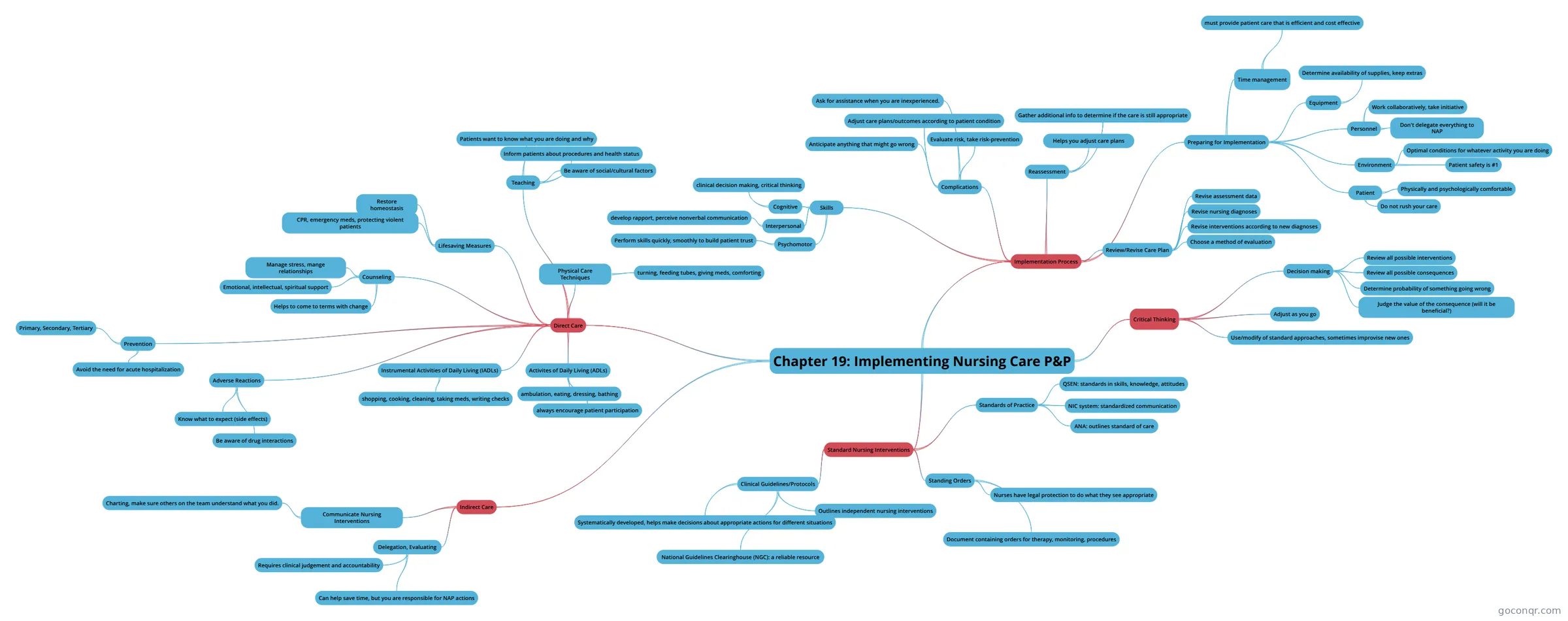
Mind map: Implementing Nursing Care P&P
Conteúdo do mapa
Chapter 19: Implementing Nursing Care P&P
Standard Nursing Interventions
- Clinical Guidelines/Protocols
- Systematically developed, helps make decisions about appropriate actions for different situations
- National Guidelines Clearinghouse (NGC): a reliable resource
- Outlines independent nursing interventions
- Standing Orders
- Document containing orders for therapy, monitoring, procedures
- Nurses have legal protection to do what they see appropriate
- Standards of Practice
- NIC system: standardized communication
- ANA: outlines standard of care
- QSEN: standards in skills, knowledge, attitudes
- Clinical Guidelines/Protocols
Critical Thinking
- Use/modify of standard approaches, sometimes improvise new ones
- Adjust as you go
- Decision making
- Review all possible interventions
- Review all possible consequences
- Determine probability of something going wrong
- Judge the value of the consequence (will it be beneficial?)
Implementation Process
- Reassessment
- Helps you adjust care plans
- Gather additional info to determine if the care is still appropriate
- Review/Revise Care Plan
- Revise assessment data
- Revise nursing diagnoses
- Revise interventions according to new diagnoses
- Choose a method of evaluation
- Preparing for Implementation
- Time management
- must provide patient care that is efficient and cost effective
- Equipment
- Determine availability of supplies, keep extras
- Personnel
- Work collaboratively, take initiative
- Don't delegate everything to NAP
- Environment
- Optimal conditions for whatever activity you are doing
- Patient safety is #1
- Patient
- Physically and psychologically comfortable
- Do not rush your care
- Time management
- Complications
- Evaluate risk, take risk-prevention
- Anticipate anything that might go wrong
- Adjust care plans/outcomes according to patient condition
- Ask for assistance when you are inexperienced.
- Skills
- Cognitive
- clinical decision making, critical thinking
- Interpersonal
- develop rapport, perceive nonverbal communication
- Psychomotor
- Perform skills quickly, smoothly to build patient trust
- Cognitive
- Reassessment
Direct Care
- Activites of Daily Living (ADLs)
- ambulation, eating, dressing, bathing
- always encourage patient participation
- Instrumental Activities of Daily Living (IADLs)
- shopping, cooking, cleaning, taking meds, writing checks
- Physical Care Techniques
- turning, feeding tubes, giving meds, comforting
- Lifesaving Measures
- Restore homeostasis
- CPR, emergency meds, protecting violent patients
- Counseling
- Manage stress, mange relationships
- Emotional, intellectual, spiritual support
- Helps to come to terms with change
- Teaching
- Inform patients about procedures and health status
- Patients want to know what you are doing and why
- Be aware of social/cultural factors
- Adverse Reactions
- Know what to expect (side effects)
- Be aware of drug interactions
- Prevention
- Avoid the need for acute hospitalization
- Primary, Secondary, Tertiary
- Activites of Daily Living (ADLs)
Indirect Care
- Communicate Nursing Interventions
- Charting, make sure others on the team understand what you did.
- Delegation, Evaluating
- Can help save time, but you are responsible for NAP actions
- Requires clinical judgement and accountability
- Communicate Nursing Interventions
Informações
- Descrição
- Mapa Mental sobre Chapter 19: Implementing Nursing Care P&P, criado por Misti Chiar em 12-09-2017.
- Criado por
- Misti Chiar
- Visualizações
- 2
- Avaliação
Mais sobre Implementing and Coordinating Nursing Care