
Mapa mental
Modulo 3
Conteúdo do mapa
Modulo 3
Consultoría
- CAPITULO 12: Communication skills and presenting your ideas.
- - 12.1 The nature of business communication
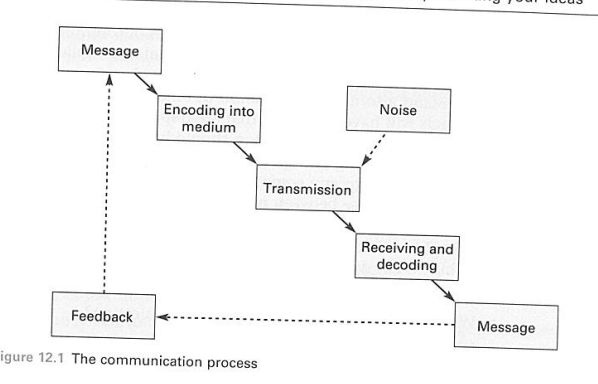
- The facility to communicate subtle and complex message is what enables us to organize task:
- 1. To decide what needs to be done 2.To allocate different jobs to different people 3. To discuss how they should be undertaken 4.To agree how the rewards of that cooperation are to be shared.
- Communication Process
- 1. To decide what needs to be done 2.To allocate different jobs to different people 3. To discuss how they should be undertaken 4.To agree how the rewards of that cooperation are to be shared.
- The facility to communicate subtle and complex message is what enables us to organize task:
- - 12.2 Communication as a business tool
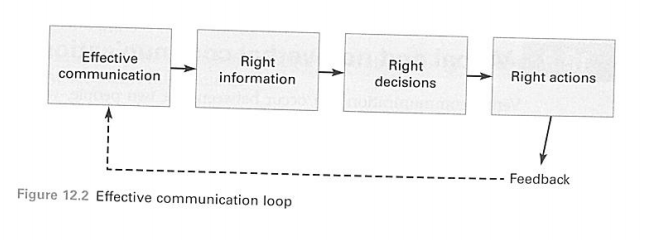
- Business communication is effective only if it leads to the right decisions made and as a result, the correct courses of action followed.
- Effective communication loop.
- The critical objective is: what do I want to happen as a result of this communication? In other words, the question to be answered is not "what do I want to say? But, "what do I want to happen as a result of saying it?
- Effective communication loop.
- Business communication is effective only if it leads to the right decisions made and as a result, the correct courses of action followed.
- - 12.3 Verbal and non-verbal communication
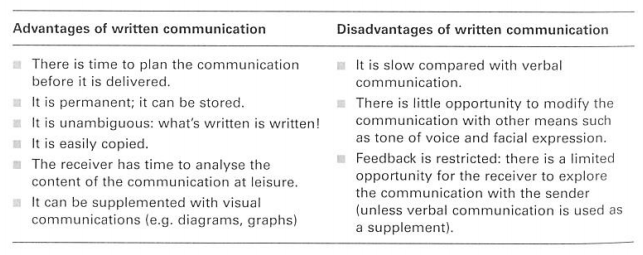
- Advantage of verbal communication:
- 1. It is flexible (communications can be generated quickly 2. It is of relatively low cost 3. The communication can be supported by personal contact 4. The meaning of messages can be complemented and modified by gestures 5. It allows instant feedback
- Disadvantage of verbal communication:
- 1. It does not (usually) leave permanent record 2. It can be difficult to control and direct (especially large groups) 3. Responses are expected quickly 4. It can easily be dominated, especially where there are strong-willed people with opposing views.
- Non Verbal
- 1. Facial expression 2. Body language 3. Posture 4. Gestures
- Advantage of verbal communication:
- - 12.4: Written and visual communication
- The consultant's report, whether backed up with a presentation or not, is often seen by the client as the product of the consulting exercise.
- - 12.5: Planning the communication
- Barbara Minto lays down three rules for connecting ideas:
- 1. Ideas at any level in the pyramid must be summaries of the ideas below them: conversely, ideas at any level may be expanded upon at a lower level 2. Ideas in each grouping must be ideas of the same kind- that is, they must relate in some way and can be grouped together. 3. Ideas in a grouping must be ordered according to some internal logic.
- Barbara Minto lays down three rules for connecting ideas:
- - 12.6 The consulting report
- A report provides a tangible, accessible and permanent communication of the findings of the consulting exercise. The report may comprise the following sections
- 1. Executive Summary 2.Introduction 3.Body of report 4,.Summary and recommendations 5. Appendices
- A report provides a tangible, accessible and permanent communication of the findings of the consulting exercise. The report may comprise the following sections
- - 12.1 The nature of business communication
- Chapter 13: Learning from success.
- .1 Transferring project ownership.
- 13.2: Post-project summary and review.
- The leading consulting firms recognize that their most profitable business comes from a loyal group of clients. This works only when the client is continually satisfied with the work performed by the consulting company
- The post project summary needs to include the following:
- 1. The original aims and objectives of the project. 2.The project charter 3.The time plan. Predicted and actual 4.Key successes. What went well 5.Key issues- what did not go well or caused problems for the project 6.The end result- the outcome of the project.
- The post project summary needs to include the following:
- The leading consulting firms recognize that their most profitable business comes from a loyal group of clients. This works only when the client is continually satisfied with the work performed by the consulting company
- - 13.3 Follow-up projects and key client management
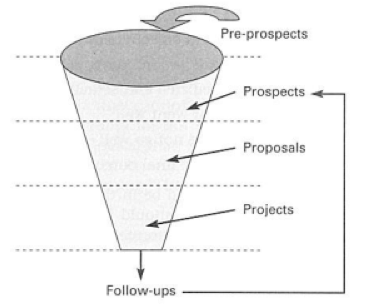
- Follow-up projects can be identified either by the consultants themselves, by the senior managers of the consulting firm or by the client. The key is to maintain momentum.
- A key tool that they sue for planning is the "sales funnel" developed by Miller and Heiman
- Follow-up projects can be identified either by the consultants themselves, by the senior managers of the consulting firm or by the client. The key is to maintain momentum.
- - 13.4 Using consulting projects as case studies
- One of the most important marketing tools for a consultant is past experience. Many new clients want the reassurance that the consultant has been involved in similar work.
- 1. Description of client 2. Objectives of the consulting project 3. Work undertaken 4. Achievements of the project
- One of the most important marketing tools for a consultant is past experience. Many new clients want the reassurance that the consultant has been involved in similar work.
- - 13.5: Recognizing the Successes
- - 13.6: Success and transferable skills
- Some experiences that will be of value in the future are as follows: o Objective definition o Problem analysis o Knowledge and application for academic tools and frameworks. o Strategy development o Project planning o External relationship management o Teamworking o Leadership.
- - 13.8: Recording successes on your CV and relating them in job inverviews:
- o Personal information o Education o Experience o Achievments o Referees
- - 13.9 Learning from failure:
- CAPITULO 12: Communication skills and presenting your ideas.
Planeación Estrategica
- Estrategias de innovación en acción
- Matriz Cuantitativa de la Planeación Estratégica
- Técnica diseñada para determinar la atractividad relativa de las acciones alternativas posibles
- Matriz Cuantitativa de la Planeación Estratégica
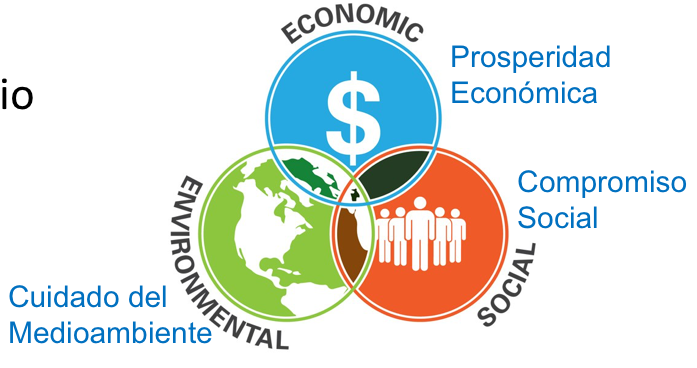
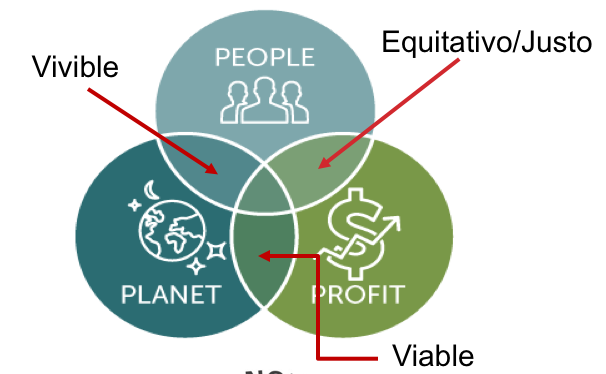
- Triple cuenta de resultados (Triple bottom line)
- 1) Creación de valor compartido 2) Responsabilidad Social Empresarial o Corporativa (Filantropía) 3) Sustentabilidad (Cuidado del medio ambiente)
- Estrategia Base Piramidal
- SEGMENTANDO LA BASE DE LA PIRÁMIDE
- NEGOCIOS EN LA BASE DE LA PIRÁMIDE
- Para generar grandes utilidades con la base de la pirámide se debe ligar el éxito financiero de la empresa con el de las personas. Tanto la empresa como la gente se beneficia.
- Estrategia para INGRESO BAJO (3-5)
- Proveer productos y servicios apropiados y costeables directamente a los consumidores.
- Estrategia para SUBSISTENCIA
- Enlistar negocios pequeños o individuales para proporcionar un alcance eficiente y cobertura. Involucrar a la comunidad para coproducir valor.
- Estrategia para POBREZA EXTREMA (1 o menos)
- Formar alianzas comerciales con gobiernos y ONGs.
- Estrategia para INGRESO BAJO (3-5)
- Para generar grandes utilidades con la base de la pirámide se debe ligar el éxito financiero de la empresa con el de las personas. Tanto la empresa como la gente se beneficia.
- NEGOCIOS EN LA BASE DE LA PIRÁMIDE
- SEGMENTANDO LA BASE DE LA PIRÁMIDE
- 12 formas en las que una empresa puede innovar.
- “Las empresas con una visión restringida de la innovación pueden perder oportunidades. Un nuevo marco llamado la "innovación radar "ayuda a evitar eso.”
- Definición de Innovación empresarial
- Definimos la innovación empresarial como la creación de un nuevo valor sustancial para los clientes y la empresa de forma creativa cambiando una o más dimensiones del sistema comercial.
- La innovación empresarial se trata de un nuevo valor, no de cosas nuevas.
- La innovación empresarial viene en muchos sabores. (homeDepot, JetBlue, Cisco)
- La innovación empresarial es sistémica. (Considerar todas las dimensiones)
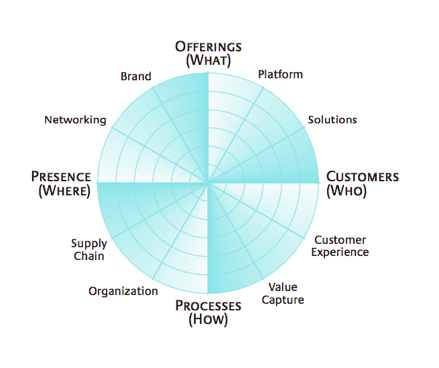
- Radar de innovación
- Esta herramienta presenta y relaciona todas las dimensiones a través de las cuales una empresa puede buscar oportunidades para innovar. Al igual que un mapa, el radar de innovación consiste en cuatro dimensiones clave que sirven como anclajes de negocios:
- Definimos la innovación empresarial como la creación de un nuevo valor sustancial para los clientes y la empresa de forma creativa cambiando una o más dimensiones del sistema comercial.
- Definición de Innovación empresarial
- “Las empresas con una visión restringida de la innovación pueden perder oportunidades. Un nuevo marco llamado la "innovación radar "ayuda a evitar eso.”
- Sostentabilidad
- Creación de Valor Compartido
- “Políticas y prácticas operacionales que mejoran la competitividad de una empresa a la vez que ayudan a mejorar las condiciones económicas y sociales en las comunidades donde opera.”
- 1- CREA VALOR ECONÓMICO PARA LAS EMPRESAS
- 2- APORTA VALOR A LA SOCIEDAD
- 3- ATACA DIRECTAMENTE LAS NECESIDADES Y DESAFÍOS OBTENIENDO ÉXITO EN LA EMPRESA.
- “Políticas y prácticas operacionales que mejoran la competitividad de una empresa a la vez que ayudan a mejorar las condiciones económicas y sociales en las comunidades donde opera.”
- Creación de Valor Compartido
- Estrategias de innovación en acción
Etica
- Principios Éticos
- Principio de autonomía
- La persona puede elegir por si misma lo que considera mejor para ella. Hay que respetar los valores y opiniones personales.
- Fernando Jr
- La persona puede elegir por si misma lo que considera mejor para ella. Hay que respetar los valores y opiniones personales.
- Principio de respeto a las personas
- Toda persona tiene capacidad de conocer y entender los problemas
- Toda persona tiene capacidad de conocer y entender los problemas
- Responsabilidad
- La empresa debe darse cuenta de que sus acciones tienen consecuencias y ellos son responsables de las mismas
- Materiales de producción y condiciones de trabajo
- La empresa debe darse cuenta de que sus acciones tienen consecuencias y ellos son responsables de las mismas
- No maleficiencia
- Evitar el maltrato o trato cruel a las personas
- Trato a trabajadores
- Evitar el maltrato o trato cruel a las personas
- Beneficiencia
- Hacer bien al usuario
- Certificacion de salud
- Hacer bien al usuario
- Justica
- Todas las personas tienen derecho al acceso a las mismas oportunidades
- Principio de autonomía
- 4 Prespectivas de la RSE
- Enfoque funcionalista
- La empresa persigue los mismos intereses que la sociedad
- Enfoque sociopolitico
- Algunos agentes sociales tratan de influenciar a las empresas para que sigan ciertos objetivos de politicos o de interes social
- Enfoque culturista
- Una empresa debe encajar con las normas y valores de la sociedad donde opera
- Enfoque constructivista
- El crecimiento empresa/sociedad es un proceso dinamico producto de su misma interacción
- Enfoque funcionalista
- Principios Éticos
Edgar Ramirez
- Prototipado
- Entender y mejorar una idea antes de su implementación
- Proceso
- 1. Persona prototipo
- Caracteristicas demograficas y psicograficas
- 2. Necesidades
- 3. Lluvia de ideas
- 1. Problema 2. Alternativa de solucion 3. Propuesta de valor
- 4. Presentación de pares
- Para (cliente objetivo) quienes (declaración de la necesidad y oportunidad) (nombre del producto) es un (categoria del producto) que (declaración del beneficio clave o razon de compra) a diferencia de (alternativa primaria,) nuestro producto (declaracion de diferenciacion primaria)
- 5. Storyboard
- Atencion
- Interes
- Deseo
- Accion
- Incorporacion
- Retencion
- 1. Persona prototipo
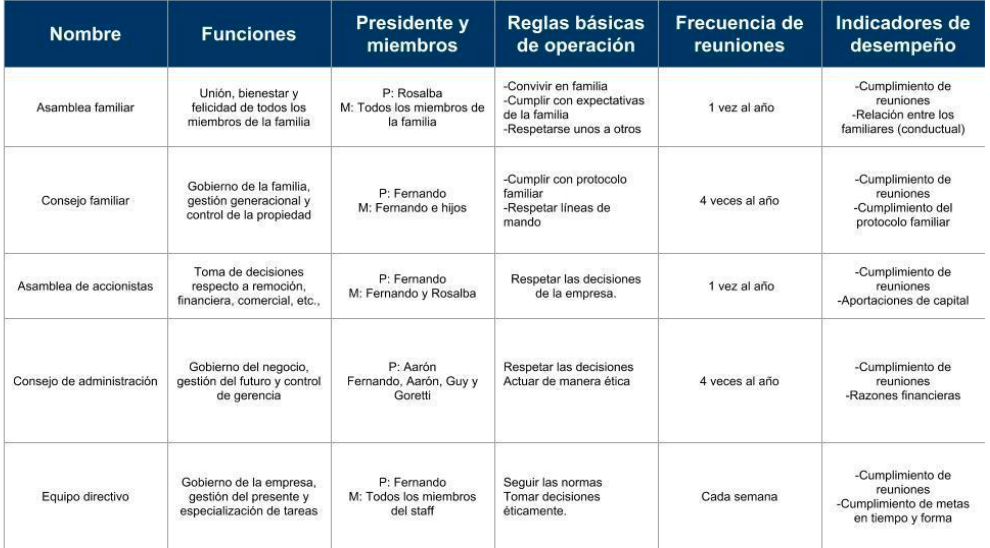
- Protocolo familiar y gobierno corporativo
- Gobierno corporativo
- Protocolo
- Preambulo
- Familia
- 2. Miembros del grupo familiar 3. Historia de la familia en la empresa (REMONTARTE A LOS ORÍGENES DE LA EMPRESA Y LA RELACIÓN CON LA FAMILIA) Valores y principios Cultura de la familia. Consejo familiar
- Empresa
- 4. Órganos de gobiernos corporativos Consejo de Administración 5. Conducta empresarial 6. Políticas de empleo a familiares Formación Orientación profesional 7. Políticas de empleo a FAMILIA EXTENDIDA 8. Resolución de conflictos 9.Terminación de relaciones laborales
- Propiedad
- 10. Uso personal de los bienes de la empresa 11. Uso de los bienes personales de la empresa. 12.Plan de sucesión
- Prototipado
Imagens e arquivos do mapa
Informações
- Descrição
- Mapa Mental sobre Modulo 3, criado por Juan Carlos Valdés Cesaretti em 30-04-2018.
- Criado por
- Juan Carlos Valdés Cesaretti
- Visualizações
- 21
- Avaliação