
Mapa mental
Software Development Life Cycles
Conteúdo do mapa
Software Development Life Cycles
Predicitive
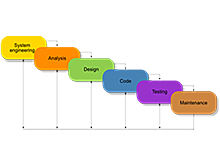
- Waterfall Models
- Advantages
- Very easy model to follow
- Documentation is done throughout
- Only producing 1 version of the product
- Anyone can pick up and run with it at any stage
- Disadvatages
- If the initial requirements are misunderstood then the final product would be inccorect
- Issues may not be found until final release to client
- Difficult to expand or adapt the product
- Dosen't account for any developments or changes to the initial requirements
- Basic Principals
- Based on sequential tasks that rely on previous tasks completed first
- 1. Requirements: Meet with client, gain list of requirements and decide some deliverables
- 2. System Design: Use the requirements from previous phase and design the system appropriately. GUIs, Wireframes, Relationship Diagrams Flowcharts.
- 3.Implementation: Using the design documentation and build the end product, this could be in smaller sections which are then all brought together.
- 4. Integration and Testing: Once all individual sections are designed, begin to bring all these elements together into 1 package and test the system internally
- 5. Deployment: Post testing release the product to the client. All bugs should have been picked up in testing(In theory)
- 6. Maintenance: Occurs post deployment. This could be improvements/additional functionality/repairs
- Useful for small projects
- Each stage must be signed off before moving on
- Based on sequential tasks that rely on previous tasks completed first
- Advantages
- Prototyping
- Advantages
- Ongoing client reviews and testing result in picking up issues early
- Can allow for larger products to be delivered and tested out earlier, whilst next stage of the product is been developed.
- Customer can see the development of the product
- Accounts for changing requirements which can be discussed and built into the next version
- The software is signed off at each stage, so at the end of the product the clients are more likely to approve
- Disadvantages
- Very time consuming
- Requires a lot of customer input and evaluation.
- Could lead to greater costs which where not initially agreed on
- Gives the customer more flexibility, to change their minds
- Basic Principals
- Based on releasing versions of the end product with limited functions in each
- The individual versions may not reflect the end GUI
- Some versions may be written off
- End goals can become clearer through each version
- Advantages
- Waterfall Models
Adaptive
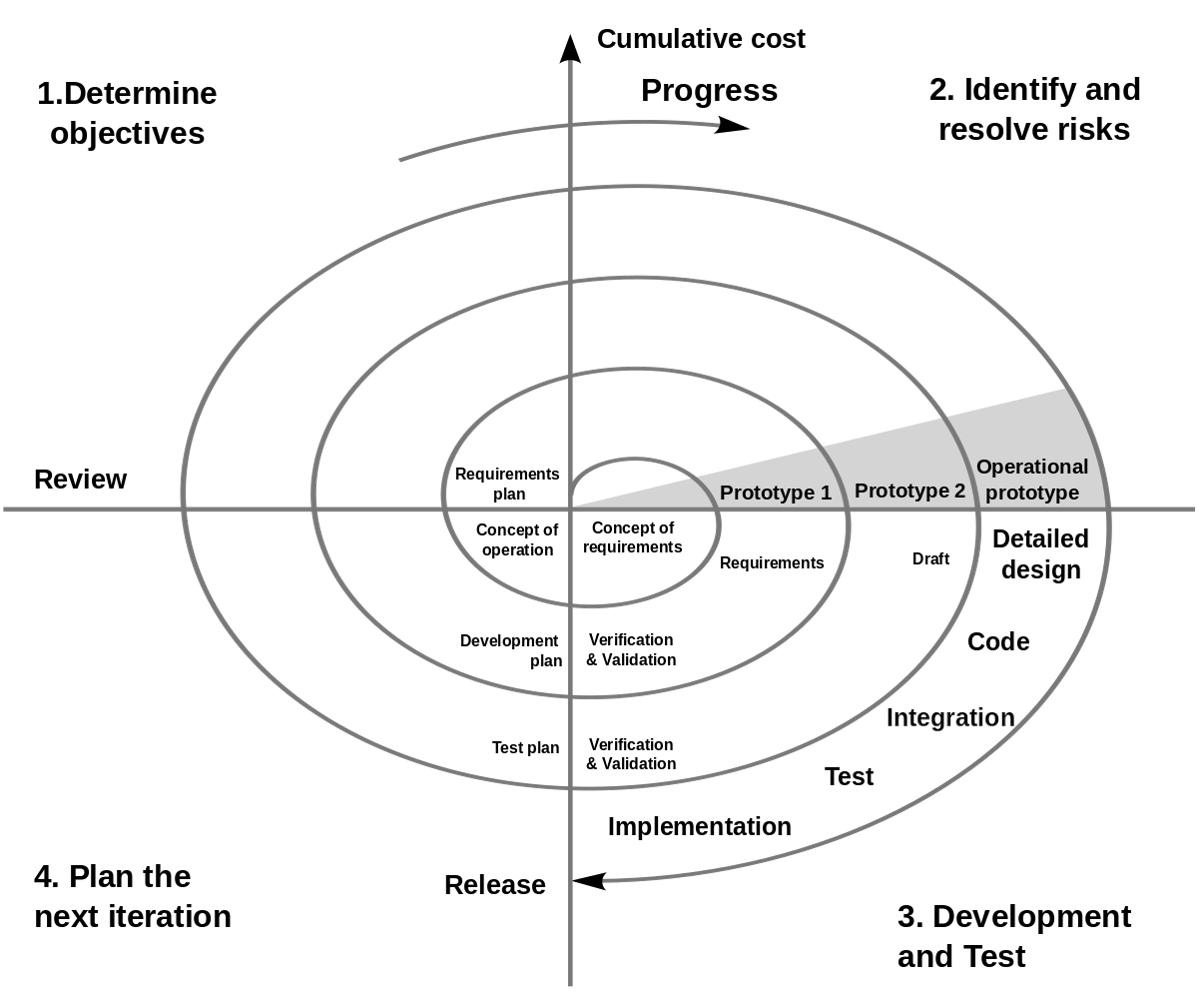
- Spiral
- Basic Principals
- Split into 4 main parts and a version is released to the client on each cycle.
- Each version is a revision of the last after a review and testing phase.
- Risks are identified early on and resolved before each version.
- Advantages
- Can account for changes to the customers requirements at each stage
- Can give a good representation of progression for the client
- Can be scaleable for larger projects
- Allows for any issues to be picked up in early versions and rectified in the next
- Disadvantages
- Can become very complex as projects grow
- Would likley lead to more work to do meaning higher overheads
- Can be very time comsuming
- Harder to manage
- Basic Principals
- Agile
- Basic Principals
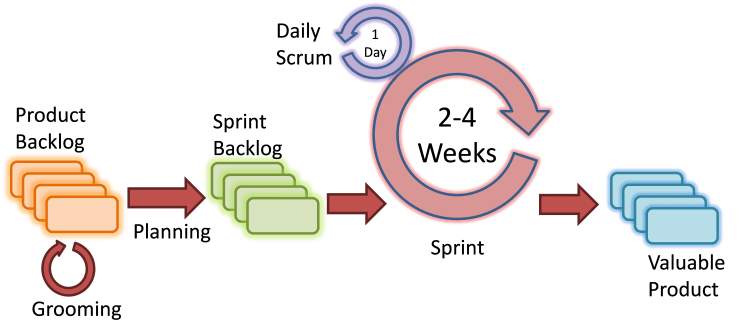
- The Agile model is based on the principal of taking a large project and dividing it up into smaller tasks.
- Tasks are delegated between teams.
- Teams each produce a small part of the program which is then added together to create a full version for client release.
- After each release, developers will work on improving the product based on client feedback to launch a revised version
- Each team has a focus and will carry out a sprint to get tasks complete and products turned around quickly
- Advantages
- Enables developers to turn software around very quickly
- Lots of feedback and communication with client
- Each team will specilise in area. This results in a higher quality end product
- Any big changes can be made quickly
- Disadvantages
- Documentation is done by different people at various stages.
- Requires a team of people
- Each person needs to be specilised in their area.
- Requires customers to review the entire product at each stage rather than small chunks.
- Basic Principals
- Spiral
Imagens e arquivos do mapa
Informações
- Descrição
- Mapa Mental sobre Software Development Life Cycles, criado por Craig Skinner em 21-01-2019.
- Criado por
- Craig Skinner
- Visualizações
- 0
- Avaliação