
Mapa mental
Chapter 9: Transport layer
Conteúdo do mapa
Chapter 9: Transport layer
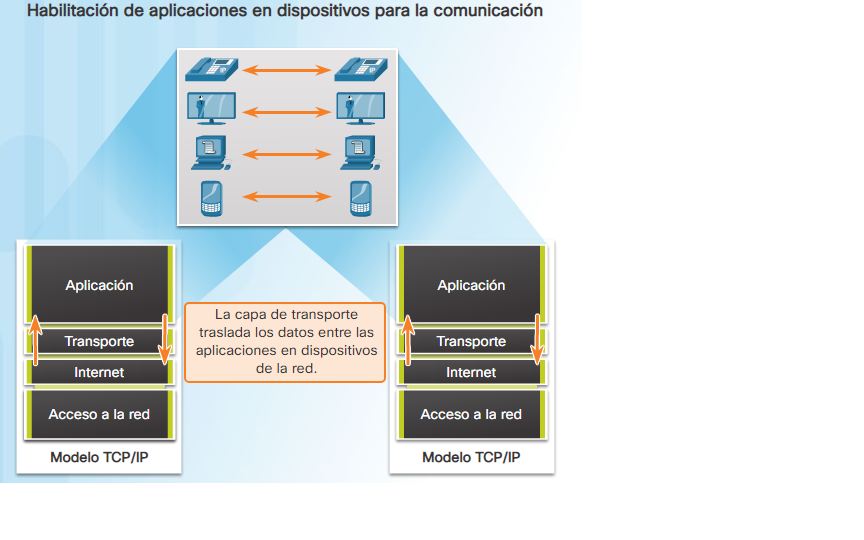
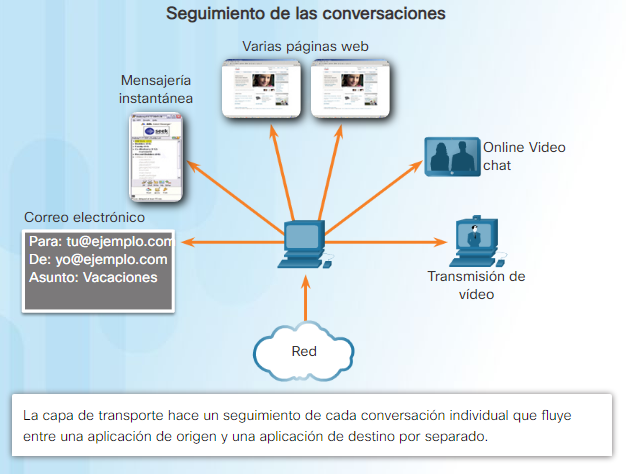
Data and Internet networks provide support to the human network through the provision of reliable communication between people. In a single device, users can use several applications and various services, such as email, the web and instant messaging to send messages or obtain information.
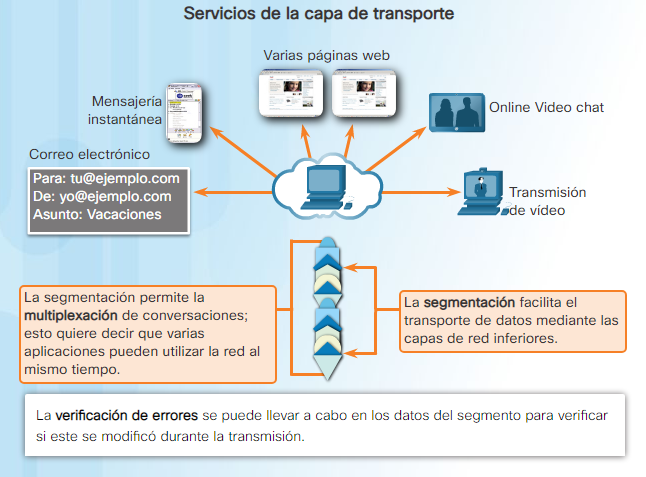
Los proc The processes described in the transport layer of the OSI model accept the data from the application layer and prepare it for routing at the network layer. An originating team communicates with a receiving team to decide how to divide the data into segments, how to ensure that none of the segments is lost and how to verify if all the segments arrive.
Transport layer function
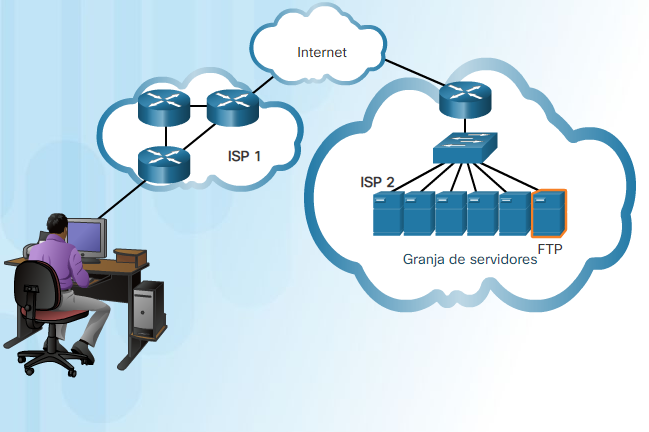
- The transport layer is responsible for establishing a temporary communication session between two applications and for transmitting data between them. An application generates data that is sent from an application on a source host to an application on a destination host. This is, regardless of the type of destination host, the type of media through which the data should travel, the route followed by the data, the congestion in a link or the size of the network.
- Responsibilities of the transport layer
- Conversation multiplexing
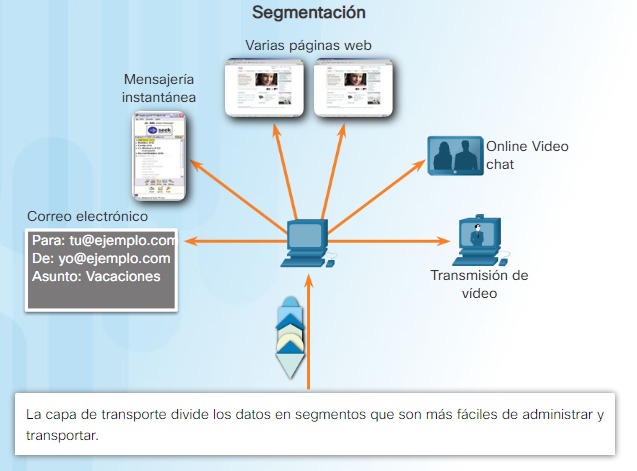
- Sending some types of data (for example, a video transmission) over a network, such as a complete communication stream, can consume all the available bandwidth. This will prevent other communications from occurring at the same time.
- Sending some types of data (for example, a video transmission) over a network, such as a complete communication stream, can consume all the available bandwidth. This will prevent other communications from occurring at the same time.
- Conversation multiplexing
- Reliability of the transport layer
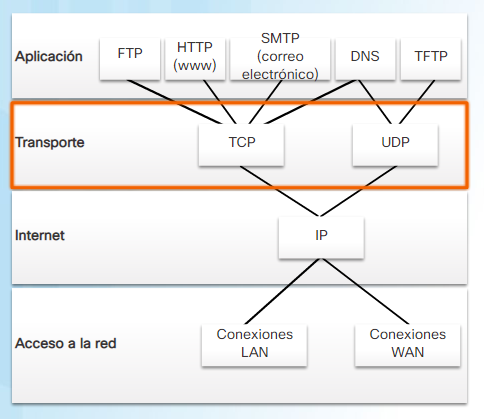
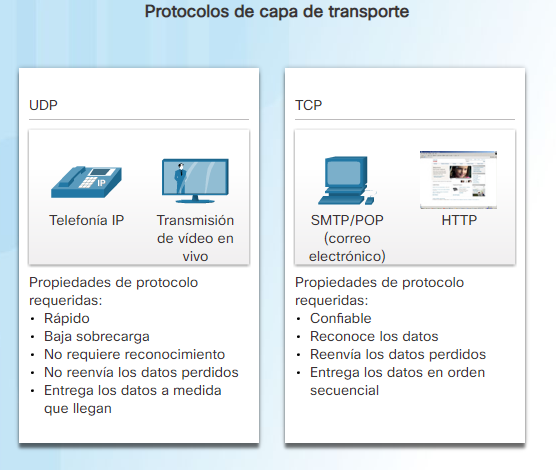
- The transport layer is also responsible for managing the reliability requirements of the conversations. Different applications have different transport reliability requirements. IP deals only with the structure, routing and routing of packets.
- TCP
- The TCP transport protocol function is similar to sending packets that are tracked from source to destination. If a shipment order is divided into several packages, the customer can review the order of delivery online.
- UDP
- While TCP's reliability features provide more robust communication between applications, they also represent additional overhead and can cause transmission delays. There is a tradeoff between the value of reliability and the burden it implies for network resources. Adding overhead to ensure reliability for some applications could reduce the utility to the application and even be harmful. In these cases, UDP is a better transport protocol.
- The TCP transport protocol function is similar to sending packets that are tracked from source to destination. If a shipment order is divided into several packages, the customer can review the order of delivery online.
- The transport layer is also responsible for managing the reliability requirements of the conversations. Different applications have different transport reliability requirements. IP deals only with the structure, routing and routing of packets.
- The transport layer is responsible for establishing a temporary communication session between two applications and for transmitting data between them. An application generates data that is sent from an application on a source host to an application on a destination host. This is, regardless of the type of destination host, the type of media through which the data should travel, the route followed by the data, the congestion in a link or the size of the network.
Protocol of the correct transport layer for the appropriate application
- Applications that transmit stored audio and video use TCP. For example, if the network suddenly can not support the bandwidth required to watch a movie on demand, the application stops playback. During the pause, you may see a message of "buffering ..." while TCP attempts to re-establish transmission. Once all the segments are in order and a minimum level of bandwidth is restored, the TCP session resumes and the movie begins to play.
- Characteristics of TCP
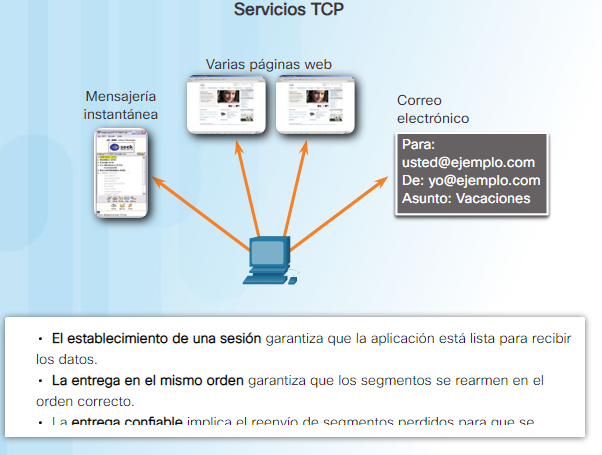
- To understand the differences between TCP and UDP, it is important to understand how each protocol implements specific reliability characteristics and how they track conversations. In addition to supporting basic data segmentation and reassembly functions, TCP, as shown in the figure, also provides other services.
- Establishing a session
- TCP is a connection-oriented protocol. A connection-oriented protocol is one that negotiates and establishes a permanent connection (or session) between the source and destination devices before forwarding traffic.
- Reliable delivery
- In terms of networks, reliability means ensuring that each segment that sends the origin arrives at the destination. For various reasons, it is possible for a segment to be completely damaged or lost as it is transmitted on the network.
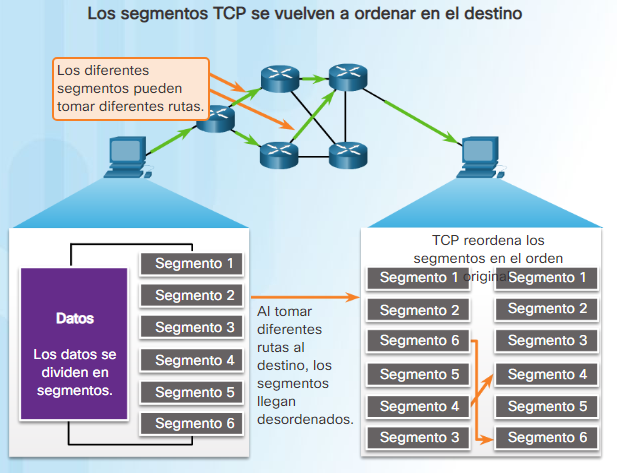
- Delivery in the same order
- Data can arrive in the wrong order, because networks can provide several routes that can have different transmission speeds. By numbering and sequencing the segments, TCP can ensure that they are reassembled in the correct order.
- Flow control
- Network hosts have limited resources, such as memory or processing capacity. When TCP notices that these resources are overloaded, you can request that the sending application reduce the speed of the data flow.
- Establishing a session
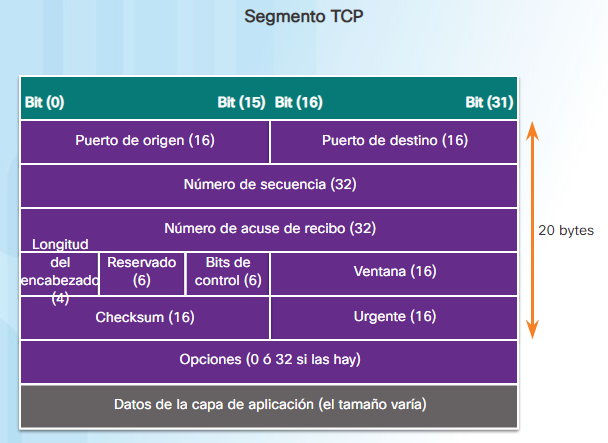
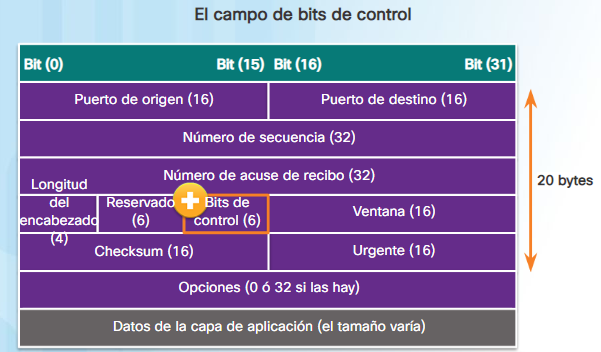
- TCP Header
- TCP is a protocol with status information. A protocol with status information is a protocol that tracks the status of the communication session.
- TCP is a protocol with status information. A protocol with status information is a protocol that tracks the status of the communication session.
- To understand the differences between TCP and UDP, it is important to understand how each protocol implements specific reliability characteristics and how they track conversations. In addition to supporting basic data segmentation and reassembly functions, TCP, as shown in the figure, also provides other services.
- Applications that transmit stored audio and video use TCP. For example, if the network suddenly can not support the bandwidth required to watch a movie on demand, the application stops playback. During the pause, you may see a message of "buffering ..." while TCP attempts to re-establish transmission. Once all the segments are in order and a minimum level of bandwidth is restored, the TCP session resumes and the movie begins to play.
UCP features
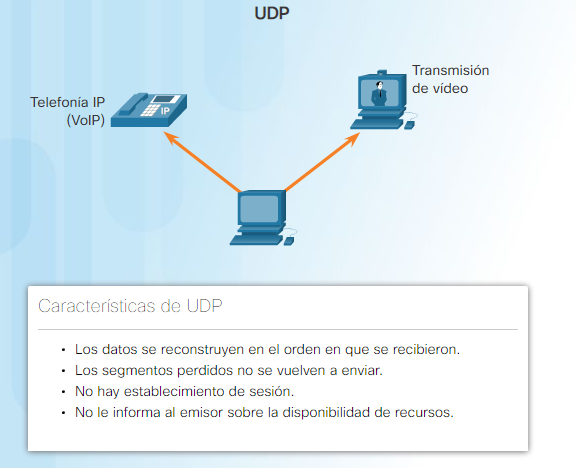
- The UDP protocol is considered a maximum effort transport protocol. UDP is a lightweight transport protocol that offers the same data segmentation and reassembly as TCP, but without the reliability and control of TCP flow.
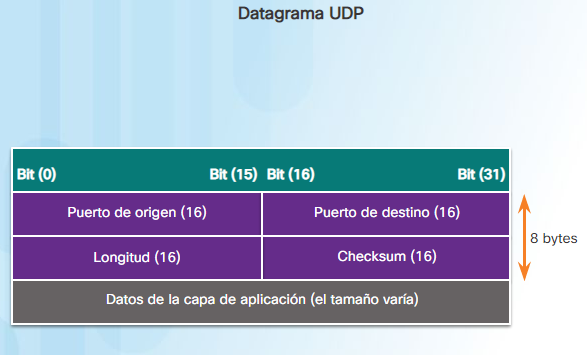
- UDP Header
- UDP is a protocol without state information, which means that neither the client nor the server are required to monitor the status of the communication session. If reliability is required when using UDP as a transport protocol, it must be administered by the application.
- UDP is a protocol without state information, which means that neither the client nor the server are required to monitor the status of the communication session. If reliability is required when using UDP as a transport protocol, it must be administered by the application.
- The UDP protocol is considered a maximum effort transport protocol. UDP is a lightweight transport protocol that offers the same data segmentation and reassembly as TCP, but without the reliability and control of TCP flow.
Multiple and independent conversations
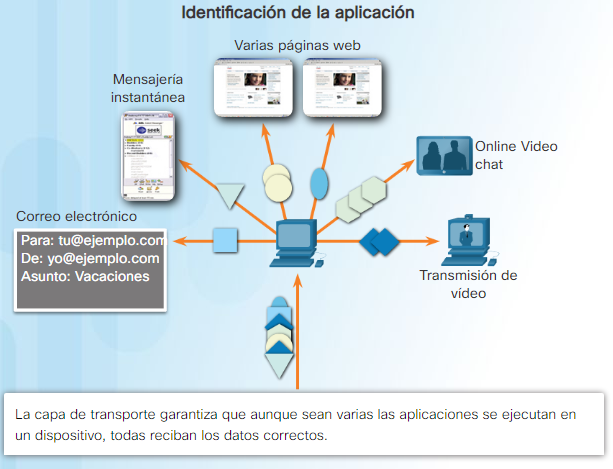
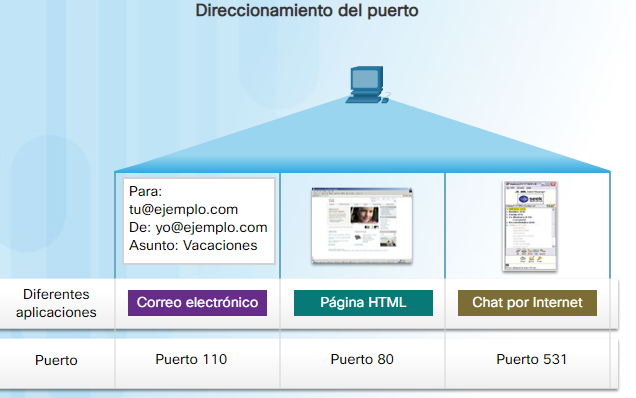
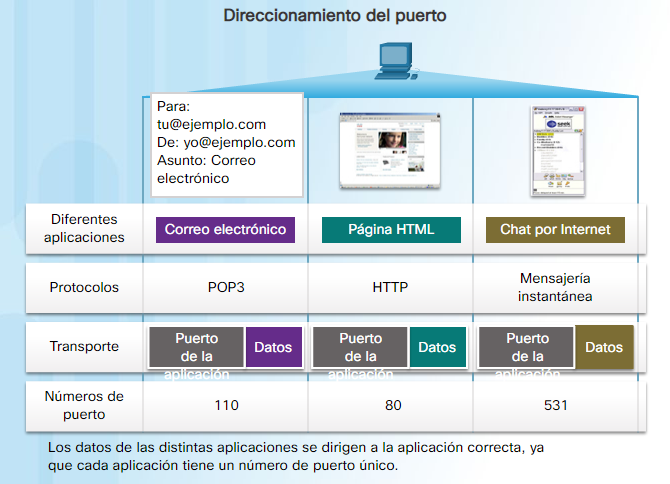
- TCP and UDP manage these different simultaneous conversations through header fields that can uniquely identify these applications. These unique identifiers are port numbers.
- TCP and UDP manage these different simultaneous conversations through header fields that can uniquely identify these applications. These unique identifiers are port numbers.
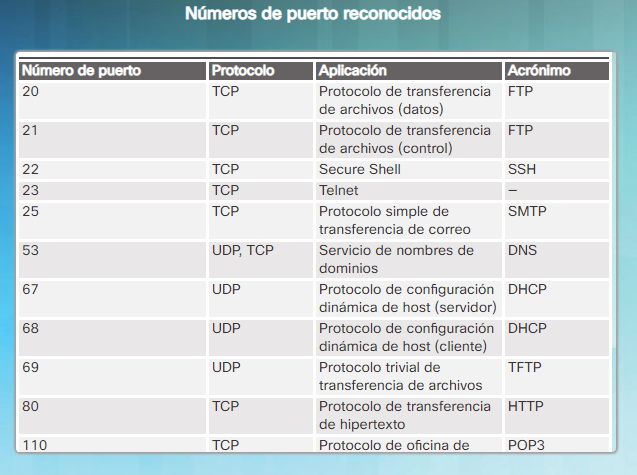
Port numbers
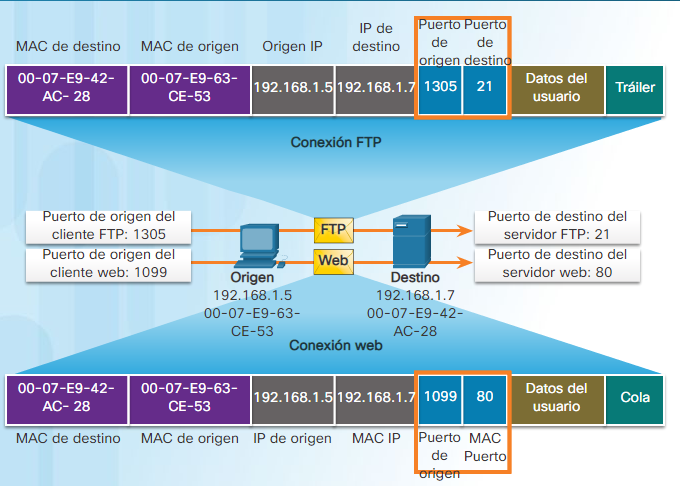
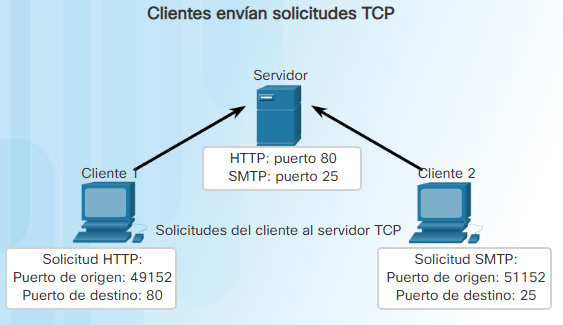
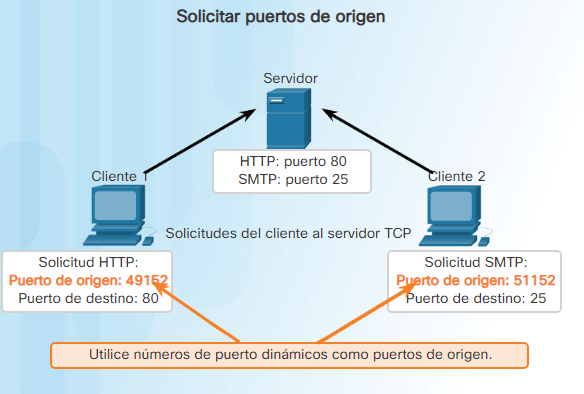
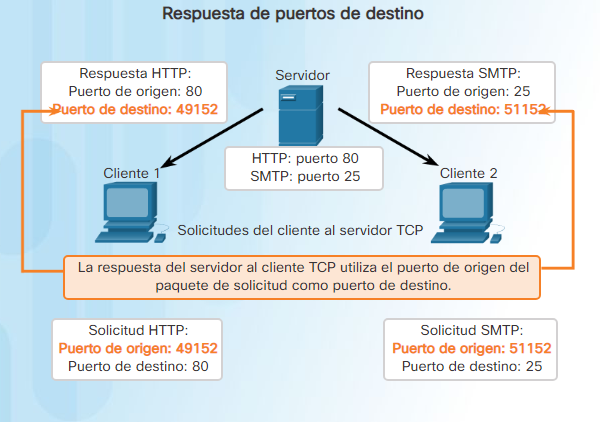
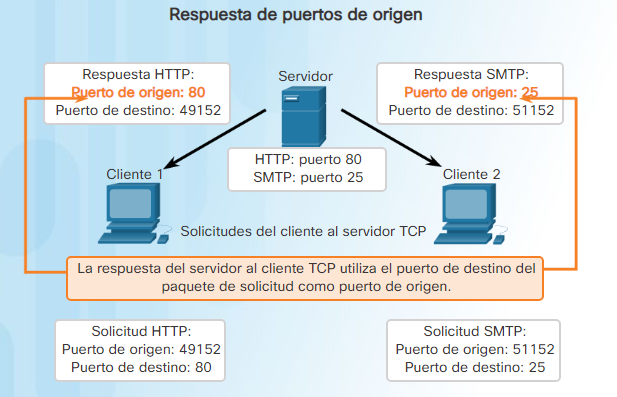
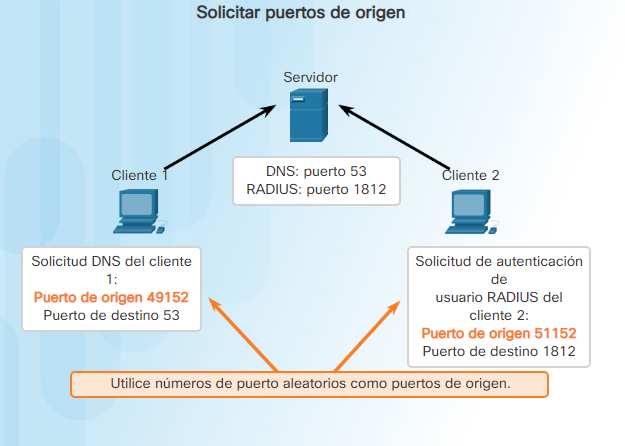
- The source port number is associated with the application that originates communication on the local host. The destination port number is associated with the destination application on the remote host.
- Port of origin
- It is common for a device to send several HTTP service requests to a web server at the same time. The tracking of each HTTP conversation separately is based on the source ports.
- It is common for a device to send several HTTP service requests to a web server at the same time. The tracking of each HTTP conversation separately is based on the source ports.
- port of destination
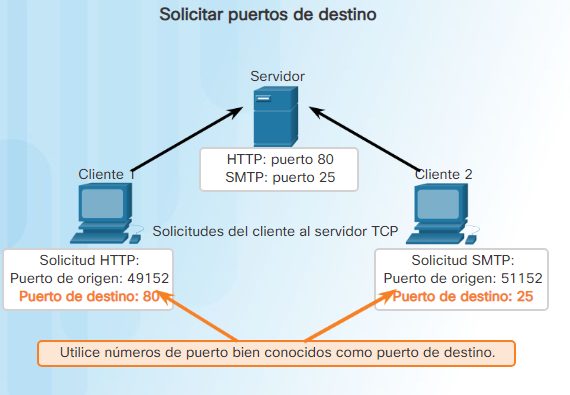
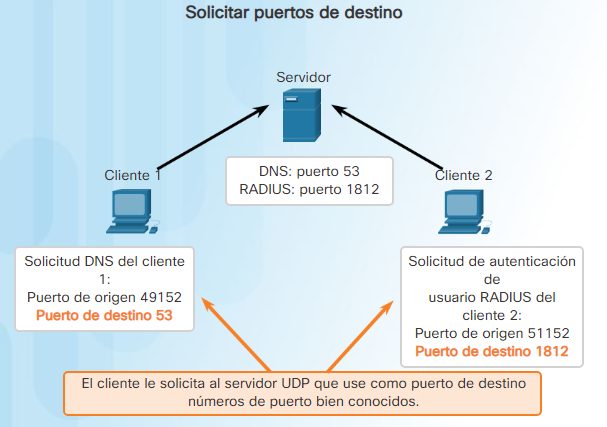
- The client places a destination port number in the segment to inform the destination server of the requested service, as shown in the figure. For example, when a client specifies port 80 on the destination port, the server that receives the message knows that web services are being requested. A server can offer more than one service simultaneously, for example, web services on port 80 at the same time it offers the establishment of an FTP connection on port 21.
- Port of origin
- Groups of port numbers
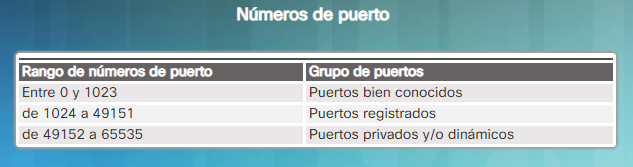
- Some client operating systems can use registered port numbers instead of dynamic port numbers to assign the source ports.
- The source port number is associated with the application that originates communication on the local host. The destination port number is associated with the destination application on the remote host.
Pair of sockets
- The source and destination ports are placed within the segment. The segments are encapsulated within an IP packet. The IP packet contains the source and destination IP addresses. The socket is the combination of the source IP address and the source port number, or the destination IP address and the destination port number. The socket is used to identify the server and the service requested by the client. A client socket can look like this, where 1099 represents the source port number: 192.168.1.5:1099
- The source and destination ports are placed within the segment. The segments are encapsulated within an IP packet. The IP packet contains the source and destination IP addresses. The socket is the combination of the source IP address and the source port number, or the destination IP address and the destination port number. The socket is used to identify the server and the service requested by the client. A client socket can look like this, where 1099 represents the source port number: 192.168.1.5:1099
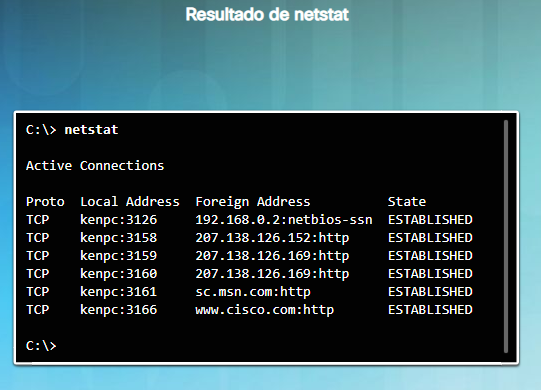
The netstat command
- TCP server processes
- Establishment of TCP connections
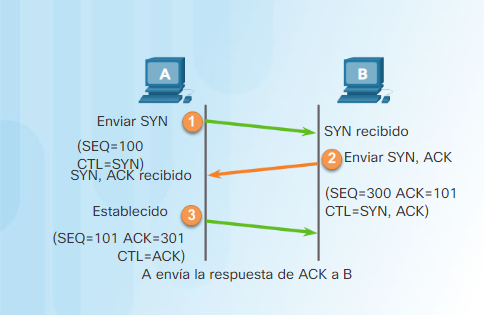
- The connections in the network are similar. In TCP connections, the client of the host establishes the connection with the server.
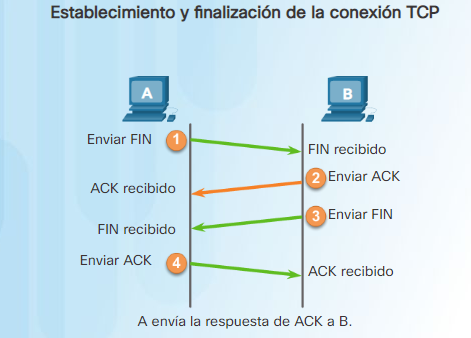
- End of the TCP session
- To close a connection, the end control marker (FIN) must be set in the segment header. To end all one-way TCP sessions, a two-way link is used, which consists of a FIN segment and an acknowledgment segment (ACK).
- Analysis of the three-way TCP link
- The six bits of the control bit field of the TCP segment header are also known as markers.
- The six bits of the control bit field of the TCP segment header are also known as markers.
- To close a connection, the end control marker (FIN) must be set in the segment header. To end all one-way TCP sessions, a two-way link is used, which consists of a FIN segment and an acknowledgment segment (ACK).
- The connections in the network are similar. In TCP connections, the client of the host establishes the connection with the server.
- Establishment of TCP connections
- TCP server processes
TCP Reliability: orderly delivery
- The ISN does not start at one, but it is a random number. This allows to avoid certain types of malicious attacks.
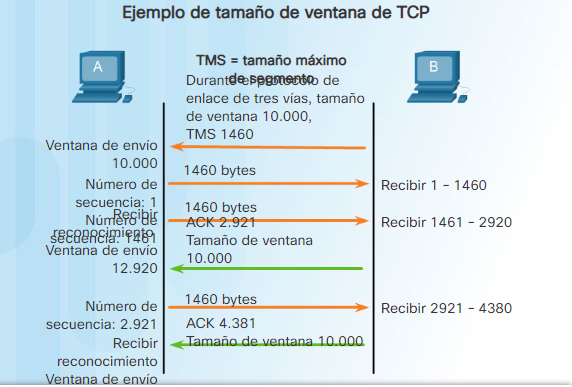
- TCP flow control: window size and acknowledgments
- In general, the devices use the sliding windows protocol. With sliding windows, the receiver does not expect the number of bytes in the window size to be reached before sending an acknowledgment. In general, the receiver sends an acknowledgment every two segments received. The number of segments received before acknowledgment may vary. The advantage of sliding windows is that they allow the transmitter to continuously transmit segments while the receiver is acknowledging the previous segments.
- TCP flow control: prevention of congestion
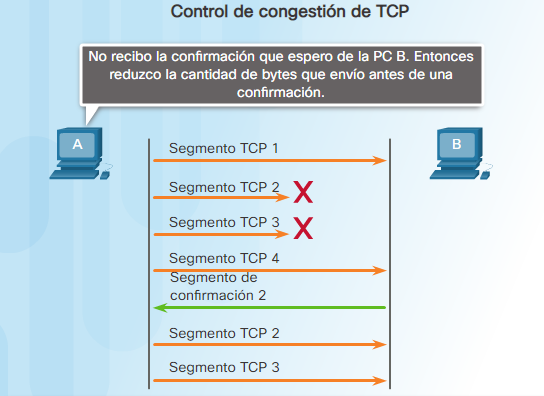
- When congestion occurs in a network, the overloaded router begins to discard packets. When the packets containing the TCP segments do not reach their destination, they remain without recognition. By determining the rate at which TCP segments are sent but not recognized, the origin can assume a certain level of network congestion.
- Comparison of low overhead and reliability of UDP
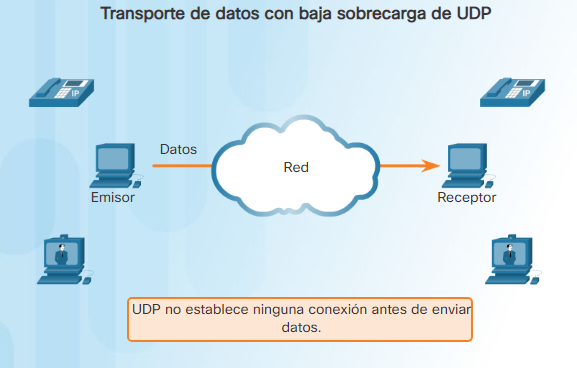
- UDP is a simple protocol that provides the basic functions of the transport layer. It has a much lower overhead than TCP, since it is not connection oriented and does not provide sophisticated relay, sequencing, and flow control mechanisms that offer reliability.
- Reassembly of UDP datagrams
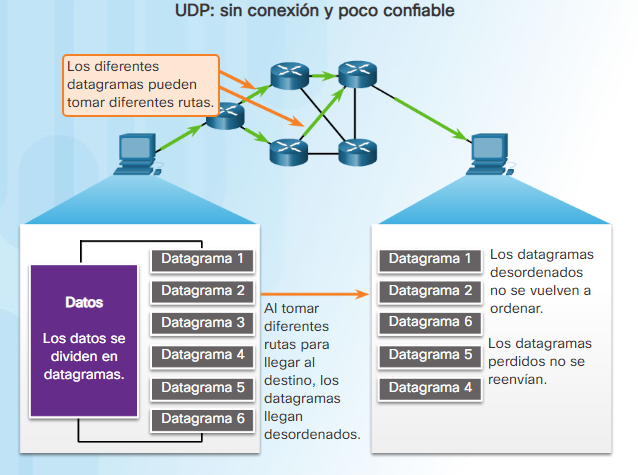
- Just like segments with TDP, when UDP datagrams are sent to a destination, they often take different routes and arrive in the wrong order. UDP does not track sequence numbers the way TCP does.
- Processes and requests of the UDP server
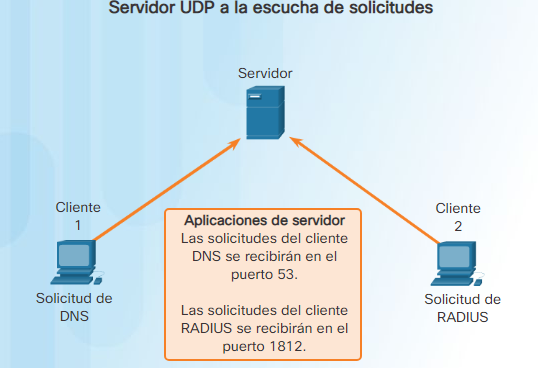
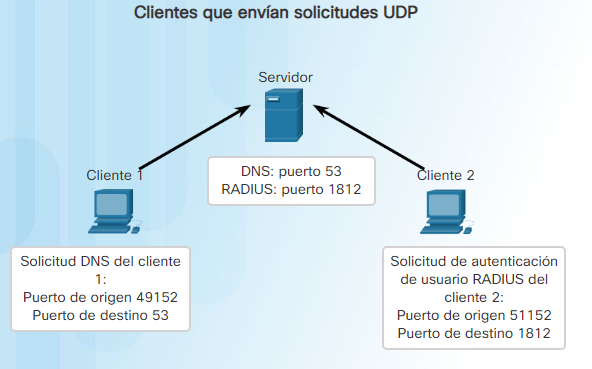
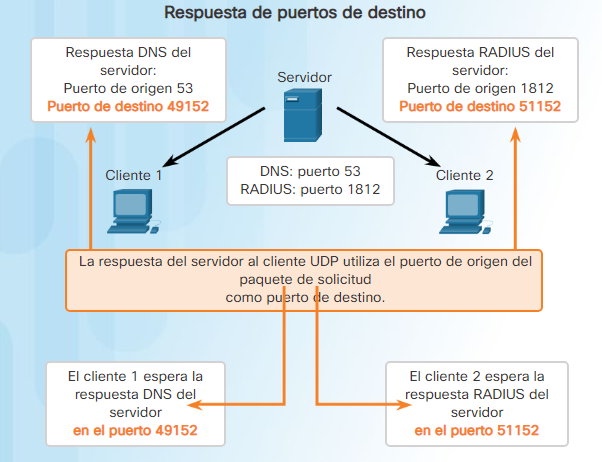
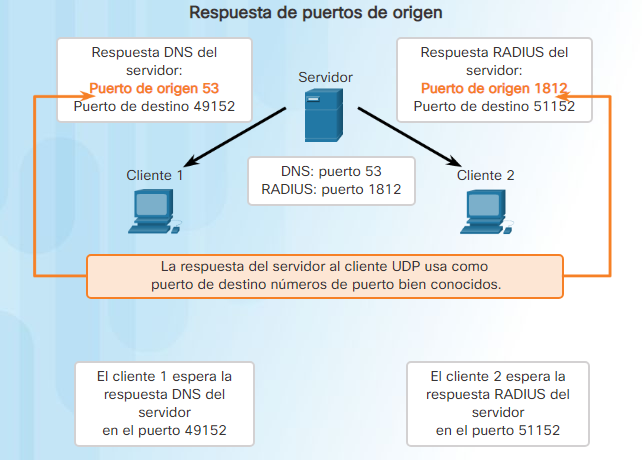
- The Remote Authentication Dial-in User Service (RADIUS) server shown in the figure provides authentication, authorization and auditing services to manage user access. The operation of RADIUS exceeds the scope of this course.
- UDP client processes
- The Remote Authentication Dial-in User Service (RADIUS) server shown in the figure provides authentication, authorization and auditing services to manage user access. The operation of RADIUS exceeds the scope of this course.
- Just like segments with TDP, when UDP datagrams are sent to a destination, they often take different routes and arrive in the wrong order. UDP does not track sequence numbers the way TCP does.
- UDP is a simple protocol that provides the basic functions of the transport layer. It has a much lower overhead than TCP, since it is not connection oriented and does not provide sophisticated relay, sequencing, and flow control mechanisms that offer reliability.
- Applications that use TCP
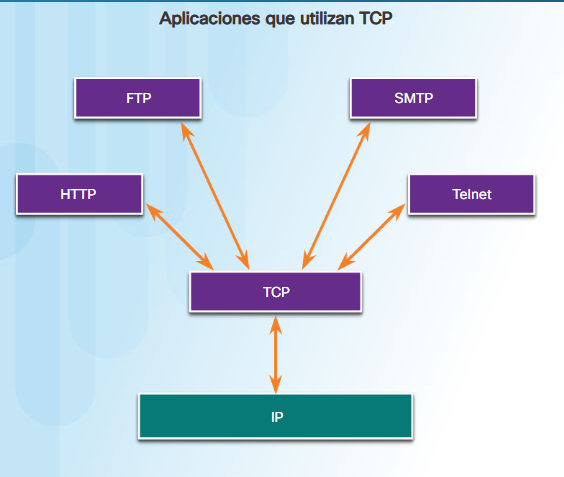
- TCP is an excellent example of how different layers of the TCP / IP protocol suite have specific functions. TCP is responsible for all tasks associated with the division of data flow into segments, which provides reliability, control of data flow and reordering of segments. TCP frees the application from having to manage these tasks.
- Applications that use UDP
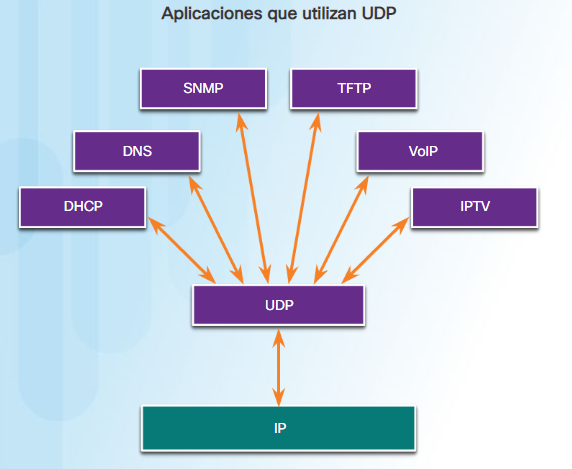
- Although DNS and SNMP use UDP by default, both can also use TCP. DNS will use TCP if the DNS request or the DNS response has more than 512 bytes, such as when a DNS response includes a large number of name resolutions. Similarly, in some situations, the network administrator may want to configure SNMP to use TCP.
- Although DNS and SNMP use UDP by default, both can also use TCP. DNS will use TCP if the DNS request or the DNS response has more than 512 bytes, such as when a DNS response includes a large number of name resolutions. Similarly, in some situations, the network administrator may want to configure SNMP to use TCP.
- TCP is an excellent example of how different layers of the TCP / IP protocol suite have specific functions. TCP is responsible for all tasks associated with the division of data flow into segments, which provides reliability, control of data flow and reordering of segments. TCP frees the application from having to manage these tasks.
- When congestion occurs in a network, the overloaded router begins to discard packets. When the packets containing the TCP segments do not reach their destination, they remain without recognition. By determining the rate at which TCP segments are sent but not recognized, the origin can assume a certain level of network congestion.
- In general, the devices use the sliding windows protocol. With sliding windows, the receiver does not expect the number of bytes in the window size to be reached before sending an acknowledgment. In general, the receiver sends an acknowledgment every two segments received. The number of segments received before acknowledgment may vary. The advantage of sliding windows is that they allow the transmitter to continuously transmit segments while the receiver is acknowledging the previous segments.
- The ISN does not start at one, but it is a random number. This allows to avoid certain types of malicious attacks.
Imagens e arquivos do mapa
Informações
- Descrição
- Ingeniería Mapa Mental sobre Chapter 9: Transport layer, criado por DIEGO CAMACHO em 20-05-2019.
- Criado por
- DIEGO CAMACHO
- Visualizações
- 0
- Histórico
-
- Criado por DIEGO CAMACHO · 18 abr 2019
- Copiado por DIEGO CAMACHO · 7 mai 2019
- Copiado por DIEGO CAMACHO · 20 mai 2019
- Avaliação