
Mapa mental
Modal verbs
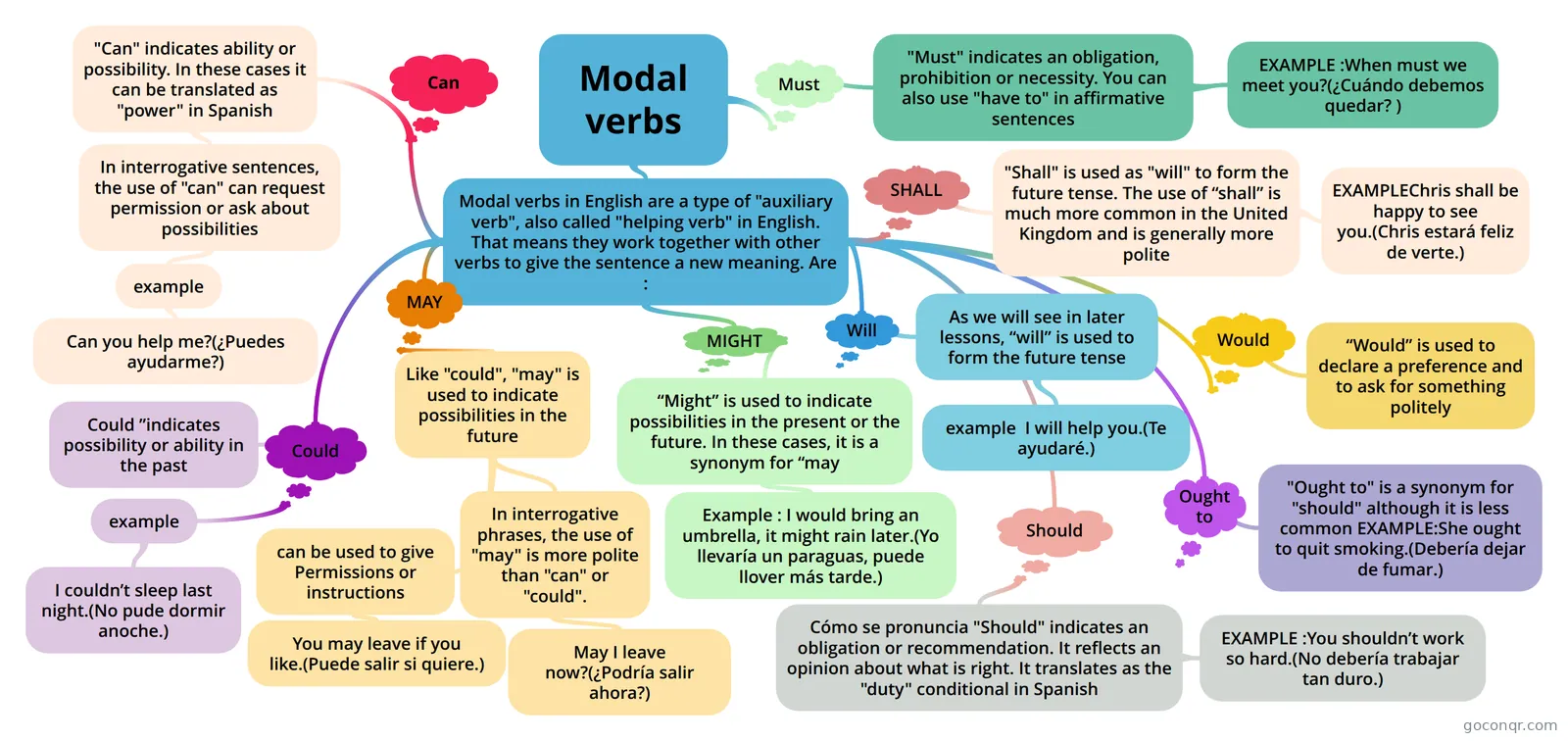
Mapa mental: modal verbs
Conteúdo do mapa
Modal verbs
Modal verbs in English are a type of "auxiliary verb", also called "helping verb" in English. That means they work together with other verbs to give the sentence a new meaning. Are :
- Can
- "Can" indicates ability or possibility. In these cases it can be translated as "power" in Spanish
- In interrogative sentences, the use of "can" can request permission or ask about possibilities
- example
- Can you help me?(¿Puedes ayudarme?)
- example
- In interrogative sentences, the use of "can" can request permission or ask about possibilities
- "Can" indicates ability or possibility. In these cases it can be translated as "power" in Spanish
- Could
- Could ”indicates possibility or ability in the past
- example
- I couldn’t sleep last night.(No pude dormir anoche.)
- MAY
- Like "could", "may" is used to indicate possibilities in the future
- can be used to give Permissions or instructions
- You may leave if you like.(Puede salir si quiere.)
- In interrogative phrases, the use of "may" is more polite than "can" or "could".
- May I leave now?(¿Podría salir ahora?)
- can be used to give Permissions or instructions
- Like "could", "may" is used to indicate possibilities in the future
- MIGHT
- “Might” is used to indicate possibilities in the present or the future. In these cases, it is a synonym for “may
- Example : I would bring an umbrella, it might rain later.(Yo llevaría un paraguas, puede llover más tarde.)
- “Might” is used to indicate possibilities in the present or the future. In these cases, it is a synonym for “may
- Will
- As we will see in later lessons, “will” is used to form the future tense
- example I will help you.(Te ayudaré.)
- As we will see in later lessons, “will” is used to form the future tense
- SHALL
- "Shall" is used as "will" to form the future tense. The use of “shall” is much more common in the United Kingdom and is generally more polite
- EXAMPLEChris shall be happy to see you.(Chris estará feliz de verte.)
- "Shall" is used as "will" to form the future tense. The use of “shall” is much more common in the United Kingdom and is generally more polite
- Should
- Cómo se pronuncia "Should" indicates an obligation or recommendation. It reflects an opinion about what is right. It translates as the "duty" conditional in Spanish
- EXAMPLE :You shouldn’t work so hard.(No debería trabajar tan duro.)
- Cómo se pronuncia "Should" indicates an obligation or recommendation. It reflects an opinion about what is right. It translates as the "duty" conditional in Spanish
- Ought to
- "Ought to" is a synonym for "should" although it is less common EXAMPLE:She ought to quit smoking.(Debería dejar de fumar.)
- Would
- “Would” is used to declare a preference and to ask for something politely
- Can
Must
- "Must" indicates an obligation, prohibition or necessity. You can also use "have to" in affirmative sentences
- EXAMPLE :When must we meet you?(¿Cuándo debemos quedar? )
- "Must" indicates an obligation, prohibition or necessity. You can also use "have to" in affirmative sentences